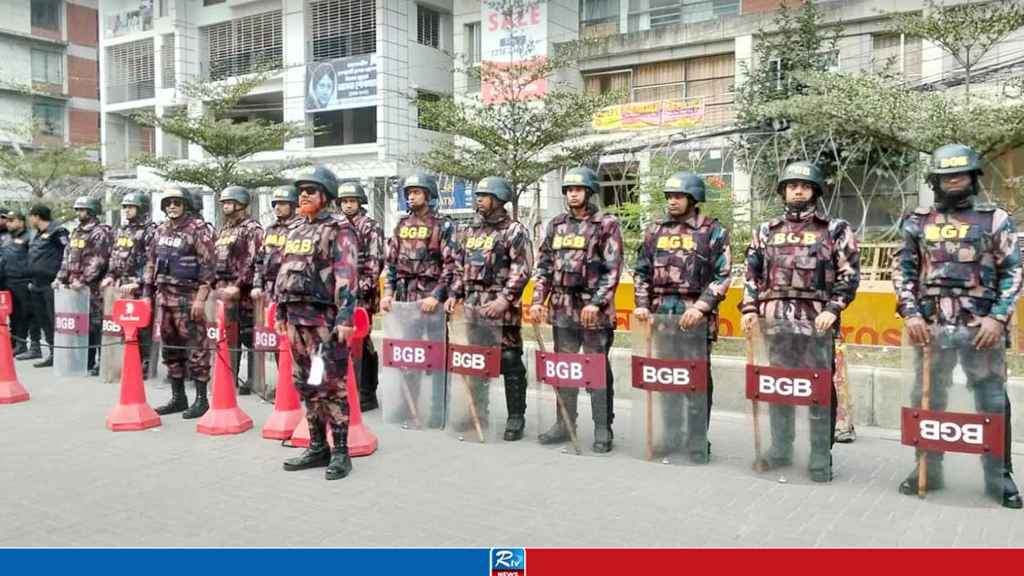
Former and current army officers accused in three separate cases of crimes against humanity related to enforced disappearances have been taken to the International Crimes Tribunal (ICT). Security has been heightened in the capital in connection with this.
The officers were taken to Tribunal-1 at around 7:15 am on Wednesday (October 22). A hearing is scheduled before the three-member judicial panel of the International Crimes Tribunal, led by Chairman Justice Md. Golam Mortuza Majumder.
The other members of the Tribunal are Justice Md. Shafiul Alam Mahmud and retired District and Sessions Judge Md. Mohitul Haque Enam Chowdhury.
Meanwhile, a tight cordon of law enforcement agencies was placed around the Tribunal premises starting at 6:00 am. A large number of police, RAB (Rapid Action Battalion), BGB (Border Guard Bangladesh), and APBn (Armed Police Battalion) members are present at the Tribunal grounds. Additionally, the army, Ansar, and other law enforcement agencies were seen taking cautious positions and patrolling in various areas of the capital, including Karwan Bazar, Bangla Motor, and Kakrail intersection.
Seventeen individuals are accused in one of the two cases filed over incidents of enforced disappearances and torture. They include former additional directors general of RAB: Brigadier General Md. Jahangir Alam, Brigadier General Tofael Mostafa Sarwar, Brigadier General Md. Kamrul Hasan, Brigadier General Md. Mahabub Alam, Brigadier K. M. Azad, Colonel Abdullah Al Momen, and Colonel Anwar Latif Khan (now on retirement leave); former director of RAB's intelligence branch Lieutenant Colonel Md. Mashiur Rahman, Lieutenant Colonel Saiful Islam Sumon, and Lieutenant Colonel Md. Sarwar Bin Kashem, who are currently in army custody.
Additionally, three former Directors General of RAB are also among the accused: Benazir Ahmed (later became IGP), M Khurshid Hossain, and Md. Harun-Or-Rashid. They are currently absconding. Sheikh Hasina, former Defence Affairs Adviser Major General (Retd.) Tarique Ahmed Siddique, former Home Minister Asaduzzaman Khan, and former RAB Director Lieutenant Colonel (Retd.) Muhammad Khairul Islam, who are also on the list of accused in this case, are also absconding.
In the other case filed over enforced disappearances and torture during the Awami League government's tenure, 13 individuals, including Sheikh Hasina and Tarique Ahmed Siddique, have been accused. Among them, three former Directors of DGFI (Directorate General of Forces Intelligence)—Major General Sheikh Md. Sarwar Hossain, Brigadier General Md. Mahbubur Rahman Siddiqui, and Brigadier General Ahmed Tanvir Mazahar Siddiqui—are currently in army custody. The list of accused in this case also includes five former Directors General of DGFI: Lieutenant General (Retd.) Md. Akbar Hossain, Major General (Retd.) Md. Saiful Abedin, Lieutenant General (Retd.) Md. Saiful Alam, Lieutenant General (Retd.) Ahmed Tabrej Shams Chowdhury, and Major General (Retd.) Hamidul Haque. Other accused are former DGFI Directors Major General (Retd.) Mohammad Touhidul Ul Islam, Major General Kabir Ahammed, and Lieutenant Colonel (Retd.) Makhsurul Haque. However, there is no confirmed information regarding their current whereabouts.
Furthermore, in another case of crimes against humanity committed in the Rampura and Banashree areas of the capital during the mass uprising, former BGB official Lieutenant Colonel Mohammad Redwanul Islam, former BGB official Major Md. Rafat-Bin-Alom, former Additional Deputy Commissioner of Police (ADC) Md. Rashedul Islam, and former Officer-in-Charge (OC) Md. Mashiur Rahman have been accused. Of them, Redwanul and Rafat are now in army custody, while the other two remain absconding.
Prosecutor Gazi Monawar Hossain Tamim stated that according to the law, two things can happen now: either the accused respect the law and voluntarily appear before the Tribunal, or law enforcement agencies will arrest them and bring them to the Tribunal.
Once present at the Tribunal, they can apply for bail. If there is a basis for bail, the Tribunal may grant it. If the accused are ordered to be sent to jail custody, the prison authorities under the Ministry of Home Affairs will decide which jail they will be kept in.



 Live TV
 RTV Plus