Six days ahead of the 13th National Parliament Election and the Referendum, which is scheduled to be held on February 12, the Bangladesh Nationalist Party (BNP) officially released its manifesto, centering on the core principle of 'Bangladesh First'.
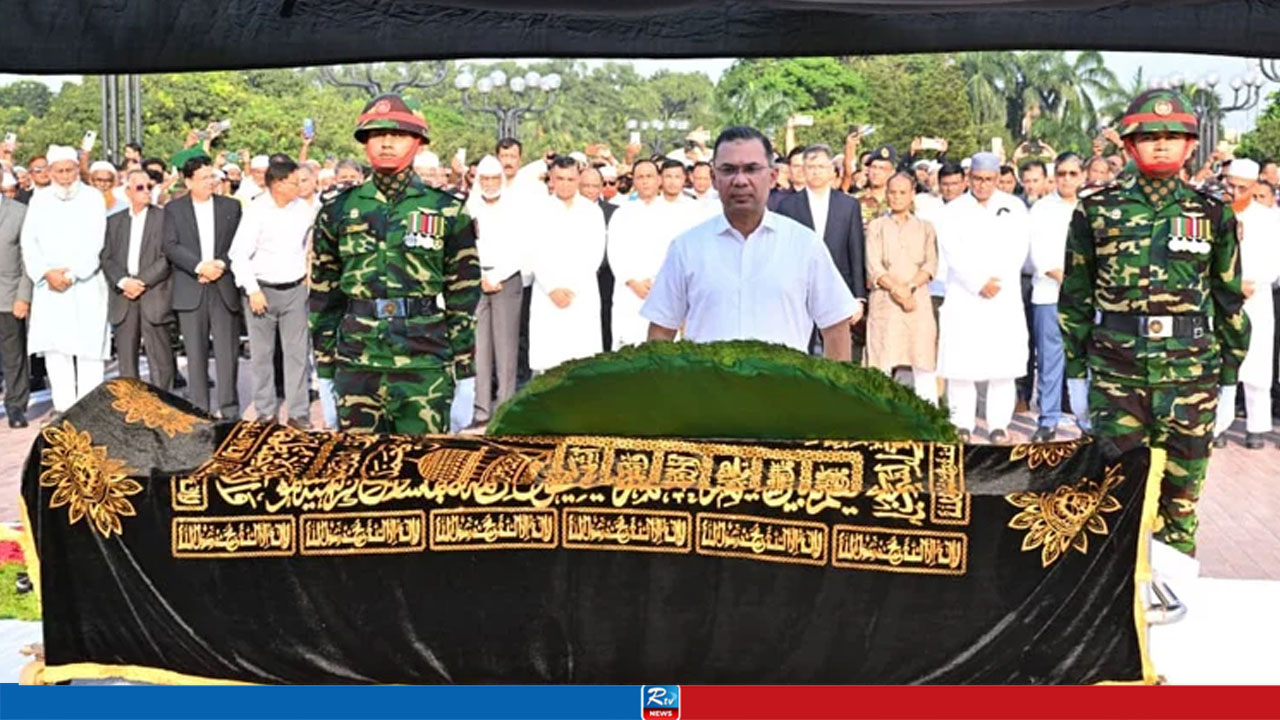
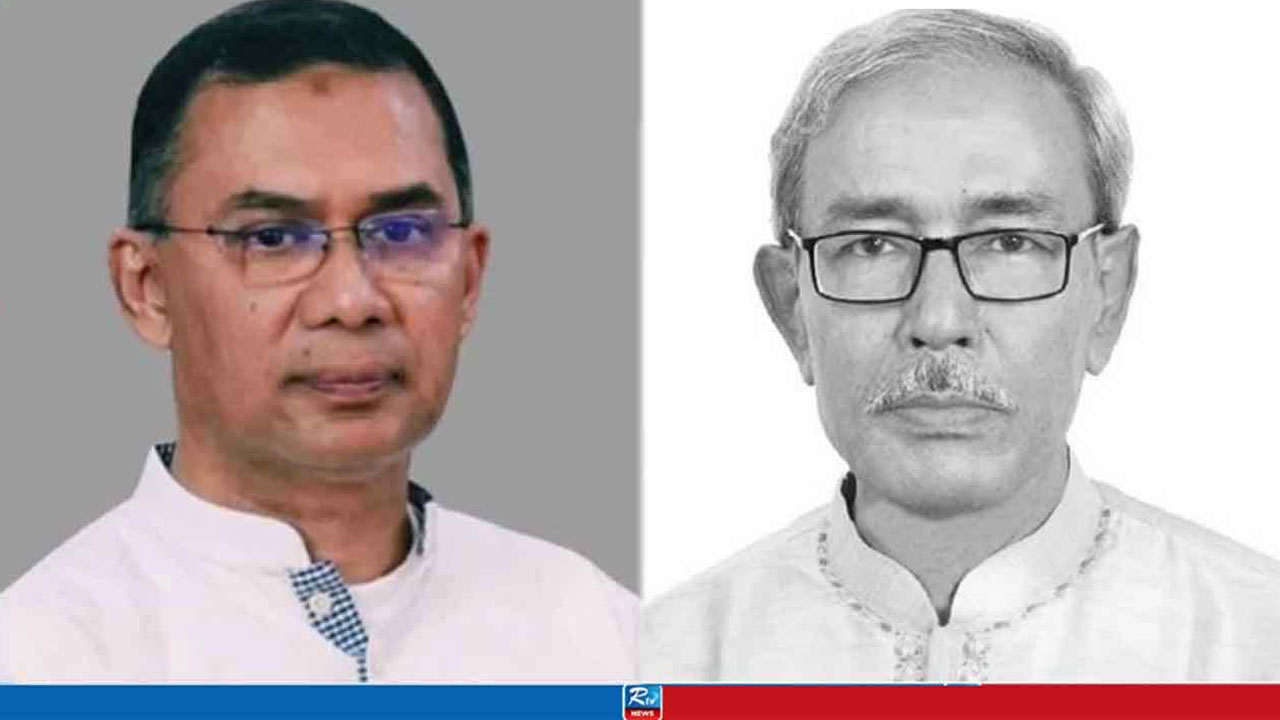
BNP Chairman Tarique Rahman unveiled the manifesto during a formal ceremony at a hotel in the capital on Friday at 3:30 pm.
The vision presented by the party focuses on "Insaaf" (justice), humanitarian values and national interest as the foundations of future state governance.
BNP Secretary General Mirza Fakhrul Islam Alamgir presided over the unveiling ceremony, which was coordinated by Standing Committee member and chairman of the Election Steering Committee Nazrul Islam Khan.
The opening chapter prioritizes a total overhaul of the state system, emphasizing the restoration of democracy and honoring the legacy of both the Liberation War and the July mass uprising. This section commits to deep constitutional reforms, national reconciliation, and the establishment of an independent judiciary alongside comprehensive police and local government reforms.
In the second chapter, the focus shifts to social equity, highlighting strategies for poverty reduction, social safety nets, and the empowerment of women. It also details plans for food security through agricultural modernization, nationwide job creation, and enhanced healthcare and educational systems, while addressing climate resilience and disaster management.
The third chapter centers on economic recovery, proposing aggressive reforms for the banking and financial sectors to stimulate investment. It outlines a vision for industrial growth, energy security, and the modernization of transport and information technology infrastructures to stabilize the economy.

For balanced national progress, the fourth chapter suggests transforming Chattogram into a formal commercial capital and focuses on the specialized development of haor, coastal, and wetland regions. This part of the manifesto also aims for sustainable urban housing and a safer, more functional Dhaka.
The final chapter is dedicated to the nation’s social fabric, pledging to protect religious harmony, ensure the rights of ethnic minorities, and safeguard media freedom while fostering sports, arts, and strong moral values in public life.
The comprehensive document pledges to transform the nation into a justice-based, humane, and prosperous state through significant democratic and economic reforms.
Key pillars of the manifesto include commitments to welfare expansion, institutional accountability, and a complete economic transformation.
By emphasizing a "justice-based" approach, the BNP aims to rebuild state institutions and ensure a governance model rooted in transparency and the protection of citizens' rights.
The party's manifesto is structured into five distinct chapters, offering a detailed roadmap for the nation’s governance, economic trajectory, social welfare, and regional growth.
Framework and Ideological Foundation
The manifesto has been framed by integrating BNP founder late President Ziaur Rahman’s 19-point programme, former Prime Minister Khaleda Zia’s Vision-2030, Tarique Rahman’s 31-point proposal on state restructuring, and the July National Charter.
It reiterates BNP’s ideological commitment to democracy, justice and moral governance, stating that the party’s core objective is to establish a fair and accountable society while upholding religious values and ethical principles.
Democracy, Reforms and Accountability
Emphasising electoral and constitutional reforms, the manifesto vows to restore voting as the sole legitimate source of state power and build a sustainable democratic framework through necessary reforms to the election system and the Constitution.
BNP pledged zero tolerance for authoritarianism and foreign subservience, vowing to eliminate discrimination across society, ensure social justice, protect media freedom, and guarantee freedom of expression.
The party also committed to preparing an accurate list of martyrs of the Liberation War through a state-led survey, ensuring due recognition and dignity of freedom fighters, preserving the correct history of the Liberation War, and encouraging investment by freedom fighter entrepreneurs.
Justice for July Uprising and Reconciliation
The manifesto promises justice for the July mass uprising and the 16-year anti-authoritarian movement, including recognition, treatment and rehabilitation of injured activists and support for families of martyrs.
BNP announced plans to establish a Truth and Healing Commission in line with its proposed National Reconciliation framework to ensure victim-centred, restorative justice and national unity.
Anti-corruption and Governance
Reaffirming a no-compromise stance on corruption, BNP pledged institutional reforms, legal restructuring, real-time audits, open tendering, performance audits of government projects, and single-window clearance systems.
The party also vowed to recover laundered money siphoned abroad during what it termed the “fascist era” and restore confidence in public institutions through transparency and accountability.
Social Protection and Welfare
BNP committed to building a humane, dignified and rights-based social protection system. Key pledges include:
Women’s empowerment has been prioritised, with a pledge to issue Family Cards in the name of the female head of household and provide free education up to postgraduate level.
The manifesto promises agricultural protection through Farmer Cards and the waiver of agricultural loans with interest up to BDT 10,000.
To tackle unemployment, BNP pledged to establish government employment exchanges at district and upazila levels, launch free internet services at key public locations, and set up overseas employment training and language centres.
Economy and Investment
BNP outlined an ambitious economic vision, aiming to transform Bangladesh into a $1 trillion economy by 2034 by shifting from consumption-driven to investment-driven growth.
Increasing foreign direct investment to 2.5% of GDP, SME and startup support through guarantee schemes, cash-flow-based loans, crowdfunding and insurance, formation of an Economic Reform Commission to restore confidence in the banking sector, control inflation and rationalise interest rates— outlined in BNP manifesto.
The party pledged to ensure autonomy of the Securities and Exchange Commission and establish a Capital Market Protection Commission, alongside a special probe into irregularities over the past 15 years.
It also plans to develop Chattogram and Mongla ports into integrated logistics hubs, expand power generation capacity to 35,000 MW by 2030, and strengthen transmission infrastructure while reviewing costly rental and quick-rental power contracts.
ICT, Revenue and Urban Development
BNP aims to position Bangladesh as a global ICT and AI hub, create one million new ICT jobs, ensure fast and reliable internet access, and implement a national connectivity master plan.
The party pledged to raise the tax-GDP ratio to 15% in phases and ensure balanced regional development through planned urbanisation, affordable housing, land banks, waste management and citizen service centres.
Religious Freedom and Media
Reaffirming the principle “religion is personal, the state belongs to all,” BNP pledged to ensure full religious freedom, enhance the dignity and honorarium of khatibs, imams and muezzins, and expand religious welfare trusts.
The manifesto also promises protection of journalists’ rights, an end to harassment, justice for journalist killings, and formation of a National Journalists’ Welfare Board.
This is the first time BNP has unveiled an election manifesto under the leadership of Tarique Rahman, who is leading the party in the current parliamentary election.
In previous polls—the fifth, sixth, seventh, eighth and ninth national elections—the party was led by then chairperson and former prime minister Khaleda Zia, who personally announced each of BNP’s election manifestos during that period.
With Inputs from UNB





 Live TV
 RTV Plus