Dhaka 21 September, 2026

Sabyasachi Hazra Unpacks Life, Typography and 4000 Book Covers at Gallery Cosmos Event

RTV News

Publish : 20 Sep 2026, 05:40 PM
Collected Photo

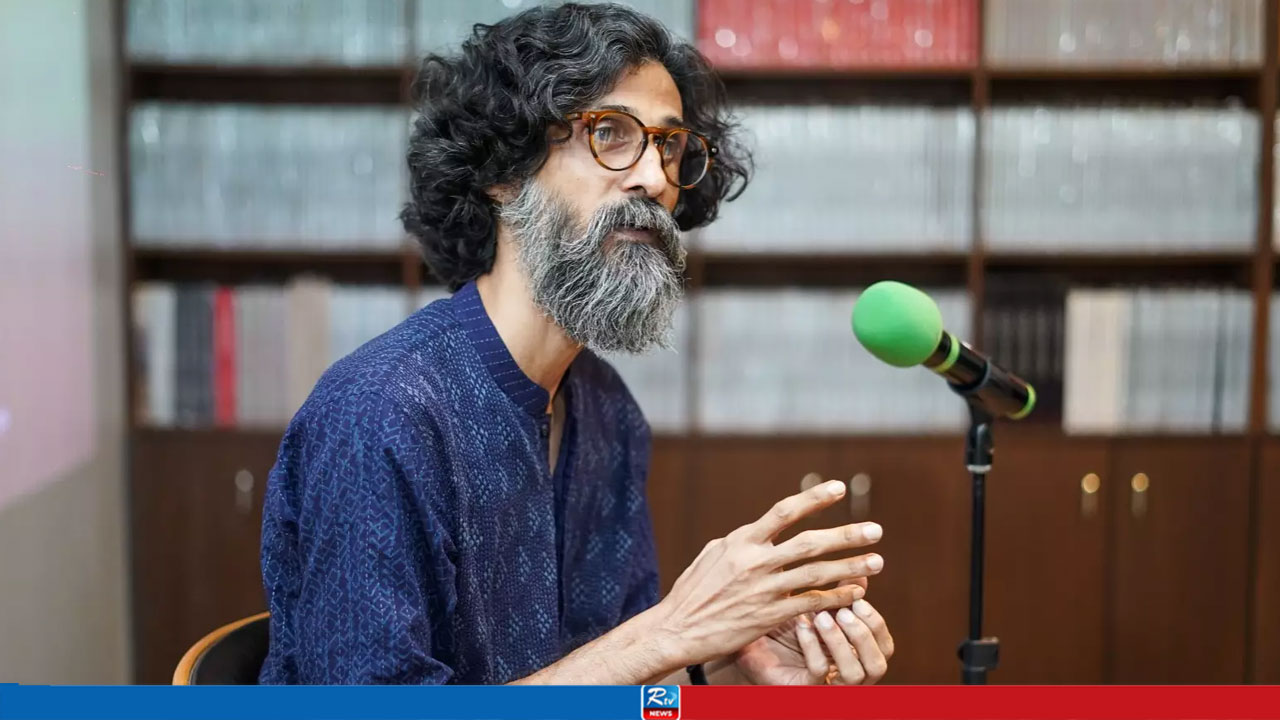
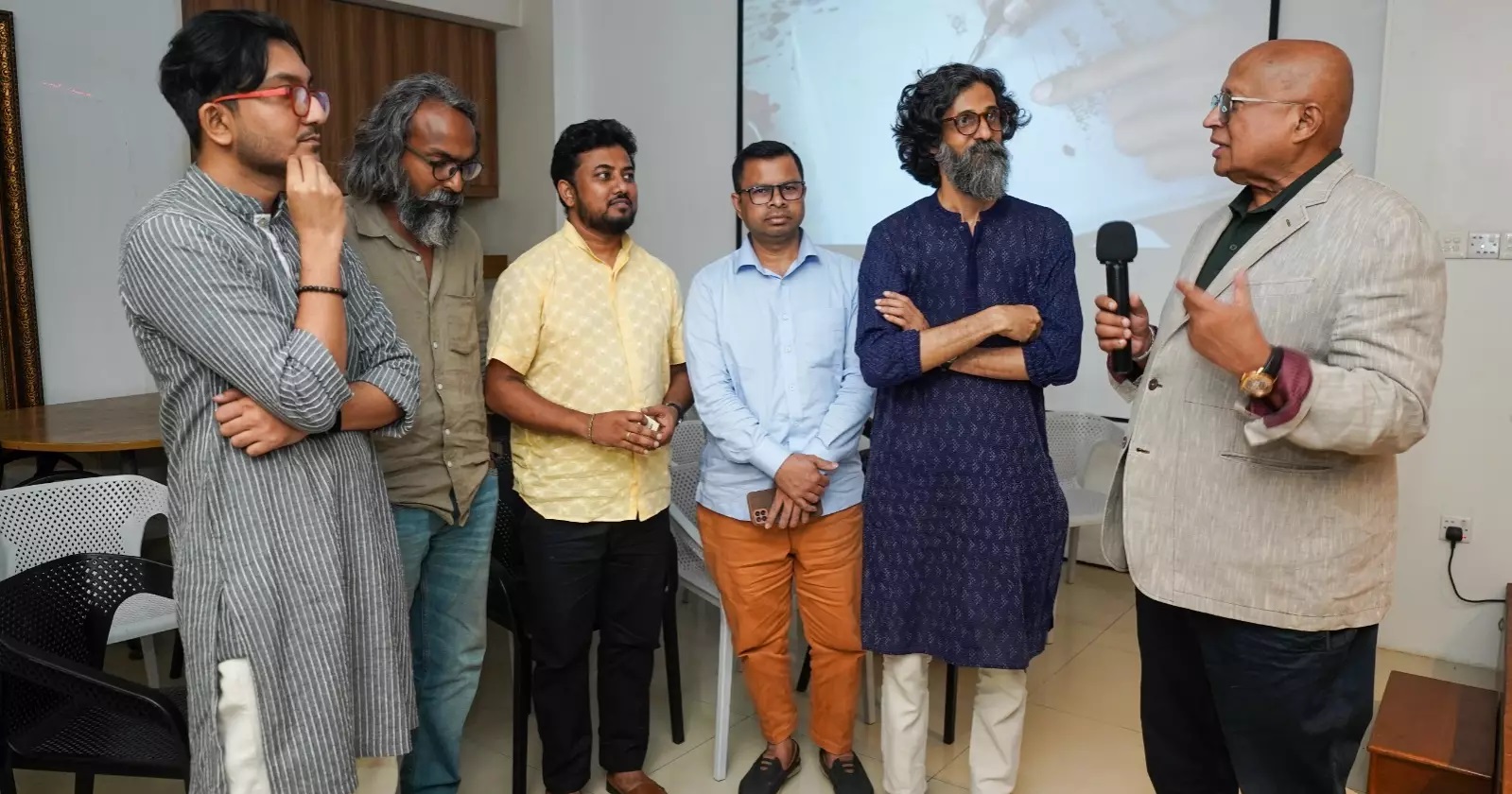
For artist Sabyasachi Hazra, creative expression extends beyond canvas and gallery walls, weaving through personal recollection, camaraderie, adversity, and daily life during an unhurried artistic evolution revisited Saturday at 'Contemplation: An Unhurried Journey Through Art, Purpose and Life', the 12th Cosmos Art Echo session hosted by Gallery Cosmos and Cosmos Atelier71 at Malibagh's Cosmos Centre and moderated by artistic director Sourav Chowdhury.

Opening with a retrospective of his early childhood in Khulna and formative six years in Itna village, Lohagara, Narail, Sabyasachi screened the 11-minute documentary Hazrabari, reflecting on family history and noting, "My grandmother, whom I never saw, was shot dead in this very Hazrabari in 1971 during the Liberation War. Although I never met her, I can still feel her presence whenever I return to the house."

Teenage years introduced political literature via a communist mentor, wall-writing, and poster design, framing his background through the sentiment that "growing up was connected with Narail, Khulna was where I had a deep love and with Dhaka it was an 'arranged marriage'."

Moving into Jagannath Hall after enrolling at Dhaka University's Institute of Fine Arts placed Aziz Super Market's bookshops and little magazines at his creative core, yielding roughly 250 designed magazine covers and teaching him that "adversity brings out the best in people."

While fine arts peers gravitated toward singing, recitation, or acting, Sabyasachi found theatrical affinity working with Prachyanat alongside Short Film Forum screenwriting engagements, Moviyana Film Society ties and Russian Cultural Centre or Goethe-Institut interactions.
Collected Photo

BUET-student brother connections exposed him to compositional experiments, reinforcing that "design has never seemed less important to me than an artwork."

Rejecting artist's block as an unaffordable luxury given limited lifespan, he draws subjects from cinema, music, theatre, and surroundings, asserting "I have learnt the most from my surroundings, my friends and people younger than me, through conversations with them. Perhaps I learnt only 10 percent from textbooks."

Specializing in book-cover design since 2000, Sabyasachi has built a portfolio of nearly 4,000 published works alongside theatre, film, and advocacy posters for Syed Jamil Ahmed's 4.48 Montrash, Ami Birangona Bolchi, Mayer Mukh, Agunjatra, and Gulmohor.

Mentored by figures like Khaled Chowdhury, Purnendu Pattrea, Kazi Hasan Habib, Qayyum Chowdhury, and Kamrul Hassan, his editorial and authorial collaborators span Dhruva Esh—of whom he noted, "Dhruva Esh is the only writer who, to this day, has never seen a book cover I designed for him before its publication"—iftekhar Mahmud, Syed Manzoorul Islam, Anisuzzaman, Joy Goswami, Syed Shamsul Haq, Nirmalendu Goon, and Humayun Ahmed.

Bangla script typography anchors volumes including Chitralipi (2015), Rong Tulite Chopchap (2018), In the Quest of Bangla Typography(2022), edited collection Bangla Namer Desher Galpo (2023) and Bornomala, collecting eight primers from 1849 to 1948.

Campus wall installations and companionship with Kalidas Karmakar, Rahul Anand, Animesh Aich, Mezbhaur Rahman Sumon, Kanak Aditya, and Shibu Kumar Shil reinforce a shared ethos where "none of us ever thought we would become popular."

Multifaceted paintings address sociopolitical themes and women's narratives alongside early abstract-mythological studies. Concluding the talk, Hazra unpacked personal keepsakes—a handmade horse figurine, a self-crafted pen, a childhood aunt-gifted mould, and a nakshi kantha handkerchief—voicing hope for their memory's endurance.

Gallery Cosmos founder Enayetullah Khan closed the session highlighting art's capacity to navigate crisis and presenting Sabyasachi with the second edition of The Bangladesh Sundarban.

With Inputs from UNB

Follow google news channel to get RTV news Google News
Academic Seminars and Tributes Mark Michael Madhusudan Dutt’s Death Anniversary
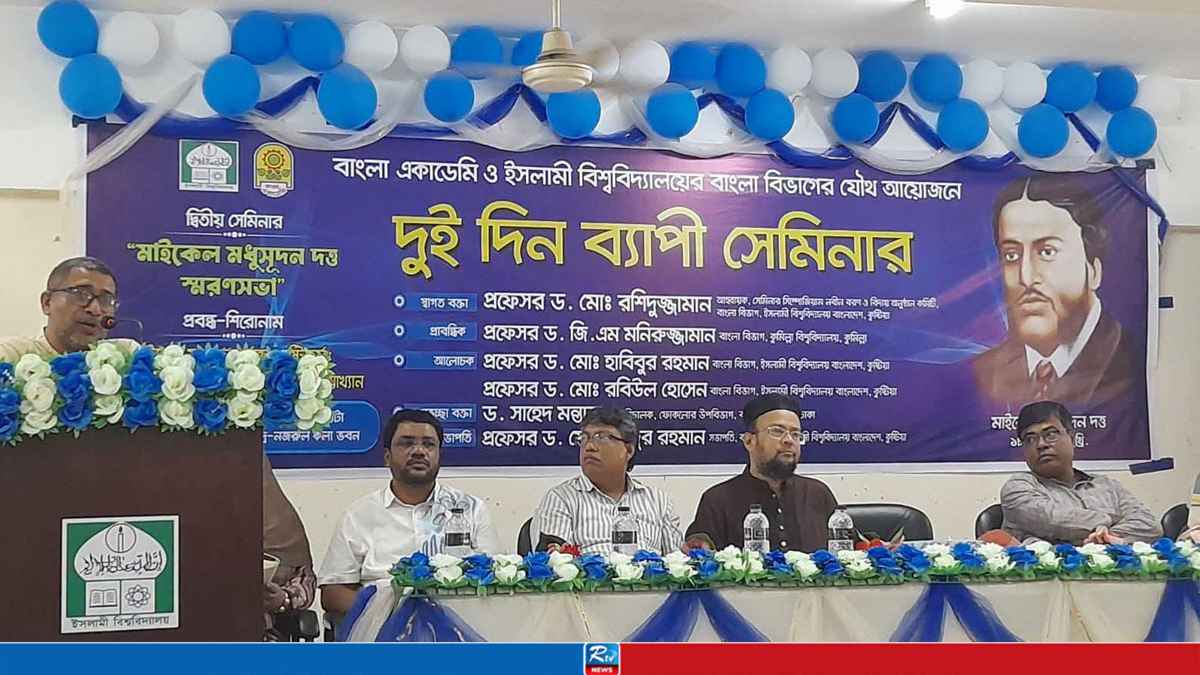
The legacy of the legendary poet Michael Madhusudan Dutt was commemorated across Bangladesh this week through a series of seminars, memorial tributes and cultural events.  At Islamic University (IU) in Kushtia, a seminar was held on last Sunday to honor the poet’s life and works.  Jointly organized by the Bangla Academy and the university’s Department of Bangla at the Rabindra-Nazrul Arts Building, the event was sponsored by the Ministry of Cultural Affairs. During the seminar, Dr. Shahed Montaz, Deputy Director of the Bangla Academy, delivered the opening remarks, followed by a welcome address from Professor Dr. Md. Rashiduzzaman of IU’s Department of Bangla.  A keynote paper titled "The Creative Works of Michael Madhusudan Dutt: Iconoclasm, Individualism and the Narrative of Rebellion" was presented by Professor Dr. G.M. Moniruzzaman of Comilla University.  Collected Photo The discussion session featured insights from Professor Dr. Md. Habibur Rahman and Professor Gazi Md. Rabiul Hossain, with the session presided over by the Chairman of the Department of Bangla, Professor Dr. Md. Monzur Rahman.  Speakers highlighted the poet's revolutionary contributions to Bangla literature, noting, "The master craftsman of breaking traditions, who, through his works, constantly celebrated the spirit of flesh-and-blood human beings beyond the realms of gods and demons," opened new horizons in both poetry and dramatic literature. Simultaneously, the 153rd death anniversary of the poet was observed on Monday at his ancestral home in Sagardari, Keshabpur upazila, Jashore.  Read More Barcelona ‘Bombed’ with 100,000 Poems to Commemorate 50 Years of Democracy The local administration, the Madhusudan Academy, and various social and cultural organizations marked the occasion by placing wreaths at the poet’s bust.  Following the tributes, a discussion meeting was held at the Madhusudan Academy, chaired by Academy Chairman Asaduzzaman Selim. Dr. Md. Dulal Hossain, Head of the Bangla Department at Khulna University, addressed the gathering as the chief guest, offering a detailed analysis of the poet's literary impact. The event in Jashore also featured contributions from several notable figures, including Madhusudan Academy Director Khasru Parvez; Assistant Professor Kanaila Bhattacharya of Abu Sharaf Sadeq Commerce and Technical College; Deputy Director of the Madhusudan Academy, poet Makbul Mahfuz; Publicity and Publication Secretary Taheruzzaman; and Keshabpur Press Club President Ashrafuzzaman Khan.  The commemoration concluded in the afternoon with an evocative session of poetry recitation from the works of Michael Madhusudan Dutt and a cultural programme, celebrating the enduring relevance of his artistic vision.
Academic Seminars and Tributes Mark Michael Madhusudan Dutt’s Death Anniversary
Barcelona ‘Bombed’ with 100,000 Poems to Commemorate 50 Years of Democracy
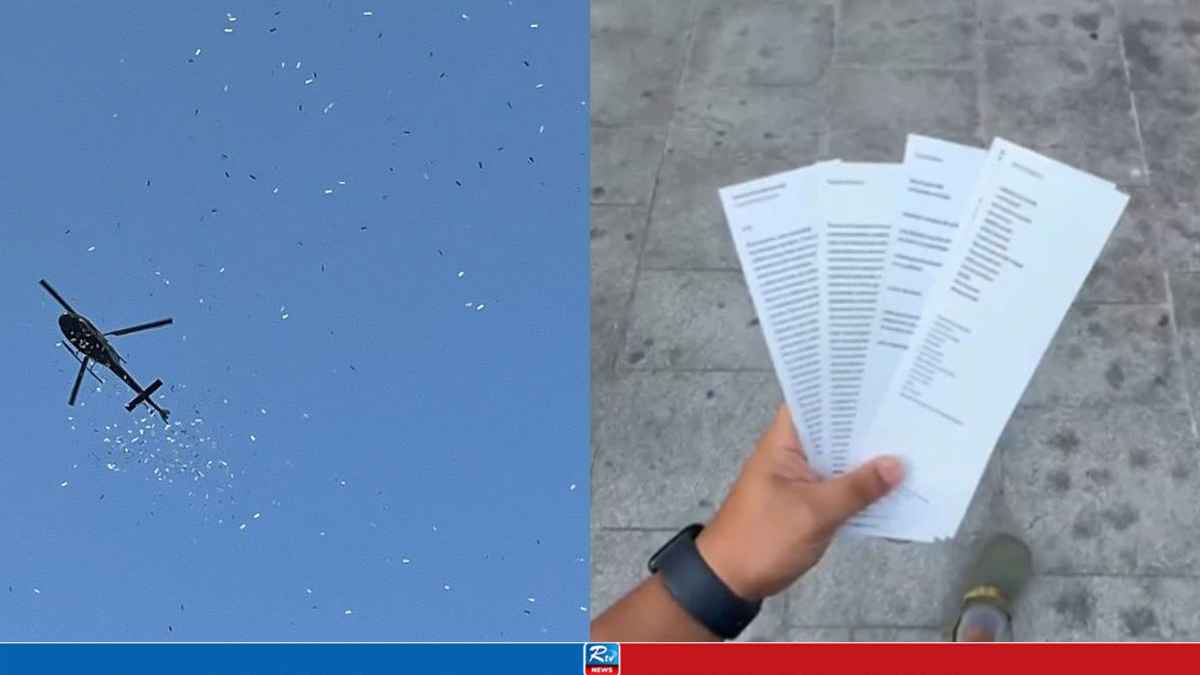
In a poignant display of artistic healing, the skies over Barcelona’s historic Gothic Quarter were recently filled not with explosives, but with over 100,000 bookmarks featuring poetry.  The event, an artistic performance by the Chilean collective Casagrande, served to commemorate 50 years of Spanish democracy and reclaim the city's airspace, which suffered 1,903 bomb attacks between 1937 and 1939 during the Spanish Civil War.  These historical attacks, which claimed over 2,700 lives and injured around 7,000 people, left deep scars on the city, particularly in the Cathedral district.  One of the most devastating strikes in the area occurred in 1938, killing 42 people—20 of whom were children—followed by another three-day assault months later that resulted in hundreds more deaths. The performance, which took place on June 20, 2026, involved a helicopter dropping bookmarks printed with poems in Catalan and Spanish on the theme of freedom.  These works were penned by 50 Catalan poets and 50 Chilean ones, chosen to reflect on "freedom, memory and consequences of both of those." Collected Photo The site of the performance, Plaça Nova near the Barcelona Cathedral, was chosen intentionally to honor the areas most heavily damaged during the 1930s.  This initiative marks the tenth edition of Casagrande’s "poetry bombing" series, a project that first began in Santiago, Chile, in 2001 to address the trauma of the 1973 military coup. Since its inception, the collective has brought similar performances to nine other cities worldwide, including London, Berlin, Dubrovnik, Warsaw, and Gernika.  Collected Photo The project focuses on cities that endured historical aerial bombardment, aiming to "remember the past trauma and redefine the airspace with something good." A recent article by Rachele Gusella and Ann Peeters in Audioliterary Poetry between Performance and Mediatization (2024) noted that "bombing has recently emerged as an artistic practice, where artists occupy the public space to deliver a message," adding that "the influence of guerrilla art is important for the interpretation of bombing since they share the same urgency of delivering a message: guerrilla through communicative inversion and bombing through repetition."   Following the event, videos posted on social media garnered global praise, with one viewer remarking, "Humans can be so cute sometimes," and another stating, "Raining poems gotta be my favourite weather."  Collected Photo Others expressed hopes for similar initiatives in conflict-ridden regions like Palestine.  However, the event’s title drew mixed reactions; while the performance is celebrated for its unifying power, some, such as poet and writer Lena Tuffaha, expressed reservations, writing, "Could we have gone with ‘raining poems’? Unfortunate naming for this event."  The tradition of the "poetry bombing" has previously seen success elsewhere, including in Rotterdam in May 2025, which marked 85 years since the city was bombed during the Second World War, and in Madrid in 2018.  Read More Indian High Commissioner Inaugurates 'CROSSROAD' Art Exhibition in Dhaka Through this repetition of beauty, Casagrande continues its mission of transforming the memory of past violence into a shared, healing experience for city residents. With Inputs from Agenices and different online portals
Barcelona ‘Bombed’ with 100,000 Poems to Commemorate 50 Years of Democracy
Indian High Commissioner Inaugurates 'CROSSROAD' Art Exhibition in Dhaka
Indian High Commissioner Pranay Verma inaugurated a premier group art exhibition titled “CROSSROAD… not a project” at Galleri Kaya on Friday, April 3, 2026. The exhibition showcases the works of 11 contemporary Bangladeshi artists, a group that notably includes several Indian Council for Cultural Relations (ICCR) scholars. The collection features a diverse range of artistic exploration, moving from poignant tributes to the martyrs of the Language Movement to evocative depictions of nature and everyday life. Art as a Bilateral BridgeIn his inaugural address, High Commissioner Verma emphasized the unique role that creative expression plays in the partnership between India and Bangladesh. "In the India-Bangladesh relationship, art is a very strong medium that brings our people together," Verma stated. "Apart from the fact that we share history, geography, language, and traditions, art has always been a foundational connector between us." A Legacy of CollaborationThe High Commissioner highlighted the long-standing tradition of artistic exchange between the two nations, noting that creators from both sides of the border have historically inspired and influenced one another to produce masterpieces. Looking toward the future, Verma reaffirmed India’s commitment to fostering these creative ties. "I look forward to more and more exchanges between India and Bangladesh in the field of art," he said. "We will be very happy to facilitate, enable, and encourage it in whatever way we can." The exhibition serves as a testament to the ongoing cultural diplomacy between the neighboring nations, celebrating both individual talent and the collective heritage of the region.
Indian High Commissioner Inaugurates 'CROSSROAD' Art Exhibition in Dhaka
Kazi Nazrul Islam's Works Now Available in English
Quintessence of Nazrul, the English translation of Kazi Nazrul Islam's works, was unveiled today (Tuesday) to promote the global reach of the national poet's literary contributions. Marking the unveiling, a publication ceremony and cultural programme was organised by the National Poet Kazi Nazrul Islam Institute at its auditorium this noon. Cultural Affairs Adviser Mostofa Sarwar Farooki attended the event as the chief guest and unveiled the book. The Institute's executive director Md Latiful Islam Shibli presided over the event.  Mostofa Sarwar Farooki thanked all involved in the translation work, saying, "It is a very good initiative to translate the works of Nazrul into English to take him to the global stage. Now it is more important to disseminate it. We often see that a book is produced and remains confined within the country. We must think about how to present it to people abroad." He also advised the Institute to arrange events centred on the book so that people worldwide could engage with the poet's works. Read More 12-day Young Artist Fine Arts Exhibition Begins Today Urging the Institute to continue such initiatives, he added, "After we leave, whichever government is elected, I believe that the cultural journey that began in Bangladesh after the 2024 Mass Uprising, which is wholly Bangladesh-focused and rooted in self-respect, will continue, and I am confident they will uphold it." Renowned Nazrul researcher and Nazrul Award recipient Prof Irshad Ahmed Shaheen delivered the keynote speech, highlighting the depth and significance of Poet Kazi Nazrul Islam's works. "When I present Nazrul on the world stage, audiences are amazed by his work and recognize its unique features. It is a great achievement by the Institute to take both Nazrul and Bangla literature to the global stage," he said. Secretary of the Ministry of Cultural Affairs Md Mofidur Rahman, the poet's granddaughter and Chairperson of the Trustee Board of the National Poet Kazi Nazrul Islam Institute Khilkhil Kazi, and Prof Dr Tazin Aziz Chowdhury of the University of Dhaka addressed the event as special guests.  A cultural segment followed, featuring solo musical performances by Yakub Ali Khan, Dr Nashid Kamal, Ferdous Ara, and Salauddin Ahmed. Group music was performed by trainee artistes of the Institute, while an English solo recitation segment was presented by Nasim Ahmed and Shima Islam.
Kazi Nazrul Islam's Works Now Available in English