Chief Adviser Professor Muhammad Yunus has said that the repatriation of the Rohingya people to their homeland is the only viable solution to the protracted crisis.
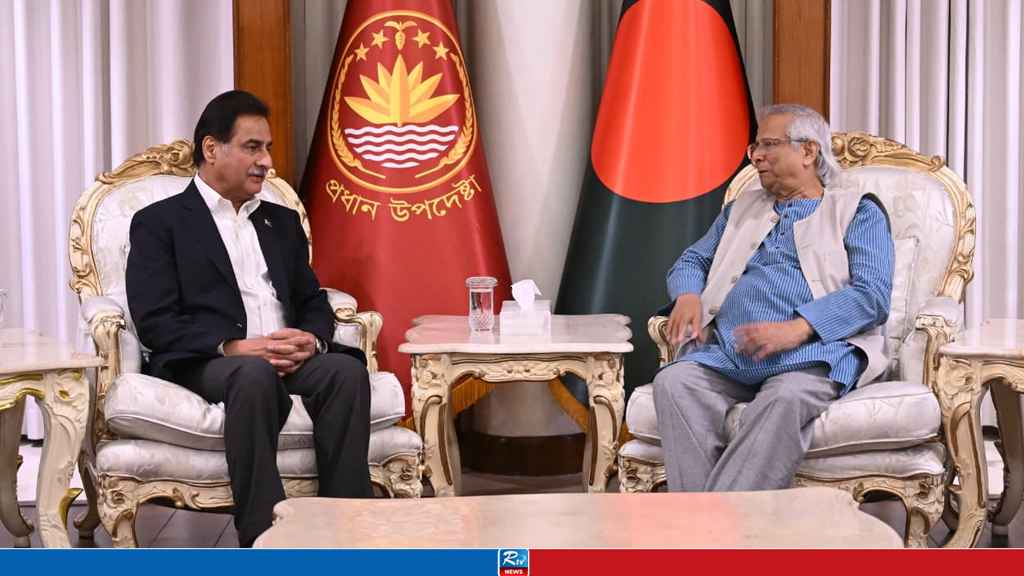
"The return of the Rohingya people to their homeland is the only viable solution. There is no alternative," he said when Julie Bishop, former acting Prime Minister of Australia and currently the UN Special Envoy on Myanmar, met him at a hotel in New York on Monday (Local Time).
The meeting took place a day before the High-Level Conference on the Situation of Rohingya Muslims and Other Minorities in Myanmar at the General Assembly Hall of the United Nations Headquarters on Tuesday.
Representatives from at least 75 countries and organisations, including heads of state and government, have confirmed their participation in the conference, which will begin at 10:00 am local time (8:00 pm Bangladesh time).
The objectives of the UN-organised conference are to mobilise political support, sustain international attention on the crisis, review the overall situation, and address its root causes, including human rights issues.
However, during the meeting, Professor Yunus and Julie Bishop discussed different issues including the Rohingya crisis, the situation in Rakhine State in Myanmar, the severe funding shortfall affecting Rohingyas.
"Let’s hope tomorrow’s (Tuesday) conference brings forth some meaningful proposals. This is not an issue the world can afford to forget," said Professor Yunus.
Bishop emphasised the need to diversify funding sources for Rohingya support, calling on OIC member states to increase their contributions.
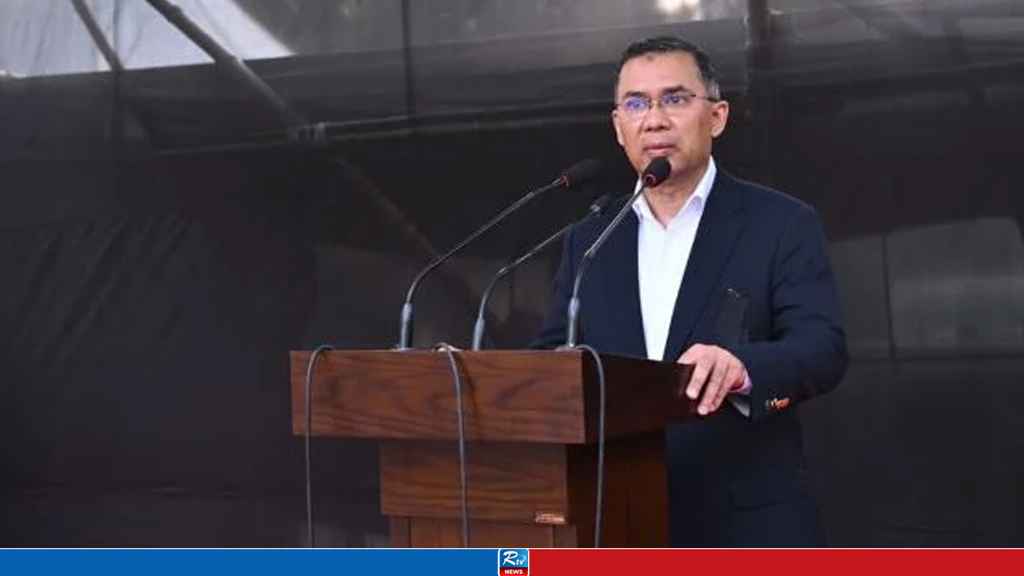
Foreign Adviser Touhid Hossain, NCP leader Tasnim Jara and SDG Coordinator Lamiya Morshed were also present at the meeting.
UN Conference on Rohingya crisis
UN High Commissioner for Refugees Filippo Grandi met Chief Adviser Professor Muhammad Yunus. The two leaders held in-depth discussions on key aspects of the crisis, including the worsening humanitarian conditions in Myanmar’s Rakhine State, recent cuts in international aid affecting over one million Rohingyas in Bangladesh’s Cox’s Bazar, and ongoing diplomatic efforts to ensure the voluntary, safe, and dignified return of Rohingya to their homeland.
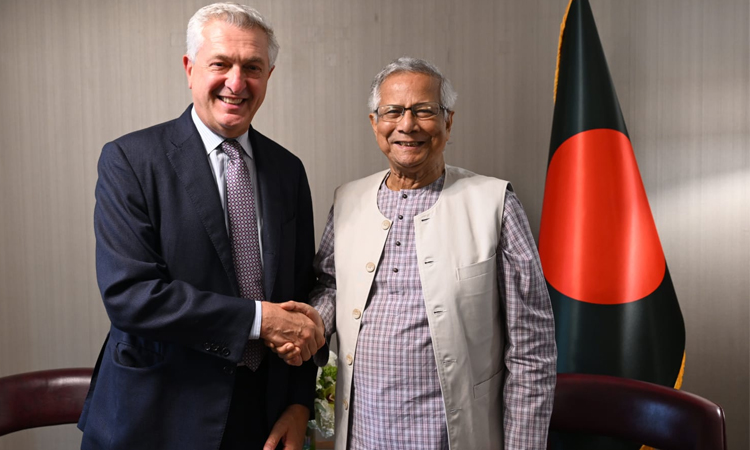
Chief Adviser Prof Yunus noted that approximately 150,000 Rohingyas have fled to Bangladesh over the past 18 months, exacerbating the already dire humanitarian situation and raising regional tensions.
He expressed strong optimism that Tuesday’s landmark international conference—the first of its kind focused solely on the Rohingya—would produce a clear roadmap for resolving the crisis.
Professor Yunus said that the event is expected to galvanise international support, particularly in mobilising much-needed funding for the over one million Rohingyas currently in Bangladesh.
Grandi praised last month’s regional conference in Cox’s Bazar, where Rohingya community leaders actively participated in the four-day deliberations for the first time.
He encouraged Bangladesh to intensify its diplomatic outreach, particularly with major global powers, to help achieve a durable solution to the crisis.
At the meeting, Dr Khalilur Rahman, National Security Adviser, briefed the UNHCR chief on the ongoing verification process of Rohingyas in Bangladesh.
"To date, approximately 250,000 Rohingyas have been verified," he said.
However, the objectives of the UN-organised conference are to mobilise political support, sustain international attention on the crisis, review the overall situation, and address its root causes, including human rights issues, reports BSS.
The conference aims to review the crisis and exchange perspectives on the ground situation in order to propose a comprehensive, innovative, concrete, and time-bound plan for a sustainable resolution. Key priorities include ensuring the voluntary, safe, and dignified return of Rohingya Muslims to Myanmar.
Chief Adviser Professor Muhammad Yunus will be among the speakers in the opening session.
Turkey will represent the Organization of Islamic Cooperation (OIC) while Kuwait will represent the Gulf Cooperation Council (GCC) at the conference.
Ahead of the event, UN High Commissioner for Refugees Filippo Grandi and the UN Secretary-General’s Special Envoy on Myanmar, Julie Bishop, and UNICEF Executive Director Catherine Russell held separate meetings with the Chief Adviser at his hotel on Monday and discussed issues related to the crisis.
Briefing reporters at a city hotel about the outcomes of the meetings, Chief Adviser's Press Secretary Shafiqul Alam said the overall Rohingya and civil war situation in Myanmar's Rakhine state were discussed in the three meetings.
He said they also discussed the pathway of Rohingya repatriation, and how funding for Rohingyas living in camps can be increased and how Rohingya children could be built as skilled ones and educated.
UNICEF chief meets CA to discuss Rohingya education in camps
UNICEF Executive Director Catherine Russell also met Chief Adviser Professor Muhammad Yunus on Monday on the sidelines of the United Nations General Assembly.
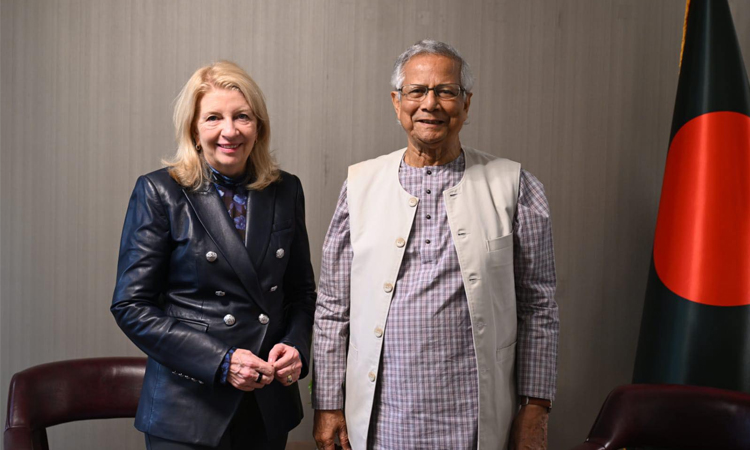
Their discussion focused on the ongoing Rohingya crisis, particularly the severe funding shortfall affecting humanitarian operations for the over one million Rohingyas currently sheltered in Bangladesh. A key concern was the impact of these funding cuts on education services for Rohingya children in the camps.
Describing the donor funding cuts as a serious challenge, Prof Yunus said they had already forced the closure of schools and resulted in job losses for thousands of Rohingya teachers.
"This is a disaster. Education in the camps provided a glimmer of hope for hundreds of thousands of Rohingya children. Our concern is for these children, who are growing up as angry young people—and that anger could erupt in unpredictable ways," Prof Yunus said.
UNICEF Executive Director Russell painted a grim picture of the global funding climate, noting that even traditionally generous European nations are reducing their humanitarian contributions to agencies such as UNICEF.
She urged the Bangladeshi government to introduce skills training for Rohingya youths so they could eventually apply those skills upon returning to their homeland.
UNICEF Deputy Executive Director Ted Chaiban, who also attended the meeting, emphasised the positive impact that education has already had in the Rohingya camps in Cox’s Bazar.
"The level of education among Rohingya children has increased significantly," he noted.
Prof Yunus urged UNICEF to use the occasion to advocate strongly for the continuation and expansion of education initiatives in the camps.





 Live TV
 RTV Plus