
International media outlet Deutsche Welle (DW) provided extensive coverage of the passing of Begum Khaleda Zia, framing her death as the end of a defining era in South Asian politics.
The report, titled 'Rise and Fall of Khaleda Zia, Bangladesh's first female PM', highlights her historic journey from a "shy housewife" to becoming Bangladesh’s first female prime minister and a symbol of democratic resistance.
DW emphasizes that Khaleda Zia will be remembered for her pivotal role in transitioning Bangladesh from military rule to a parliamentary democracy in the early 1990s.
Focus on Education: During her three terms in office (1991–1996 and 2001–2006), she was praised for aggressively promoting girls' education and vocational training.
Experts interviewed by DW, including University of Dhaka professor Laila Noor Islam, noted that her policies laid the foundation for the export-oriented garment industry, which empowered millions of women through employment.
Her influence was globally recognized, with Forbes magazine including her in its list of the world's 100 most powerful women in 2005.
The DW report delves into the "long and bitter rivalry" between Khaleda Zia and Sheikh Hasina, often referred to as the "Battling Begums." Michael Kugelman, a South Asia expert at the Woodrow Wilson Center, told DW that this rivalry was embedded in the core political history of the nation, as both women led competing political dynasties that dominated the landscape for over three decades.
DW also touched upon her later years, characterized by legal battles and deteriorating health. While she was convicted in corruption cases that her party maintains were politically motivated, her supporters view her refusal to flee the country—despite extreme illness and political pressure—as her "final act of uncompromising courage."
The report also highlights the homecoming of her son, Tarique Rahman, after 17 years in exile. Returning just five days before her passing, Tarique's arrival has been seen as a "historic homecoming" that reorganizes the BNP at a critical juncture.
Asif Nazrul, a law professor at the University of Dhaka (and current Law Adviser), told DW that despite her political setbacks and the "thorny path" she chose, Khaleda Zia’s fight for democracy remains untarnished. He noted that her decision to remain on Bangladeshi soil, saying, "This country is my only address," ensures her legacy as a leader who never bowed to foreign or domestic pressure.
As her final journey concludes today at Manik Mia Avenue, the global spotlight remains on her legacy, which DW summarizes as a life of "power, resistance, and an unwavering commitment to her people."
The Entire Report of DW:
Rise and fall of Khaleda Zia, Bangladesh's first female PM
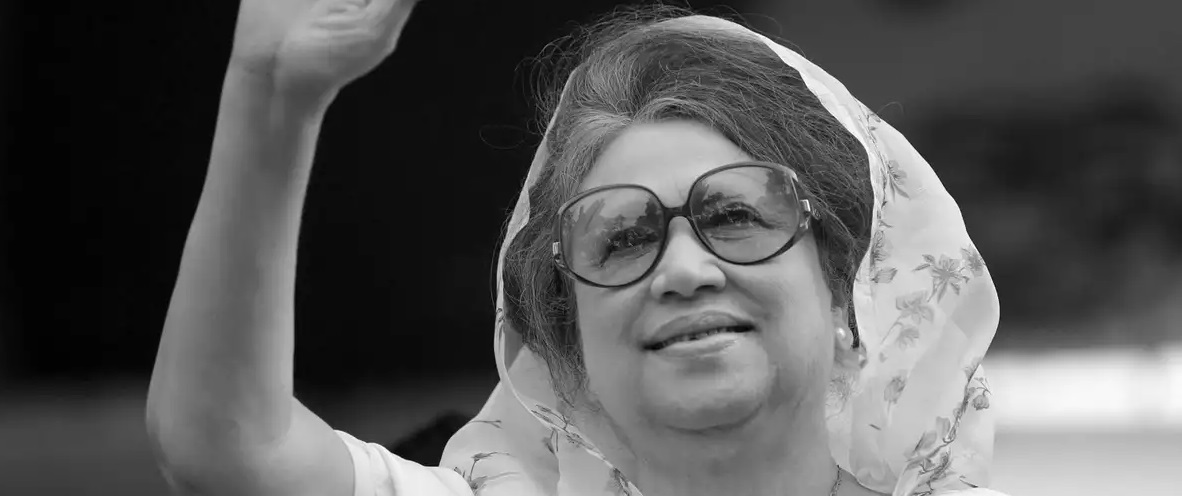
Bangladesh's first female prime minister, Khaleda Zia — once praised for restoring democracy and empowering millions of women — has died at the age of 80.
Khaleda Zia, who served as prime minister of Bangladesh for three terms, died on Tuesday morning at the age of 80.
Zia and her Bangladesh Nationalist Party (BNP) were once hailed for playing a crucial role in transitioning the South Asian nation from military rule to democracy.
She served as prime minister between 1991 and 1996, and again from 2001 to 2006, becoming the first woman to serve as prime minister of Bangladesh.
Zia had been sentenced to several years behind bars prior her death for alleged involvement in corruption charges that her party said were politically motivated.
Rise to Politics
Zia entered politics after her husband, former president Ziaur Rahman, was assassinated in May 1981 during a military coup. Rahman had fought for Bangladesh's independence war from Pakistan in 1971, and formed the BNP a few years prior his assassination.
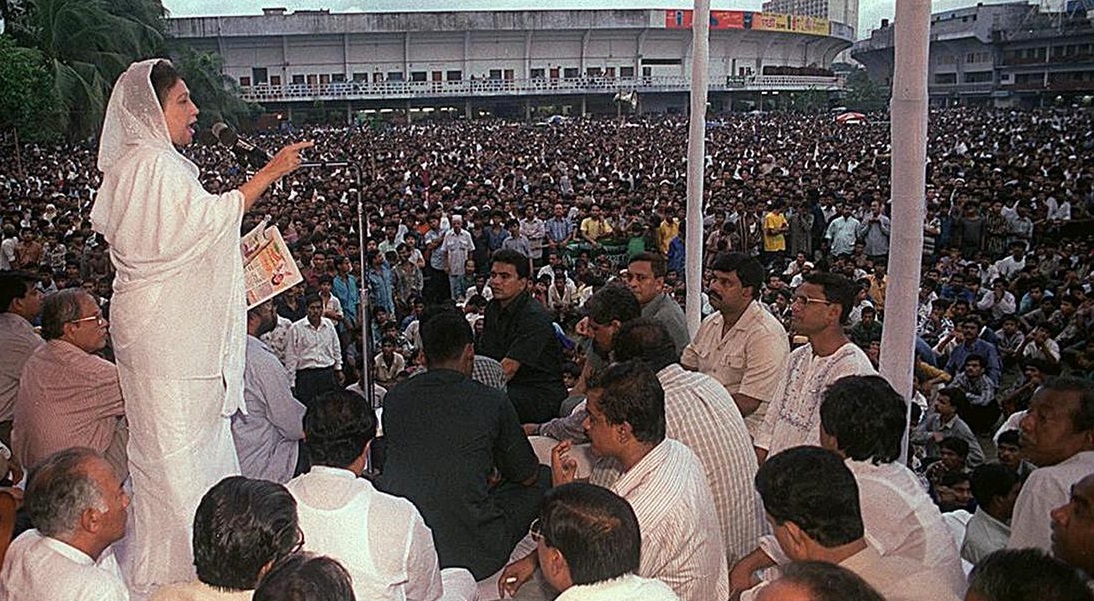
Zia, who was a housewife at the time with no experience in politics, soon became one of the country's top leaders for her civilian political resistance against the then military regime. She established a solid political alliance by joining political parties from both the left and the right with her center-right party, and successfully forced the military regime to give up power by leading nationwide movements for democracy.
On February 27,1991, Zia's party won 140 of the 300 directly-elected seats during the national election, making her the country's new prime minister.
Focus on Empowering Women, Boosting Industry
During her time in office, Zia helped increase literacy rates among girls and boosted job opportunities for women by providing free education and scholarships. She introduced daily free meals for students at schools across the country with help from foreign donors. Those efforts saw millions of girls enrolled in primary and secondary schools.
Zia also contributed to expanding the country's export-oriented garment industry. Barbara Crossette, in a profile of Zia in The New York Times in October 1993, wrote that "in contrast with Benazir Bhutto when she first became prime minister of Pakistan [Zia] is aggressively promoting education and vocational training, especially of girls, and expanding small-scale, no-collateral lending to increase the self-sufficiency of women." In 2005, Forbes magazine included Zia in its list of the world's 100 most powerful women during her last term in office.
Laila Noor Islam, a professor at the University of Dhaka, told DW Zia will be remembered for changing the social and political landscape of Bangladesh.
"People will remember her for introducing the parliamentary system of democracy in her country, for creating export-oriented ready-made garment factories where hundreds of thousands of women got jobs, for introducing free primary education for all, and developing the caretaker government system for conducting free and fair national elections," said Islam.
Zia, Hasina had 'Long and Bitter Rivalry'
Soon after entering politics, Zia became the archrival of Sheikh Hasina, the top leader of the center-left Awami League (AL) party who was in power from 2008 until her ouster in 2024.
They were often called "the Battling Begums" — "begum" refers to a Muslim woman of high rank — for their long-standing rivalry, which split the country's political arena into two, one led by Hasina's AL, the other by Zia's BNP.
"When I hear the name Khaleda Zia, what comes to mind is 'Hasina's rival,'" Michael Kugelman, a South Asia expert at the Washington-based Woodrow Wilson International Center for Scholars, told DW before her death. "Zia and Hasina have had such a long and bitter rivalry, and it's been amplified by the fact that they've dominated Bangladeshi politics for so long."
"And given that their respective families comprise the country's two political dynasties, the rivalry also is embedded in the core political history of Bangladesh," he added.
Corruption Allegations
Zia was convicted in a graft case in February 2018 and later in a separate corruption case. She was accused of misusing her power by embezzling some USD 250,000 (Euro 240,000) in donations meant for an orphanage trust.
The BNP maintained the cases were fabricated to keep Zia out of politics, allegations denied by Hasina's government.
Over the past decade, more than 180,000 legal cases have also been filed against nearly 4 million BNP members, according to the party's count. The data shows that more than 600 party members have been abducted, and around 3,000 were victims of extrajudicial killings at the hands of authorities during the same period.
In 2020, Zia's prison sentence was converted to house arrest before she was released again in 2024 after the fall of Hasina's government.
Political Downfall
Zia, an advocate of democracy, slowly lost her ground by failing to form solid political resistance against the Hasina government.
"Khaleda Zia has made a lot of mistakes in the last decade," said Kugelman. "Boycotting elections led to missed opportunities. More importantly, she opted to play the role of a disruptive and confrontational opposition without seeking a middle ground, and this led to a lot of burned bridges.
"It also led to her party resorting to violence at times, which didn't help its cause. Additionally, her decision to align herself with Islamist political parties [at times], especially those with hard-line elements, cost her and her party support from those that uphold the idea of a secular and moderate Bangladesh," he added.
Asif Nazrul, a law professor at the University of Dhaka, believes Zia's downfall should also be attributed to her unwillingness to gain the confidence of India and foreign diplomats who could have pushed Hasina to conduct a fair and inclusive national election.
"Zia's decision not to meet Indian President Pranab Mukherjee in Dhaka in 2013, and refusing the offer of Sheikh Hasina regarding election-time government in the same year, heavily cost her political career," Nazrul told DW.
"She failed to win the heart of Dhaka-based elite intellectuals and Western diplomats," he added. "Her failure to stop the people in BNP and its allies in harboring separatists fighting the Indian government in the past also made her weaker over time."
But Zia's fight for democracy will be remembered for years to come, said Nazrul.
"Zia could have flown to other countries during political uncertainties in 2006 and 2007, and during her trial in the last years," Nazrul said. "She was aged and very ill, and despite knowing the likelihood of her suffering, she did not bow to the Hasina government and take any chance of leaving the country."





 Live TV
 RTV Plus


