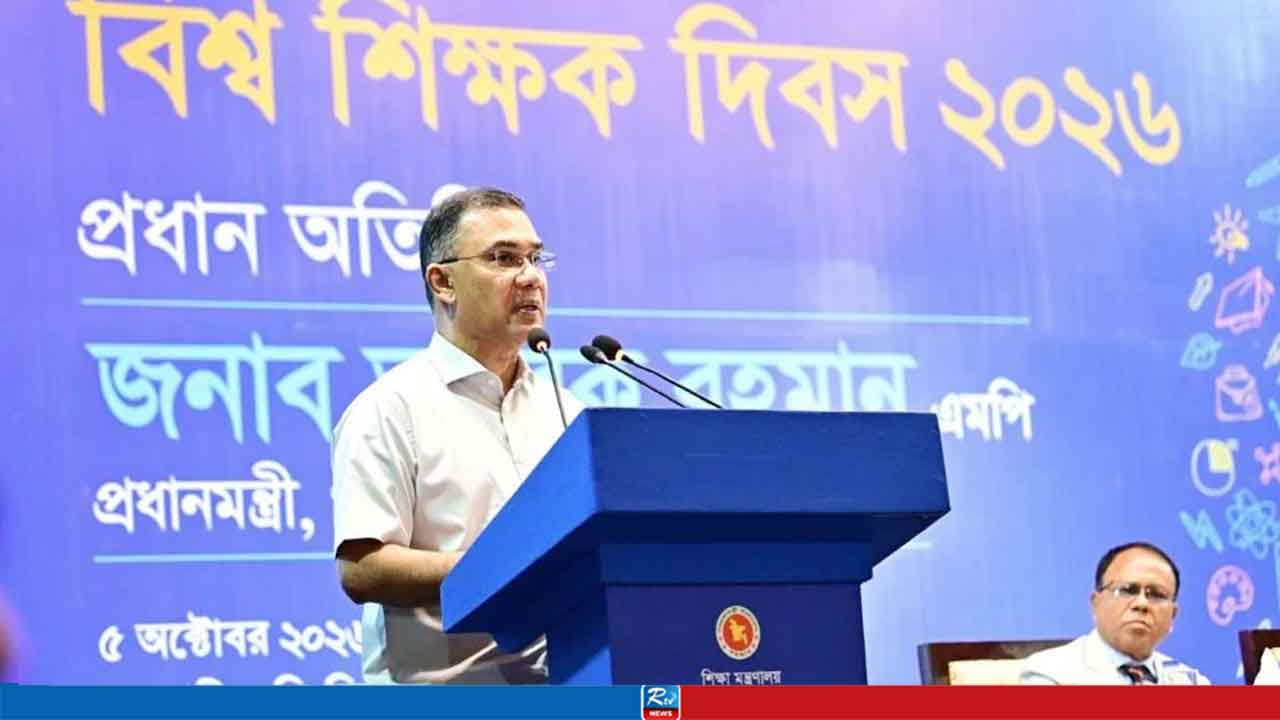
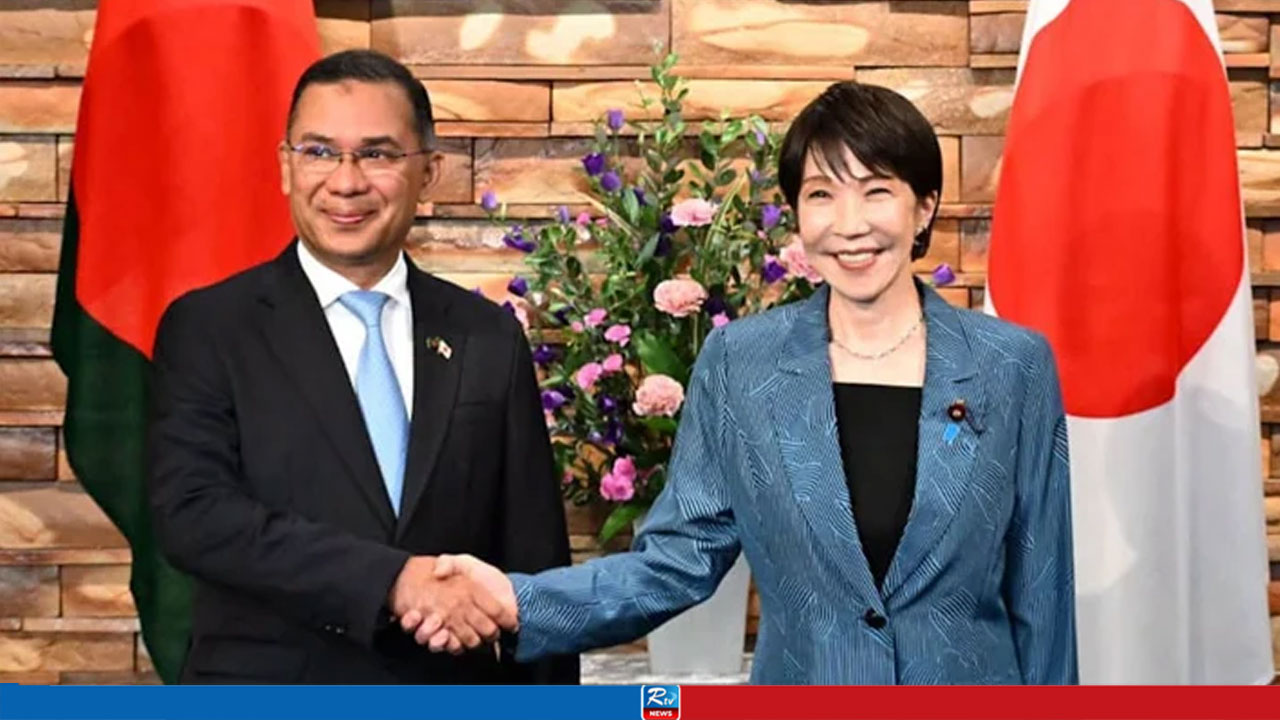
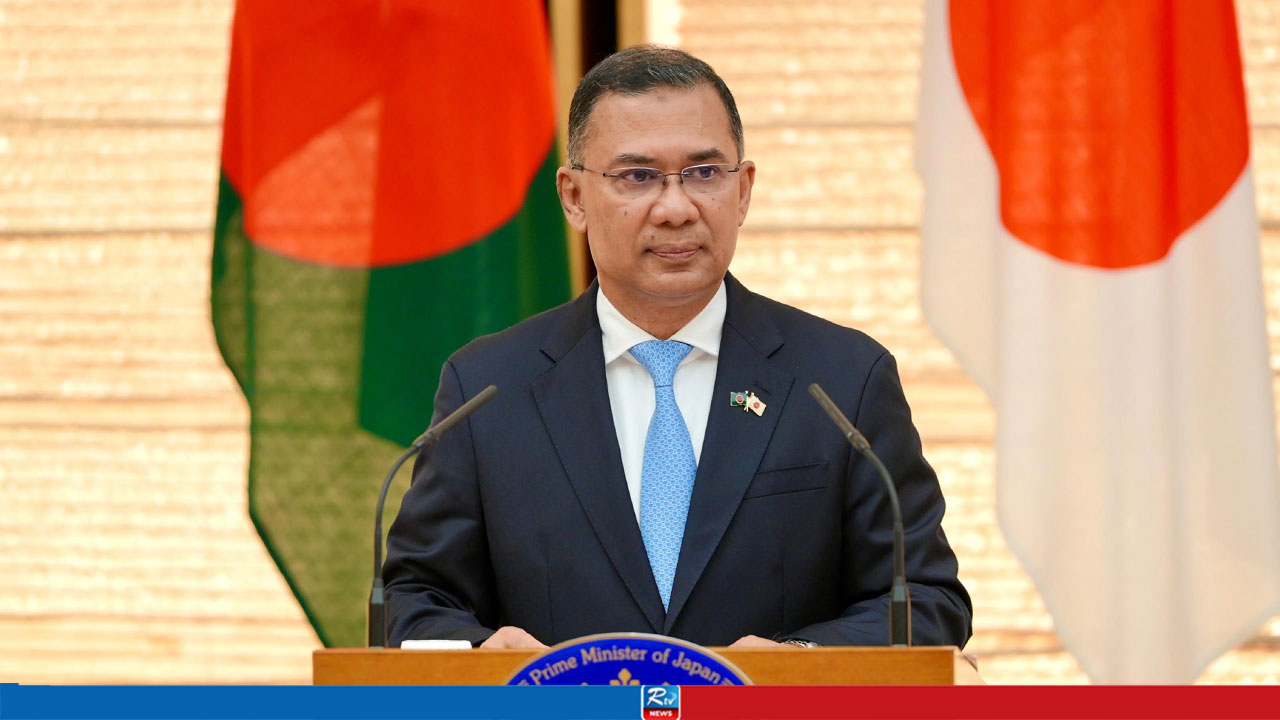
Prime Minister Tarique Rahman compared children to the sturdy structural pillars of a residence on Tuesday, emphasizing that Bangladesh’s global foundation will grow substantially stronger if every child receives the proper environment to cultivate their inherent capabilities.
Addressing an event on the academy premises in the capital marking Children’s Rights Day 2026 and the 50th anniversary of Bangladesh Shishu Academy, he remarked, “Children are the pillars of their families. When children are given the right environment and opportunities to grow and flourish, families also become stronger.”
He further noted that providing equal opportunities across the nation will fortify the entire country, stating, “If we can ensure opportunities for every child across Bangladesh to develop their full potential, the foundation of our country will become much stronger, enabling Bangladesh to emerge as a strong country in the competitive world.”
Highlighting his administration's vision for youth development, he stressed that the strength of today’s youth directly shapes the nation’s future trajectory.
“We want to develop our children in a way that makes their future strong. A strong future for today’s children means a strong future for the nation. And a strong future for the nation means we will be able to build a strong and powerful Bangladesh,” the Prime Minister asserted.
He encouraged young people to look beyond traditional academics and engage in sports, Quran recitation, music, and various fine arts, advising, “You have to become good human beings.”
Additionally, he urged children to show empathy toward nature and living creatures, observing that “People should show kindness not only to other people but also to nature and all of its creations.”
He instructed them to protect neighborhood trees and treat birds and animals as national treasures, pointing out that human survival hinges on environmental preservation.
“If we are kind to nature, it will also be kind to us,” he reflected, adding that environmental degradation directly affects the younger generation: “If I, as a child today, am harmed, that means millions of children in Bangladesh are harmed.”
Underscoring his administration's goal to foster a compassionate Bangladesh, the Prime Minister expressed optimism that today's youth would develop the empathy previous generations lacked.
He also urged parents and guardians to instill environmental and social stewardship in their children, stating, “If we all try to develop this feeling and awareness among our children, I firmly believe that, InshaAllah, one day we will be able to build a humane Bangladesh.”
Furthermore, he asked children to champion civic cleanliness by politely reminding adults to avoid indiscriminate littering and to utilize designated waste bins.
“If we can build a clean and beautiful environment today, your children will grow up in a healthy environment, both physically and mentally,” he noted.
Outlining policy initiatives to expand arts, culture, and athletic infrastructure in schools, the Prime Minister explained that the government is intervening to ensure all students can pursue extracurricular interests regardless of financial background.
“We are trying to create these facilities at the school level — whether it is art, culture, sports or music — so that every child can choose according to their preference,” he said.
Referencing a recently organized primary school football tournament involving approximately 2.2 million participants split equally between boys and girls, he remarked, “If we can continue this, I firmly believe that one day a Pele or internationally recognised players will emerge from among our children.”
He recalled the historic “Notun Kuri” talent program introduced by Shaheed President Ziaur Rahman, noting its modern revival along with new national sports initiatives.
“We want our children to have good exposure to art, culture and music, while also becoming capable in sports,” he affirmed, outlining plans to introduce music, instrumental training, and sports facilities starting at the primary and secondary education levels.
Additionally, the Prime Minister announced upcoming provisions allowing students to learn a third language alongside Bangla and English—offering options such as Arabic, Mandarin, and German to enhance global competitiveness.
“Learning a third foreign language will help them stand firmly in life and compete with people from other countries,” he explained, while reminding youth, “Dear little friends, you have many responsibilities. You have to be humane.”
Sharing personal nostalgia, PM Tarique Rahman recounted visiting the Bangladesh Shishu Academy as a child with his parents, Shaheed President Ziaur Rahman and Begum Khaleda Zia, and his younger brother shortly after its founding around 1976 or 1977.
“I was also a child when I came to this Shishu Academy. I came here as a child guest,” he recalled, noting that he also contributed stories and rhymes to the academy’s children’s magazine, Shishu.
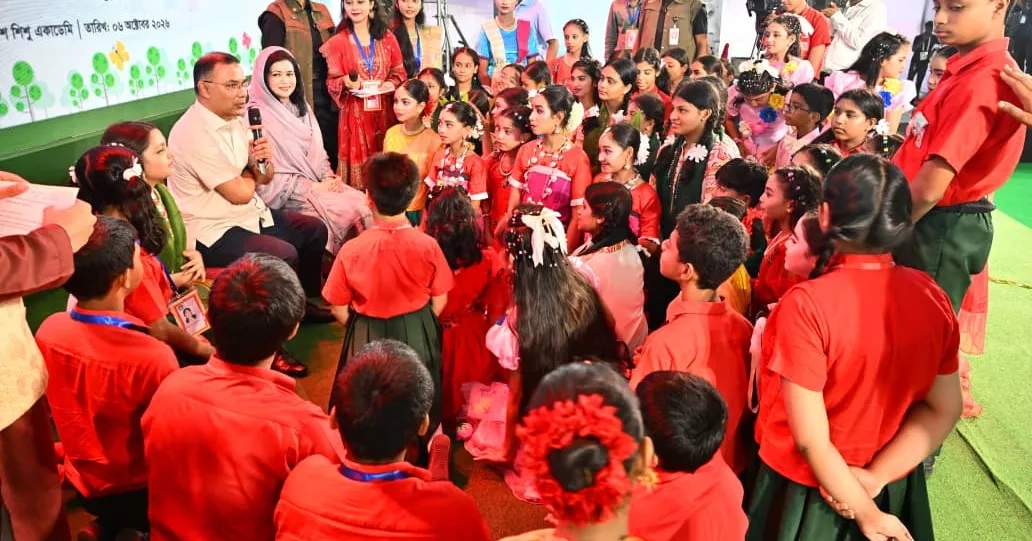
Earlier in the day, around 150 children welcomed the Prime Minister and his wife, Dr. Zubaida Rahman, upon their arrival at the academy. Chaired by Women and Children Affairs Minister Prof. Dr. A.Z.M. Zahid Hossain, the function was held under the theme “Let every child have a secure future.”
The Prime Minister enjoyed cultural performances, interacted with young artists, joined a group photograph session, and answered questions from children at the venue as well as participants joining via nationwide videoconference.
During the event, children presented him with a commemorative gift, and he officially unveiled the special souvenir publication titled Shaishab.
Following the main proceedings, Tarique Rahman toured a children’s painting exhibition and photo gallery at the Children’s Museum building, where he inaugurated a solar panel system and an electrical substation located on the ground floor.



 Live TV
 RTV Plus