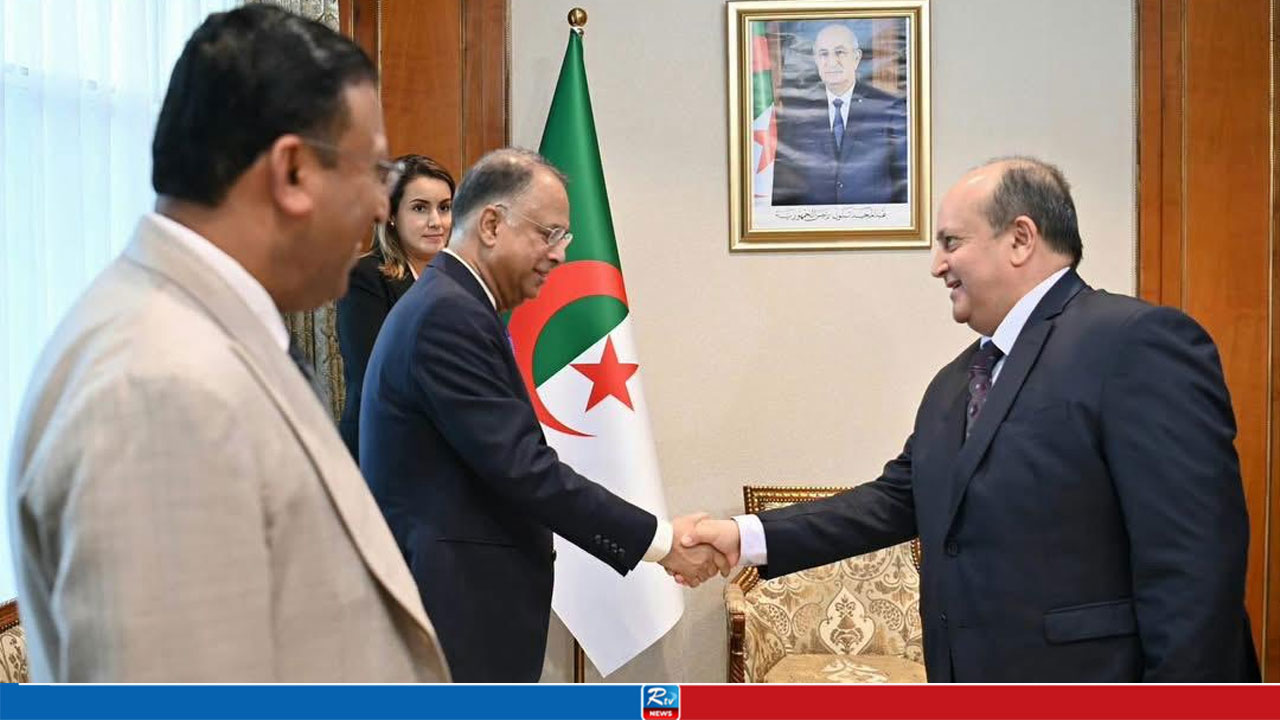
Kazi Enayet Ullah proposes 12 European-standard skill development centres in Bangladesh; Dhaka seeks expanded legal labour migration opportunities to EU countries.
Bangladesh should urgently develop a skilled, internationally trained and multilingual workforce to meet the growing demand for workers in European Union (EU) member states, particularly countries facing demographic challenges and labour shortages, Kazi Enayet Ullah, president of the France–Bangladesh Economic Chamber and secretary-general of the All European Bangladesh Association (AEBA), has said.
Speaking to this correspondent, the prominent Bangladeshi-French businessman stressed the need for a comprehensive national policy to prepare Bangladeshi workers for European labour markets through demand-driven training, internationally recognised qualifications and language proficiency.
According to Kazi Enayet Ullah, Europe offers significant employment opportunities across a range of sectors, including construction, healthcare, hospitality, agriculture, logistics and information technology. He cited estimates indicating an annual European labour demand of approximately 12 million workers, including around five million in Germany and three million in France.
He said countries such as India, China, Vietnam and several African nations were better positioned to benefit from international labour demand, while Bangladesh continued to face challenges in capitalising on these opportunities because of inadequate policy coordination and a shortage of training facilities aligned with international occupational standards.
“Bangladesh should immediately begin developing a highly skilled workforce capable of meeting European labour-market requirements through appropriate policy decisions and coordinated initiatives,” he said.
12 European-standard training centres proposed
Kazi Enayet Ullah proposed establishing 12 strategically located European-standard Skill Development Centres in major cities across Bangladesh during the initial phase. Following a successful pilot programme, the initiative could gradually be expanded to all 64 districts.
The proposed centres would operate under a public-private partnership (PPP) framework and provide training tailored to the actual requirements of EU member states and their respective labour markets.
He said the centres should be equipped with modern European machinery, tools, equipment and laboratories, while qualified European instructors and internationally benchmarked curricula would help ensure high-quality practical training.
The programmes would focus on occupations where employers face shortages or anticipate substantial recruitment needs. These would include construction and civil engineering, building trades, plumbing, electrical installation, welding, heating, ventilation and air-conditioning (HVAC), steel reinforcement work, nursing, healthcare, elderly care, rehabilitation and social support services.
Other priority sectors would include hospitality and tourism, housekeeping, transport and logistics, warehouse operations, agriculture, food processing, information technology, green technology and renewable energy.
He emphasised that training programmes should be developed in consultation with European employers, vocational institutions and relevant authorities to ensure that graduates possess the practical competencies required for employment.
Language training and international recognition
Language proficiency, he said, would be a critical component of the proposed initiative. Depending on the destination country and occupation, trainees should receive structured instruction in English, French, German, Spanish or Italian, with appropriate proficiency targets, such as A2 or B1 under the Common European Framework of Reference for Languages (CEFR).
He also called for vocational qualifications to be aligned with relevant European and national occupational standards, with the aim of improving their recognition by employers and competent authorities across Europe.
However, he noted that recognition of qualifications, professional licensing and access to regulated occupations would need to be addressed separately under the applicable rules of each destination country.
Kazi Enayet Ullah said Bangladesh could establish a more effective and sustainable labour-export system by bringing the government, private training providers, European employers and recruitment agencies under a coordinated policy framework.
He added that such an initiative would help Bangladeshi workers compete for skilled jobs, improve their earning potential and reduce their vulnerability to exploitation through unregulated recruitment channels.
Bangladesh seeks expanded legal migration pathways
The proposal comes as Bangladesh and the European Union seek to strengthen cooperation on safe, orderly and regular migration while creating more employment opportunities for Bangladeshi skilled workers and professionals.
State Minister for Foreign Affairs Shama Obaed Islam recently urged the EU and its member states to establish practical, demand-driven and results-oriented labour mobility pathways for Bangladeshi workers.
During a meeting with EU Commissioner for Migration and Home Affairs Magnus Brunner at the Ministry of Foreign Affairs, the two sides discussed migration management, the return of irregular migrants, combating human trafficking and migrant smuggling, and expanding access to European labour markets.
Shama highlighted Bangladesh’s National Action Plan (NAP) 2026–2030 for implementing the objectives of the Global Compact for Safe, Orderly and Regular Migration. She also emphasised the importance of addressing the root causes of irregular migration while creating viable opportunities for legal employment abroad.
The EU commissioner presented the bloc’s Eastern Corridor Initiative, which aims to address irregular migration through closer cooperation with countries of origin, transit countries and other relevant stakeholders.
Bangladesh expressed its willingness to cooperate with the initiative and outlined measures to prevent document fraud and dismantle criminal networks involved in facilitating irregular migration.
Both sides reaffirmed the importance of coordinated action and agreed to deepen cooperation on migration-related issues, trade and investment.
EU delegation discusses skilled migration with government
In a separate development, a high-level EU delegation led by Commissioner Magnus Brunner met Mahdi Amin, adviser to the prime minister, at the Prime Minister’s Office in Tejgaon to discuss ways to facilitate safe, regular and legal migration from Bangladesh to European countries.
The discussions focused on expanding employment opportunities for skilled Bangladeshi workers, preventing human trafficking and irregular migration, and improving transparency in visa-related procedures.
The two sides also discussed the possible use of QR codes on educational certificates, bank statements and other financial documents to reduce forgery and improve the verification of applicants’ credentials.
Other issues included facilitating legal remittance transfers, expanding opportunities for Bangladeshi students to pursue higher education in Europe, strengthening people-to-people relations and turning brain drain into brain circulation.
Brunner said approximately 500,000 Bangladeshis were legally residing in EU member states and expressed the EU’s readiness to support efforts to promote legal migration while combating irregular migration and human trafficking.
Mahdi Amin, who is also spokesperson for the Prime Minister’s Office, said the government was committed to ensuring safe, regular and legal migration. He briefed the delegation on the government’s policy reforms and development initiatives, including the Family Card, Farmer Card and Expatriate Card.
The delegation also included senior EU officials, while EU Ambassador to Bangladesh Michael Miller and other representatives of the EU Delegation were present at the meeting.
Stricter migration policies raise concerns
Commenting on the political and social situation in France, Kazi Enayet Ullah said rising energy prices, the increasing cost of living and pressure on social benefits were among the factors contributing to public discontent.
He cautioned that economic uncertainty could affect Bangladesh’s exports to France and other European markets if consumers reduced spending on non-essential goods.
He also expressed concern that tighter migration policies and the growing influence of far-right political movements in several European countries could make conditions more difficult for undocumented migrants.
According to him, the economic consequences of the Russia–Ukraine war and the resulting pressures on public finances had contributed to debates over immigration, social protection and the allocation of public resources.
He said these developments made it increasingly important for Bangladesh to promote regulated migration and ensure that workers travelled through legitimate recruitment and visa procedures.
Kazi Enayet Ullah also called for a nationwide awareness campaign against irregular migration, warning prospective migrants about fraudulent recruiters, human trafficking and the risks of attempting to enter Europe through unauthorised channels.
He urged the government to strengthen cooperation with European authorities and expand access to verified information about employment opportunities, recruitment procedures, work permits and workers’ rights.
Changing European migration framework
Kazi Enayet Ullah noted that the EU and its member states were moving towards a more coordinated approach to migration and asylum, with stricter measures aimed at managing irregular arrivals and accelerating asylum procedures.
He referred to changes in the European migration framework, including proposals and legislation concerning the processing of asylum claims, cooperation with third countries and the return of people whose applications are rejected.
These developments, he argued, made it increasingly important for Bangladesh to distinguish between asylum procedures and legal labour migration, and to focus on creating transparent, employer-driven employment pathways for qualified workers.
The precise scope, implementation dates and legal effects of individual EU migration measures should be verified against the relevant legislation and official EU announcements.
A strategic opportunity for Bangladesh
Kazi Enayet Ullah, who has been living in France since 1978 and has established business interests there, said he had recently visited Bangladesh and submitted a memorandum to President Mirza Fakhrul Islam Alamgir outlining the potential for skilled Bangladeshi manpower in European countries.
He estimated that approximately 50,000 Bangladeshis were living in France, although the number of French passport holders of Bangladeshi origin would require verification.
He said Bangladesh had a significant opportunity to strengthen its position in European labour markets if it invested in internationally benchmarked vocational education, language training and transparent recruitment systems.
With demand for qualified workers in several European sectors and renewed diplomatic engagement between Bangladesh and the EU, he argued that the country should move quickly to establish a coordinated strategy linking skills development with actual employment opportunities.
The proposed European-standard Skill Development Centres, he said, could serve as a foundation for that strategy, helping Bangladesh develop a competitive workforce while promoting safe migration, stronger economic ties and mutually beneficial cooperation with European countries.





 Live TV
 RTV Plus