
Prime Minister Tarique Rahman returned home early Friday, wrapping up his four-day official tour of Japan aimed at reinforcing bilateral relations, attracting investment, and expanding trade and economic cooperation between the two nations.
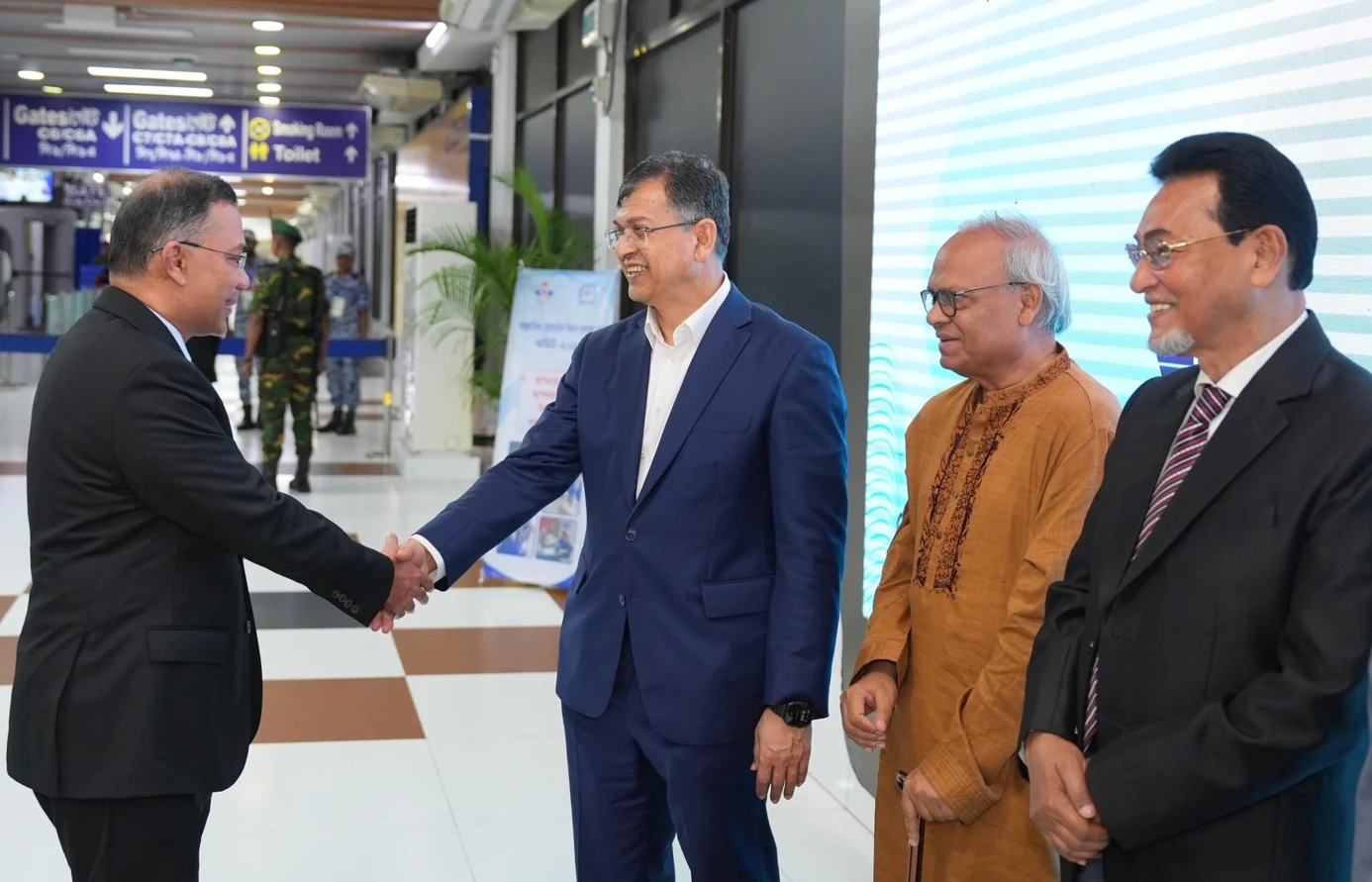
“A Biman Bangladesh Airlines flight carrying the Prime Minister, his wife Dr Zubaida Rahman and members of his entourage landed at Hazrat Shahjalal International Airport in Dhaka at 2:48 am,” said Prime Minister’s Deputy Press Secretary Shahadat Shadhin.
Earlier, the flight departed Narita International Airport in Tokyo at 10:55 pm local time on October 29, he added.
At the invitation of Japanese Prime Minister Sanae Takaichi, PM Tarique Rahman's visit featured high-level bilateral discussions, the execution of cooperation agreements, dialogues with Japanese business leaders on investment opportunities in Bangladesh and tours of major industrial and energy facilities.
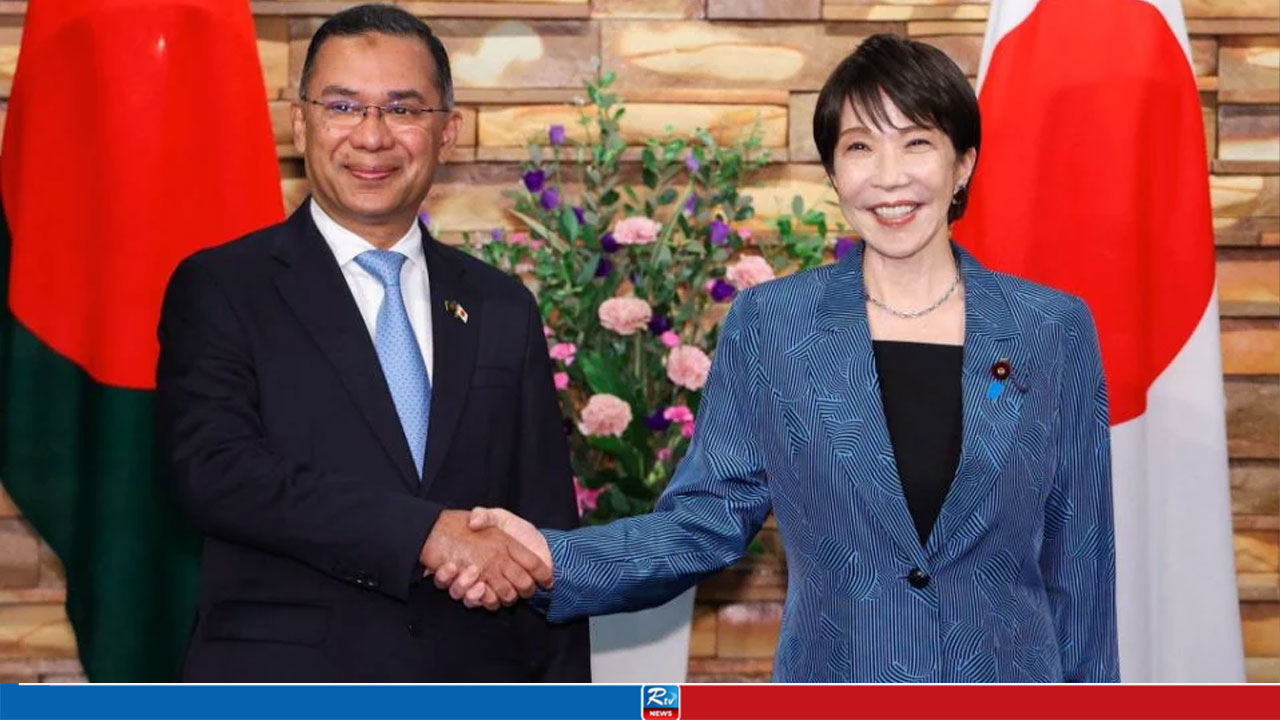
During the bilateral summit at the Japanese Prime Minister's Office on October 27, PM Tarique Rahman and Japanese PM Takaichi deliberated on fortifying the longstanding partnership between the two countries, with particular emphasis on trade, investment, energy security, infrastructure, technology, space research, and regional and international affairs.
The two leaders also discussed a proposed private investment of one trillion Japanese yen (USD 6.3 billion) in Bangladesh's energy, infrastructure, and information and communication technology (ICT) sectors.
They discussed dispatching a Japanese delegation to Bangladesh to expedite progress on the investment framework.
Bangladesh secured commitments for two yen-loan projects valued at a combined 46.56 billion yen, equivalent to approximately USD 295.5 million, and signed six bilateral cooperation instruments during the tour.
The instruments included a grant agreement of up to 2.12 billion yen (USD 13.44 million) for a patrol vessel to bolster Bangladesh's coastal security capabilities.
The two nations also signed memorandums of cooperation on enhancing the business environment, agriculture, the Employment for Skill Development Programme and fisheries and livestock, alongside a letter of intent on climate change cooperation.
The two loan projects will support the enhancement of the investment climate in Bangladesh and the second phase of the Upazila Governance and Development Project.
Beyond the government-level agreements, 17 memorandums of understanding (MoUs) were signed between private-sector entities at the Japan External Trade Organization (JETRO), according to State Minister for Foreign Affairs Humaiun Kobir.
On October 28, the prime minister addressed the Bangladesh-Japan Economic Forum Dialogue at JETRO headquarters in Tokyo, inviting Japanese enterprises to invest in five priority areas: automotive manufacturing, energy, technology and space, high-speed rail and logistics, and agro-processing.
He pledged government support and structural reforms to improve the business climate.
During the visit, Tarique Rahman also met Japanese political leaders, development partners, and corporate executives, including former prime minister Taro Aso, Japan International Cooperation Agency (JICA) President Dr Akihiko Tanaka, Japan Bank for International Cooperation (JBIC) Governor Kazuhiko Amakawa, and JETRO President Susumu Kataoka.
In meetings with representatives of major Japanese firms, including apparel giant Uniqlo, Mitsui & Co., Sumitomo Corporation, and JERA, he explored opportunities to expand investment, set up manufacturing plants, generate employment, facilitate technology transfer, and build skills.
The prime minister visited JERA's liquefied natural gas (LNG) terminal and power plant in Futtsu and the Nittsu Logistics Hub in Ichikawa on October 27 to observe Japan's energy and logistics infrastructure.
On Thursday, he travelled to Nagoya and visited Toyota Motor Corporation's Motomachi factory and the Toyota Commemorative Museum of Industry and Technology, where he observed Japan's automotive manufacturing capabilities.
The visit comes as Bangladesh and Japan seek to broaden economic engagement following the signing of their first-ever Economic Partnership Agreement (EPA) in February 2026, establishing a new framework for strengthening trade and commercial ties.
Japan has long been one of Bangladesh's primary development partners, supporting key infrastructure projects, including the Dhaka metro rail, the third terminal of Hazrat Shahjalal International Airport, and the Matarbari deep-sea port.







 Live TV
 RTV Plus
