Dhaka 08 October, 2026

CA to BBC: EC to Decide on AL's Election Participation

Rtv News

Publish : 22 Jun 2025, 09:16 AM
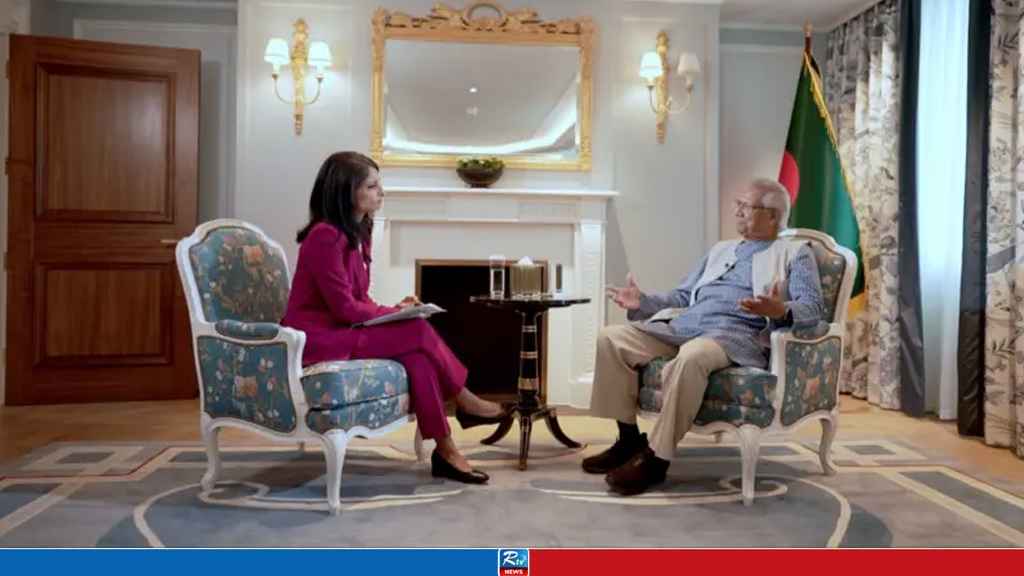
Professor Muhammad Yunus speaks to the BBC. Photo: Collected

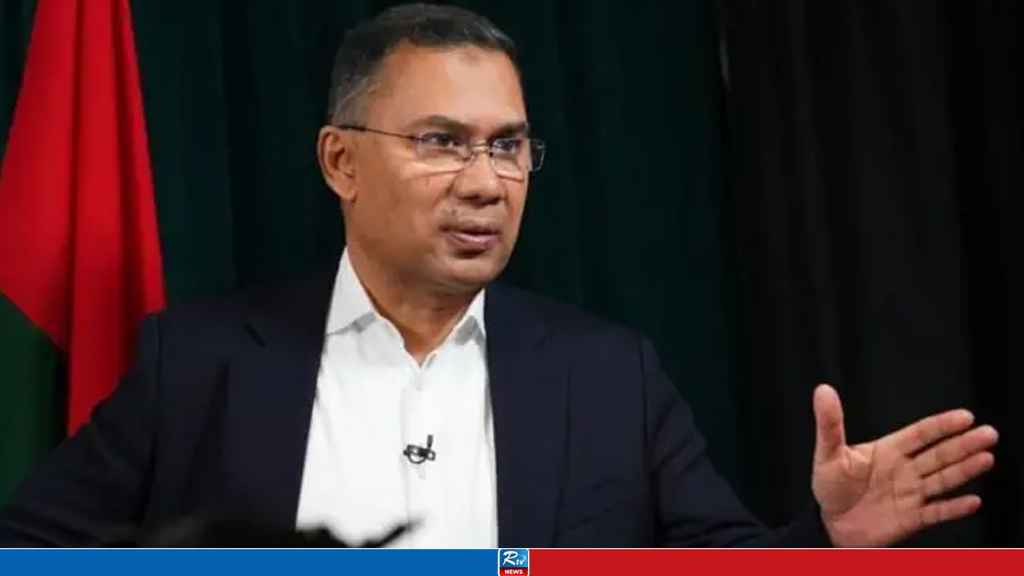
Professor Muhammad Yunus, the Chief Adviser of Bangladesh's interim government, discussed a range of issues including politics, reforms, elections, and the Rohingya crisis during an interview with the BBC while on a visit to the United Kingdom.

Professor Yunus, who received the British King Charles III Harmony Award on June 12 during his UK tour, spoke to BBC journalist Rajini Vaidyanathan prior to the award ceremony.

The interview touched upon critical aspects of Bangladesh's political landscape:

On Inclusivity of Elections and Awami League's Participation
The BBC's Rajini Vaidyanathan questioned Professor Yunus about the interim government's commitment to an inclusive and participatory election, particularly amidst criticisms that the Awami League, the party of former Prime Minister Sheikh Hasina, is being prevented from participating.

Professor Yunus reiterated, "We have explained this many times, and I will say it again. Firstly, whether an election will be inclusive even without the Awami League was very well explained recently by the UN Resident Coordinator in Dhaka. He said that 'inclusive' means the participation of all people, not any specific party. As long as people can vote, it is inclusive."

When pressed on the significant public support for the Awami League, Professor Yunus stated, "Let them decide if they want to vote." He clarified that while voters are free to cast their ballots, they cannot vote for an Awami League candidate if the party is not allowed to participate.

He then made a crucial clarification: "We have not banned the Awami League yet." He added, "Let me make one thing clear – the Awami League has not been banned. Their activities have been temporarily suspended, which includes elections. This is temporary. Whether they will be in the elections depends on the decision of the Election Commission." When asked if this meant there was a possibility of their presence on the ballot, he again deferred to the Election Commission's decision.

On Sheikh Hasina and Legal Proceedings
The interview then shifted to the whereabouts of former Prime Minister Sheikh Hasina, who has reportedly sought refuge in India. Vaidyanathan asked if the interim government intends to bring her back to face the allegations against her.

Professor Yunus confirmed, "The trial has already begun; it is an ongoing process. The trial will proceed entirely through legal procedures. We want her to face justice. We will use international methods to bring her back – whatever means are available to bring an accused person back to the country, we will do that. It is a completely legal process."

When questioned about how she would be brought back, given his frequent meetings with Indian Prime Minister Modi, Professor Yunus responded, "By using the international system. We do not have the power to apprehend her."

The BBC journalist then asked if Professor Yunus was annoyed with Modi for allowing Sheikh Hasina and her associates, who face charges including crimes against humanity and corruption, to remain in India. Professor Yunus replied, "Her presence in India is not much of a problem for Bangladeshis. The problem is her voice; she regularly addresses the people of Bangladesh and disseminates her messages through the media." When asked if he believed India should do more to prevent these speeches, he stated, "That is what you are saying."

On Allegations of Suppression and Rohingya Crisis
Vaidyanathan highlighted concerns raised by some regarding the arrest of hundreds of Awami League supporters or sympathizers since the interim government took charge, asking if this constituted a similar suppression of critics.

Professor Yunus strongly refuted this comparison: "It would be shameful to say that. If you compare the interim government with the Awami League government, then you must understand that you do not understand Bangladesh, you do not understand the reality of Bangladesh. You do not understand what the Awami League is, and what the interim government is." When pressed that these were not his words but those of others, he insisted, "Okay, someone said it, but you have come to Bangladesh. So I am telling you this is absolutely not true."

The discussion concluded with the Rohingya refugee crisis. The BBC journalist, having visited the camps in Cox's Bazar, described the dire conditions, lack of freedom, food struggles, reduced aid, and poor education for children. She questioned why the interim government was not doing more to help them.

Professor Yunus clarified the government's stance: "We? We are trying to solve our internal problems. This is the responsibility of the international community." He emphasized his personal commitment as a Nobel laureate, stating, "I am doing my utmost. I visited the Rohingya camps with the UN Secretary-General, met with over a hundred thousand Rohingyas, discussed what should be done, and appealed to the world for assistance in their return. In that case, repatriation is the only solution. Everyone is now only busy with food and other assistance, but no one is talking about how to send them back to their own country."

When the BBC pointed out that repatriation might not be realistic given the refugees' fear of Myanmar's military government and asked why Bangladesh was not trying to integrate the Rohingyas, Professor Yunus responded, "That will not be a solution." He elaborated, "People living around the camps are hostile towards the Rohingyas because they see that international aid is only coming for the Rohingyas, and Rohingyas seem to be living easily, whereas outsiders have to work hard."

He concluded by reiterating Bangladesh's policy: "Bangladesh's policy is not to allow them to settle permanently outside the camps. We have many problems of our own. We cannot bear the burden of another new population." He acknowledged their suffering but stressed that Bangladesh had opened its borders and accepted them, with the understanding that the international community would take care of them and even resettle them in other countries.

Follow google news channel to get RTV news Google News
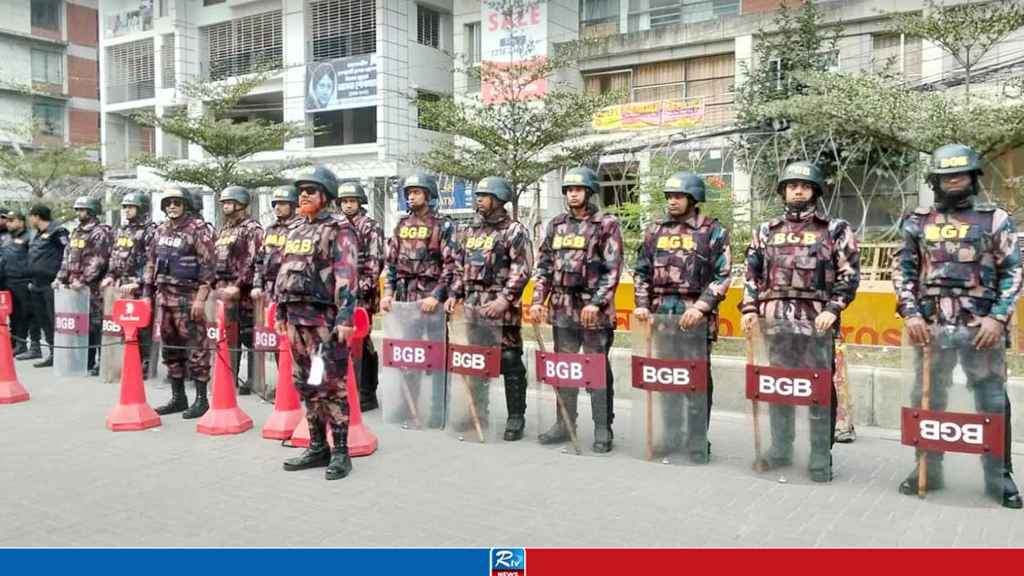
27 Platoons of BGB Deployed for Khaleda Zia’s Funeral and Burial
The government has deployed 27 platoons of the Border Guard Bangladesh (BGB) across the capital to ensure foolproof security during the funeral and burial of former Prime Minister and BNP Chairperson Begum Khaleda Zia. The funeral prayer (Janaza) is scheduled to take place after the Zuhr prayer today, Wednesday (December 31), at Manik Mia Avenue. Read More Khaleda Zia’s Funeral Today at 2 PM The Chief Adviser’s Office confirmed late Tuesday night that all logistical preparations for the massive gathering have been completed. Strict Security Measures To maintain law and order and ensure the smooth execution of the services, BGB personnel have been stationed at key points. BGB Public Relations Officer Md. Shariful Islam confirmed the deployment, noting that the 27 platoons are concentrated around: Evercare Hospital The National Parliament (Jatiya Sangsad Bhaban) area Zia Uddan In addition to the BGB, other law enforcement agencies are on high alert to manage the hundreds of thousands of mourners expected to attend the historic leader's final rites. Following the Janaza at Manik Mia Avenue, Begum Zia will be laid to rest with state honors at Zia Uddan in Sher-e-Bangla Nagar.
27 Platoons of BGB Deployed for Khaleda Zia’s Funeral and Burial
Special Assistant to Chief Adviser Prof. Md. Sayedur Rahman Resigns
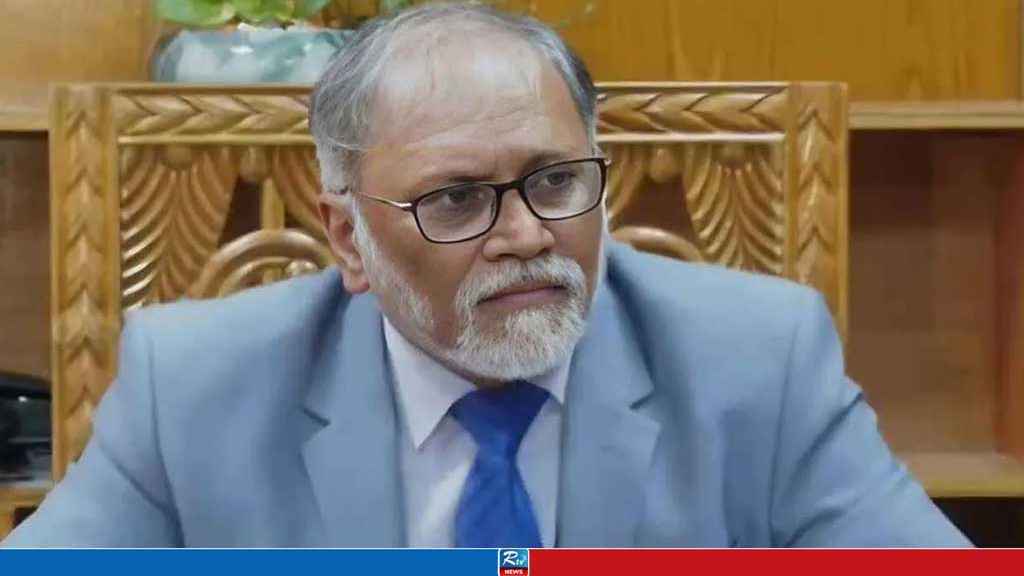
Professor Dr. Md. Sayedur Rahman, the Special Assistant to the Ministry of Health and Family Welfare (holding the rank of State Minister), has resigned from his post. He was one of three special assistants appointed by Chief Adviser Professor Muhammad Yunus. The President accepted his resignation letter on Tuesday night (December 30), according to a statement from the Chief Adviser's Press Wing. A notification issued by the Cabinet Division confirmed the development, stating that the President has accepted the resignation of Professor Dr. Md. Sayedur Rahman, who was entrusted with executive powers as a Special Assistant to the Ministry of Health and Family Welfare of the interim government. Context of Resignations The interim government had previously appointed three special assistants with the status of State Ministers to oversee key ministries: Prof. M. Aminul Islam: Appointed to the Ministry of Education; he resigned several months ago. Khoda Baksh Chowdhury: Former Inspector General of Police (IGP), appointed to the Ministry of Home Affairs; he resigned on December 25. Prof. Dr. Md. Sayedur Rahman: Vice-Chancellor of BMU, appointed to the Ministry of Health; he has now become the latest to step down. With Prof. Sayedur Rahman’s departure, all three initial special assistants appointed to these executive roles have now resigned from their positions.
Special Assistant to Chief Adviser Prof. Md. Sayedur Rahman Resigns
3-Day State Mourning for Khaleda Zia, Public Holiday Today
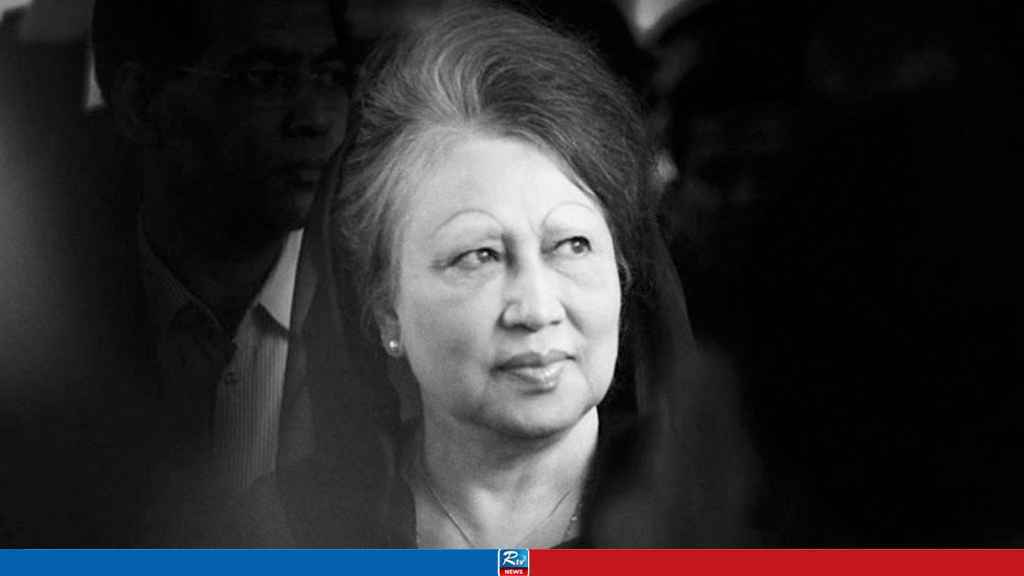
The government has declared three days of state mourning from Wednesday to Friday (December 31 to January 2) following the passing of BNP Chairperson and former Prime Minister Begum Khaleda Zia. Additionally, a nationwide public holiday has been announced for today. Cabinet Secretary Sheikh Abdur Rashid shared the information with journalists at the Secretariat on Tuesday (December 30). A formal notification was subsequently issued by the Cabinet Division. State Mourning and Honors The gazette notification stated that the interim government is deeply saddened by the death of the "uncompromising leader" of the movement to restore democracy. Read More Khaleda Zia’s Funeral Today at 2 PM To honor the memory of the three-time Prime Minister, the government has decided on the following: Duration: State mourning will be observed from Wednesday (December 31) through Friday (January 2, 2026). Flag Protocol: The national flag will be flown at half-mast at all government, semi-government, autonomous, and educational institutions, as well as private buildings and Bangladesh missions abroad. Special Prayers: Special prayers (Dua) for the departed soul will be held at all mosques across Bangladesh on Friday. Other religious institutions will also organize special prayers for her soul. Public Holiday and Exemptions In a separate notification from the Ministry of Public Administration, the government declared a general holiday today (Wednesday, December 31) by executive order. While all offices and private institutions remain closed, the following emergency services are exempt from the holiday: Electricity, water, gas, and fuel supplies. Fire services and port activities. Waste management and cleaning services. Telephone, internet, and postal services. Hospitals, emergency medical services, and vehicles carrying medicine or medical equipment. The notification added that Bangladesh Bank and the Supreme Court would issue specific instructions regarding the operations of banks and courts, respectively. Begum Khaleda Zia passed away at the age of 80 on Tuesday morning while undergoing treatment at Evercare Hospital in Dhaka.
3-Day State Mourning for Khaleda Zia, Public Holiday Today
Jaishankar to Attend Khaleda Zia’s Funeral
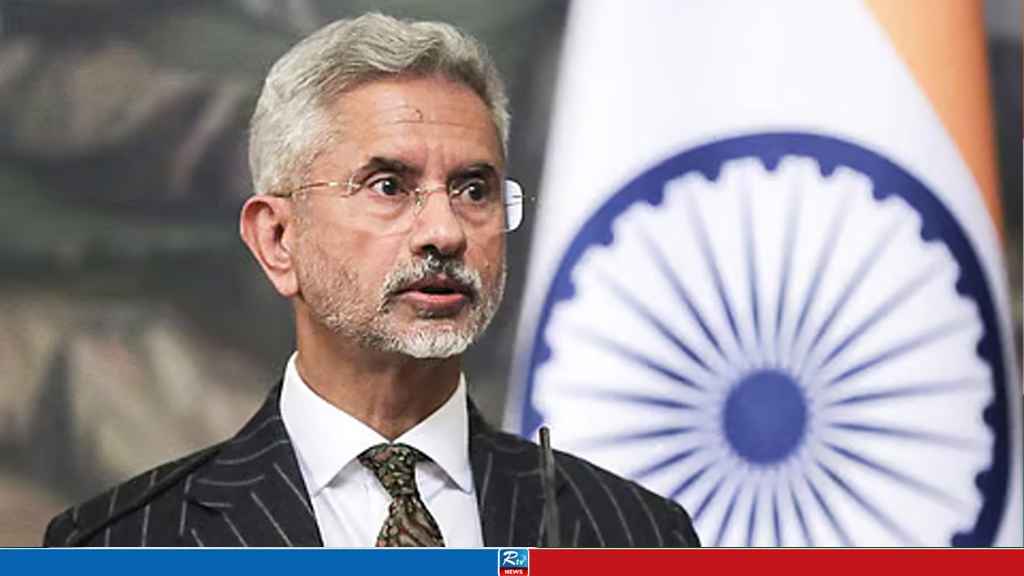
Indian External Affairs Minister, Dr S Jaishankar is to arrive in Dhaka tomorrow to attend the funeral of former prime minister and BNP chairperson Begum Khaleda Zia. “External Affairs Minister, Dr. S. Jaishankar will represent the Government and people of India at the funeral of Begum Khaleda Zia, former Prime Minister of Bangladesh and Chairperson of the Bangladesh Nationalist Party,” the Indian high commission in Dhaka said in a statement this evening. Begum Zia’s Janaza would be held after Zohr prayers while the high commission statement said Jaishankar would accordingly visit Dhaka on December 31. Indian Prime Minister Narendra Modi earlier in the morning expressed deep sorrow at Begum Zia’s demise, recalling her contributions to Bangladesh and bilateral relations. “Our sincerest condolences to her family and all the people of Bangladesh. May the Almighty grant her family the fortitude to bear this tragic loss,” he said. The Indian premier recalled her political legacy saying “as the first woman Prime Minister of Bangladesh, her important contributions towards the development of Bangladesh, as well as India-Bangladesh relations, will always be remembered”. “I recall my warm meeting with her in Dhaka in 2015. We hope that her vision and legacy will continue to guide our partnership,” Modi said.
Jaishankar to Attend Khaleda Zia’s Funeral
Chinese Ambassador Sends Condolences to Tarique Rahman Over Khaleda Zia’s Passin
Yao Wen, the Chinese Ambassador to Bangladesh, has expressed profound grief and condolences to BNP Acting Chairman Tarique Rahman following the death of former Prime Minister and BNP Chairperson Begum Khaleda Zia. The ambassador conveyed his sympathies in a formal letter sent to Tarique Rahman on Tuesday (December 30). The Chinese Embassy in Dhaka later shared the contents of the letter on their official Facebook page. In his message to Tarique Rahman, Ambassador Yao Wen wrote: "It is with deep sorrow and a heavy heart that I extend my profound condolences on the passing of your beloved mother, Khaleda Zia, the Chairperson of the BNP and former Prime Minister of Bangladesh." The ambassador’s gesture follows official diplomatic protocols, as Chinese Premier Li Qiang and Foreign Minister Wang Yi also sent separate condolence messages to Chief Adviser Professor Muhammad Yunus and Foreign Affairs Adviser Md. Touhid Hossain, respectively. A "Steadfast Pioneer" of Democracy Describing her legacy, Yao Wen noted that Khaleda Zia served as a long-standing symbol of democratic aspirations in Bangladesh and was a "steadfast pioneer" of the nation’s independence. "Her leadership played a pivotal role in shaping the country’s history, and her resilience inspired the people," the letter stated. The Ambassador further emphasized her role in international relations, calling her a "dear friend of the Chinese people" whose contributions left a lasting impact on bilateral ties. He noted that the people of China would remember her with "deep gratitude and the highest respect." Future Cooperation Looking forward, Ambassador Yao Wen assured the BNP Acting Chairman that the Communist Party of China (CPC) remains committed to maintaining its long-standing friendly relations with the BNP under Tarique Rahman's leadership. The letter concluded with a wish for the peace of Khaleda Zia’s soul, stating, "May her contributions to Bangladesh and the China-Bangladesh relationship be remembered forever."
Chinese Ambassador Sends Condolences to Tarique Rahman Over Khaleda Zia’s Passin
Read More
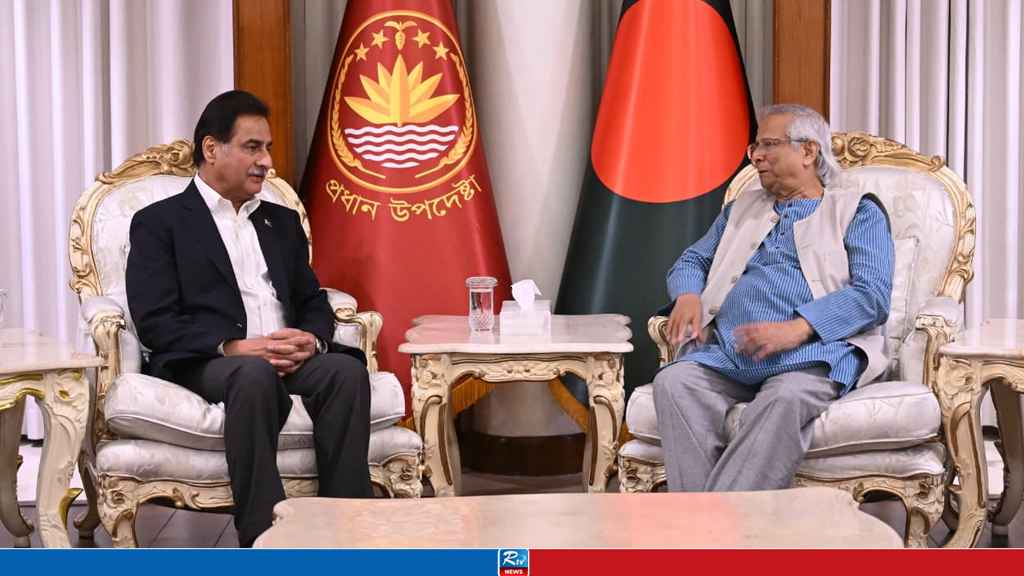
Pakistan’s National Assembly Speaker Calls on CA
CA, CJ and Other Dignitaries Join Namaz-e-Janaza of Begum Zia
Special Assistant to Chief Adviser Prof. Md. Sayedur Rahman Resigns
3-Day State Mourning for Khaleda Zia, Public Holiday Today