Dhaka 26 September, 2026

More funding is critical for the most vulnerable to survive climate change: PM

Rtv news

Publish : 31 Oct 2021, 05:05 PM
File photo

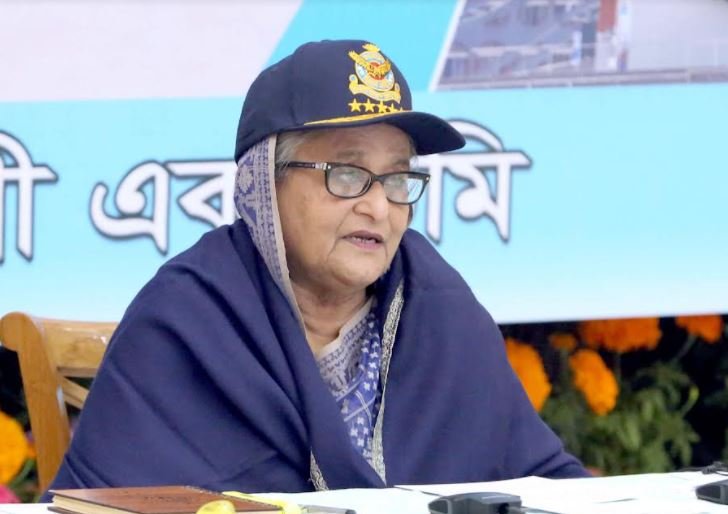
Prime Minister and Chair of the Climate Vulnerable Forum (CVF) Sheikh Hasina stressed the need for increasing financing for survival of the most vulnerable countries from the adverse impact of climate change.

“According to the International Monetary Fund (IMF), between $6 trillion and $10 trillion needs to be invested over the next decade to green our economies. Yet most CVF members are least developed, low or at best middle-income developing nations. They need support through both funding and expertise to help devise adaptation strategies to counter the effects of climate change, which scientists warn are already locked in for centuries,” the premier said.

In a jointly written article, by Sheikh Hasina and Chief Executive Officer (CEO) of the Global Center on Adaptation Patrick Verkooijen, titled “More Funding is Critical for the Most Vulnerable to Survive Climate Change” in the widely distributed and esteemed American weekly magazine “Newsweek”, they called for materializing the developed countries climate promises of $100 billion in annual funding to developing countries for their survival.

They wrote: “Our climate emergency is global, yet it does not affect everyone equally. For the Climate Vulnerable Forum (CVF)—a group of 48 countries spanning four continents—climate change is quite simply an existential threat. This is not hyperbole.”

In the article, they called for greater ambition from the world to fend off the climate crisis, saying, “Greater funding for CVF countries will enable them to move from climate vulnerability to climate prosperity. That will be good for the 48 countries in greatest peril right now, but also for all those facing increasing threats. It is quite simply the right thing to do.”

Referring to the response by governments around the world to the COVID-19 pandemic that has shown what is possible when we face imminent peril, they said, “We must harness this same drive in our response to existential climate threats.”

About the adversity of climate change, they said that small island states such as Vanuatu, the Maldives and the Marshall Islands are being engulfed by rising sea levels.

“The vast and low-lying Delta region of Bangladesh, home to and food basket for more than 160 million people, is being poisoned by saltwater infiltration and may soon become infertile wasteland. Extreme temperatures and severe droughts threaten to make large swathes of the Middle East, which is warming at twice the global average, uninhabitable. For the countries that make up the CVF, action on climate change, already urgent, simply cannot be delayed any longer,” they continued.

At the United Nations Climate Change Conference (COP26) in Glasgow, the CVF will ask for greater ambition to keep the 1.5 degrees Celsius limit on warming, a matter of survival for many of the most vulnerable nations, the article read.

“We are also spotlighting the need to be more ambitious in adaptation because we are already living inside the eye of the storm that is the global climate emergency. And because of that, vulnerable nations are asking major emitting countries to join annual platforms at every U.N. climate conference to constantly raise ambition,” they wrote.

But for the poorer nations, funding is essential to realize ambitious goals, they opined.

“That is why developing nations have been so concerned that the climate finance promises at the U.N. of $100 billion in annual funding to developing countries are not being met. We are calling for the two pillars of annual ambition raising and a delivery plan on the $100 billion a "Climate Emergency Pact," which we hope to see in the outcome of COP26,” they wrote.

In the article, both the writers have put forward four suggestions before the world which needs to be implemented to fight the adverse impact of climate change.

They wrote, “Firstly, we will ask that rich countries finally make good on their pledge before the landmark 2015 Paris agreement to provide $100 billion a year to fund carbon emissions reduction and climate-adaptation projects in the developing world. Because climate-vulnerable countries are already living with the devastating effects of our warming planet, at least half of this funding—$50 billion a year—must be earmarked for adaptation. We can then work on ways to transform these billions into the trillions needed to allow countries to move from climate vulnerability to climate prosperity.”

They said that, “We know this is possible because investing in climate adaptation delivers great value for money.”

According to figures from the Global Center on Adaptation (GCA), they said, “Investing $1.8 trillion in five key areas of early-warning systems, climate-resilient infrastructure, improved dry land agriculture, mangrove protection and increasing water resilience by 2030 could reap $7.1 trillion in benefits. And studies show that the benefits of adaptation almost always return more than double what they cost, and often more than five times as much.”

In the second proposal, they said that with these returns in mind, we will ask that the private sector steps up with discounted and targeted funding.

“Pension funds, with their $35 trillion in assets under management, and other banks and institutions that are custodians of the savings of millions of people, must look to direct their investments toward climate-change resilience. As part of this, we will encourage financial institutions to offer innovative instruments such as resilience bonds, lending made for specific resilience projects at below market rates, or debt-for-climate swaps where repayments are redirected from creditors toward domestic climate-change projects. Look to the Seychelles, for example, which has swapped some of its national debt (held by the Nature Conservancy) in return for creating the Seychelles Conservation and Climate Adaptation Trust,” the article read.

Thirdly, also at COP26, vulnerable nations are asking that the agreed revenues from carbon exchange schemes under the Paris agreement are channeled at the level of at least a 5 percent levy on transactions to countries suffering the worst consequences of climate change, they wrote.

“They are often the ones who have done least to cause it. The monies raised from carbon abatement schemes could be substantial—and so make a substantial difference. Research suggests that the IMF recommended benchmark of a global $75-per-ton carbon tax is equivalent to $0.17 a litre extra at fuel pumps, which would generate $40 billion additional tax revenues annually across Africa alone,” they opined.

Such redistribution is climate justice—and we will not succeed in curbing our carbon emissions unless the world's poorest and most affected by climate change are shielded from the costs of the energy transition. We must stand together to survive, they wrote.

“Finally, we will ask that pandemic recovery resources be used with climate adaptation in mind, including some of the $650 billion of newly allocated IMF Special Drawing Rights (SDRs). These unprecedented resources should be channelled toward resilient infrastructure—roads and bridges that can withstand flooding, for example—and increased food and water security. Options are already being explored to channel SDRs from wealthier to poorer and more vulnerable member countries to climate-proof their economic recovery. A new Resilience and Sustainability Trust being considered for this purpose would be a very good start, the article read,” the article read.

Bangladesh, for example, is already sharing best practices and adaptation knowledge with other climate-vulnerable countries through the GCA's regional office in Dhaka, they wrote.

Regarding Bangladesh’s initiatives to face the climate change, the article read: “This includes its experience of adopting the Mujib Climate Prosperity Plan, which aims to ensure funds are used to promote green growth as well as that the country's investment focus is on resilient infrastructure and renewable energy as well as the Climate Change Trust Fund which undertakes mitigation and adaptation programs to offset climate-induced impacts,” the article read.

“Bangladesh spends, on average, 2.5 per cent of its GDP or $5 billion each year on climate adaptation and resilience-building. Nearly 800 adaptation and resilience projects have been implemented across the country, including 12,000 cyclone shelters and 200,000 hectares of coastal green belts at a cost of $450 million,” they wrote.

To make the most of this cooperation, we also need more adaptation initiatives, they said, adding that the newly created Agriculture Innovation Mission for Climate (AIM4C), for example, was founded to help equip farmers on the front line of climate change with new climate-smart solutions and tools.

“With its three objectives of increasing investment in agriculture innovation, enabling coordination and collaboration and increasing cooperation, AIM4C is in a position not only to enhance existing efforts but also encourage their expansion,” the article read.

Source: BSS

AH

Follow google news channel to get RTV news Google News
Bangladesh reports 512 fresh cases, two deaths from Covid-19
Bangladesh today (Saturday) reported 512 Covid-19 cases while the coronavirus claimed overnight two lives.      "The country reported 2.74 percent Covid-19 positive cases as 18,673 samples were tested in the past 24 hours," Directorate General of Health Services (DGHS) said in its routine daily statement.      In the past 24 hours, the combined figure of coronavirus in Dhaka city and upazilas of the district is 429 while one Covid-19 death was reported during the period.      The official tally showed that the virus killed 28,072 people and infected 15,85,539 so far, the statement added.      The recovery count rose to 15,49,101 after another 290 patients were discharged from the hospitals during the past one day.      From the beginning of the pandemic, 97.70 percent Covid-19 patients recovered among the infected people while 1.77 percent died, the DGHS statistics showed.      The DGHS said among the total 28,072 fatalities, 12,261 occurred in Dhaka division, 5,689 in Chattogram, 2,061 in Rajshahi, 3,619 in Khulna, 949 in Barishal, 1,273 in Sylhet, 1,373 in Rangpur and 847 in Mymensingh divisions. Source: BSS AH
Bangladesh reports 512 fresh cases, two deaths from Covid-19
President administers Hasan Foez Siddique’s oath as Chief Justice
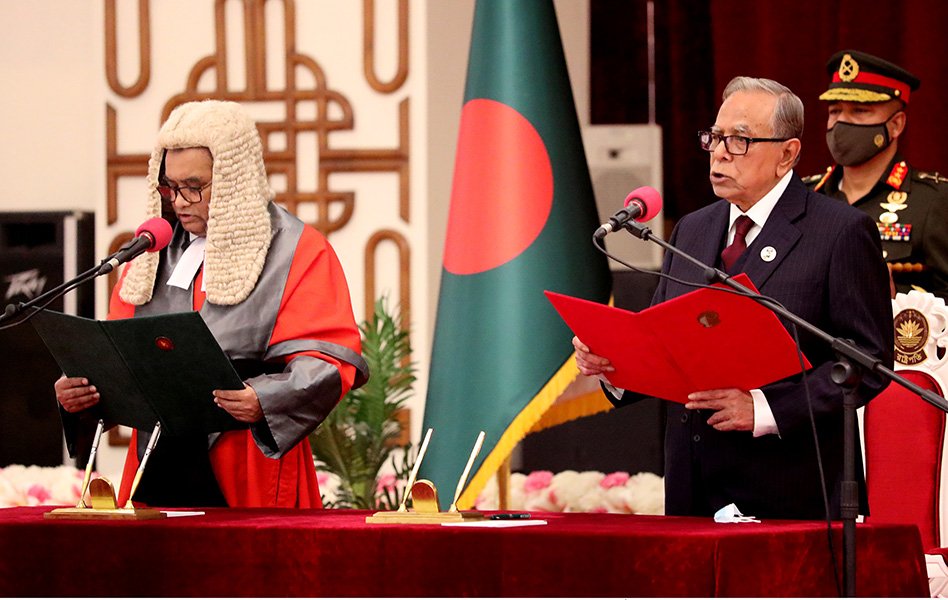
President M Abdul Hamid today (Friday) administered the oath of office to Hasan Foez Siddique as the 23rd chief justice a day after signing his appointment.      The president administered the oath at 4 pm at the Darbar Hall of Bangabhaban in a brief ceremony, witnessed by Prime Minister Sheikh Hasina, President's wife Begum Rashida Khanam, cabinet members, former chief justices, judges of both appellate and high court divisions, heads of the three services, principal secretary to the prime minister, the attorney general, Supreme Court lawyers, including SC Bar Association leaders.     Cabinet Secretary Khandker Anwarul Islam conducted the oath taking ceremony.      The President made the appointment as per Article 95 (1) of the Constitution on Thursday as the outgoing Chief Justice Syed Mahmud Hossain retired on the day.     Justice Hasan Foez Siddique was enrolled as an advocate of the District Court on August 21, 1981. He was enrolled at the High Court Division on September 4, 1983 and at the Supreme Court on May 27, 1999.     He acted as Legal Advisor to Khulna City Corporation, Kushtia Municipality, Jalalabad Gas Transmission Company and Chief Law Adviser of the Ministry of Home Affairs. Besides, he worked as Additional Attorney General for Bangladesh.     Justice Siddique was elevated as Judge of the High Court Division on March 25, 2009, and as a Judge of the Appellate Division of the Supreme Court on March 31, 2013.   Source: BSS AH
President administers Hasan Foez Siddique’s oath as Chief Justice
Nation set to welcome New Year 2022
The nation is set to welcome the New Year 2022 of English calendar tomorrow with a plausible hope of returning to a new normal life as a number of people across the country were vaccinated to prevent the deadly coronavirus despite its Omicron variant sweeping around the world.   Usually the New Year's Eve comes as an occasion for huge celebration across the globe, bidding farewell to the outgoing year.   But, the COVID-19 pandemic has forced the nations to avoid any kind of public gatherings or extravaganza centering the New Year celebration in 2020 while this year would also witness a limited celebration as many countries across the world have already put several restrictions afresh to slow the spread of the highly-infectious Omicron variant of Covid-19.   Though the New Year's Eve is likely look different like all of the 2021 holidays, the people in Bangladesh will celebrate the occasion with the traditional manner maintaining the health guidelines and social distancing.   Jubilant people, particularly the young population, might spend the evening watching New Year's movies or playing a New Year's game at homes with family members rather than going out for a glitzy night in the town, with the clock strikes 12 midnight.   As 2021 draws to a close, New Zealand will be among the first few countries to usher in the New Year. Celebrations then move across the world -- to Asia, the Middle East, Africa, Europe and finally the Americas.   On this special occasion, people have already conveyed their best wishes to their friends and beloved ones through different messaging applications and social media platforms.   Corporate and government officials and various organisations also did the same thing as they do every year to greet their nearest ones.   The day is also a moment of looking back to the outgoing year for reviewing the successes and failures and planning strategies to reach new goals for the New Year, with accomplishing the unfinished tasks those need to be done in the coming days.   The year 2021 was a significant year for Bangladesh as amidst the global pandemic, the country saw many successes in major areas including politics, economy, agriculture and driving the IT sectors towards attaining the middle-income status.   Alongside many achievements and global recognitions, the country was totally peaceful in the political landscape in 2021. The peaceful political situation allowed the nation's economy to grow faster.   The outgoing year also came with an extra significance since two giant celebrations- the birth centenary of Father of the Nation Bangabandhu Sheikh Mujibur Rahman and the golden jubilee of the country's independence- have been celebrated simultaneously in the country.   In separate messages, President Abdul Hamid and Prime Minister Sheikh Hasina will greet the countrymen on the occasion of New Year 2022 this evening.   Meanwhile, Dhaka Metropolitan Police (DMP) restricted public gatherings at open spaces, including rooftops, on the night of December 31 amid the coronavirus pandemic.    The DMP asked all not to arrange any cultural programme on roads, flyovers, building rooftops and other public places.    No fireworks or parties will be allowed under the open sky on 31st night on the occasion of the New Year 2022 celebration. Source: BSS AH
Nation set to welcome New Year 2022
DAP is finalised: Tajul
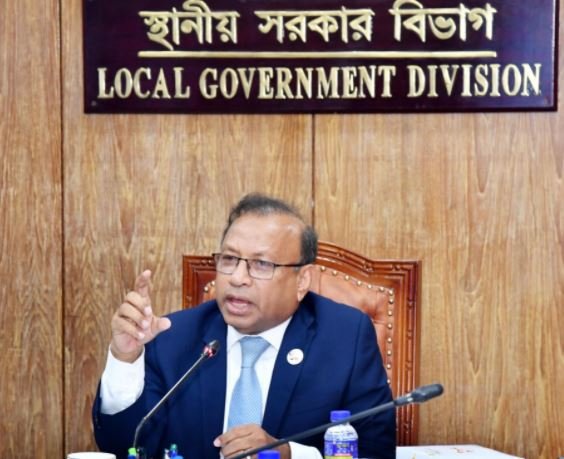
Local Government, Rural Development and Cooperatives Minister Md Tajul Islam today (Thursday) said the government has finalised the Detailed Area Plan (DAP).   "The Detailed Area Plan (DAP) has been finalised. Once Prime Minister Sheikh Hasina approves it, a gazette notification will be issued to this end," he told reporters after a meeting of the committee formed to review the DAP at his ministry's conference room in the capital.    Tajul, also the convener of the committee, said the DAP will be implemented not to cause any harm to anyone. "If anyone faces any loss due to the DAP implementation, it will be considered," he added.    The LGRD minister said the decisions taken in the meeting today will be sent to the Prime Minister and once she gives clearance to it, a gazette notification will be issued.    He said it was earlier announced that DAP would be finalised by December this year.    "We were able to keep our words. The review committee will meet in every three months after it is finalised. All objections and opinion will be reviewed at these meetings. If there is a need for amendment, it will be accomplished with consultation of everyone," Tajul said.    Environment, Forest and Climate Change Minister Md Md Shahab Uddin, Land Minister Saifuzzaman Chowdhury, State Minister for Water Resources Zahid Farooq, State Minister for Housing and Public Works Sharif Ahmed, Local Government Division Senior Secretary Helaluddin Ahmed, Housing and Public Works Secretary Shahid Ullah Khandaker, Land Secretary Md Mostafizur Rahman, among others, spoke.    The RAJUK chairman and representatives of concerned ministries, divisions and departments were present on the occasion.    DAP Project Director Md Ashraful Islam gave a presentation on the draft of DAP at the meeting. Source: BSS AH
DAP is finalised: Tajul
Govt wants to build air force like developed countries: PM
Prime Minister Sheikh Hasina today (Thursday) expressed her government's keen interest to make the air force like developed countries, saying the ultra-modern fighter planes, air defence radar and missile were already inducted to the force to turn the desire into reality.    "We have already incorporated ultra-modern fighter planes, air defence radar, missile and necessary equipment to Bangladesh Air Force (BAF) alongside setting up new ghatis (wings), units and training institute ---we want to build the air force like developed countries," she said.    The Prime Minister said this while addressing as the chief guest the "President Parade (Winter)-2021" of the Bangladesh Air Force Academy, joining virtually from her official Ganabhaban residence in the capital.   The BAF is going to get soon various modern planes, high-performance air defence radar, simulator, ATS simulator, laser guided bomb and anti-ship missile which will multiply its capacity, she said. The Prime Minister called upon the fresh cadets to be prepared in such a way keeping in mind the Father of the Nation's ideals as they can play an active role in fulfilling the country's expectations by serving the nation.    She hoped that the fresher would march the force ahead by using their talent, professionalism and patriotism from the current position that was achieved by your predecessors' far-sightedness, professionalism and hard work.   The Prime Minister greeted the new cadets as they are going to join the air force upon completion of their three years training.    She asked the cadets to always love the country and its people and perform the responsibilities bestowed on them with sincerity and honesty.    "Protect the independence and sovereignty of the country that were shouldered upon you after taking the oath," she added.    Highlighting her government's various measures taken for the overall development of the air force, the premier said they have purchased the fourth generation MIG-29 and C-130 and high performance air protection radar alongside infrastructure development coming to power in 1996 after 21 years. Describing the armed forces as the symbol of country's independence and sovereignty, Sheikh Hasina said her government has been implementing the "Forces Goal-2030" to build a developed and professional force.    The "Forces Goal-2030" was formulated in line with the Defence Policy of 1974 adopted by Father of the Nation Bangabandhu Sheikh Mujibur Rahman, she said.    The Prime Minister said that they have established Bangabandhu Aeronautical Centre to ensure safe and affordable management and overhauling of the planes, radars and military equipment.    She said that Bangabandhu Sheikh Mujibur Rahman Aviation and Aerospace University was established to ensure overall development of the air force and make time-worthy the civil aviation sector.   The Prime Minister said, "InshaAllah, we will once attain ability in building planes, helicopters and fighter planes with the knowledge to be obtained through research from the university."   Her government has always attached priority on conducting research regarding space, she said.    She also said her government has added ultra-modern fly-by-wire, digital cockpit based YAK-130 combat trainer, K-8W Z trainer, L-410 transport trainer, AW-119KX helicopter trainer and various simulators to the air force to ensure a developed and time-befitting flying training for its future generation cadets.   Bangladesh Air Force arranged a spectacular parade and colourful fly past at its Jashore Academy on the occasion which the premier virtually witnessed from her Ganabhaban residence.   Chief of Air Staff Air Chief Marshal Shaikh Abdul Hannan later gave a vote of thanks to the Prime Minister for joining the programme.   He, on behalf of the premier, earlier handed over the 'Sword of Honour' 'Chief of Air Staff Trophy' 'Commandants Trophy' and other prizes among the best cadets.    Sheikh Hasina said her government has bought the certified tier-111 data centre and is setting up it to make the air force activities digital as part of the government's move to transform Bangladesh into a digital country.    The Prime Minister said v-set hub and terminal station for the air force was recently purchased which will help build satellite based communication among its ghatis and units using the Bangabandhu Satellite-1.     She also said that her government is set to launch the Bangabandhu Satellite-2 as well.     Sheikh Hasina said her government has first taken measures to appoint female in the armed forces to empower women.    She also expressed her satisfaction over participation of female cadets took part in today's march past alongside the men.     The Prime Minister said that the Father of the Nation had dreamt of building a modern, professional and developed air force.    So, Bangabandhu purchased the ultra-modern fighter plane MIG-21 from neighbouring countries alongside procuring helicopter, radar and other military equipment for the air force, she said, adding the Mig-21 was used in the Liberation War in 1971.    She recalled the contribution of Bangabandhu in shaping the armed forces with limited resources during his three and a half years tenure alongside building a war-ravaged country.     The Prime Minister said the Father of the Nation had built a military academy while her government had established the air force academy from which  cadets of Palestine, Nepal, Zambia and Sri Lanka alongside Bangladesh took the training course.    She said, "We have always given priority on training."     Sheikh Hasina thanked the air force personnel as they stood beside the distressed people during the Covid-19 pandemic alongside carrying huge quantities of medical equipment from China and South Korea and bringing back Bangladeshi expatriates stranded at the different countries.     The premier said: "The air force personnel always stand beside the people in every disaster."  Source: BSS AH
Govt wants to build air force like developed countries: PM
Read More
North African climate change threatens farming, political stability
World has to share responsibilities of climate migrants: PM
Bangladesh PM demands richer nations’ recognition to climate vulnerable countries need
World leaders in Glasgow for ‘last, best hope’ climate summit