
Garment workers across Bangladesh remain dissatisfied even after the minimum wage was raised to Tk17,000, with scattered protests continuing and many factories still shut.
Amid this turmoil, major bad news has arrived from Bangladesh’s largest export market, the United States, where the Trump administration has announced a fresh tariff hike on Bangladeshi goods.
Together, the two developments have placed the country’s apparel sector under unprecedented pressure.
Md Shihab Uddoja Chowdhury, vice president of the Bangladesh Garment Manufacturers and Exporters Association (BGMEA), has warned that most ready-made garment factories cannot afford to pay the newly set Tk17,000 minimum wage under the current cost structure.
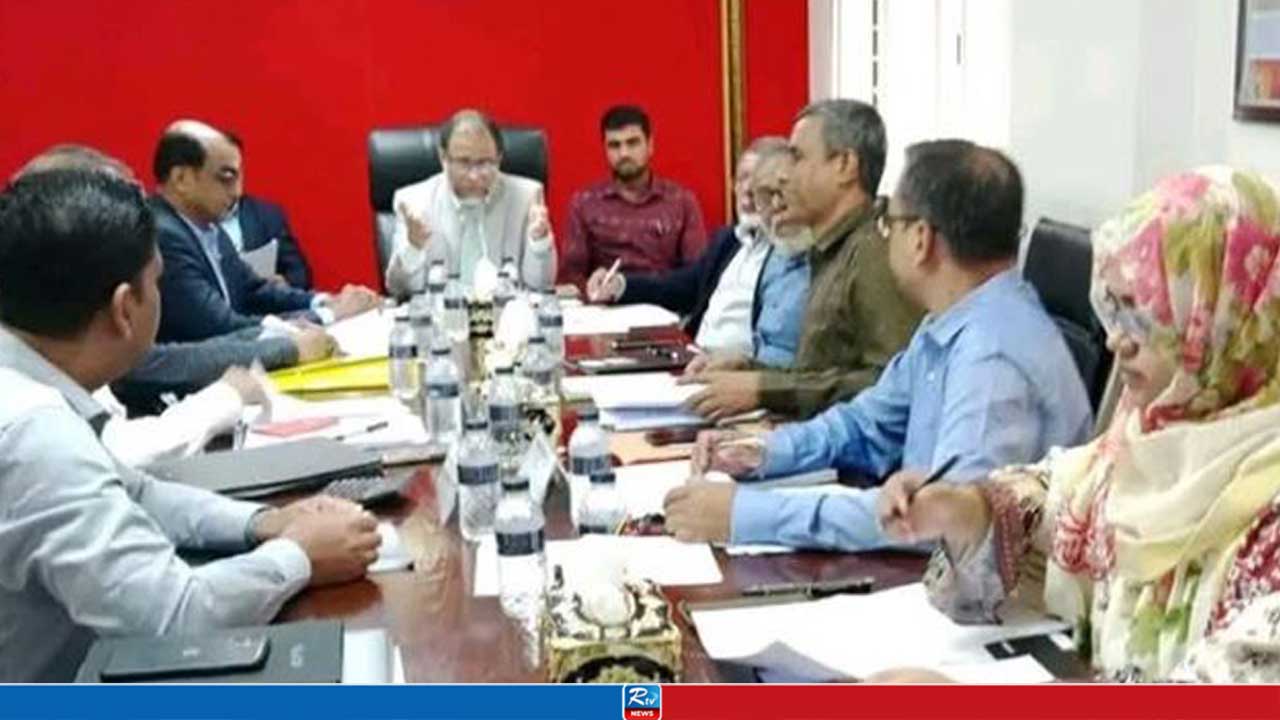
He voiced this concern on Wednesday, November 25, at a discussion organized by the reform-oriented civic platform Voice for Reform at the BDBL Bhaban in Kawran Bazar, Dhaka.
At the event, Shihab Uddoja Chowdhury said profit margins for manufacturers have shrunk due to steady increases in energy and capital costs over recent years. At the same time, regulatory hurdles have made it difficult to close loss-making factories.
Comparing the apparel sector’s current state to an "underworld," the BGMEA leader said that once someone enters the industry, they cannot get out before death. He called for urgent policy changes to allow distressed factory owners to wind down operations through a legal and orderly process.
Fahim Mashroor, co-convener of Voice for Reform, said the garment industry currently faces four major pressures: export demand, falling product prices, rising production costs, and workers’ living expenses.
Pointing to exchange rate dynamics, he noted that when the minimum wage was raised to Tk12,500 in 2023, wages across grades increased by an average of roughly 55 percent. At that time, the dollar exchange rate climbed from Tk102 to around Tk118, allowing exporters to absorb the higher wage burden. Over the past 12 months, however, the taka has weakened against the dollar by only about 1.7 percent, leaving exporters without that currency cushion.
Former BGMEA president Rubana Huq said Bangladesh’s apparel industry is going through the most difficult period in its history and is no longer profitable under the current cost structure. She warned that many small and medium-sized factories could shut down in the coming days, driving unemployment even higher.
Meanwhile, many workers have continued street protests despite the new minimum wage. On Thursday, garment workers again tried to take to the streets in several parts of Gazipur.
Reports indicate that around 9:00 a.m., a group of garment workers staged a procession and attempted to blockade the Dhaka-Mymensingh highway in Gazipur’s Bhogra Bypass area. Traffic was disrupted briefly before police dispersed the crowd using sound grenades.
Fearing unrest, many factories in areas including Naojor, Bhogra Bypass, and Konabari in Gazipur declared fresh holidays.
Mohammad Amjad Hossain, superintendent of Gazipur Industrial Police, said law enforcement personnel were deployed at key points along the Dhaka-Mymensingh and Dhaka-Tangail highways to keep the situation under control.
Against this backdrop came the U.S. proposal for another tariff increase. The Office of the United States Trade Representative (USTR) has proposed imposing an additional tariff of up to 18 percent on Bangladeshi products.
Currently, Bangladesh faces a total tariff of 25.62 percent to enter the U.S. market, including an additional 10 percent tariff imposed last July. If the new duty is enacted, tariffs on Bangladeshi goods entering the United States could exceed 40 percent.
Exports from Bangladesh to the United States have already declined during the first nine months of this year amid previous tariffs around 25 percent and other factors.
Naturally, the proposal to raise duties further is expected to pose even greater challenges for the ready-made garment sector, one of Bangladesh’s key exports.
State Minister for Foreign Affairs Humayun Kabir, however, said U.S. tariff moves are part of President Donald Trump’s political campaign agenda, adding that Bangladesh will pursue negotiation and engagement on the issue.
Where Bangladesh’s Challenges Lie
On one hand, raising wages for ready-made garment workers in Bangladesh is essential to cover living costs in line with inflation, boost worker skills and productivity, and restore stability to the industry.
On the other hand, Bangladesh faces the challenge of retaining its apparel market and finding new ones while competing with other countries amid Trump’s trade policies and other pressures.
According to data from the Office of Textiles and Apparel (OTEXA) under the U.S. Department of Commerce, U.S. imports from Bangladesh fell by 4.57 percent from January to September 2026. Overall U.S. apparel imports also dropped by 6.14 percent to $56.68 billion.
Industry insiders say that while workers’ wage increases are not directly tied to Trump’s tariffs, export uncertainty from higher tariffs and agitation over higher wages are hurting Bangladesh’s ready-made garment sector severely.
Mohammad Hatem, president of the Bangladesh Knitwear Manufacturers and Exporters Association (BKMEA), said Trump’s tariffs have cast uncertainty across the entire world.
Under these circumstances, the domestic situation surrounding garment worker wage hikes increases the risk of Bangladesh losing export markets. Looking at both issues together, he said, the garment sector is ultimately suffering heavy damage.
Rising fuel prices and higher tariffs are pushing costs up while labor unrest disrupts production. Many factory owners believe that if production costs in Bangladesh’s apparel sector climb further and unrest persists, international apparel buyers could look for alternative sourcing destinations.






 Live TV
 RTV Plus


