Dhaka 26 September, 2026

2022 could be the year of free trade pacts for India

Biswajit Dhar

Publish : 31 Dec 2021, 05:30 PM
Photo: Collected

India’s export performance has never been as good as it has been in 2021. In the first 11 months of the year, exports exceeded $354 billion, over $57 billion (or 19.2 percent) higher than the previous best for the same period, which was achieved in 2019. Imports, too, have touched a record high of $513 billion, almost 9 percent above the previous high of $472 billion in 2018. Importantly, higher imports could well be the sign that the economy is on course for a sustained recovery in 2022.

Buoyed by rapid expansion of exports in the earlier months of the year, the government had set an export target of $400 billion for fiscal 2021-22. A similar target has also been set in the past, but India’s exports have not gone beyond $330 billion (in 2018-19). In the first 8 months of the current fiscal (April-November 2021), exports had reached well over $263 billion, exceeding the previous high for this period by almost 22 percent. Although in November 2021 exports were at their lowest level during this fiscal year, there is every likelihood that the $400 billion target will be reached.

Driving India’s export surge were five major product groups — metals, ores, agricultural products, electronics, and petroleum products. Specific products within metals and agricultural products performed exceptionally well, which include iron and steel, copper, non-basmati rice, sugar, and wheat. Exports of each of these products have more than doubled during January-October 2021, as compared to the level in the corresponding period during 2019. Raw cotton and to a lesser extent cotton yarn, also experienced surge in exports in current year.

India’s exports to most of its major destinations touched record levels during 2021. Exports to the largest destination, the United States (US), increased to $58.7 billion, by almost a third as compared to the level in 2019. Even more impressive was India’s exports to China, the third largest destination, where the increase was more than 42 percent during the same period. Bangladesh emerged in the top 5 export destinations for the first time; India’s exports to its neighbour increasing by over 67 percent when compared with 2019 figures. However, exports to the second largest export destination, namely, the United Arab Emirates (UAE), declined in the midst of the overall surge.

Products triggering the export surge in the major destinations varied considerably. Among India’s major exports to the US, petroleum products, non-electrical machinery and organic chemicals expanded the fastest in 2021. On the other hand, higher exports of metals, including iron and steel, copper, and aluminium exports, besides cotton and ores, allowed India to increase its presence in China. Bangladesh emerged as one of India’s largest destinations largely due to higher exports of cotton and cereals (both rice and wheat).

Backed by this impressive export performance, a confident India is now seeking to forge several free trade agreements (FTAs). This is a complete turnaround from 2019 when India had walked out of the Regional Comprehensive Economic Partnership, the mega-regional trade agreement of East Asia.

The first of India FTAs could be with the UAE, which was once its largest export destination. However, with the decrease in India’s oil imports, trade with the UAE has lost momentum over the past several years. As the major gateway to the Gulf and, more importantly, the African continent, increase in trade ties with the UAE could provide further buoyancy to India’s exports.

India has also begun discussions for a possible FTA with the United Kingdom (UK), which is seeking to overcome the handicap it could suffer in the post-Brexit phase by rapidly forging close trade links with partner countries. Since it left the European Union less than two years back, the UK has already formalised 40 FTAs with its trade partners. It is showing similar urgency to formalise an FTA with India, and therefore, the New Year could well see heightened engagement between the two countries for closer trade relations.

For several years, speculation has been rife about a possible FTA between the US and India. But the dealings of the Trump Administration with India, especially the withdrawal of the GSP (generalised system of preferences) that India had enjoyed since the inception of the scheme and the initiation of the tariff war, resulted in a trust deficit that could not be bridged.

However, the Joe Biden administration appears to be in a conciliatory mood, as was evident from the recent visit of the US Trade Representative, Katherine Tai. The next steps the two countries take would be decide whether an India-US trade deal is possible.

(About author: Biswajit Dhar is Professor, Centre for Economic Studies and Planning, School of Social Sciences, Jawaharlal Nehru University, New Delhi. Views are personal and do not represent the stand of this publication.)

Source: moneycontrol

Follow google news channel to get RTV news Google News
Kashmiriyat faces death threat as Kashmiris kill Kashmiris
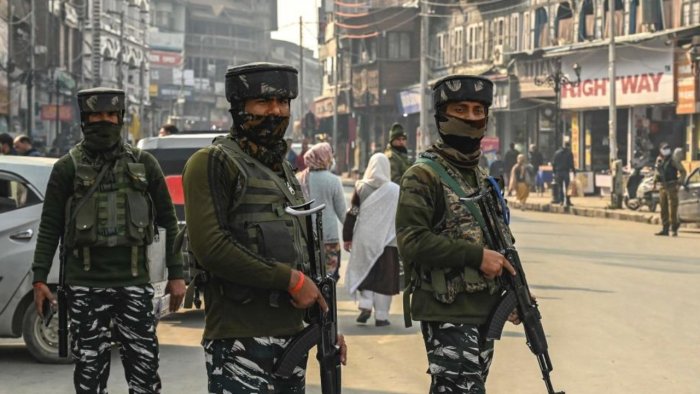
Militants in Kashmir are out to kill Kashmiriyat. The recent killing of a Muslim salesman of a Kashmir Pandit businessman in Srinagar's old city has once again shown that terror has no religion and anyone can become a victim. He can be a Muslim or a Hindu. The ultras had come to murder Sandeep Mawa but shot dead his salesman Ibrahim Khan in case of a mistaken identity. The son of a prominent Kashmiri Pandit businessman Roshan Lal Mawa, who had left Kashmir in 1990, Sandeep Mawa returned to the Valley in 2019 and re-started his shop at Bohri Kadal in the old city. He was given a warm response by local Kashmiri Muslims, who were happy to see their Kashmiri Pandit brother returning to his roots after three decades. On November 8, 2021, Sandeep left his shop early after he was alerted by the police that militants may target him. When in the evening, his salesman Ibrahim Khan went to get Sandeep's car parked outside the shop, militants mistook him as their target and pumped four bullets into his chest. It was yet another case of Kashmiri killing a Kashmiri and Kashmiriyat. What a shame, Kashmiri militants had come to kill a man just for a reason that he was a Hindu. But they murdered a Muslim man for whom they claim they are fighting. Mawa is the relative of late Makhan Lal Bindroo, who was shot dead by militants in Srinagar in October this year. Bindroo had not migrated. He had stayed back and helped his Kashmiri brethren in the most turbulent times. Design of the militants is clear they don't want Kashmiri Pandits to stay in the Valley only for a reason i.e. they are Pandits and not Muslims. Kashmiriyat Kashmir was known as the abode of sufis and saints due to the centuries-old indigenous tradition of communal harmony and religious syncretism in the Valley known as Kashmiriyat, which emerged around the 16th century and was characterised by religious and cultural harmony, patriotism and pride for their mountainous homeland of Kashmir.   It exemplifies the joint Hindu-Muslim culture, festivals, language, cuisine, and clothing in Kashmir. But after the outbreak of Pakistan sponsored armed insurgency in 1990, the gun-toting militants carried out the selective killings of Kashmiri Pandits which led to the mass exodus of the entire community from the Valley. Most Kashmiri Pandits are still living in exile but after August 5, 2019 - when the Centre abrogated Jammu and Kashmir's special status and divided it into two Union Territories - hopes of displaced Kashmiri Pandits returning to the Valley were rekindled. During the past two years, many KPs, including Mawa, have returned to Kashmir. They are making an attempt to resettle in the Valley but the militants are hell bent to chase them out. Selective killings Selective killings, including that of Kashmiri Pandit, Makhan Lal Bindroo, two teachers - a Sikh woman, Supinder Kaur and a Hindu man, Deep Chand, five non-local labourers and an assassination attempt of Sandeep Mawa, are clear indications that madness in Kashmir seems to be a never-ending process. The indoctrinated ultras at the behest of their handlers sitting across the Line of Control (LoC) are killing the innocents and have torn apart the very ethos of Kashmiriyat. India's rogue neighbor, Pakistan, that's sponsoring militancy in Jammu and Kashmir, is under the control of such people who don't know anything except preaching hate and violence. Muslims killing Muslims in Pakistan is a routine. It's unfortunate that people sitting across the LoC want to turn Kashmir into its reflection. They have indoctrinated Kashmiris to such an extent that they are following the footsteps of their mentors by targeting the pluralistic values of Kashmiri society. The organisations like banned Jamaat-e-Islami are carrying out their agenda to radicalise the Kashmiri youth and are turning them into killers by preaching hatred for the people from other communities. The Kashmiriyat - promoted by Sultan Zain-ul-Abidin, the story of the Kashmiri mystic Lal Ded in which her body turned into a mound of flowers that was buried by both Hindus and Muslims-is disappearing from Kashmir. It's high time for the members of majority Kashmiri Muslim community to wake up and condemn the communal, anti-Hindu, extremist, and jihadist character of those people who have been preaching hate for the past three decades. If they don't do so, there will be no space left for the people of other faiths in Kashmir. The emergence of jihadist characteristic will push Kashmir deep into crisis, which can lead to Kashmiri Muslims getting no acceptance outside the Valley. Kashmiris need to help themselves Militants who are targeting members of the minority community are making things difficult for Kashmiri Muslims. If any terror incident takes place across the globe, Pakistanis are treated as prime suspects for a simple reason that their nation is a breeding ground for terrorists. The Kashmiri militants who have embarked on the mission to kill innocents and target the members of a particular community are creating a notion that every Kashmiri is a terrorist and no one except ethnic Kashmiri Muslims can live in the Valley. Thousands of Kashmiri Muslims are putting up in different parts of India and in other countries, if the militants keep on killing Kashmiris and Kashmiriyat in the Valley, people of Kashmir in other states may have to face the brunt as they will be looked down upon and treated as prime suspects like Pakistanis. Members of the majority community in the Valley need to understand that the ultras are making them vulnerable and are out to label every Kashmiri as a hardliner and an intolerant human being. People of Kashmir have to stand on their own feet and have to join people like Sandeep Mawa, who despite surviving an assassination attempt has decided to stay put in Kashmir and work for restoring pluralistic culture of the Valley. Mawa's father, Roshan Lal Mawa, too was shot at by militants in 1990. After surviving the assasination attempt he left Kashmir. His son mustered courage and returned to his roots to build the burnt bridges between Kashmiri Pandits and Muslims. Majority of people in the Valley want to live a peaceful life as they are fed up of violence and uncertainty. But for that they have to come forward and help themselves, no outsider can do it. They have to become their own Messiahs then only Kashmiriyat can be saved from becoming extinct.
Kashmiriyat faces death threat as Kashmiris kill Kashmiris
How India’s Gati Shakti Plan can have an impact beyond its borders
(Constantino Xavier, Riya Sinha write: It can generate positive spillover effects, strengthen India’s economic ties with its neighbors.)   The Gati Shakti National Master Plan is another important step for India to upgrade national infrastructure and multimodal connectivity. According to the Economic Survey 2019-20, India will have to invest approximately $1.5 trillion on infrastructure to become a $5-trillion economy by 2024-25. However, while the Rs 100 lakh crore plan will have an important economic multiplier effect at home, it must also be leveraged to have an external impact by aligning it with India’s regional and global connectivity efforts. The Gati Shakti plan has three main components, all focused on domestic coordination. First, it seeks to increase information sharing with a new technology platform between various ministries at the Union and state levels. Second, it focuses on giving impetus to multi-modal transportation to reduce logistics’ costs and strengthen last-mile connectivity in India’s hinterland or border regions. The third component includes an analytical decision-making tool to disseminate project-related information and prioritize key infrastructure projects. This aims to ensure transparency and time-bound commitments to investors. One way to look at the Gati Shakti plan from a foreign policy angle is that it will automatically generate positive effects to deepen India’s economic ties with Nepal, Bhutan, Bangladesh, Myanmar and Sri Lanka, as well as with Southeast Asia and the Indian Ocean region. This has been the experience in recent years with India’s investment in roads, ports, inland waterways or new customs procedures generating positive externalities for these neighbors, who are keen to access the growing Indian consumer market. Nepal, for example, in 2020 reached record export levels due to a series of Indian connectivity initiatives, including electronic cargo tracking systems, new rail and road routes, modernization of border control systems, and the region’s first-ever bilateral petroleum pipeline. Any reduction in India’s domestic logistics costs brings immediate benefits to the northern neighbor, given that 98 per cent of Nepal’s total trade transits through India and about 65 per cent of Nepal’s trade is with India. By reducing the cost and time of doing trade through infrastructure modernization at home, India will continue to have a positive impact on the price of commodities and developmental targets in neighboring countries. In 2019, trade between Bhutan and Bangladesh was eased through a new multimodal road and waterway link via Assam. The new cargo ferry service with the Maldives, launched last year, has lowered the costs of trade for the island state. And under the South Asia Subregional Economic Cooperation Program, India’s investments in multimodal connectivity on the eastern coast is reconnecting India with the Bay of Bengal and Southeast Asia through integrated rail, port and shipping systems. However, India can’t just rely on the plan’s automatic spillover effects. Connectivity plans at home include important strategic decisions that will impact India’s external economic relations, not only in South Asia, but also with Southeast Asia and the Indian Ocean region. Whether it is the alignment of a cross-border railway, the location of a border check post, or the digital system chosen for customs and immigration processes, India’s connectivity investments at home will have limited effects unless they are coordinated with those of its neighbors and other regional partners. For instance, with its land neighbors, India’s border check posts, known as Integrated Check Posts (ICPs), only have mirror infrastructure with Nepal. Other key ICPs, such as the one at Petrapole with Bangladesh, face regular congestion due to lack of complementary infrastructure across the border. Similarly, countries in South Asia use different digital systems that have hindered real-time information sharing. While India recently joined the Transports Internationaux Routiers (TIR) convention, which facilitates cross-border customs procedures, none of its neighboring countries in the east has signed on to it. There are three avenues for India to ensure that the Gati Shakti Plan has maximum effect. First, India will have to deepen bilateral consultations with its neighbours to gauge their connectivity strategies and priorities. This is not just a technocratic exercise of coordination and harmonization. Given political and security sensitivities, India will require diplomatic skills to reassure its neighbors and adapt to their pace and political economy context. A second way is for India to work through regional institutions and platforms. SAARC’s ambitious regional integration plans of the 2000s are now defunct, so Delhi has shifted its geo-economic orientation eastwards. The Bay of Bengal Initiative for Multi-Sectoral Technical and Economic Cooperation (BIMSTEC) has got new momentum, but there is also progress on the Bangladesh, Bhutan, India, Nepal (BBIN) Initiative. Working through these multilateral platforms will help India develop a regional vision and standards for connectivity, reducing bilateral transaction costs. Finally, India can also boost the Gati Shakti plan’s external impact by cooperating more closely with global players who are keen to support its strategic imperative to give the Indo-Pacific an economic connectivity dimension. This includes the Asian Development Bank and the World Bank, but also Japan, the US, Australia, EU and ASEAN. They come with expertise and expectations about connectivity standards, whether it is on e-commerce, environmental and social impact assessments of infrastructure or technology platforms. These external connectivity dialogues will give the Gati Shakti plan a truly regional and global dimension and help India achieve its developmental targets at home. This column first appeared in the print edition on November 9, 2021 under the title ‘The connectivity effect’. Xavier is a fellow and Sinha a research associate at the Centre for Social and Economic Progress, New Delhi. Source: The Indian Express
How India’s Gati Shakti Plan can have an impact beyond its borders
KSA: How a bunch of Indian heroes in Jubail make us all proud
There are many Non-Governmental Organisations (NGOs) run by groups of expats, most of whom are working on string budgets through donations by fellow countrymen. Many among them volunteer their free time to help their fellow nationals in distress. One of the most significant groups among NGOs is the expatriate Indians who usually join or form their own NGOs. Some years back, the Indian diplomatic missions made good use of these volunteers to help the workers either to correct their status or to help them return home. Through this experience, the Embassy of India in Riyadh had realised the value of the volunteers and subsequently formed help desk committees to accommodate volunteers in Riyadh, Dammam, and Jubail. Even the local authorities appreciate their assistance and intervention to get cases moving along. The volunteers have to register with the Embassy to help the workers in labour disputes, jail cases, or the transportation of the dead back to their country. The Embassy would provide authorisation to the volunteer to approach the sponsor or the concerned authorities to get justice to the workers. The limited Embassy staff simply cannot cope with all the cases that flood its doors across a large country like Saudi Arabia where approximate 2.5 million Indian expats work. The Jubail Helpdesk is one such committee of approximately 40 volunteers from various walks of life. They started back in March 2014 and formed separate wings to specialise their follow-up on labour complaints, death cases, jail cases, etc. They have handled hundreds of various cases so far. They brought several labour discrepancies to light including the 17 Indian workers jailed by a foreign firm in Jubail. When the same company recruited some 91 workers from India and denied them their agreed salary, Jubail Helpdesk came forward and took up their cause, and with the support of the Indian Embassy. This forced the company to give the workers their rights. Now for more than one year, those workers are paid their contractual rights regularly. An Indian housewife from Surat, Gujrat was murdered by her husband in Jubail and the Indian Embassy authorised Jubail Helpdesk volunteers to provide the necessary help to the family of the victim. The family wished to come to Jubail and the NGO assisted them to get a visit visa and help complete the formalities to allow the family to take back the body of the deceased woman. During their stay, a trip to Makkah and Madinah was arranged by the NGO. Their hotel stay was sponsored by the Flour Arabia Co in Khobar, where her husband had worked. When a desperate Tamil Nadu native housemaid Stella Manikandan threw a message in a plastic water bottle through her window where she was locked up in a house in Fanateer in Jubail, the Indian worker who found the message alerted the Jubail Helpdesk. She was asking anyone’s help. The volunteers took the case to the police station and forced the sponsor to send her back home. When Kerala native Raveendran Nair was put behind bars by his company and imprisoned for several days for the disappearance of power cables at his worksite, Help desk volunteers investigated the details and proved his innocence. Accordingly, Raveendran Nair was freed and paid all his salary and benefits. When Ali Hussain Miyan passed away, his body remained in a morgue in Al-Ahsa for months as he was one of 14 workers who had filed a labour case against his company. Jubail Help desk cut through the bureaucratic red tape and brought the issue to light and the authorities forced the sponsor to send the body to India immediately. Jubail every so often is highlighted in the news due to the high number of Indian fishermen working the coast and who inadvertently drift into territorial waters of other neighbouring countries and get locked up. The Jubail Helpdesk has been instrumental in their release. The TN FIDET (Tamil Nadu Fishermen Development Trust) is another NGO established back in 2012 by a South Indian P. Justin Antony to assist Indian fisherman whose boats have strayed beyond allowed perimeters and who had been subsequently rounded up and locked away in prison. The fishermen are summarily rounded up while their fate hangs in balance. With minimal education and helpless to defend themselves, they have NGOs such as TN FIDET to thank. The organisation follows up on cases and coordinates with the respective diplomatic missions and local authorities to expedite their release. These NGOs perform the service without any expectations other than to ease the suffering of their countrymen. They do it with goodwill, and it is this kind of goodwill that all of us should exercise in the service of humanity. Author’s Description: Tariq A. Al Maeena is a Saudi sociopolitical commentator. He lives in Jeddah, Saudi Arabia. Source: Gulf News BM
KSA: How a bunch of Indian heroes in Jubail make us all proud
Pakistan: The catalyst for the U.S. washout in Afghanistan
There is only one good thing about the fact that the 20th anniversary of the Sept. 11, 2001, terror attacks will take place less than a month after the Taliban have re-established the Islamic Emirate of Afghanistan. It will serve as a reminder of why it was necessary to invade the country and topple the Taliban government two decades ago. When nearly 3,000 people are slaughtered on your soil in an operation planned and ordered by a known terrorist group residing in a country whose government refuses to cooperate in bringing that group and its leader to justice, there are no good options. The retaliatory attack on Afghanistan was the only time Article 5 of the North Atlantic Treaty, under which signatories agree to consider an attack on one as an attack on all, was invoked. The United States-led invasion was widely supported at the time — unlike the invasion of Iraq two years later. For these reasons, the 20th anniversary of 9/11 will be an even more somber occasion than usual. Alongside the terrible memories of that day will now stand a powerful sense of two decades of failure in Afghanistan; of the betrayal of all those Afghans who had become convinced that they could live in a freer and somewhat more prosperous country; and of a major blow to the international credibility of America, NATO and President Joe Biden personally. But while most of the recrimination focuses on what has and has not been done in Afghanistan, the real failure since September 2001 has been regional. And that failure centers on Pakistan. David Frum, who was writing President George W. Bush’s foreign-policy speeches in 2001-2002, has commented that if the U.S.-led invasion had achieved its primary goal of killing or capturing Osama bin Laden in December 2001, the story of America’s intervention in Afghanistan would have ended very differently: a faster withdrawal and handover to some sort of new Afghan government and no long-term commitment. We can’t know whether this counterfactual is true, but his point does highlight an overlooked issue in the aftermath of the Afghanistan debacle. For nearly a decade, until he was killed by U.S. Special Forces in 2011, bin Laden hid in Pakistan, and not simply the Federally Administered Tribal Areas, where the government’s writ hardly ran. He was in Abbottabad, a mid-size city just 120 kilometers (75 miles) from the capital, Islamabad, and home to the Pakistan Military Academy. Moreover, while some Taliban leaders decamped to Qatar after being driven from power, most based themselves in Pakistan, with the backing and apparent blessing of Pakistan’s Inter-Services Intelligence agency. The fact that the Taliban still existed as an opposition group with whom President Donald Trump’s administration negotiated its exit deal last year is largely due to Pakistani support. The biggest failure in the aftermath of 9/11 was the failure to secure long-term support from the frontline states surrounding Afghanistan: Iran, China, Russia, Central Asia’s five “Stans,” and India, but above all Pakistan. To be sure, support would never have been forthcoming from some of them. But Pakistan had long been a recipient of American aid, military and otherwise, and was considered a U.S. ally during the Cold War. The fact that it was also snuggling up to China and that its nuclear-weapons program benefited from Chinese support and technology ought to have been viewed as an indicator of its slight commitment to the American camp. It would never have been easy for the U.S. to achieve sufficient leverage over Pakistan after 2001 to stand a chance of securing long-term stability in Afghanistan, especially at a time when Pakistan and India were at military loggerheads, which in 2001-2002 fueled plausible fears of nuclear war. Moreover, during this period, a major goal of U.S. foreign policy was to establish a closer relationship with India (leading to the 2005 U.S.-India Civil Nuclear Agreement), in large part to offset against China’s rising power in the Indo-Pacific. These ties are now the centerpiece of the Biden administration’s Indo-Pacific strategy, through an enhanced role for the “Quad” countries (India, Japan, Australia and the U.S.). With hindsight, we ought to see that the key mistake of the period lay in Bush’s 2002 State of the Union Address when, using Frum’s words, he described America’s enemies as an “axis of evil.” None of the three countries he accused of being state sponsors of terrorism — Iran, Iraq and North Korea — is responsible for America’s failure in Afghanistan and for the return of the Taliban. The blame for that lies largely with Pakistan and America’s inability to bring the country onside. Even if the U.S. had not diverted its attention and resources to the invasion of Iraq in 2003, that failure would have doomed its policy in Afghanistan. To say this is not to divert attention from the more immediate and tragic failures — the moral lapses and indications of incompetent planning that are not a new feature of America’s international engagement. As the Financial Times’ Gideon Rachman has put it, there can now be no real doubt that we are living in a post-American world. When Fareed Zakaria published a book with that title in 2008, months before that year’s financial crash, many believed it to be premature. Now it looks prescient.   Bill Emmott, a former editor-in-chief of The Economist, is co-director of the Global Commission for Post-Pandemic Policy. ©Project Syndicate, 2021
Pakistan: The catalyst for the U.S. washout in Afghanistan
Afghanistan: Russia faces its own risks, uncertainty
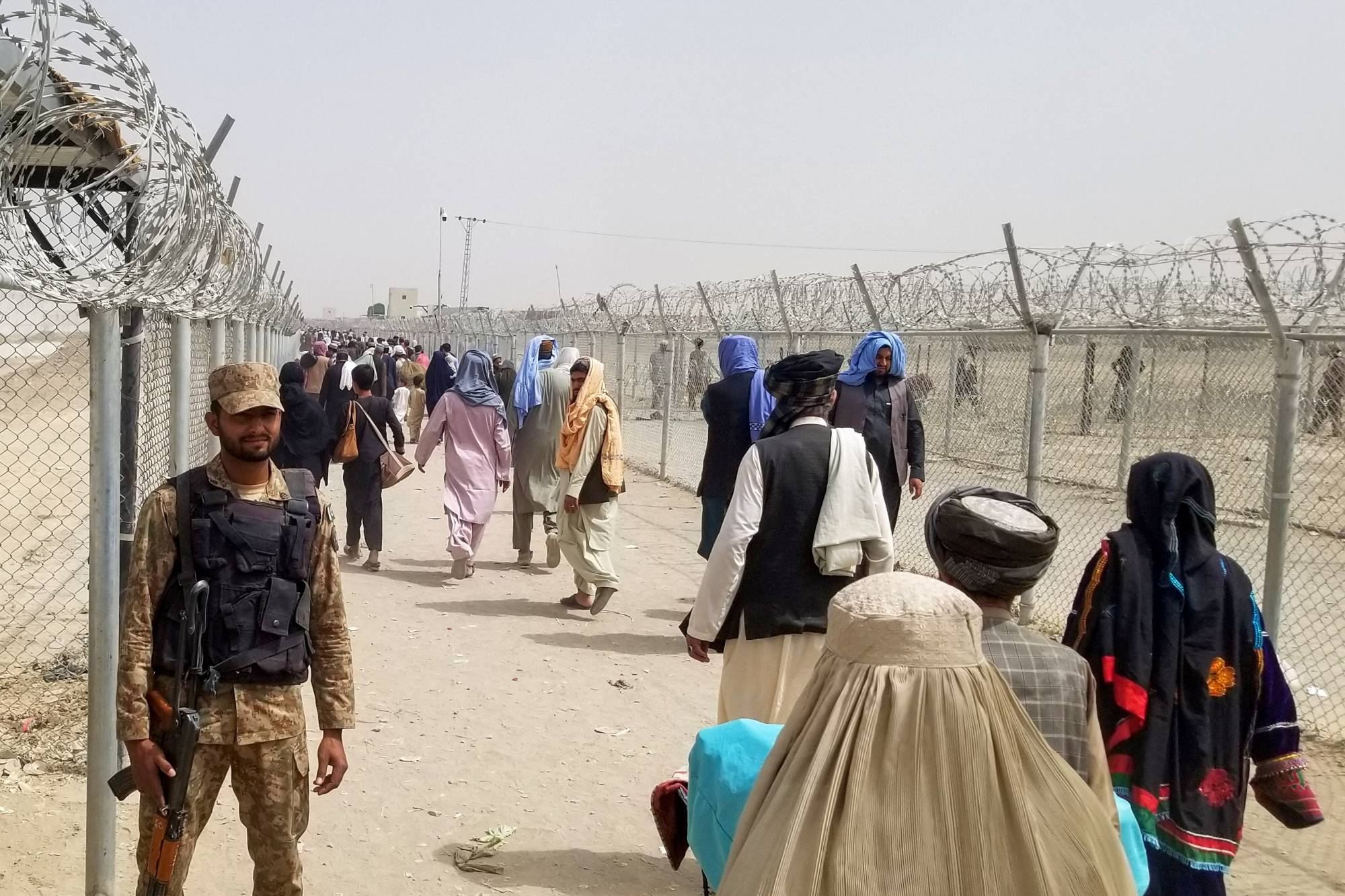
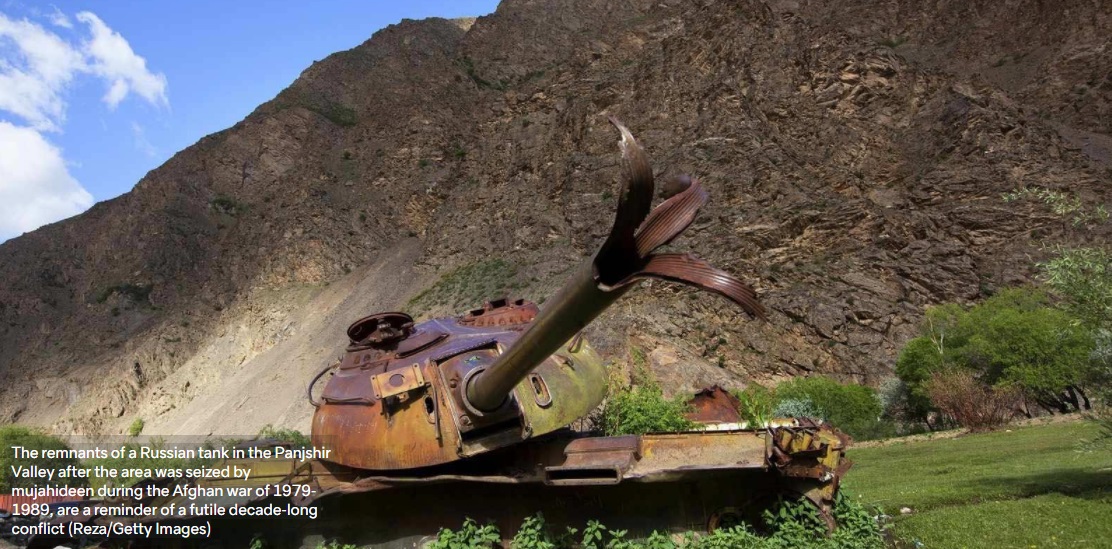
    The American withdrawal from Afghanistan offers some opportunities to Russia – but exposes it to greater uncertainty and risk. Russia has long been ambivalent about the US/NATO force presence in Afghanistan. On the one hand, Moscow recognised, and valued, the stabilising role they played in the country over the past 20 years, restraining extremist groups and bolstering the Afghan authorities – thereby protecting Russia’s southern approaches. Yet Moscow found the US military presence unsettling, close by its sphere of influence in Central Asia, and suspected America might look to make its stay more permanent, entrenching itself as a player on the Eurasian chessboard. While criticising the US withdrawal as hasty, Russia may draw satisfaction from the inconclusive outcome of America’s long struggle in Afghanistan ­– recalling its own humiliating withdrawal in 1989 after a futile decade-long conflict waged to support its client regime in the face of mujahideen assaults. Of particular concern to Moscow are Islamist extremist factions now operating in northern and eastern Afghanistan, reportedly including Islamic State veterans from Syria and elsewhere. Yet such schadenfreude will be tempered by unease about what the ensuing turmoil now engulfing Afghanistan portends. Moscow seems concerned less about who wins and loses the emerging Afghan civil war and more about whichever authorities gain sway in Kabul being able to impose some order on the country. This reflects Russia’s key interest in preventing any spillover of instability and Islamist extremism from Afghanistan into adjacent Central Asian countries – Tajikistan, Uzbekistan and Turkmenistan – with potential flow-on terrorist risks for Russia itself. Moreover, on-going conflict in Afghanistan risks substantial outflows of refugees across its borders, imposing further strains and tensions on its neighbours. Curbing the damaging flow of narcotics out of Afghanistan, through Central Asia and on to markets in Russia, is another priority for Moscow. Of particular concern to Moscow are Islamist extremist factions now operating in northern and eastern Afghanistan, reportedly including Islamic State veterans from Syria and elsewhere. Russia fears that these elements might seek to infiltrate and foment unrest in neighbouring Central Asian states, exploiting porous borders and close ethnic ties. Moscow appears to regard the Taliban as less worrying in this regard, judging the group’s objectives as primarily focused on gaining power and control within Afghanistan itself. Indeed, Russia’s special envoy for Afghanistan, Zamir Kabulov suggests that, to the extent that expansion and consolidation of Taliban control in Afghanistan limits the threat posed by other Islamist extremist factions, this serves Russia’s interests. How then is Russia approaching the situation as the US military presence winds down? Moscow has no appetite to get involved on the ground again in Afghanistan – that much is clear. Russia has learned the bitter lessons of its past Afghan involvement. Instead, Russia is focused on bolstering the security of its vulnerable Central Asian partners along Afghanistan’s northern borders – especially Tajikistan. The Afghanistan conflict does provide Moscow with the opportunity to demonstrate, and consolidate, its implicit role as the primary security provider for the former Soviet republics along its southern periphery – although it has a full defence treaty relationship only with Tajikistan. (Uzbekistan suspended its Collective Security Treaty Organisation (CSTO) membership in 2012, while Turkmenistan asserts a neutral status.) Tajikistan is particularly exposed: impoverished and brittle, with long-time strongman ruler Emomali Rahmon (who emerged as leader from the savage civil war that engulfed the country in the 1990s) now looking to secure a power transition to his son. Russia maintains a large military base near the Tajik capital Dushanbe, focused on border security. Pakistan is of particular importance, given the close (and not always helpful) role it has long played in Afghan affairs. Already, large numbers of Afghan government soldiers and refugees have fled across the border into Tajikistan from northern Afghanistan. Tajikistan has mobilised its reservists. Moscow has intensified diplomatic efforts to secure a political settlement that promotes stability in Afghanistan. It has hosted talks between the Afghan government and the Taliban (with whom it has been quietly talking since 2018, despite its proscribed status in Russia). Russia has also engaged with other key players, notably China, Pakistan and the United States. Pakistan is of particular importance, given the close (and not always helpful) role it has long played in Afghan affairs. Moscow has stepped up its contacts with Islamabad, with Foreign Minister Sergey Lavrov visiting in April this year  – his first visit in nearly a decade. Russia has undertaken to intensify security cooperation with Pakistan – although Moscow will be careful to manage sensitivities in neighbouring India. Russia will also be watching China closely. The two countries have a shared interest in cooperating to prevent spillover of Islamist extremist activity beyond Afghanistan’s borders – in China’s case, fearful of contamination to Uyghurs in neighbouring Xinjiang. But Moscow will be protective of its leading security role in Central Asia. And both countries have long-term economic ambitions in Afghanistan. China is eyeing copper and rare earth mineral resources, and is working to upgrade transport links through the Wakhan Corridor. While Russia hopes planned construction of energy and transport infrastructure through Afghanistan will open up economic opportunities through to the subcontinent and Indian Ocean. But this all depends on whether security in Afghanistan can be assured. For Russia, then, much is riding on what happens next in Afghanistan.   Source: The Interpreter/Ian Hill (Ian Hill is a retired senior career diplomat in the New Zealand foreign ministry. In the course of his 42 years in the diplomatic service, Mr Hill served three times in Moscow, twice as Ambassador (2009–12 and 2016–20). He also served as Deputy Head of Mission for five years in Washington DC, and held other senior foreign service roles in London and the Pacific. Mr Hill served in several senior foreign ministry positions in Wellington, including as Director for European Affairs, and was also the Prime Minister’s foreign affairs adviser from 1993–95.)   EK  
Afghanistan: Russia faces its own risks, uncertainty
Read More
Month-long DITF-2022 begins from tomorrow
Taliban should ensure women’s freedom: Pak media
Aiming for ‘drug-free Kashmir’, Sky Running Championship held in Srinagar for youth
Fakhrul insults war heroes by dubbing Khaleda as freedom fighter: Quader