Dhaka 27 September, 2026

The Dreadful Daily Drama of Religious Persecution in China

Bitter Winter

Publish : 17 Sep 2023, 03:51 PM

On his way back from BRICS, the summit of the world emerging economies, where the People’s Republic of China (PRC) succeeded in more than doubling the number of countries involved in it, President Xi Jinping found time on August 26, 2023, to stop in Urumqi, the capital of Xinjiang, which its non-Han inhabitants call East Turkestan.

There he invoked a harsher repression of Uyghurs and other Muslim Turkic people, implying that what local authorities have been doing so far is not enough. This is all the more outrageous, given the fact that the measures he labelled as insufficient amount to a genocide, now largely documented as well as officially recognized by governments and Parliaments throughout the world. Xi summarized his relentless offensive in the expression “Sinicization.” It is impossible to underestimate the weight of this concept, whose message is sometimes also conveyed by using another word, “modernization,” by which the Chinese regime means lifting groups and peoples up from the supposed “backwardness” that allegedly their traditional customs and religious beliefs keep them in.

Under the specious and mellifluous idea of harmonizing people and ethnicities to craft a much more robust and shared national conscience, “Sinicization” is in reality the ideological attempt to homologate all to the official doctrine of the state.

Being that Chinese state doctrine is Marxism-Leninism which, I want to recall here, killed at least 100 million people in the world, most of whom exactly in China, “Sinicization” is nothing else than the “Communistization” of everything, or the classic, unchangeable totalitarian aim of all “real socialist” governments. In this perspective, pluralism is only a facade useful to deceive the rest of the world and mislead it through propaganda.

Faked pluralism, a department in the tireless CCP fake news industry, which is applied even to ancient history, is in itself a major feature of “Sinicization.” In fact, while the CCP claims that pluralism does exist in the country, the only plurality of options that the CCP allows is what is approved and certified by the CCP itself. This is particularly true for religions, creeds, and beliefs and for spiritual schools, ways, movements, and groups.

In Article 36, the PRC’s 1982 Constitution control by foreign forces.”be subject to use religion to engage in activities that disrupt public order, impair the health of citizens or interfere with the state’s education system. Religious groups and religious affairs shall not coerce citizens to believe in or not to believe in any religion, nor shall they discriminate against citizens who believe in or do not believe in any religion.

The state shall protect normal religious activities. No one shall organ, social organization or individual shall enjoy freedom of religious belief. No state Proclaims: “Citizens of the People’s Republic of China shall The language here is unequivocal. In the PRC, it is said, there is religious liberty, and no one can curtail or deny it. But the key point here is what “religion” means for the CCP. Enter the concept of “Sinicization.”

For the CCP, only “Sinicized” religion is really religion. In simpler words, religion is what the CCP says religion is. As all totalitarian regimes do, the PRC led by the CCP wants to give its own controlling definition to everything. For totalitarianisms, nothing has its own nature or reality independently from the ideological will of the state, especially what has to do with the One Party’s real rival, i.e., God, by whatever name religions and beliefs call the Supreme Being. In totalitarian Communism, the Communist state is in fact the jealous secular supreme being, which takes no prisoner and bows to no other deity.

So, religion is only a function of the Communist state: its vassal, servant, lackey, slave, tool, and even weapon. Article 36 of the PRC’s Constitution says it openly. The Chinese state protects “normal” religious activities. It means that it is up only to the state to unquestionably decide what is normal and what is not normal in religious doctrines and affairs, repressing religious leaders, authorities and experts who disagree. All who engage in activities that generate unrest and turmoil under what the state judges to be only a mask of religion are subject to repression.

This makes sense. However, only the totalitarian Chinese state decides what is disruptive and what is not. For the CCP simple prayers may be and often are judged as socially disruptive—or fasting on holy days, growing a beard in a certain fashion, wearing a specific garment, keeping religious literature at home, owning a Bible, going on a pilgrimage, educating children spiritually. And then, the cherry on top, religions are free only if they have no foreign connections, otherwise they are accused of betraying the country.

Article 36, which theoretically affirms freedom of religion or belief, is the same constitutional provision that denies religious liberty by totally emptying the concept of any meaning and significance. Chinese citizens are only free to obey the state in all matters, religion included.

In short, Article 36 demonstrates how the now classical analysis and terminology introduced in 2006 by Chinese sociologist Fenggang Yang is still the best description of the religious scenario in the PRC. We at “Bitter Winter” have adopted his model since our beginning because it proves effective in explaining facts. Yang divided the religious market in China by using three colors: red, gray, and black. The red market is the room that the CCP grants to religions, belief and groups that have been or can be infiltrated and controlled, a practice that the regime massively begun in 1957. It is basically the field of sufficiently “Sinicized” or domesticated religions.

It includes the effort to control large portions of Catholics, Protestants, Muslims, Buddhists, and Taoists through five so-called “patriotic” associations, which totally obey the state.


The gray market is the middle-of-the-road field, where the repressive machine of the CCP pursues the same goals implied for the red market, but, for a number or reasons, needs to progress step by step and even to accept some temporary compromise. It is the room where, as powerful as it is, the CCP has not yet reached a status of total control.

This group include Catholic conscientious objectors outside the Patriotic Catholic Church, local groups connected to Protestant so-called house churches, and independent Muslim, Taoist, and Buddhist communities. Although the gray market survived for decades, Xi Jinping has repeatedly announced that the whole field of independent religion should now be absorbed into the red market or share the fate of the black market.

The latter, the black market, is the field of the “xie jiao.” Often incorrectly translated as “evil cults,” this expression (which has been in use since the Middle Ages) means “heterodox teachings,” and has no accepted scholarly definition (similarly to the Western term “cult”).

As a matter of fact, it only tautologically indicates the religious movements that are included in the government-compiled list of the “xie jiao,” which includes the groups the government regards as hostile, dangerous, and not “really” religious. Being active in a “xie jiao” can cost severe jail penalties under Article 300 of the Chinese Criminal Code, which has been repeatedly amended by increasing the penalties, which now can go up to life imprisonment. This is the spectacular case of groups like Falun Gong, hunted and haunted through the horrible practice of organ harvesting,

The Church of Almighty God, the Association of Disciples, the Shouters, and several groups imported into China from South Korea and other countries. Scholars, like Edward Irons explain that anyway Chinese courts of law also apply Article 300 by analogy to groups that are not included in the list of “xie jiao.” The Jehovah’s Witnesses, for example, are not in the list, but Article 300 is applied against them as well.

This is the landscape of religious persecution in todays’ China. This dreadful situation is a drama that continues daily, as the cultural genocide against Uyghurs, Tibetans, and Mongols, paralleled by the repression in Hong Kong, continues daily as well. While religious liberty is the first human right, as well as the first political right, for the CCP religion remains public enemy No.1. Now, the CCP seeks no compromise on that. Thus, no compromise should be sought with such trespassers of the first human right, religious liberty.

Follow google news channel to get RTV news Google News
China population: reluctance to marry, have kids continued in 2022 as demographic woes deepened
Willingness to get married and have children continued to fall in China last year, with a significant drop also seen in the interest to raise a second child, an official yearbook on population and employment statistics for 2022 showed. Over 51 per cent of people aged between 25 and 29 in China remained single in 2022, up from 48.7 per cent for the previous year, the 2023 China Population and Employment Statistical Yearbook showed. The unmarried rate for the thirty-something age group also rose mildly, according to data based on a sample survey conducted by the National Bureau of Statistics in November 2022. Meanwhile, the annual fertility rate for women of childbearing age – the number of births for every 1,000 women aged between 15 and 49 – dropped from 31.27 in 2021 to 30.22 in 2022, the survey showed. The fall in China’s fertility rate was largely caused by a plunge in the number of babies born as a second child, which slumped from 13.48 to 9.58 per 1,000 women, according to the yearbook. Authorities have issued a series of incentives to encourage couples to have bigger families over the years after China introduced a three-child policy in May 2021 having officially ended its one-child policy in January 2016. Reasons for the growing reluctance to get married and have children include the high cost of starting a family and pursuit of diversity and individuality. It underscores the demographic pressure China is facing as its population shrinks and grows older, which threatens long-term economic development. Source: South China Morning Post
China population: reluctance to marry, have kids continued in 2022 as demographic woes deepened
Tibetans in quake-hit areas get scarce aid from Chinese government
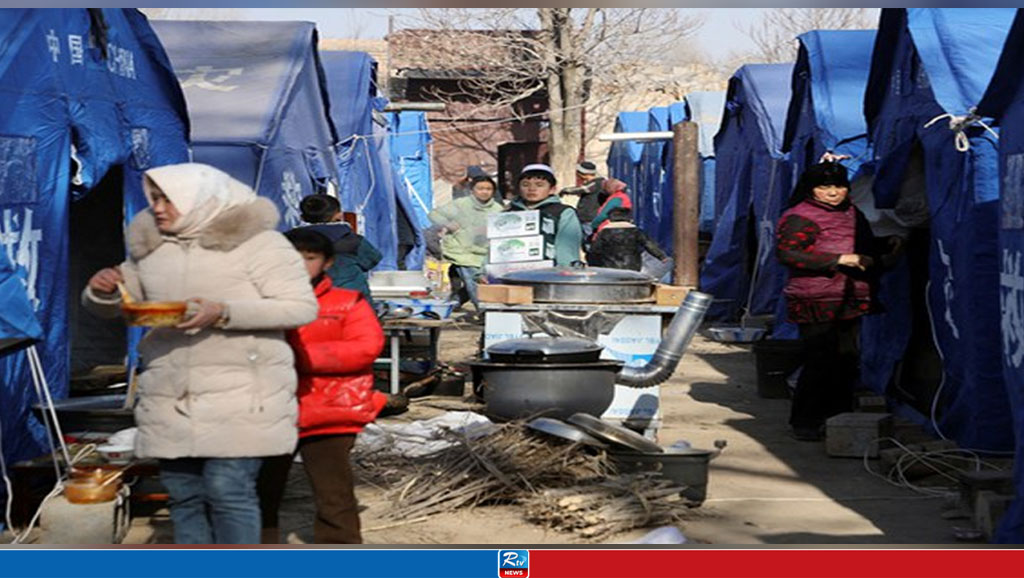
Tibetans in earthquake-affected areas of China’s Qinghai Province have received scarce help from the Chinese government, except for “some tent facilities” and utilities checks for those whose homes were destroyed by a December earthquake, at least three sources inside the country told Radio Free Asia.   A magnitude 6.2 earthquake rocked the northwestern Chinese provinces of Qinghai and Gansu on Dec. 18 — one of the most powerful earthquakes the country has seen in recent years — killing at least 149 people and injuring over 780 others.    The earthquake brought down buildings across Jishishan county and Linxia Hui Autonomous Prefecture in Gansu — the worst hit province — as well as in parts of neighboring Qinghai, a province on the Tibetan plateau. The affected areas in Qinghai are mainly populated by Tibetans. In the absence of adequate aid from the Chinese government, Tibetans in other parts of Chinese-occupied Tibet as well as Tibetan lay and monastic communities have sent funds and supplies to those displaced by the quake, said the sources, who asked not to be identified for safety reasons.    “Other than laying a few tents three days after the quake, the Chinese government did not provide any special assistance or aid, but many Tibetan individuals, organizations, and monasteries from all over Tibet have volunteered help with funds and relief materials, so we have not faced any immediate difficulties,” at least two sources told RFA. Another source noted that more than a week after the earthquake, Chinese authorities had conducted checks to see if water and electricity supplies were flowing but that no other aid or housing and relocation facilities had been provided.   China’s local housing and urban-rural development bureau, however, said it is building 15,000 prefabricated houses in Gansu for quake-affected people and estimates they will be completed by the end of December, Chinese state media reported.
Tibetans in quake-hit areas get scarce aid from Chinese government
North Korea plans to launch three satellites in 2024
Pyongyang has carried out a record amount of missile tests this year. North Korean leader Kim Jong Un said that it was a "mistake" to try to reunify with Seoul and warned of the risk of "war" in the peninsula. North Korea plans to launch three satellites in 2024, state media reported on Sunday. Meanwhile, North Korean leader Kim Jong Un said that it is a "mistake" to pursue unification with the south. Pyongyang announces satellite plan at party meeting "The task of launching three additional reconnaissance satellites in 2024 was declared" as one of the key policy decisions for 2024 at a party meeting, the KCNA news agency said. The meeting lasted for five days and was attended by Kim. North Korea has carried out a record number of weapons tests in 2023 and aims to increase its military capabilities. This month, it launched its most powerful intercontinental ballistic missile. North Korea also announced plans to build unmanned drones and develop electronic warfare capabilities, as well as to strengthen nuclear and missile forces. Japan, South Korea and Washington have stepped up cooperation in reaction to Pyongyang's increased missile tests. The three countries have recently activated a system to share real-time data on North Korean missile launches. North Korea has previously described Washington's participation in joint drills on the Korean peninsula as a "provocation." Kim dismisses unification with south, warns of 'war' North Korea's leader said that Pyongyang would no longer seek unification with Seoul. "I believe that it is a mistake that we should no longer make to consider the people who declare us as the 'main enemy'... as someone to seek reconciliation and unification with," Kim was cited by KCNA as saying. "Because of reckless moves by the enemies to invade us, it is a fait accompli that a war can break out at any time on the Korean peninsula," he said. He accused Washington of posing "various types of military threat" and ordered North Korea's military to maintain "overwhelming war response capability." "We must respond quickly to a possible nuclear crisis and continue to accelerate preparations to pacify the entire territory of South Korea by mobilising all physical means and forces, including nuclear force, in case of emergency," he said. "If we look closely at the confrontational military actions by the enemy forces .... the word 'war' has become a realistic reality and not an abstract concept," Kim said. He said that South Korea had been transformed into a "forward military base and nuclear arsenal" of the United States.
North Korea plans to launch three satellites in 2024
Venice bans large tourist groups
Venice officials are imposing new rules on groups of visitors coming to the popular lagoon city, aiming to curb negative effects of mass tourism. The city of Venice will ban tourist groups consisting of more than 25 people and will outlaw loudspeakers — which can "generate confusion and disturbances" — on such tours, the city council decided on Saturday. The new rules also prevent stopping at narrow streets, bridges or places of passage. They are set to take effect on June 1. The changes are part of the authorities' effort to limit mass tourism and its negative effects on the northern Italian lagoon city. The rules apply to the city center and the islands of Murano, Burano and Torcello. They are aimed to protect residents from noise and nuisance, the cuty council said in a press release. Mass tourism has been causing problems for Venice — one of the most famous tourist destinations in the world — for many years. The historic center with the famous Piazza San Marco, the Rialto Bridge and the many canals no longer has even 50,000 permanent residents. On some days during the high season, visitors outnumber the locals by more than two to one. In September, local officials decided to charge an admission fee of €5 ($5.50) for short-term visitors from April 2024. In a report published in summer 2023, the UN cultural agency UNESCO pointed at over-tourism and over-development as some of the major threats to the Italian hotspot, with a growing number voices calling for the city to be placed on  UNESCO's list of heritage sites in danger. Restricting tour groups to less than 25 people and the ban on loudspeakers will contribute to sustainable tourism, said Elisabetta Pesce, Venice's city councilor for security.  
Venice bans large tourist groups
Emboldened Iran silences critics as world looks elsewhere
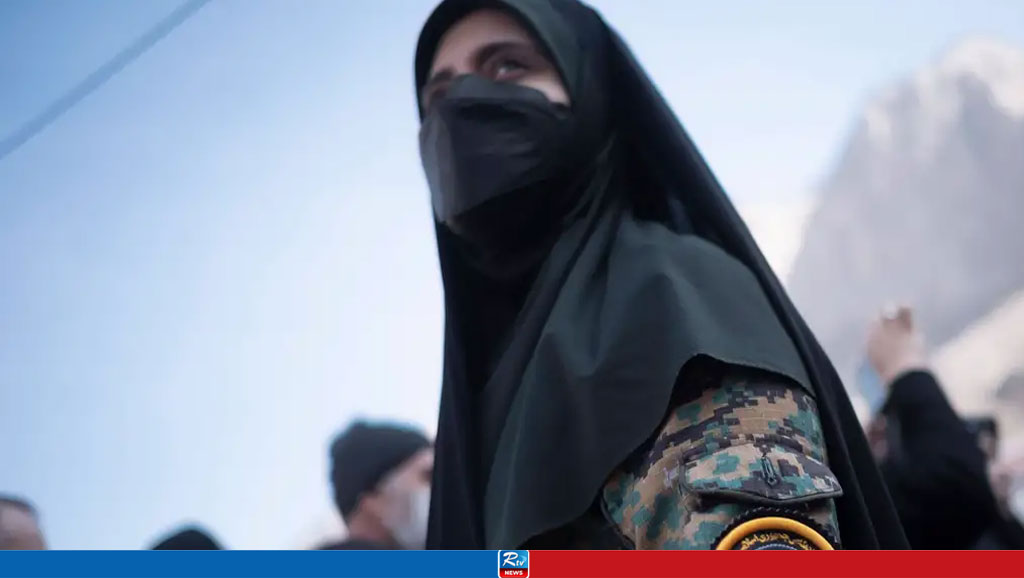
In the shadow of the Israel-Gaza war Iran's rulers are settling scores with internal critics. Women who refuse to wear the headscarf are being severely punished, activists are persecuted and prisoners have been executed.   As least 690 prisoners were executed in Iran in 2023, as of December 1, according to the human rights organizations Center for Human Rights in Iran and the Oslo-based Hengaw Organization for Human Rights, whose data was based on official Iranian statistics.   However, rights organizations believe a considerable number of unreported executions have been carried out hidden from the public eye and often only come to light years later, when bereaved relatives have the courage to speak out. "The world is distracted by the Gaza war. The Islamic Republic of Iran is taking maximum advantage of this situation to crack down on its critics, especially with executions that I would characterize as state murder for revenge, and to intimidate society through violence," Saeid Dehghan, an Iranian human rights activist, told DW. Dehghan, who has lived in Canada since 2022, has founded a worldwide network of Iranian lawyers. He heads a legal center called Parsi Law, which provides legal advice to people in Iran. The center also supports international organizations, such as UN bodies, in their efforts to improve human rights in Iran.  "The sad reality is that as soon as the streets in Iran are emptied of protesters, the country is forgotten and the global community returns to business as usual with the Islamic Republic," said Dehghan.  "Human rights activists understand that every country worldwide pursues its own interests. Nevertheless, the massive oppression in Iran must not be ignored. Especially not by politicians in Western countries, where human rights are one of the fundamental principles of politics," he added.   Iran cracks down on women's rights movement At least eight people who were arrested during nationwide women's rights demonstrations under the slogan "Woman, Life, Freedom" have been sentenced to death in sham trials and executed in recent months. One of them was 21-year-old Milad Zohrevand. On November 30, he was executed without warning, and without the opportunity to say goodbye to his family. According to human rights activists, Zohrevand was not allowed access to a lawyer or family visits during his imprisonment.  "Slaughter and killing do not only happen in war," wrote imprisoned Iranian Nobel Peace Prize laureate Narges Mohammadi in a letter to UN Human Rights Commission. In this open letter, which Mohammadi's husband shared with DW, she asks the UN human rights commissioner to take urgent, decisive and swift action to stop executions in Iran.  "In this world where everything is globalized, is humanity an exception? Is it enough to make a statement on paper? Is the global will to stop the unsafe and widespread executions in Iran's cities paralyzed by empty and baseless excuses?" Mohammadi wrote.   Since December 3, Iranian authorities have cut off all of Mohammadi's connections with the outside world. She is not allowed to make phone calls or receive visitors. Her voice, and that of other critics, has been silenced.  On December 2, Iranian rapper Toomaj Salehi was arrested several days after being released from prison. The judiciary justified the arrest with statements he made in a video allegedly "spreading lies and violation of public opinion."  The musician had posted a video sharing details of how he had been arrested and harassed. Salehi was initially arrested for showing solidarity with the nationwide women's rights protests in the fall of 2022, and was later sentenced to six years in prison.   No space for free speech in Iran Journalists and media professionals in Iran are under enormous pressure not to publish any critical articles.  At the end of November, the public prosecutor's office in Tehran took legal action against the newspaper Etemad, which is cautiously critical of the government.  The newspaper had published a secret document showing an excerpt from a ministerial directive for "arrests" and "other measures" against women who refuse to wear the obligatory headscarf in public. According to the document, the duties of Iran's "morality police" include taking photos and videos of women to ensure dress code compliance in the "metro areas," including "inside the wagons."  The newspaper published this document after Iran's interior minister claimed on November 22 that female morality watchdogs are citizens who want to "fulfill their religious duties and prohibit evil."   The last victim of this ostensible religious sense of duty was a 16-year-old schoolgirl, who was on her way to school at the beginning of October and wasn't wearing a headscarf. According to a source who spoke with the British newspaper The Guardian, she was attacked by a morality police officer on the subway.  Instead of going to school that day, she fell into a coma and was taken to hospital. She later died and was buried at the end of October.
Emboldened Iran silences critics as world looks elsewhere