Dhaka 18 October, 2026

Lahore Gasps For Clean Air

International Desk

Publish : 24 Sep 2023, 02:18 PM

The city of Lahore is beautiful, residents and visitors agree. But most days, it becomes hard to find that beauty as it is blanketed under a dense haze of vehicular smoke and industrial emissions. It is no wonder that this beautiful city is now ranked among the most polluted cities in the world.

One of the major causes of this unwanted honour is the high air pollution to the point of being toxic. As I write this in mid-September, the Air Quality Index (AQI) -- an index that measures how polluted the city's air is -- is 154 (unhealthy). At this level, citizens are advised to adopt measures to keep themselves safe, including wearing a mask outdoors, running an air purifier, closing windows to avoid dirty outdoor air and avoiding all outdoor exercise – which includes something as simple as a stroll in your nearby park.

With many people unable to afford food rations amid spiralling inflation and exorbitant electricity bills, one wonders how people can afford expensive air purifiers?

Last year, an annual global survey conducted by a Swiss air purifier manufacturer found that Lahore had jumped ten places to top the list of cities with the worst air.

As winter approaches, Lahore is again expected to rise to the top of the global rankings as its residents search for face masks and air purifiers.

One of the reasons for the high air pollution in Lahore is the winter air phenomenon of smog. Smog is a combination of heavy smoke and fog, which manifests in winter due to increased brick kiln activity and crop stump burning on both sides of the Radcliff Line.

Smog leads to a rapid increase in health problems – exacerbating asthma, allergies, eye infections, respiratory tract infections and cardiac pathologies leading to premature death. Sughis et al. have reported higher blood pressure levels in school-going children of Lahore exposed to high levels of air pollution. These observations help highlight the long-term detrimental impact on public health.

Moreover, smog brings life in Lahore and surrounding areas to a virtual halt. Flights are delayed, the highways are shut, and within cities, poor visibility combined with unbreathable air makes any sort of outdoor activity impossible.

Syed Mohammad Ali, a scholar at the Middle East Institute and a teacher at Georgetown and Johns Hopkins Universities, explains that the reasons for the steady decline of air quality in Lahore are numerous.

"Vehicular emissions, industrial pollution, fossil fuel power plants, the burning of waste materials, and coal being burned by thousands of brick kilns spattered across the province are all part of the problem."

Unfortunately, the decision-makers in Lahore seem to focus only on quick fixes. On days when the AQI is extremely unhealthy, the government decides to shut down schools and offices to reduce traffic emissions and lower human exposure. Farmers who burn crop stubble are targeted, and a clampdown is launched against brick kilns.

However, if they focus on improving the efficiency of their urban management with long-term options, it would yield sustainable solutions that may lead to both, lower energy consumption and vehicular emissions.

Instead, all residents witness is a loss of green areas to make way for grey housing societies, flyovers and roads so that residents of these projects can zip across to the city centre in their expensive, gas-guzzling SUVs apart from other pollution-causing, expensive projects such as metro buses and railroads to ferry the white and blue collared workers to factories and offices.

It gives the impression that the government cares only for those citizens who own big cars and can afford air purifiers to be installed within metres of wherever they most commonly find themselves.

Urban planning in Lahore has failed to build a lane on the roads for cyclists like in The Netherlands, one of the most environmentally friendly countries in the world.

The difference between Lahore and Amsterdam could not be more stark. While the former prioritises gas-guzzling and smoke-spewing vehicles to fill its roads and its air with an AQI of over 150, Amsterdam - a city with a canal running through it - creates space for green transportation and other green practices to be rewarded with an AQI of 40 even today (The population of Lahore Division in the 2023 census is 22.77 million packed in 11,727 square kilometres while population of the entire Netherlands in 2021 was 17.53 million spread over 41,850 square kilometres).

The Global Alliance on Health and Pollution estimated in 2019 that some 128,000 Pakistanis die annually due to air pollution-related illnesses. But in true Pakistan fashion, one of the major environment-related health emergencies in Lahore, the smog, was deemed by the then-climate change minister as a conspiratorial attempt to spread misinformation.

Even today, many Pakistani officials and politicians blame stubble burning by Indian farmers across the border as the cause for Lahore's smog problem while ignoring the poor air that residents of Lahore have to breathe for the rest of the year.

They ignore how most environmental regulatory organisations lack specialised monitoring equipment, standardised protocols, trained personnel and funds.

The Punjab government needs to allocate adequate funds for monitoring and reducing harmful emissions, shifting from polluting and fossil fuels to renewable resources apart from widespread afforestation programmes.

The current situation requires a tough action plan to prevent adverse outcomes for public health whilst minimising the economic burden on Pakistan's beleaguered health sector.

The government must educate the public about the health issues of air pollution how they can protect themselves and prevent pre-existing medical conditions from worsening. Why are public service messages not flooding television, radio and the internet along with mass distribution of educational pamphlets and brochures amongst the public to ensure effective communication?

I posed questions on Lahore's environmental situation to Ahmad Rafay Alam, an environmental lawyer and activist.

Firstly, I asked him what, in his view, are the key contributors to the terrible AQI of Lahore?

Alam: "If you rely on the Food and Agriculture Department's 2018 smog report for the Punjab, it stipulates that about 45% of the year-long air pollution in Punjab comes from the transport sector, which indicates the emissions from automobiles.

It is followed by emissions from the energy sector and then the industrial sector. This has been corroborated by a report published by the Urban Unit this year, it's inventory of air pollution over the last 30 years for Lahore cites roughly the same proportions for transport, energy and industry.

A report published on the city of Lahore specifically associated 80% of air pollution with the transport sector. The transport sector gets flagged because we have some of the dirtiest fuels and petrol available in the world, so automobile emissions are a major contributor to air pollution. Then, of course, the diesel and furnace oil we burn for energy, etc."

Second, I asked how the government and civil society can help improve environmental conditions and reduce the AQI?

Alam (after an ironic chuckle): "Well, the government's job is to protect its citizens' life and property. And so, they should, both at the federal level and provincial levels, take steps to introduce cleaner fuels in Pakistan.

There are still no standards on how clean fuels will be distributed throughout the country. In any event, the provincial environmental protection agencies have legal authority to impose standards for the type of fuels used in automobiles. Yet, in none of the provinces has this power been exercised.

Then, of course, the government can focus on renewable energies and shifting and transitioning the energy sector from fossil fuel reliance to a more sustainable and renewable form of energy, specifically solar and wind. And also move towards energy efficiency, not just in buildings but also in industry. That would make a huge difference.

Also, we must find alternatives to crop burning, which happens twice a year for a few weeks. Civil society must hold the government to account and have a clear vision of a future with clear air, a vision which is stronger and longer than the five-year political election cycle of the country."

Third, I asked if the situation would worsen if the government continued to fail in long-term planning?

Alam: "Well, the situation is critical now. Air pollution in Pakistan's cities, including Lahore, is a year-long public health emergency. The Air Quality of Life Index Report by the University of Chicago indicates that life expectancy in Pakistani cities is down by about four years for every Pakistani who lives in a city, which is staggering. This will only get worse unless measures are taken to eliminate the problem where it comes from – the transport emissions, the energy emissions and the industrial emissions."

Finally, I asked him if proper planning is undertaken, how long will it take to bring AQI to normal range for the city?

Alam: "Getting air quality right is about improving the refinery capacity in Pakistan. It's about transitioning to clean energy. It's about investment in renewable energies. None of these are overnight fixes, so it will take a while. Cities that have combatted air pollution have done so over years and years, sometimes even over a decade.

Which is why, I repeat, it is imperative for civil society to have a shared vision of a clean-air future that is more durable and sustainable than the five-year political cycle that we have."

Effective cooperation between the government, civil society and individuals is needed if the environmentally hazardous weather approaching us again this year is to be tackled in a coordinated manner and if we want a clean-air future with renewable energy resources. We all want a cleaner, healthier city and healthy children – the question is, are we willing to work towards it in a planned manner?

Source:thefridaytimes.com

Follow google news channel to get RTV news Google News
China population: reluctance to marry, have kids continued in 2022 as demographic woes deepened
Willingness to get married and have children continued to fall in China last year, with a significant drop also seen in the interest to raise a second child, an official yearbook on population and employment statistics for 2022 showed. Over 51 per cent of people aged between 25 and 29 in China remained single in 2022, up from 48.7 per cent for the previous year, the 2023 China Population and Employment Statistical Yearbook showed. The unmarried rate for the thirty-something age group also rose mildly, according to data based on a sample survey conducted by the National Bureau of Statistics in November 2022. Meanwhile, the annual fertility rate for women of childbearing age – the number of births for every 1,000 women aged between 15 and 49 – dropped from 31.27 in 2021 to 30.22 in 2022, the survey showed. The fall in China’s fertility rate was largely caused by a plunge in the number of babies born as a second child, which slumped from 13.48 to 9.58 per 1,000 women, according to the yearbook. Authorities have issued a series of incentives to encourage couples to have bigger families over the years after China introduced a three-child policy in May 2021 having officially ended its one-child policy in January 2016. Reasons for the growing reluctance to get married and have children include the high cost of starting a family and pursuit of diversity and individuality. It underscores the demographic pressure China is facing as its population shrinks and grows older, which threatens long-term economic development. Source: South China Morning Post
China population: reluctance to marry, have kids continued in 2022 as demographic woes deepened
Tibetans in quake-hit areas get scarce aid from Chinese government
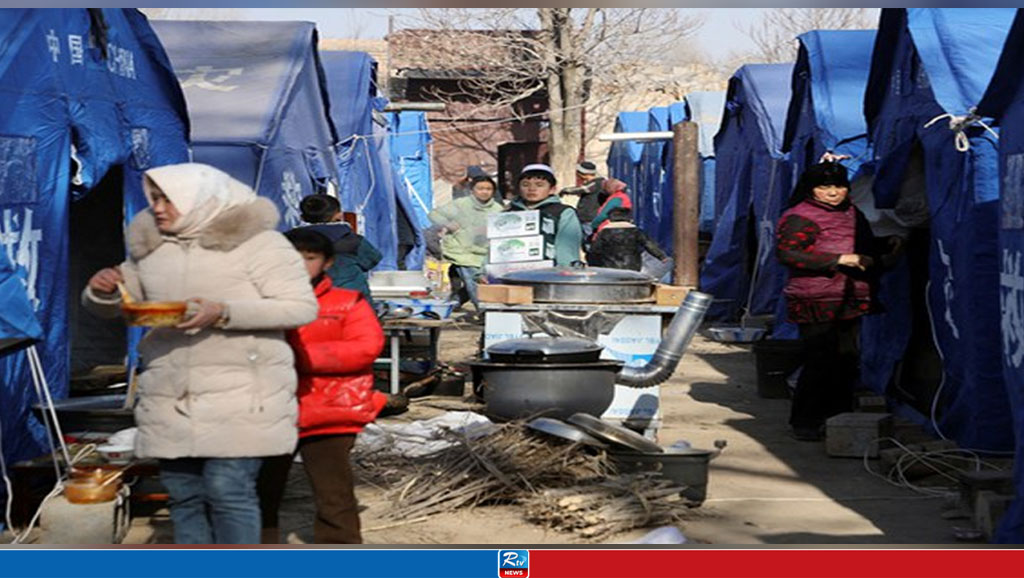
Tibetans in earthquake-affected areas of China’s Qinghai Province have received scarce help from the Chinese government, except for “some tent facilities” and utilities checks for those whose homes were destroyed by a December earthquake, at least three sources inside the country told Radio Free Asia.   A magnitude 6.2 earthquake rocked the northwestern Chinese provinces of Qinghai and Gansu on Dec. 18 — one of the most powerful earthquakes the country has seen in recent years — killing at least 149 people and injuring over 780 others.    The earthquake brought down buildings across Jishishan county and Linxia Hui Autonomous Prefecture in Gansu — the worst hit province — as well as in parts of neighboring Qinghai, a province on the Tibetan plateau. The affected areas in Qinghai are mainly populated by Tibetans. In the absence of adequate aid from the Chinese government, Tibetans in other parts of Chinese-occupied Tibet as well as Tibetan lay and monastic communities have sent funds and supplies to those displaced by the quake, said the sources, who asked not to be identified for safety reasons.    “Other than laying a few tents three days after the quake, the Chinese government did not provide any special assistance or aid, but many Tibetan individuals, organizations, and monasteries from all over Tibet have volunteered help with funds and relief materials, so we have not faced any immediate difficulties,” at least two sources told RFA. Another source noted that more than a week after the earthquake, Chinese authorities had conducted checks to see if water and electricity supplies were flowing but that no other aid or housing and relocation facilities had been provided.   China’s local housing and urban-rural development bureau, however, said it is building 15,000 prefabricated houses in Gansu for quake-affected people and estimates they will be completed by the end of December, Chinese state media reported.
Tibetans in quake-hit areas get scarce aid from Chinese government
North Korea plans to launch three satellites in 2024
Pyongyang has carried out a record amount of missile tests this year. North Korean leader Kim Jong Un said that it was a "mistake" to try to reunify with Seoul and warned of the risk of "war" in the peninsula. North Korea plans to launch three satellites in 2024, state media reported on Sunday. Meanwhile, North Korean leader Kim Jong Un said that it is a "mistake" to pursue unification with the south. Pyongyang announces satellite plan at party meeting "The task of launching three additional reconnaissance satellites in 2024 was declared" as one of the key policy decisions for 2024 at a party meeting, the KCNA news agency said. The meeting lasted for five days and was attended by Kim. North Korea has carried out a record number of weapons tests in 2023 and aims to increase its military capabilities. This month, it launched its most powerful intercontinental ballistic missile. North Korea also announced plans to build unmanned drones and develop electronic warfare capabilities, as well as to strengthen nuclear and missile forces. Japan, South Korea and Washington have stepped up cooperation in reaction to Pyongyang's increased missile tests. The three countries have recently activated a system to share real-time data on North Korean missile launches. North Korea has previously described Washington's participation in joint drills on the Korean peninsula as a "provocation." Kim dismisses unification with south, warns of 'war' North Korea's leader said that Pyongyang would no longer seek unification with Seoul. "I believe that it is a mistake that we should no longer make to consider the people who declare us as the 'main enemy'... as someone to seek reconciliation and unification with," Kim was cited by KCNA as saying. "Because of reckless moves by the enemies to invade us, it is a fait accompli that a war can break out at any time on the Korean peninsula," he said. He accused Washington of posing "various types of military threat" and ordered North Korea's military to maintain "overwhelming war response capability." "We must respond quickly to a possible nuclear crisis and continue to accelerate preparations to pacify the entire territory of South Korea by mobilising all physical means and forces, including nuclear force, in case of emergency," he said. "If we look closely at the confrontational military actions by the enemy forces .... the word 'war' has become a realistic reality and not an abstract concept," Kim said. He said that South Korea had been transformed into a "forward military base and nuclear arsenal" of the United States.
North Korea plans to launch three satellites in 2024
Venice bans large tourist groups
Venice officials are imposing new rules on groups of visitors coming to the popular lagoon city, aiming to curb negative effects of mass tourism. The city of Venice will ban tourist groups consisting of more than 25 people and will outlaw loudspeakers — which can "generate confusion and disturbances" — on such tours, the city council decided on Saturday. The new rules also prevent stopping at narrow streets, bridges or places of passage. They are set to take effect on June 1. The changes are part of the authorities' effort to limit mass tourism and its negative effects on the northern Italian lagoon city. The rules apply to the city center and the islands of Murano, Burano and Torcello. They are aimed to protect residents from noise and nuisance, the cuty council said in a press release. Mass tourism has been causing problems for Venice — one of the most famous tourist destinations in the world — for many years. The historic center with the famous Piazza San Marco, the Rialto Bridge and the many canals no longer has even 50,000 permanent residents. On some days during the high season, visitors outnumber the locals by more than two to one. In September, local officials decided to charge an admission fee of €5 ($5.50) for short-term visitors from April 2024. In a report published in summer 2023, the UN cultural agency UNESCO pointed at over-tourism and over-development as some of the major threats to the Italian hotspot, with a growing number voices calling for the city to be placed on  UNESCO's list of heritage sites in danger. Restricting tour groups to less than 25 people and the ban on loudspeakers will contribute to sustainable tourism, said Elisabetta Pesce, Venice's city councilor for security.  
Venice bans large tourist groups
Emboldened Iran silences critics as world looks elsewhere
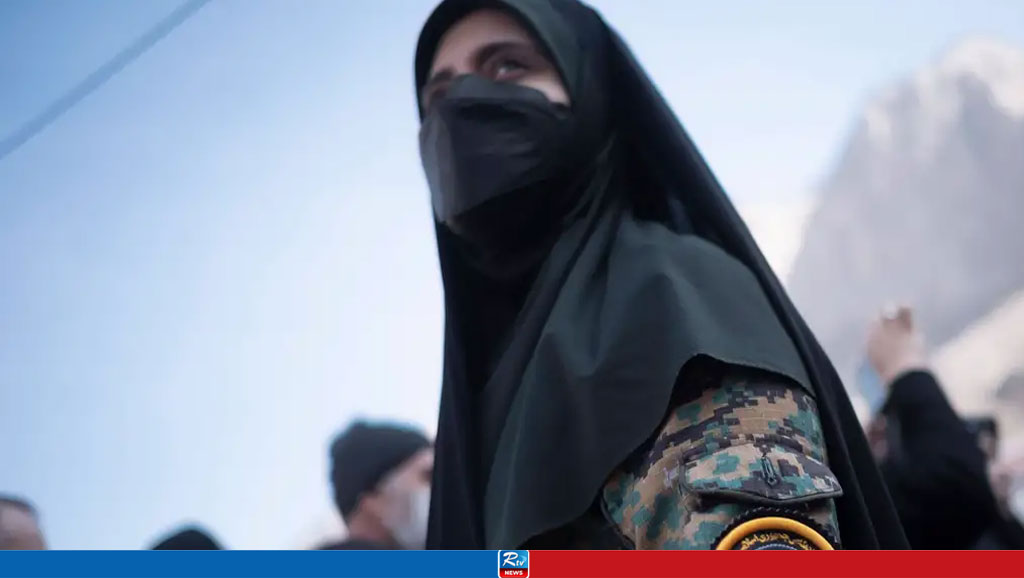
In the shadow of the Israel-Gaza war Iran's rulers are settling scores with internal critics. Women who refuse to wear the headscarf are being severely punished, activists are persecuted and prisoners have been executed.   As least 690 prisoners were executed in Iran in 2023, as of December 1, according to the human rights organizations Center for Human Rights in Iran and the Oslo-based Hengaw Organization for Human Rights, whose data was based on official Iranian statistics.   However, rights organizations believe a considerable number of unreported executions have been carried out hidden from the public eye and often only come to light years later, when bereaved relatives have the courage to speak out. "The world is distracted by the Gaza war. The Islamic Republic of Iran is taking maximum advantage of this situation to crack down on its critics, especially with executions that I would characterize as state murder for revenge, and to intimidate society through violence," Saeid Dehghan, an Iranian human rights activist, told DW. Dehghan, who has lived in Canada since 2022, has founded a worldwide network of Iranian lawyers. He heads a legal center called Parsi Law, which provides legal advice to people in Iran. The center also supports international organizations, such as UN bodies, in their efforts to improve human rights in Iran.  "The sad reality is that as soon as the streets in Iran are emptied of protesters, the country is forgotten and the global community returns to business as usual with the Islamic Republic," said Dehghan.  "Human rights activists understand that every country worldwide pursues its own interests. Nevertheless, the massive oppression in Iran must not be ignored. Especially not by politicians in Western countries, where human rights are one of the fundamental principles of politics," he added.   Iran cracks down on women's rights movement At least eight people who were arrested during nationwide women's rights demonstrations under the slogan "Woman, Life, Freedom" have been sentenced to death in sham trials and executed in recent months. One of them was 21-year-old Milad Zohrevand. On November 30, he was executed without warning, and without the opportunity to say goodbye to his family. According to human rights activists, Zohrevand was not allowed access to a lawyer or family visits during his imprisonment.  "Slaughter and killing do not only happen in war," wrote imprisoned Iranian Nobel Peace Prize laureate Narges Mohammadi in a letter to UN Human Rights Commission. In this open letter, which Mohammadi's husband shared with DW, she asks the UN human rights commissioner to take urgent, decisive and swift action to stop executions in Iran.  "In this world where everything is globalized, is humanity an exception? Is it enough to make a statement on paper? Is the global will to stop the unsafe and widespread executions in Iran's cities paralyzed by empty and baseless excuses?" Mohammadi wrote.   Since December 3, Iranian authorities have cut off all of Mohammadi's connections with the outside world. She is not allowed to make phone calls or receive visitors. Her voice, and that of other critics, has been silenced.  On December 2, Iranian rapper Toomaj Salehi was arrested several days after being released from prison. The judiciary justified the arrest with statements he made in a video allegedly "spreading lies and violation of public opinion."  The musician had posted a video sharing details of how he had been arrested and harassed. Salehi was initially arrested for showing solidarity with the nationwide women's rights protests in the fall of 2022, and was later sentenced to six years in prison.   No space for free speech in Iran Journalists and media professionals in Iran are under enormous pressure not to publish any critical articles.  At the end of November, the public prosecutor's office in Tehran took legal action against the newspaper Etemad, which is cautiously critical of the government.  The newspaper had published a secret document showing an excerpt from a ministerial directive for "arrests" and "other measures" against women who refuse to wear the obligatory headscarf in public. According to the document, the duties of Iran's "morality police" include taking photos and videos of women to ensure dress code compliance in the "metro areas," including "inside the wagons."  The newspaper published this document after Iran's interior minister claimed on November 22 that female morality watchdogs are citizens who want to "fulfill their religious duties and prohibit evil."   The last victim of this ostensible religious sense of duty was a 16-year-old schoolgirl, who was on her way to school at the beginning of October and wasn't wearing a headscarf. According to a source who spoke with the British newspaper The Guardian, she was attacked by a morality police officer on the subway.  Instead of going to school that day, she fell into a coma and was taken to hospital. She later died and was buried at the end of October.
Emboldened Iran silences critics as world looks elsewhere
Read More
Dhaka’s air 6th most polluted in the world today
Dhaka's air most polluted today
Dhaka's air ‘unhealthy for sensitive groups’ for last 3 days
Air pollution killing 1,200 young people in Europe each year