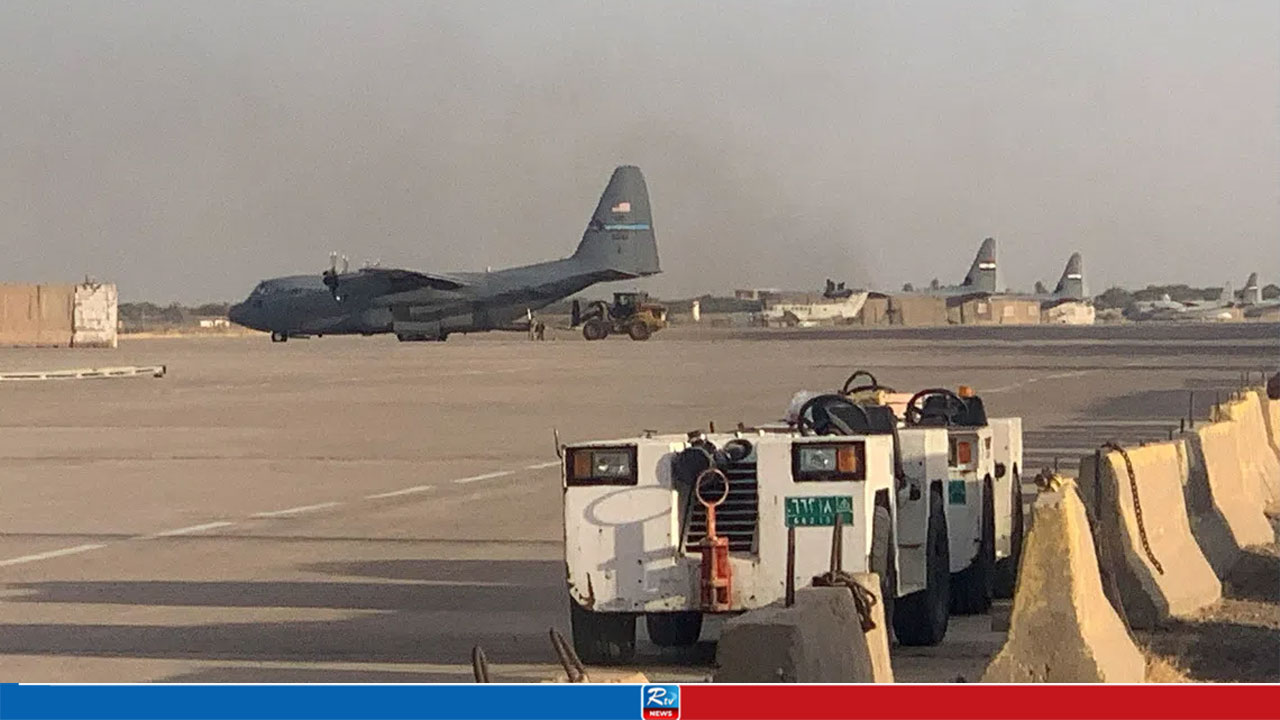
The US military has announced it will initiate a comprehensive blockade of all Iranian ports and coastal areas starting Monday at 10 am EDT (5:30 pm Iranian time).
This significant escalation by US Central Command (CENTCOM) follows the collapse of marathon ceasefire talks in Pakistan, which ended early Sunday without an agreement.
While President Donald Trump had previously vowed to entirely block the strategic Strait of Hormuz, CENTCOM clarified that the current blockade will be "enforced impartially against vessels of all nations entering or departing Iranian ports," though it will still allow commercial ships traveling between non-Iranian ports to transit the waterway.
This shift comes as Lloyd’s List Intelligence reported a sharp decline in maritime traffic, with passage rates dropping from a pre-war average of 135 vessels per day to just 40 since the ceasefire began.
The move has already sent shockwaves through global energy markets, withUS crude prices surging 8% to USD 104.24 a barrel and Brent crude rising 7% to 102.29.
Iranian leaders reacted swiftly with threats of retaliation, as Mohsen Rezaei, a military adviser and former Revolutionary Guard Commander, warned that Tehran holds "major untouched levers" to counter the US move.
Parliament Speaker Mohammad Bagher Qalibaf, who led the Iranian delegation in Islamabad, issued a direct warning to President Trump upon his return, stating, "If you fight, we will fight."
The Revolutionary Guard reiterated that while the strait remains open for non-military vessels, any military presence would be met with a "forceful response."
The diplomatic rift widened further on Sunday when President Trump took to Truth Social to attack Pope Leo XIV, calling the Catholic leader "terrible on foreign policy" after the Pope denounced the conflict and urged immediate peace negotiations.
The failure of the 21-hour summit—the highest-level engagement between the rivals since 1979—centered largely on Iran’s nuclear ambitions.
President Trump, speaking to Fox News, threatened to strike Iran’s civilian infrastructure if it refused to dismantle its nuclear program, claiming that "in one half of a day they wouldn’t have one bridge standing."
Vice President JD Vance confirmed that Washington requires an "affirmative commitment" that Tehran will not seek nuclear weapons, while US officials noted that "red lines" regarding uranium enrichment and the funding of groups like Hamas and Hezbollah remained insurmountable.
Conversely, Iranian Foreign Minister Abbas Araghchi accused the US of "shifting goalposts" and "maximalism" that tanked a deal that was reportedly within "inches" of completion.
As the April 22 ceasefire deadline approaches, the humanitarian toll of the conflict has already surpassed 5,000 deaths across Iran, Lebanon, and Israel, leaving regional stability hanging in the balance.
Source: AP







 Live TV
 RTV Plus