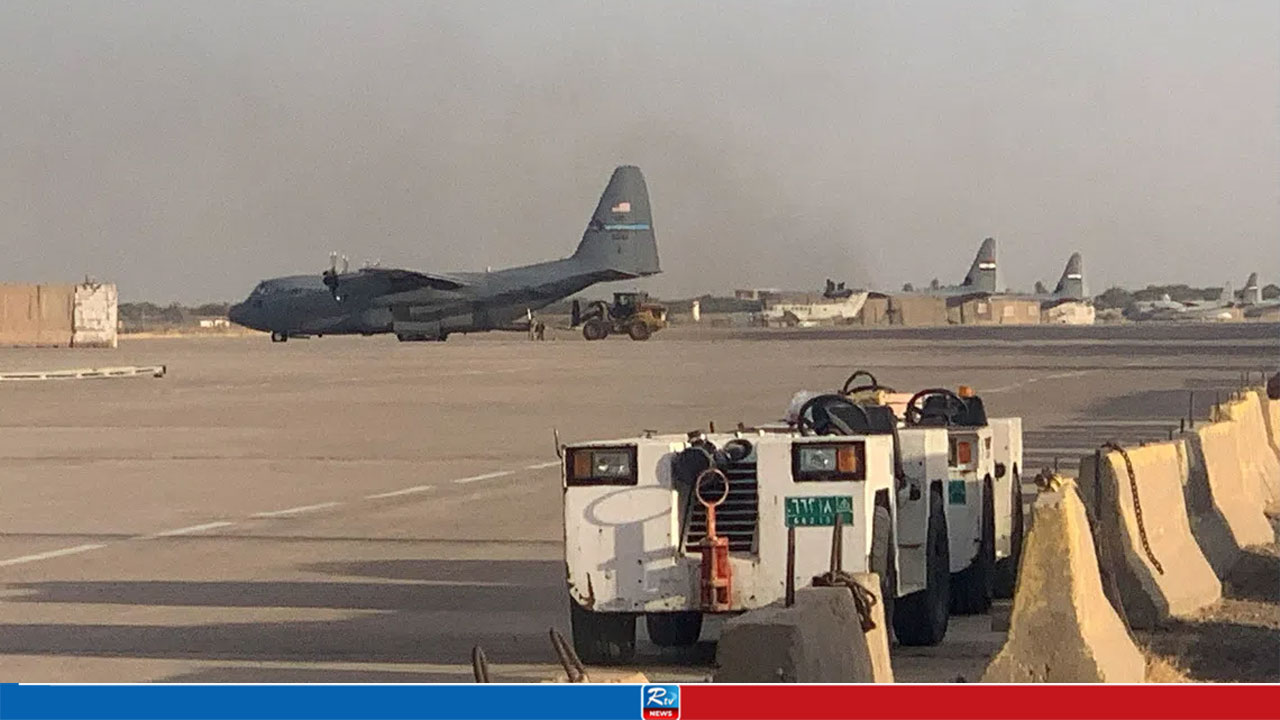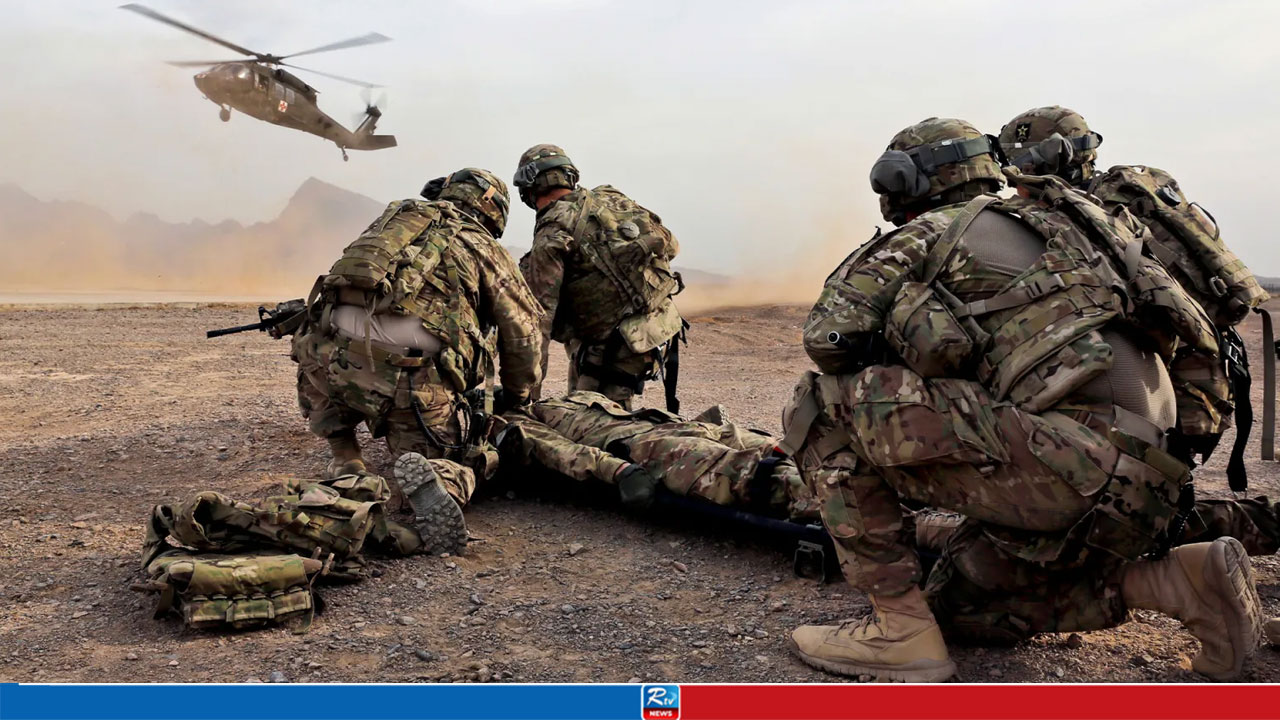
The number of US service members killed in the ongoing war with Iran in the Middle East is higher than the figures published by the Pentagon.
According to The Washington Post, this information comes from six US officials with knowledge of the Department of Defense's internal casualty figures.
Five officials stated that at least 22 US service members have been killed since the Iran war began. This is four more than the number currently listed in the Pentagon's public database, the Defense Casualty Analysis System (DCAS).
Another official stated that the death toll of service members stands at 23. However, not all deaths that are not publicly listed are directly linked to combat; several US troops stationed in the region also passed away during the ongoing conflict, the official noted. Additionally, three US contractors stationed in the region have died since the war started.
As of Friday (September 18), however, the Pentagon's DCAS database records a total of 18 US military deaths since the start of the Iran conflict. This includes deaths resulting from enemy attacks as well as other causes.
When asked about the discrepancy between the published figures and internal counts, the Pentagon declined to comment.
The identities of the service members excluded from the published figures, as well as when, where, and how they died, remain unclear.
Officials familiar with the higher death toll expressed frustration, stating that the additional fatalities should have been included in the Pentagon's public casualty list.
When a service member dies, the military conducts an investigation to determine whether the death occurred in the line of official duty. The findings of this investigation also dictate the various benefits and compensation owed to the families of the fallen soldiers.
As of Friday, the DCAS database lists 14 deaths directly linked to the Iran war, known as Operation "Epic Fury." Four additional deaths are categorized under a separate heading called "Overseas Operations," which occurred during the July ceasefire period between the US and Iran.
Meanwhile, the Pentagon reported that two additional US service members died in separate operations in the Middle East since February that were not related to the Iran war. Although they died at bases targeted by Iranian forces, their names were also omitted from the DCAS.
Sergeant Devin Seibel died in a training accident on May 31 in Erbil, Iraq. A Department of Defense statement noted he was involved in the ongoing anti-Islamic State mission, "Operation Inherent Resolve." However, his name is not listed among those killed in that operation in the DCAS.
Major Surfli Davius died of an unspecified medical emergency on March 6 in Kuwait. It remains unclear whether his death was related to Iranian attacks. He was deployed under "Operation Spartan Shield" to work with regional military forces.
According to the Pentagon's public database, more than 820 US service members have been injured in the Iran war so far. Many troops have suffered traumatic brain injuries from Iranian retaliatory strikes on US bases across the Middle East.
The war has also strained the US military's stockpile of precision-guided munitions, and US bases in the Persian Gulf region have suffered damage. Global energy markets have experienced volatility after Tehran closed the Strait of Hormuz, a critical shipping lane for oil and gas.
According to a document reviewed by The Washington Post, US Central Command—which oversees US military operations in the Middle East—estimates that the Iran war has cost approximately $43.6 billion as of early September.
This includes roughly $28 billion spent on weapons and ammunition consumed during the conflict, though it does not account for damages sustained by US military bases.
Political pressure is also mounting inside the United States on President Donald Trump and the Republican Party over the Iran war. Recent polls reflect low public support for the conflict.
A Reuters/Ipsos poll in September showed that 28 percent of Americans support Trump's stance on Iran, while 62 percent disapprove.
On Tuesday, a record seven Republican lawmakers joined Democrats to help pass a symbolic resolution calling for an end to the war. This is the latest example of momentum behind several war-powers resolutions concerning the Iran conflict in Congress.
Previously, four US troops killed in action were temporarily removed from the Pentagon's casualty list, drawing heavy criticism. The administration later reclassified the renewed conflict with Iran as "Overseas Operations" instead of Operation "Epic Fury."
Meanwhile, Senate Democrats have stated that if they regain the majority after the midterms, they will investigate the Pentagon's process for releasing service casualty information and notifying families.
On Friday, House Democrats and military veterans Pat Ryan, Jason Crow, and 10 other lawmakers announced an effort to introduce a bill preventing the alteration or manipulation of official military casualty data. Democratic Senator Tammy Duckworth and 18 others introduced a similar bill in the Senate.
On the other side, Republican Representative Thomas Massie has initiated efforts to hold a vote in the House to impeach Defense Minister Pete Hegseth, accusing him of violating the War Powers Resolution of 1973 by launching military operations without congressional approval.
Source: The Washington Post








 Live TV
 RTV Plus