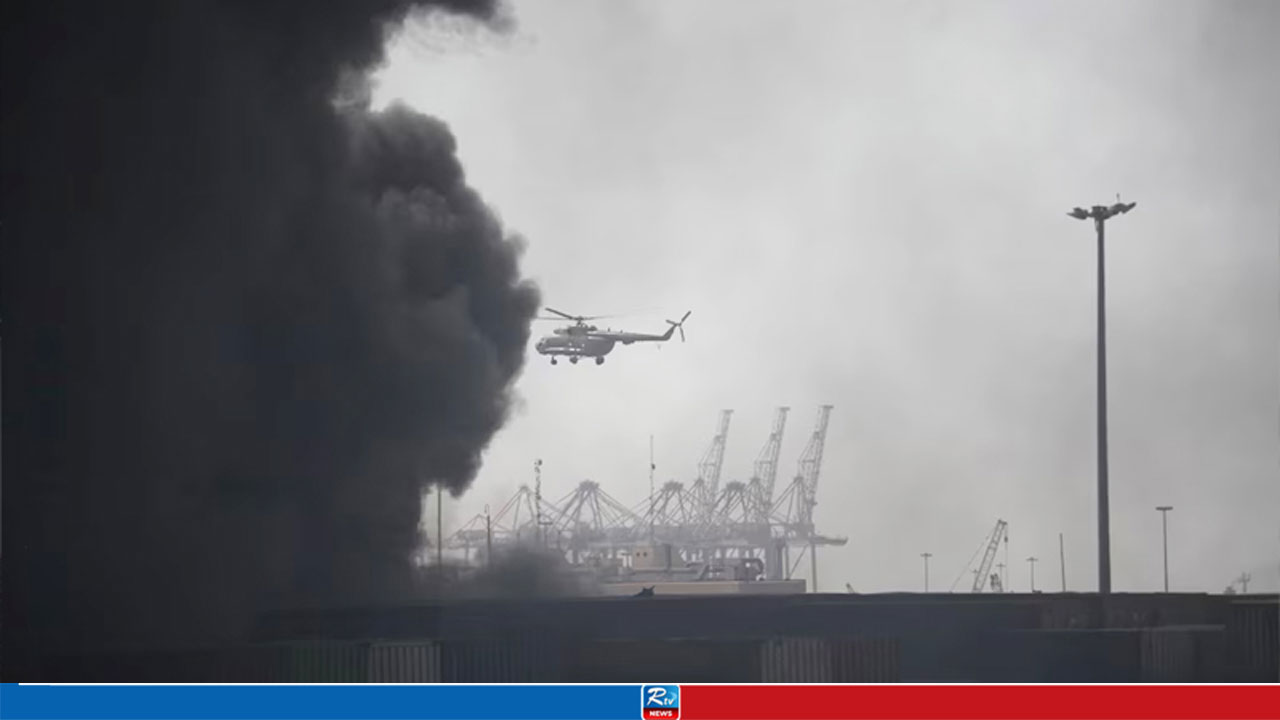
Multiple explosions were heard on Saturday evening (November 7) across several areas in southern Iran.
Iranian media reported hearing blast sounds on Qeshm Island—located near the Strait of Hormuz—as well as in the cities of Jask, Sirik, and Bandar Abbas.
Citing Iranian state television, Reuters reported that these explosions might be linked to military activities in the strategically critical Strait of Hormuz.
Since the outbreak of war between the United States and Iran in February, commercial vessels in the Strait of Hormuz have been subjected to repeated attacks.
State television noted that Iranian officials have not confirmed whether any missile strikes took place in these areas.
Meanwhile, the semi-official Tasnim News Agency quoted a source stating that the blast sounds heard on Qeshm Island had no connection to missile attacks.
However, early Sunday (November 8), the naval force of Iran’s Islamic Revolutionary Guard Corps (IRGC) reported that two oil tankers caught fire after striking mines while attempting to navigate an "unauthorized route" in the Strait of Hormuz.
It was not immediately clear whether the incidents reported by the IRGC were linked to the explosions heard in southern Iran.
Iran has attacked various vessels, claiming they violated navigation restrictions imposed in the waterway, in an attempt to establish control over the Strait of Hormuz and exert pressure on Washington.
Earlier on Saturday, Tasnim News Agency reported that two missiles had struck Qeshm Island, though no official information regarding potential damage was made available.
These reports of explosions follow a US strike on the island days earlier, which a US official described as limited in scope and not part of a resumption of major military operations.
Meanwhile, on Saturday evening, the US military announced that its forces had disabled a commercial vessel attempting to breach the US blockade against Iran.
US Central Command stated that when the ship tried to violate the blockade, a US fighter jet launched a strike targeting the rear section of the vessel, rendering it disabled.






 Live TV
 RTV Plus