Dhaka 02 October, 2026

Suu Kyi to lead team to fight genocide accusation

Rtv online desk

Publish : 20 Nov 2019, 12:00 AM
File Photo: Reuters

Myanmar's government says its leader, Aung San Suu Kyi, will head a legal team it will send to the International Court of Justice in the Netherlands to contest a case of genocide filed against it by Gambia on behalf of the Organization of Islamic Cooperation.

The announcement Wednesday night was posted on the Facebook page of the office of the state counselor, a position Suu Kyi holds along with that of foreign minister.

Myanmar's military has been accused of carrying out mass rapes, killings and the torching of homes during a counterinsurgency campaign launched in western Myanmar in August 2017 after rebel attacks. The violence sent more than 700,000 members of the Muslim Rohingya minority fleeing to neighboring Bangladesh.

Myanmar has strongly denied carrying out organized human rights abuses.

Source: UNB

AH

Follow google news channel to get RTV news Google News
Saudi sentences 5 to death for Jamal Khashoggi’s killing
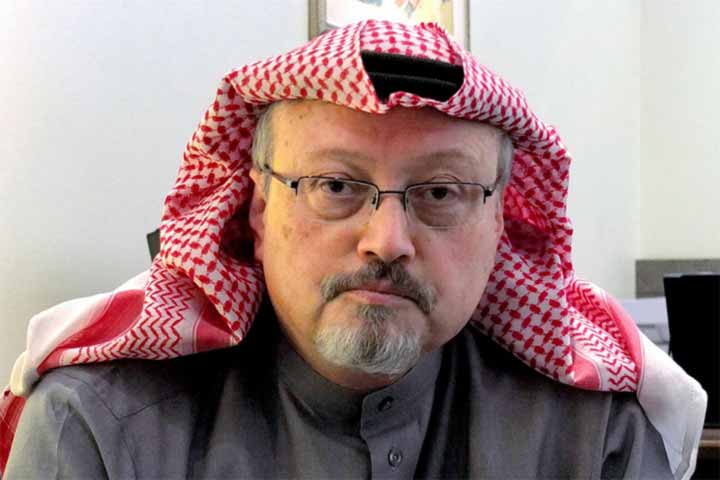
A court in Saudi Arabia on Monday sentenced five people to death for the killing of Washington Post columnist Jamal Khashoggi, who was murdered in the Saudi Consulate in Istanbul last year by a team of Saudi agents. Saudi Arabia's state-run Al-Ekhbariya TV channel reported that three others were sentenced to prison. All can appeal the verdicts. The crown prince drew international condemnation for the killing because several Saudi agents involved worked directly for him. The kingdom denies that Prince Mohammed bin Salman had any involvement or knowledge of the operation. State TV also reported the Saudi attorney general's investigation showed that the crown prince's former top adviser, Saud al-Qahtani, had no proven involvement in the killing . Al-Qahtani, however, has been sanctioned by the United States for his alleged role in the operation. The court also ruled that the Saudi consul-general in Istanbul at the time, Mohammed al-Otaibi, was not guilty. He was released from prison after the verdicts were announced, according to state TV. After holding nine sessions, the trial concluded that there was no previous intent by those found guilty to murder, according to state TV. The trials of the accused were carried out in near total secrecy, though a handful of diplomats, including from Turkey, as well as members of Khashoggi's family were allowed to attend the sessions. Source: AP/UNB AH
Saudi sentences 5 to death for Jamal Khashoggi’s killing
Fresh clashes over India law, death toll hits 14
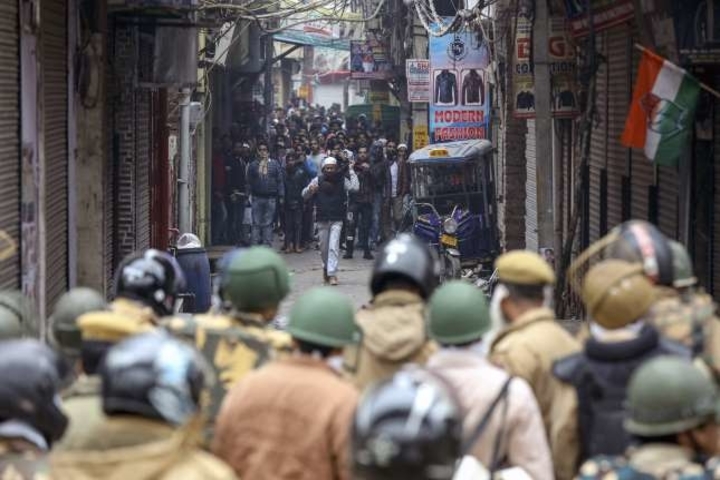
Five more protesters died in fresh clashes Friday between Indian police and demonstrators, taking the death toll to 14 from more than a week of unrest triggered by a citizenship law seen as anti-Muslim, as thousands rallied at the nation's biggest mosque. The law -- making it easier for persecuted minorities from three neighboring countries to gain citizenship, but not if they are Muslim -- has stoked fears Prime Minister Narendra Modi wants to remold India as a Hindu nation, which he denies. The latest deaths, in northern Uttar Pradesh state, followed the loss of three lives on Thursday when police opened fire on protesters in northern Lucknow and southern Mangalore cities. Four of the demonstrators -- two from Meerut district and two from neighboring Muzaffarnagar district -- died Friday from "gunshot wounds", Meerut chief medical officer Rajkumar told AFP. Rajkumar, who goes by one name, added that five police officers, including three with bullet wounds, were being treated in hospital. In the city of Firozabad, also in Uttar Pradesh, a police spokesman confirmed "one person has died and at least one other is injured... during the protests", but added the cause of death was not yet known. Street battles also broke out in the heart of India's capital late Friday with police firing a water cannon and baton charging protesters, who chanted anti-Modi slogans and threw stones. A car was set on fire and an AFP protester on the scene saw demonstrators bleeding from their heads and mouths during the clashes at Delhi Gate in the Old Delhi district. The confrontation came as thousands regathered at Delhi Gate following an earlier sit-in in the same area after marching from India's biggest mosque Jama Masjid in the afternoon. "All the people here, be it those who are Hindu, Muslim, Sikh or Christian -- they are all out on the streets," Tanvi Gudiya told AFP at another Delhi rally  in a Muslim neighborhood after Friday prayers. "So doesn't it affect Modi at all? Does Modi not like anyone? Why is he becoming like Hitler? More than a dozen metro stations in Delhi were closed for the second-straight day. Violence also spread to other parts of Uttar Pradesh, where almost 20 percent of the 200-million population are Muslim, with demonstrators throwing stones and police firing tear gas. In Modi's home state of Gujarat, there were new clashes between security forces and protesters in Vadodara city, a day after battles in the largest city Ahmedabad left 20 policemen and 10 locals injured. Police open fire Tens of thousands had hit the streets nationwide Thursday, with violence erupting in several places including Mangalore in the south. Mangalore security forces opened fire on a crowd of around 200 people after they ignored orders to disperse, killing two people, the spokesman for the deputy commissioner Qadir Shah told AFP. Four others were in hospital with gunshot wounds, while 28 policemen were injured, medical and police officials told AFP. A protester succumbed to gunshot injuries in Lucknow, said a doctor who declined to be named. Officers denied opening fire in the city. Five people were arrested for "misleading and inflammatory" social media posted, police added. In Ahmedabad, video footage shared on social media and confirmed by police showed officers in riot gear being pelted with stones by protesters on Thursday. Authorities have scrambled to contain the situation, imposing emergency laws, blocking internet access, and shutting down shops in sensitive areas across the country. Mobile phone services were briefly suspended Thursday in pockets of the capital, and access in parts of northeast India -- where the wave of protests began -- was only restored Friday. In a strongly worded editorial, the Indian Express Friday said the government must do all it can "to keep the peace" in the country, home to 200 million Muslims. "But in doing so the world's largest democracy cannot look like it cannot accommodate its young who disagree, it cannot afford to signal that it is so ill at ease with itself. "India risks a lot if it begins to be seen as a place where the dissenter's mind is not without fear." Source: AFP AH
Fresh clashes over India law, death toll hits 14
Trump impeached, what next
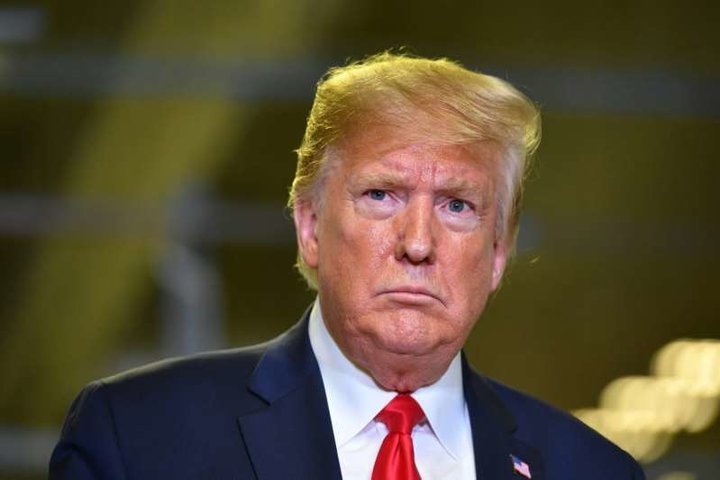
Donald Trump’s impeachment is a black mark against his presidency of historic proportions, but it does not guarantee his removal from office. That decision lies in the hands of the US Senate, the other half of the US Congress, which will consider the issue during a blockbuster trial in January.  Unlike in the House of Representatives, where a simple majority vote was enough to pass impeachment, two thirds of senators will need to vote to remove Mr Trump for it to happen.  That means 67 of the 100 senators must back the move. Given there are only 47 Democrats or independents, 20 Republicans would have to support removal, which looks very unlikely.  The trial itself, which has only ever happened for two other US presidents, will be a moment of epic political theatre and major consequence. The Supreme Court’s chief justice – John Roberts, who was nominated by Republican president George W Bush – will sit as the judge for the trial.  The 100 senators will act as the jury, watching on silently as the case for and against convicting Mr Trump of the two articles of impeachment is put to them.  Among them will be five senators competing for the 2020 Democratic presidential nomination - Bernie Sanders, Elizabeth Warren, Cory Booker, Amy Klobuchar and Michael Bennet.  Making the case for impeachment will be a team of Democratic congressmen picked by Nancy Pelosi, the Democratic House speaker. Defending the president will be his lawyers. How the trial will play out – the length, which witnesses are called, what rules of debate are set – is largely up for grabs, with few hard and fast parameters set by the US Constitution. But here Mr Trump has one advantage – it is the Republicans who hold the majority in the Senate and so call the shots, providing their senators go along with the party leadership. The US president was said to have initially favored a lengthy trial where his supporters could vehemently lay out his defense and – it was hoped – convince new swathes of the country.  Some Republicans had lobbied for Democratic presidential hopeful Joe Biden and his son Hunter – the two men who Mr Trump wanted investigated by Ukraine, triggering impeachment – to give evidence.  Democrats have also been lobbying publicly for their own witnesses, including figures central to the Ukraine scandal who have not yet given evidence, such as Mick Mulvaney, Mr Trump’s acting chief of staff, and John Bolton, his former national security adviser.  However it seems the Republican senators, led by Senator majority leader Mitch McConnell, favour a short trial of around two weeks with no witnesses.  That would be markedly shorter than for the two other US presidents to have been impeached – Andrew Johnson, who had a 10-week trial, and Bill Clinton, whose trial lasted five weeks.  Neither Mr Johnson nor Mr Clinton appeared at their trial to give evidence in person – a precedent Mr Trump is expected to follow.  He will also be hoping for the same result. Neither Mr Johnson, who had replaced Abraham Lincoln after his assassination, nor Mr Clinton, a Democrat, were removed from office. Mr Johnson survived by one vote. Not one of the 53 Republican senators has publicly said they will support removal. Some of those who have remained neutral in public, such as Utah senator and former presidential candidate Mitt Romney, have been hosted in the White House in recent weeks. The country is split down the middle on impeaching and removing Mr Trump. Around 47 per cent of Americans support the move and the same proposition oppose it, with the rest having no opinion, according to a poll of polls run by the political website 538.  However opposition to impeachment among Republican voters is fierce, with nine in 10 being against removing Mr Trump in some polls.  That suggests Republican senators will hesitate before voting to remove, fearing a backlash from party supporters in their home states.  Should Mr Trump survive the trial without being removed – as is widely expected – he faces an uncertain next 11 months as he attempts to secure re-election.  No president has been impeached and gone on to win an election. Mr Johnson sought his party’s nomination again but failed. Mr Clinton bowed out after his second term ended two years later. But that does not mean a slump in support is guaranteed. Mr Clinton, impeached for lying under oath about his affair with White House intern Monica Lewinsky, actually saw his approval rating increase after impeachment.  In Mr Trump's eyes, survival in the Senate trial will amount to vindication. The verdict of the American public will have to wait until November 3 2020.  Source: The Telegraph AH
Trump impeached, what next
CAA: India PM Modi appeals for calm as protests grow
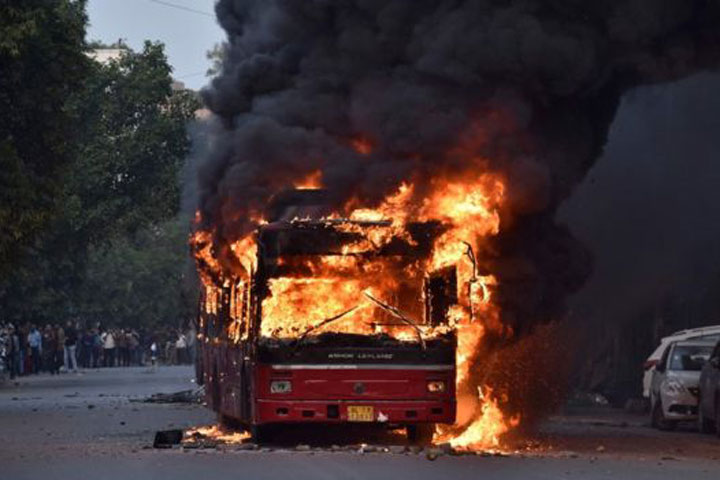
India's Prime Minister Narendra Modi has appealed for calm as violent protests against a new law on illegal migrants entered a fifth day. Large demonstrations are taking place in the capital Delhi, Mumbai, Hyderabad and Kolkata (formerly Calcutta). Monday's protests came a day after clashes between police and protesters in Delhi left at least 50 injured. Protesters are angry at a law entitling citizenship to some non-Muslim migrants from three Muslim-majority countries. But people are divided on why they have taken to the streets. Some critics say the law is anti-Muslim, while others - especially in border regions - fear large-scale migration. The protests - which have left six people dead - began in the north-eastern state of Assam on Thursday, before spreading to other parts of northern and eastern India. But as students resumed their protests on Monday, Mr Modi attempted to calm tensions in a series of tweets. "No Indian has anything to worry regarding this act. This act is only for those who have faced years of persecution outside and have no other place to go except India," the prime minister wrote. "This is the time to maintain peace, unity and brotherhood." Authorities have tried to curb the protests by shutting down internet services, so it is unclear how many people in affected areas have seen his tweets. Several lawyers have asked the Supreme Court to intervene, pointing out that officers had allegedly assaulted students in bathrooms, but the chief justice said that the court would not take any action until the protests ceased. Delhi police spokesman MS Randhawa denied the allegations, saying his officers "exercised maximum restraint". The UK, US and Canada have issued travel warnings for people visiting India's north-east, telling their citizens to "exercise caution" if travelling to the region. The law allows non-Muslims from Bangladesh, Pakistan and Afghanistan, who entered India illegally, to become citizens. What is happening in Delhi? Protests resumed at the city's prestigious Jamia Millia Islamia University on Monday morning, despite violent clashes on Sunday which resulted in 35 students being detained. A march on Sunday ended with at least three buses and several motorbikes being torched, roads blocked and stones being thrown at officers, who responded with tear gas. The university said police later entered the campus without permission and video footage showed police assaulting students and staff. Videos shot by students show police beating up students inside campus areas like bathrooms and the library. Police have said that they did what was "necessary" to stop the protests. The university's vice chancellor, Najma Akhtar, condemned the police action on Monday, telling reporters they would be filing a court case against the police and demanding a high-level inquiry. She also denied rumors of student deaths. Hundreds of people also protested in other parts of the city, including in Jawaharlal Nehru University and outside the city's police headquarters. How have Indian authorities reacted? India's Chief Justice Sharad Bobde said that the Supreme Court will intervene only if "the atmosphere settles down", adding that student protesters could not "take the law into their own hands". "The court can't do anything right now. Let the riots stop," he said. Meanwhile, Delhi police spokesman MS Randhawa appealed for calm and asked students to not get provoked, even as he denied allegations of excessive force. "Police exercised utmost restraint. There was no firing and we have used minimum force," he said at a press conference on Monday. The police have been heavily criticized, with many on social media alleging that officers attacked students with sticks and tear gas when they were peacefully protesting. But Mr Randhawa said students and locals threw stones at the police first, adding that 30 policemen were injured. "We will identify outside protesters and take action against them," he said. What has the reaction been in other Indian cities? Live footage from the northern city of Lucknow on Monday showed students at Nadwa university throwing stones at security forces, who retaliated by throwing the stones back at them. The students have been locked inside the campus. Local television footage also showed officers hitting students with large sticks. In Kolkata, tens of thousands of people have joined a demonstration led by Chief Minister Mamata Banerjee and her ruling Trinamool Congress party. The situation remains tense and more protests are expected. Students at the prestigious Indian Institute of Technology in the southern city of Chennai (formerly Madras) have already announced a protest this afternoon. Why is the law so divisive? The Hindu-nationalist BJP government argues that the law aims to accommodate those who have fled religious persecution. Critics say the law is part of the government's agenda to marginalize Muslims, and that it violates secular principles enshrined in the constitution. Earlier this week, the United Nations Human Rights office voiced concern that the new law was fundamentally discriminatory in nature. The government denies any religious bias and says Muslims are not covered by the new law because they are not religious minorities, and therefore do not need India's protection. Meanwhile, people in Assam fear that they will be "overrun" by illegal non-Muslim migrants from neighboring Bangladesh. They argue that outsiders will take over their land and jobs - eventually dominating their culture and identity. Source: BBC AH
CAA: India PM Modi appeals for calm as protests grow
Citizenship Amendment Bill: India’s West Bengal hit by protests
Protests in Kolkata against a controversial Indian citizenship law have continued into their second day. The new law entitles non-Muslim migrants from three Muslim-majority countries to citizenship if they are facing religious persecution. On Saturday, protesters blocked motorways and attacked trains and stations in West Bengal's capital. A curfew was also imposed in Guwahati, in the north-eastern state Assam, after two people died in clashes this week. The curfew was lifted from 09:00 local time until 16:00 on Saturday. Protest groups in Guwahati have said they plan to defy the curfew on Saturday evening. The UK, US and Canada have issued travel warnings for people visiting India's north-east, telling their citizens to "exercise caution" if travelling to the region. Demonstrations have been breaking out across India. On Friday, hundreds of mostly student protesters clashed with riot police in New Delhi. Officers used tear gas on the protesters and detained more than 40 students, the BBC's Priyanka Dubey reports - adding that there was a palpable sense of anger on the streets of the capital. Other, smaller rallies were also held in the southern states of Kerala and Karnataka. Mamata Banerjee, West Bengal's chief minister, opposes the law and has said she will not implement it. She has also called for more rallies to be held next week. The chief ministers of Punjab, Kerala, Madhya Pradesh and Chhattisgarh have also said they will not implement the law. What is the new law and why is it controversial? The Citizenship Amendment Bill (CAB), which was approved this week, applies to non-Muslims from Pakistan, Afghanistan and Bangladesh, who have been persecuted for their faith. As well as Hindus, this includes Christians, Buddhists, Sikhs, Jains and Parsis. If people from these groups enter India illegally and can prove that they originate from one of the three eligible countries, they can become Indian citizens. Muslim rights groups across the country and an opposition political party argue the bill is part of Prime Minister Narendra Modi's "Hindutva", or Hindu nationalism, and part of an agenda to marginalize Muslims. Mr Modi denies this, saying that Muslims are not covered by the new law because they are not religious minorities, and therefore do not need India's protection. Critics argue that if the law were genuinely aimed at protecting minorities, it would include Muslim religious minorities who have faced persecution in their own countries - Ahmadis in Pakistan, for example. They also say the bill violates secular principles enshrined in the constitution, which prohibits religious discrimination against all citizens. There is also an anti-migrant element to some of the protests. The BBC's India correspondent, Soutik Biswas, says that the protests in Assam in particular have little to do with the law being seen as exclusionary or as a threat to secularism, and "more to do with indigenous fears about being demographically and culturally swamped by 'outsiders'". Prime Minister Modi has sought to reassure people in Assam, telling them they have "nothing to worry" about. "The central government and I are totally committed to constitutionally safeguard the political, linguistic, cultural and land rights of the Assamese people," he tweeted on Thursday. But it is unlikely residents would have been able to read the message, because internet and mobile services in the area were shut down. Source: BBC AH 
Citizenship Amendment Bill: India’s West Bengal hit by protests
Read More
Two RAB members wounded in gun attack at Rohingya camp
Suu Kyi denies Myanmar genocide allegations at top UN court
All eyes on Hague; Hearing on Myanmar genocide begins Tuesday
Ban Ki-moon for political solution to Rohingya crisis