Dhaka 26 September, 2026

Universal Covid test will be mandatory in Jammu & Kashmir

International Desk

Publish : 01 Dec 2021, 06:35 PM
Photo: Collected

Indian administrated Jammu and Kashmir’s Chief Secretary Arun Kumar Mehta on Monday chaired a meeting of the COVID Task Force to review the public health response to COVID-19 and asked the divisional and district administrations to ensure universal testing of all foreign travelers to Jammu and Kashmir in the light of the emergence of new COVID variant Omicron.


Local Administrative Secretaries of Finance, Health & Medical Education, Home, Disaster Management, Relief, Rehabilitation and Reconstruction, besides Divisional Commissioners Kashmir/ Jammu, Deputy Commissioner of Anantnag, Srinagar, Kathua, Jammu, Udhampur, Reasi and Budgam, along with MD, National Health Mission, Director, Family Welfare, and other concerned officers participated in the meeting.


As per the official press release issued by the Jammu and Kashmir government, it was informed that the Central Government issued guidelines for detecting cases of COVID variant Omicron from countries declared at risk.


The Chief Secretary underlined the need to adhere to the laid down guidelines and test all the incoming foreign travelers through international flights. As per the guidelines, the negative travelers will be sent for home quarantine of seven days and re-tested on the eighth day, whereas, the COVID positive patients will be sent to institutional quarantine centers for 15 days and their samples will be sent for genome sequencing at ICMR designated testing laboratories.


In the meeting, it was emphasized that de-boarding from international flights must comply with the COVID appropriate behavior (CAB) and set protocols and a special COVID helpdesk is forthwith established at the Srinagar airport. Besides, Secretary, Disaster Management was asked to monitor the situation and submit a daily report for timely intervention of the concerned agency.


The Chief Secretary impressed upon the Health Department to establish genome sequencing facilities at Government Medical Colleges, Srinagar and Jammu to fast-track the detection of Omicron variant and other mutations.


Moreover, district administrations of Budgam and Srinagar were asked to establish government quarantine centers and further explore arrangements for paid quarantine facilities for institutional quarantine to deal with any emergent situation.


The Health and Medical Education Department was asked to conduct equipment audit to establish functionality of COVID related infrastructure including COVID dedicated hospitals, ventilators, Oxygen supported beds and Oxygen plants. The Department was directed to ensure readiness of manpower and machinery to cater to a peak caseload of at least 7500 patients per day and firm up the inventory of oxygen supply and medicines.


Further, the Chief Secretary directed the Deputy Commissioners to enhance testing rate and contact tracing for positive patients to trace infection trajectory and establish micro-containment zones at an early stage. Additionally, the Deputy Commissioners were directed to reduce the daily reported cases through strict enforcement of Covid-19 Appropriate Behavior, COVID-19 Standard Operating Procedures and protocols, and micro-containment zones.

Source: ANI

BM

Follow google news channel to get RTV news Google News
Report says children dies highest rate in Pakistan due to malnutrition
Unhygienic atmosphere and lack of family planning are attributed to malnutrition and causing early death among children in Pakistan. Malnutrition in children and mothers is a serious issue in many developing countries all over the world. Pakistan has not been faring any better as we regularly read reports about deaths that are mostly the result of malnutrition, according to Dawn. Earlier, the problem in Pakistan is that a large number of infants somehow do not get the required vaccination at appropriate intervals. There is also a need to collect reliable data from across Pakistan from both government and private clinics and health facilities as most data from private hospitals do not reach the government record. Further, there are at least two strategies that both federal and provincial governments must follow. Reducing malnutrition among children and mothers should be the top priority of all concerned departments and ministries, according to Dawn. Also, an expanded programme of vaccinating children as and when they turn six, 10, and 14 months old will help as recommended by World Health Organization. According to some estimates, approximately 90,000 children die annually in Pakistan due to the pneumonia virus alone that affects malnourished children more than healthy children. The coverage of immunization will not help much if children and mothers lack the required nutrition during prenatal and post-natal years, according to Dawn. Further, the absence of prenatal care and traditional delivery methods compound the problem and become the main contributing factors in this problem. Recent surges in inflation and high prices of essential food items have added to the malnutrition among children and mothers, according to News International. Source: ANI
Report says children dies highest rate in Pakistan due to malnutrition
90 pc of Indian adults received first dose of covid vaccine: Indian Health Ministry
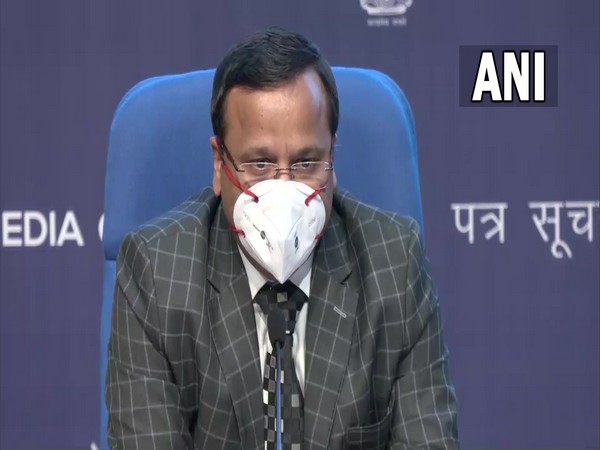
Approximately 90 per cent of the adult population in India has been vaccinated against COVID-19 with the first dose, said The Ministry of Health and Family Welfare on Thursday. Addressing media personnel, Luv Aggarwal, Joint Secretary, Union Health Ministry said, "Approximately 90 per cent of the adult population in India has been vaccinated against COVID-19 with the first dose. On average, India reported more than 8,000 cases per day last week. Overall case positivity rate stands at 0.92 per cent. From December 26 onwards, the country has been reporting 10,000 daily cases."   "The weekly positivity rate of more than 10 per cent is being noted in eight districts including six districts of Mizoram, one from Arunachal Pradesh and Kolkata in West Bengal. The weekly case positivity rate is between 5-10 per cent in 14 districts of the country. There are 961 cases of Omicron variant of coronavirus in India, out of which 320 patients have recovered," he added.   India has reported 13,154 new COVID-19 cases and 268 deaths in the last 24 hours, the Union Health Ministry said on Thursday. The tally of Omicron COVID-19 variant cases in the country has gone up to 961 with maximum cases were reported from Delhi (263) and Maharashtra (252). With this, the country's COVID-19 tally has risen to 34,822,040 while the death toll has mounted to 4,80,860.   The ministry informed that the active caseload in the country stands at 82,402 constituting 0.24 per cent of the total cases. As many as 7,486 patients recovered in the last 24 hours taking the total number of recoveries to 3,42,58,778. The recovery rate in the country currently stands at 98.38 per cent. The weekly positivity rate in the country is 0.76 per cent which remains lesser than 1 per cent for the last 46 days. The daily positivity rate is 1.10 per cent which remains lesser than 2 per cent for the last 87 days.   The country has conducted as many as 67.64 crore COVID-19 tests so far.   Source: ANI
90 pc of Indian adults received first dose of covid vaccine: Indian Health Ministry
Performance at UNSC indicates world needs New Delhi at the table permanently: India
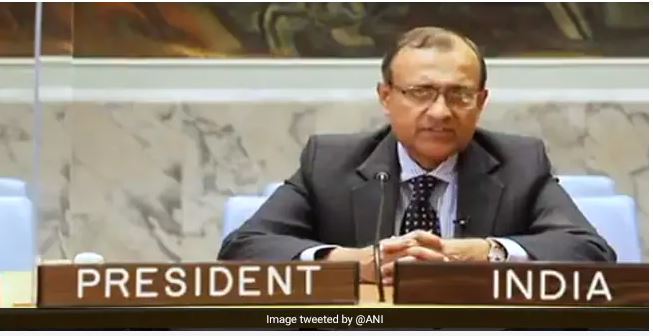
Though being a non-permanent member of the UN Security Council, performance of India indicates that the world needs new delhi to be at the horseshoe table permanently, the country's envoy to the United Nations TS Tirumurti has said. "India took its place in the Security Council for the eighth time as an elected member - The highlight of our presence in the Security Council so far has been our presidency in August," Mr Tirumurti, who is India's Permanent Representative to the UN, said in a video. India's Permanent Mission to the UN posted the special video highlighting the several achievements by India as its first year in the UN Security Council draws to a close. The video chronicles India's journey as a non-permanent UNSC member in 2021 including its Presidency of the 15-nation Council in August, on combatting terrorism, UN peacekeeping, Afghanistan, Myanmar, Africa, Middle East and Climate action. "Our performance again indicates that the world needs India to be at the horseshoe table permanently," Mr Tirumurti said, as he underscored the need for New Delhi to have a seat at the UN Security Council as a permanent veto-welding member. Narendra Modi also became the first Indian Prime Minister to preside over a UN Security Council Open Debate as he chaired the high-level session on 'Enhancing Maritime Security - A Case for International Cooperation' on August 9. For the first time, the Security Council adopted a presidential statement on maritime security. The visit of the Indian Prime Minister to the United Nations and to address the UN General Assembly was "certainly a high point this year", he said. It was during India's August presidency of the Council that the situation in Afghanistan rapidly deteriorated, requiring the Security Council to act without any delay, Mr Tirumurti said, adding that Resolution 2593 on Afghanistan was adopted under India's presidency, which demands assurances that Afghan soil will not be used for terrorism against other countries and that the authorities in Kabul will act against all terrorists, including those designated by the 1267 Sanctions Committee. Significantly, India firmly opposed the attempt by countries to bring the issue of climate change into the Security Council. Mr Tirumurti had said at the Council meeting earlier this month that "India is second to none when it comes to climate action and climate justice. But the Security Council is not the place to discuss either issue. In fact, the attempt to do so appears to be motivated by a desire to evade responsibility in the appropriate forum." At the flag installation ceremony in the beginning of the year for the incoming UNSC members, Mr Tirumurti had highlighted that India comes into the Security Council "as a largest democracy, representing 1/6 of humanity and a very strong commitment to reformed multilateralism, rule of law, a fair and equitable international system and to peace, security and development." Mr Tirumurti also said in the video that India has been consistent in its support for transition to democracy, whether in Myanmar or in Africa and on issues affecting the developing world, India has been a strong voice to protect their interests."Our steadfast commitment to safeguarding the interests of the developing world is reflected in our performance," he said. Further, given its predominant role in UN peacekeeping, India gave UN peacekeeping a strong focus in the last one year, including during its August Presidency.During a meeting in August, External Affairs Minister S Jaishankar had said that peacekeeping continues to play a crucial role in India's vision of ensuring international peace and security and providing greater clarity, direction and professionalism in UN peacekeeping operations is at the heart of the vision. After nearly five decades, India piloted a resolution on 'Protecting the Protectors', calling for accountability for crimes against peacekeepers. India also gifted 200,000 COVID vaccines to cover every peacekeeper in every peacekeeping mission throughout the world. Indian forerign minister Jaishankar had also chaired a briefing on ISIL Daesh during India's presidency and New Delhi helped shape the Global Counterterrorism Strategy in the UN General Assembly. During the year, India also sought to bring the necessary balance to the debates relating to Africa, Mr Tirumurti said adding that India made its views clear on the issue of burdening African countries with unrealistic benchmarks on their sanctions regime and called for greater commitment from the international community to assist Africa fight terrorism. India chaired the Taliban Sanctions Committee and the Libya Sanctions Committee this year and will chair the Counter-terrorism Committee next year. In a historic decision, the UN General Assembly granted observer status to the International Solar Alliance. Source: NDTV
Performance at UNSC indicates world needs New Delhi at the table permanently: India
Taliban should ensure women’s freedom: Pak media
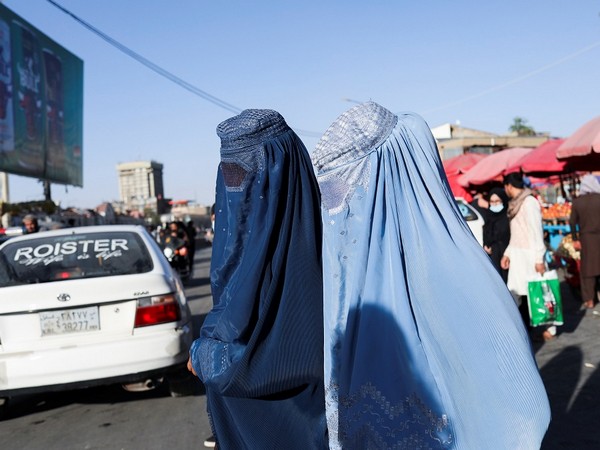
A recent communication by the Taliban which put limitations on the movement of Afghan women is a grim reminder that Taliban governance is gradually slipping in a ground mood. The Express Tribune, in an editorial, advised the group to lower the guard on civil liberties and allow women to become part of the enterprising Afghan public life. According to new directives by the Taliban, women seeking to travel longer distances must be accompanied by a close male relative, and likewise, restrictions were slapped on showing dramas and soap operas on national television. Last but not least, the mandatory wearing of the hijab, curbs on higher education of girls and a ban on playing music are other aspects that hint at adopting stricter regulations, especially pertaining to women’s liberties and restricting their movement at ease. This will certainly cast the Taliban rulers in a bad light as far as the West is concerned, and also bring them under pressure even from their friends and admirers, said the editorial. Taliban, who are desperate to seek international recognition, and have time and again been reminded that release of their legal foreign assets and humanitarian aid is indispensable to keep them going has not completed a single parameter to get the recognition. Respect for women and human rights, establishing inclusive government, not allowing Afghanistan to become a safe haven of terrorism are the preconditions for the recognition set by the international community. The Taliban are still longing for a de jure status in the comity of nations. This could be one factor of irksome behaviour as Taliban try to adopt a more theocratic approach in state business visible in the latest instructions and policy guidance from the group, wrote The Express Tribune. Enabling girls to get an education and drive vehicles and giving them permission to work in offices and perform daily chores will be appreciated, and is a must in today’s interdependent lifestyle where men and women together help families to make ends meet. The Saudis have led from the front in reforming their society, and the Taliban should take a cue from them, added the editorial. Source: ANI
Taliban should ensure women’s freedom: Pak media
Punjab terror cases: Jaswinder Singh Multani being questioned in Germany
Jaswinder Singh Multani, an activist of the banned terror organization Sikhs for Justice (SFJ), was being questioned in Germany at the behest of Indian security agencies over his involvement in terror incidents in Punjab, officials privy to the development said today. The German Federal Police, in reply to a query by The Tribune on Multani, neither denied nor confirmed his arrest. In an e-mail communication, the press officer of the German police said as a matter of principle, they did not divulge personal information and the Indian authorities should be contacted for the purpose. A controversy had erupted earlier in the day when SFJ general counsel Gurpatwant Singh Pannu released a purported video, claiming Multani had not been arrested. He is also seen speaking with Multani in the video. Media reports from New Delhi claimed on Tuesday that efforts made by Indian diplomatic channels had led to the arrest of Multani after the Ludhiana court blast. Indian officials today chose to ignore the claims made by the SFJ. Interestingly, Pannu, in earlier video messages, had threatened different Punjab CMs and DGPs. But in today’s video, he said the SFJ believed in fighting through ballot, not bombs. Sources privy to the developments in Germany said Multani was a suspect in some recent terror incidents, with a Punjab Police dossier stating he was a “master handler” and expert in recruiting youth for terrorism and that he used to supply them money, weapons and explosives through narcotic smugglers or gangsters in the state. His name figures in two FIRs lodged in February and August in Punjab, including a plot to kill farmer leader Balbir Singh Rajewal to spread unrest and chaos. The police are suspecting his involvement in the Ludhiana court blast case. A controversy erupted on Wednesday when banned SFJ’s Gurpatwant Singh Pannu released a purported video, claiming that the outfit’s activist Jaswinder Singh Multani had not been arrested. He is seen speaking with Multani in the video. Indian officials chose to ignore the claims.   Source: The Tribune
Punjab terror cases:  Jaswinder Singh Multani being questioned in Germany
Read More
90 pc of Indian adults received first dose of covid vaccine: Indian Health Ministry
PM renews call to countrymen to receive Covid-19 vaccine
WHO warns of ‘very high’ Omicron risk as Covid surges worldwide
To handle any pandemic-like situation needs global cooperation: Indian Army Chief