Dhaka 26 September, 2026

What Trump's Immigration Freeze Means

Thomas Latschan, Deutsche Welle

Publish : 07 Dec 2025, 09:04 PM
Green card holders from 19 countries must now undergo security screening again. Photo: IMAGO

United States President Donald Trump announced drastic measures against immigration in late November.

All asylum procedures were suspended indefinitely "until we can ensure that every alien is vetted and screened to the maximum degree possible," Joseph Edlow, director of US Citizenship and Immigration Services (USCIS), posted on X.

Further restrictions have since been imposed on nationals from 19 countries. These include entry bans and the suspension of all immigration applications and naturalizations.

The granting of permanent residence and work permits, known as green cards, has also been suspended for people of the nationalities in question.

USCIS chief Edlow said the president had also directed him to conduct "a full scale, rigorous re-examination of every green card for every alien from every country of concern," including holders of residence permits that have already been granted.
74936719_906
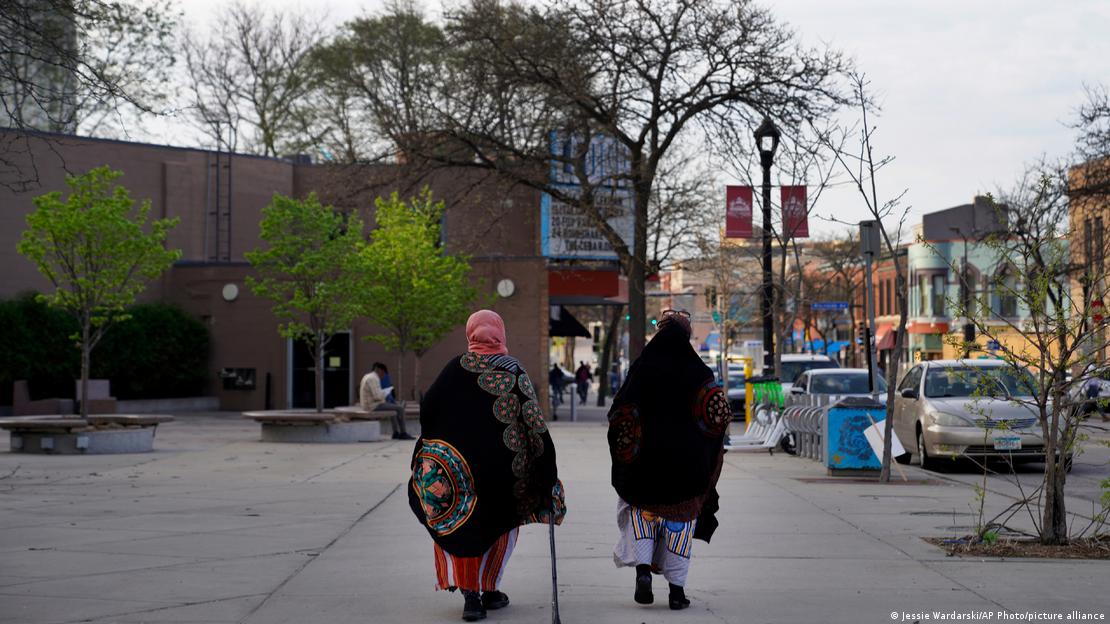
Women in the predominantly Somali neighborhood of Cedar-Riverside in Minneapolis: Will they now have to worry about their residency permits too?

What sparked the immigration crackdown?

The background to these new policies is an attack on two National Guard soldiers in Washington on November 26.

The two men were seriously injured by gunshots in the center of the US capital, and one of the victims later died. The suspected attacker, a 29-year-old Afghan, was arrested and charged with murder.

According to media reports, he entered the US in 2021, the year of the chaotic US troop withdrawal from Afghanistan, having previously worked for the Central Intelligence Agency (CIA) and other US government agencies in his home country.
74950342_906
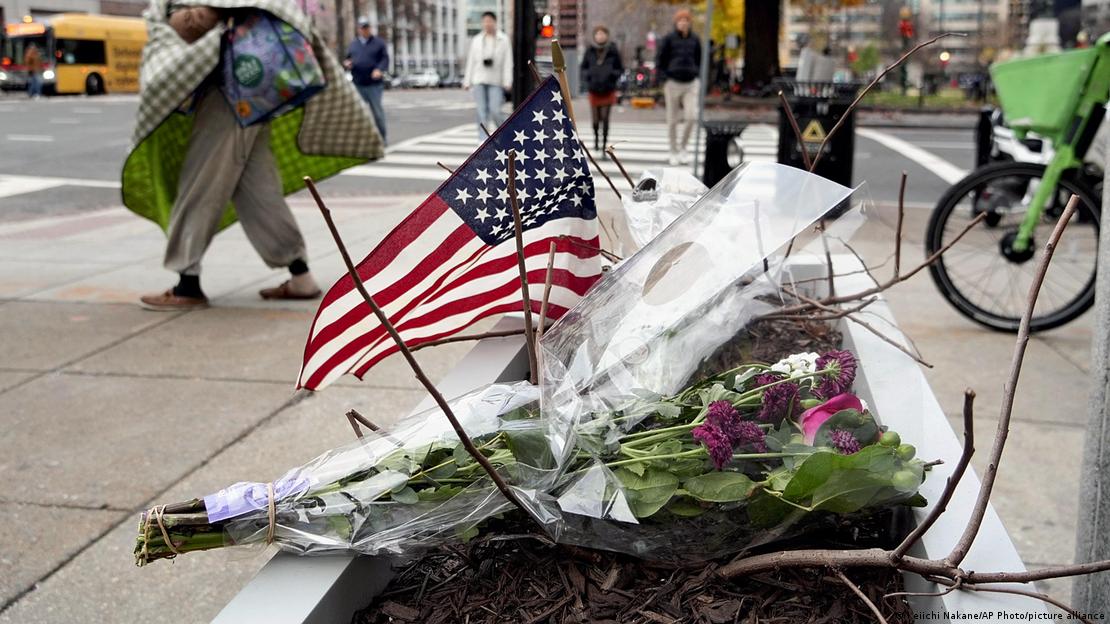
Flowers at the scene of the deadly attack on two National Guard soldiers in Washington, DC

But the Trump administration's recent response is in line with asylum and migrationpolicies that have become increasingly rigid in recent months.

The US president used this incident to once again sharply criticize immigration under Joe Biden, claiming that, like many others, the alleged assassin had entered the country "unchecked" during his predecessor's term in office.

But a US government file revealed that the alleged gunman was actually granted asylum this year under Trump, Reuters reported.

Which countries are affected?

The immigration ban applies to citizens of countries on three continents.

In Asia, this includes Afghanistan, Yemen, Iran, Turkmenistan, Myanmar, and Laos. In Latin America, the ban applies to Cuba, Haiti, and Venezuela.

But most of the sanctioned countries are in Africa: Libya, Chad, Sudan, Eritrea, Somalia, Sierra Leone, Togo, Equatorial Guinea, the Republic of Congo and Burundi.

These are all the same 19 countries for which the US government imposed entry bans in June 2025. And these restrictions have now been tightened once again.

They are considered "high-risk" because US authorities say that they don't receive enough reliable information about their nationals to conduct security checks.

Many of these countries are also accused of failing to cooperate in taking back people who have been required to leave the US.

How are immigrants impacted?

The new restrictions have far-reaching consequences for the individuals concerned: all green card applications, naturalizations, and asylum procedures have been put on hold for the time being.

Those affected cannot pursue their applications, even if they were already being processed.

Even green card holders could lose their permanent residency status after a new security check. In the worst case, they would then face deportation to their home countries.
74500446_906
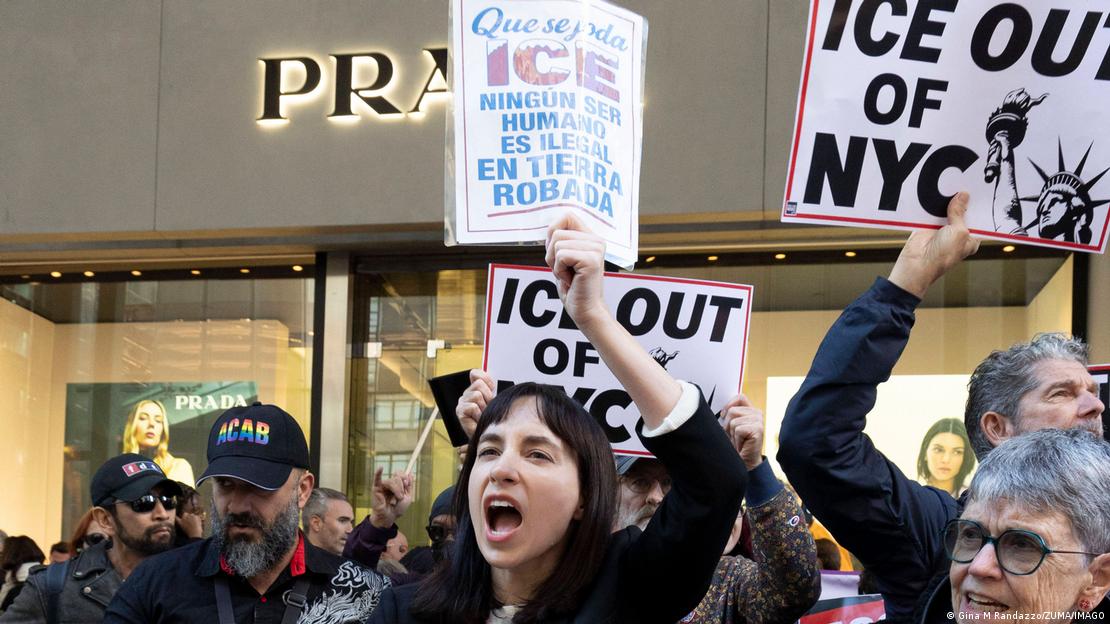
The Trump administration's rigid migration policy has sparked numerous protests in the US, like this one against ICE raids in New York in October

Late this week, it was announced that the US government would also shorten the maximum validity period of work permits for refugees, asylum seekers, and other migrants — from five years to 18 months.

Since all asylum applications are currently on hold, war refugees and people facing political persecution from around the world will no longer find a safe haven in the US.

The additional issue of reuniting affected families has now also been made extremely difficult or even impossible because family members will no longer be admitted to the country.

But the US economy is also facing negative consequences as a result of these policies. The freeze affects sectors that are heavily dependent on foreign workers, particularly in health, science, and technology. The refusal to issue visas, green cards, or work permits makes it difficult to import talent and skilled workers in these areas.

Who has criticized these policies?

While the US government considers the measures necessary steps to protect national security, Democratic lawmakers and human rights organizations have been critical.

"Nothing meaningfully links the 19 countries except the administration's opportunistic stigmatization and exclusion of people based on where they were born," Tanya Greene, US program director at Human Rights Watch, said in a statement. "This sweeping change is not about safety. It is about scapegoating entire nationalities to justify discriminatory policies."

Follow google news channel to get RTV news Google News
U.S. Expresses Deep Condolences Over Khaleda Zia’s Death
The United States has expressed deep grief following the passing of former Bangladesh Prime Minister Begum Khaleda Zia. The message was shared via a post on the verified Facebook page of the U.S. Embassy in Dhaka at 10:35 AM this Tuesday. Read More China Expresses Deep Condolences Over the Death of Khaleda Zia In the post, the U.S. Embassy stated, "Khaleda Zia played a vital role in shaping the modern history of her country. Her leadership held a special significance in the development and progress of Bangladesh." This tribute follows similar messages from other global powers, acknowledging her long-standing influence on the nation's democratic journey and economic growth.
U.S. Expresses Deep Condolences Over Khaleda Zia’s Death
Trump Warns Iran Against Rebuilding Nuclear Program
US President Donald Trump said Iranian leaders "know the consequences" should Iran try to rebuild its nuclear program after June's brief war. He was speaking as Israeli Prime Minister Benjamin Netanyahu visited Florida. Donald Trump on Monday intimated at further Israeli or US strikes on Iran if the country tried to rebuild its nuclear weapons facilities. "Now I hear that Iran is trying to build up again," Trump told reporters at his Mar-a-Lago estate on Monday during Israeli Prime Minister Benjamin Netanyahu's visit to Florida. "And if they are, we're going to have to knock them down. We'll knock them down. We'll knock the hell out of them. But hopefully that's not happening." Iran and Israel exchanged fire for two weeks in June in what became known as the Twelve-Day War between June 13 and 24, with the US also striking three key Iranian sites with heavy munitions on June 22 in what was codenamed Operation Midnight Hammer. What happened to Iran's nuclear capabilities in June's attacks? Trump had previously said that Tehran's nuclear capabilities had been "completely and fully obliterated" by a combination of Israeli and later US strikes in June on key nuclear enrichment sites. But more sober US appraisals from intelligence agencies and the Pentagon estimated that the attacks would only set Iran back by a matter of months or up to two years, if it were to continue seeking nuclear weapons. Israeli reports suggest efforts in Iran to rebuild, particularly its long-range missile capabilities that can also be used to strike Israel with conventional weapons. Iran, meanwhile, claims that it is no longer enriching uranium for nuclear weapons at any site in the country. Iranian adviser warns of 'immediate harsh response' Trump said it was possible but not confirmed that Iran was trying to rebuild nuclear capabilities at sites other than the Natanz, Fordow and Isfahan ones struck by the US in June. "We know exactly where they're going, what they're doing, and I ⁠hope they're not doing it because we ‍don't want to waste fuel on a B-2," he said, referring to the bomber used in the earlier strike. "It's a 37-hour trip both ways. I don't want to waste a lot of fuel." He said leaders in Tehran "know the consequences" if the government sought to move towards nuclear weapons, adding these consequences would be "very powerful, maybe more powerful than last time." Ali Shamkhani, an adviser to Iran's religious leader Ayatollah Ali Khamenei, responded in similarly bullish but conditional terms online, saying Iran's missile capability and defense "are not containable or permission-based." "Any aggression will face an immediate harsh response beyond its planners' imagination," he said. Netanyahu said last week that he was aware of the reports concerning Iran, but that Israel was not seeking another confrontation. He had said he planned to discuss the matter with Trump.
Trump Warns Iran Against Rebuilding Nuclear Program
Trump Says Ukraine Deal Closer But No Talks Breakthrough
US President Donald Trump said Sunday that a deal was closer than ever to end Russia's invasion of Ukraine but reported no apparent breakthrough on the flashpoint issue of territory after new talks with the warring countries' leaders. Trump, who had promised a peace deal on day one of his nearly year-old presidency, said it would become clear within weeks whether it was possible to end the war that has killed tens of thousands of people since February 2022. In a pre-New Year's diplomatic sprint, Trump brought Ukrainian President Volodymyr Zelensky to Florida, where the two met with top aides over lunch, a day after Russia unleashed major new attacks on residential areas of the capital Kyiv. Much like when Zelensky last met Trump in October, Russian President Vladimir Putin also spoke shortly beforehand by telephone with the US leader, who immediately insisted that Moscow was "serious" about peace despite the assault. "I really believe we're, Mr. President, probably closer than -- far closer than -- ever before with both parties," Trump said with Zelensky at his side in the tea room of his Mar-a-Lago estate. "Everybody wants it ended," Trump said. After their talks, Zelensky and Trump spoke jointly by telephone with key European leaders, who have been particularly alarmed about any decisions that would embolden Russia. Zelensky said that he and European leaders could return jointly for talks with Trump in Washington in January. The Ukrainian president stayed studiously polite throughout his visit, mindful of his disastrous White House meeting on February 28 where Trump and Vice President JD Vance publicly berated him for not being sufficiently grateful. Territory impasse Trump, for all his stated optimism, gave few details on the progress he cited, instead digressing into familiar grievances about his predecessor Joe Biden, who committed billions of dollars for Ukraine's defense, and speaking of his own friendly rapport with Putin. Trump acknowledged continued disagreement between Kyiv and Moscow on territory. The current plan, revised after weeks of intense US-Ukrainian negotiations, would stop the war at the current frontlines in the eastern Donbas region and set up a demilitarized area, while Russia has long demanded territorial concessions. "It's unresolved, but it's getting a lot closer. That's a very tough issue, but one that I think will get resolved," Trump said. Trump offered to address the Ukrainian parliament to promote the plan -- an idea, however unlikely, that Zelensky was quick to welcome. Zelensky has voiced an openness to the revised US plan, marking Kyiv's most explicit acknowledgement yet of possible territorial concessions, although Ukrainians voters would need to approve it in a referendum. By contrast, Russia has shown no signs of compromise, as it sees hope in the grinding gains it has made over four years against tough Ukrainian defenses. The Kremlin in its readout of talks between Putin and Trump called on Kyiv to make a "brave decision" and immediately withdraw troops from Donbas, casting European leaders as the impediment to peace. "Russia and the United States share the same position which is that the Ukrainian and European proposal for a temporary ceasefire (...) would only prolong the conflict and lead to a resumption of hostilities," the Kremlin's diplomatic advisor Yuri Ushakov told reporters. '90 percent' agreed by Ukraine Trump's advisors have previously floated the idea of offering NATO-like security guarantees to Ukraine, meaning in theory that the alliance's members would respond militarily if Russia attacks again. Zelensky said that the peace framework laid out by Trump was "90 percent agreed" and that "US-Ukraine security guarantees: 100 percent agreed." Zelensky said the two sides were still finalizing a "prosperity plan" for Ukraine as well as the sequencing of the various actions. Russia had adamantly rejected any entrance of the former Soviet republic into NATO. In its latest assault with drones and missiles, Russia knocked out power and heating to hundreds of thousands of residents during freezing temperatures. "If the authorities in Kyiv don't want to settle this business peacefully, we'll resolve all the problems before us by military means," Putin said on Saturday.
Trump Says Ukraine Deal Closer But No Talks Breakthrough
US Justice Dept Says May have a Million More Epstein Documents
The US Department of Justice said Wednesday that more than a million more documents potentially related to convicted sex offender Jeffrey Epstein have been discovered and are being reviewed for release. The DOJ began releasing records last week from the investigation into Epstein, a wealthy financier who died in a New York jail in 2019 while awaiting trial for sex trafficking underage girls. The Epstein Files Transparency Act passed nearly unanimously by Congress last month and signed into law by President Donald Trump mandated the release of all of the Epstein files by December 19. The Justice Department failed to meet that deadline, however, with Deputy Attorney General Todd Blanche blaming the delay on the need to painstakingly redact the identities of Epstein's victims from the files. The DOJ said Wednesday it would need a "few more weeks" to sort and redact the new material. It said the US Attorney for the Southern District of New York and the FBI had "uncovered over a million more documents potentially related to the Jeffrey Epstein case." "We have lawyers working around the clock to review and make the legally required redactions to protect victims, and we will release the documents as soon as possible," the DOJ said on X. "Due to the mass volume of material, this process may take a few more weeks."
US Justice Dept Says May have a Million More Epstein Documents
US Supreme Court Blocks Trump's National Guard Deployment in Chicago
The US Supreme Court dealt a blow to President Donald Trump's immigration crackdown on Tuesday by blocking his deployment of National Guard troops in Chicago. The conservative-dominated court kept in place for now a lower court order barring the deployment of troops on the streets of the city in the midwestern state of Illinois. "At this preliminary stage, the Government has failed to identify a source of authority that would allow the military to execute the laws in Illinois," the court said in an unsigned order. Three conservative justices -- Samuel Alito, Clarence Thomas and Neil Gorsuch -- dissented. The Republican president has sent National Guard troops to three Democratic-led cities this year -- Los Angeles, Washington and Memphis -- but his efforts to deploy soldiers in Portland and Chicago have been tied up in the courts. White House spokeswoman Abigail Jackson, reacting to the court ruling, said the president "activated the National Guard to protect federal law enforcement officers, and to ensure rioters did not destroy federal buildings and property." "Nothing in today's ruling detracts from that core agenda," Jackson said. JB Pritzker, the Democratic governor of Illinois, who strongly opposed the deployment along with the Democratic mayor of Chicago, welcomed the ruling, calling it a "big win for Illinois and American democracy." "This is an important step in curbing the Trump Administration's consistent abuse of power and slowing Trump's march toward authoritarianism," Pritzker said. After two lower courts blocked Trump from sending troops into Chicago, his administration made an emergency appeal to the Supreme Court. In his filing with the top court, Solicitor General John Sauer claimed federal agents in Chicago were being "forced to operate under the constant threat of mob violence." The court order blocking deployment of the National Guard "improperly impinges on the president's authority and needlessly endangers federal personnel and property," Sauer added. Read More Libyan Army Chief Among Several Officials Killed in Plane Crash The Supreme Court rebuff of the emergency appeal was a rare defeat for Trump at the top court, where conservatives hold a 6-3 majority. It was not immediately clear how Tuesday's decision would affect the other cases where Democratic-ruled states have challenged Trump's National Guard deployment. California and Oregon have both filed legal challenges against the Trump administration's extraordinary domestic use of the National Guard. Trump sent troops to Los Angeles earlier this year to quell demonstrations sparked by a federal crackdown on undocumented migrants. A district court judge ruled it unlawful, but an appeals court panel allowed the Los Angeles deployment to proceed. Some 300 National Guard troops remain activated in the Chicago area but are not engaged in operations.
US Supreme Court Blocks Trump's National Guard Deployment in Chicago
Read More
World Bids Farewell to 2025, A Year of Trump, Truces and Turmoil
Trump Warns Iran Against Rebuilding Nuclear Program
Trump Says Ukraine Deal Closer But No Talks Breakthrough
Powerful Explosions Rock Ukrainian Capital
