
Historic World War II landing beaches in France, Greece’s iconic Mount Olympus, a centuries-old monastery in southern Thailand, the ancient capitals of Japan, and a vast wildlife migration sanctuary in South Sudan were officially inscribed onto UNESCO’s World Heritage List on Sunday during a United Nations committee session held in Busan, South Korea.
Meeting through Wednesday to review global cultural and natural nominations, the UNESCO committee added France's Normandy D-Day landing beaches—covering Omaha, Utah, Sword, Gold, and Juno beaches alongside the Pointe du Hoc assault site—to the prestige list.
The site marks the June 6, 1944 amphibious invasion where over 150,000 Allied forces landed to liberate Western Europe from Nazi occupation.

According to the International Council on Monuments and Sites (ICOMOS), which evaluates submissions for UNESCO, the French location encompasses extensive physical remnants including German fortifications, bomb craters, artificial harbor structures, and sunken vessels that represent an "event widely perceived as having enabled the return of freedom and heralded a lasting peace on the European continent."
ICOMOS simultaneously urged enhanced conservation monitoring against environmental threats, rising sea levels, tourism pressure, and nearby offshore wind farm developments.
Ahlem Gharbi, France’s permanent delegate to UNESCO, stressed that designating the landing grounds carries heightened significance during current global instability, while historian David Edgerton noted, "It’s probably the greatest amphibious landing there’s ever been. It ought to be remembered for that alone."
In Greece, a 12-year campaign culminated in UNESCO designating Mount Olympus as a mixed cultural and natural heritage property. Soaring 2,918 meters (9,573 feet) above sea level, the peak served as the mythical residence of the 12 Olympian gods and the throne of Zeus while maintaining rich biological diversity.
Evangelos Geroliolios, mayor of Dion-Olympus, acknowledged that inclusion brings "greater obligations on our part to protect this environment" from tourism impacts, while Greek delegate Georgios Koumoutsakos added, "As Greek mythology wisely reminds us, it is always best to remain on good terms with gods."
In Thailand, the Thai Foreign Ministry announced Sunday that Wat Phra Mahathat Woramahawihan in Nakhon Si Thammarat province became the country's ninth World Heritage site and its first in the southern peninsula.
Dating back to the 8th century, the monastery complex features grey stupas, a massive reclining Buddha, and gilded statues reflecting architectural influences from Brahmanism, Hinduism, Mahayana and Theravada Buddhism across India, Sri Lanka, and Myanmar.
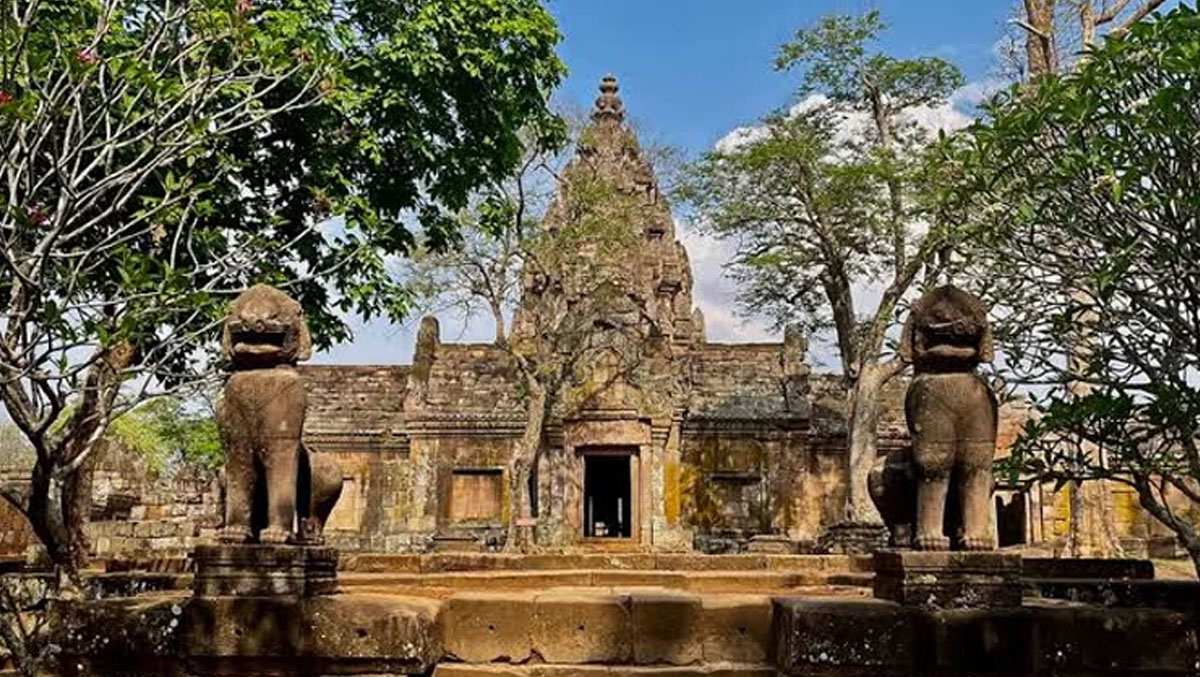
Thai officials and monks marked the recognition on Saturday with chanting and gongs, with the government expecting the listing to boost tourism recovery following post-pandemic declines.
The committee also granted World Heritage status to Japan’s ancient 6th- to 8th-century capitals of Asuka and Fujiwara in Nara prefecture.
Comprising 19 archaeological sites, the areas preserve buried royal palaces, government buildings, and tombs reflecting China and Korean Peninsula influences during the formation of Japan's first centralized state.
Japanese Prime Minister Sanae Takaichi expressed hope the designation would boost regional tourism, while archaeology professor Yoshiyuki Aihara noted that significant ruins sit buried just one meter beneath working rice paddies.
Additionally, South Sudan secured its first-ever World Heritage designation with the inscription of the Boma-Badingilo Migratory Landscape.
The massive ecosystem of wetlands, floodplains, and savannas hosts one of the planet's largest land mammal migrations, where an estimated 6 million white-eared kob, tiang, and Mongalla gazelles move across the terrain alongside lions, elephants, and cheetahs while supporting local herding, farming, and fishing communities.
With Inupts from Agencies



 Live TV
 RTV Plus
