Dhaka 18 October, 2026

Will the Middle East run out of groundwater soon?

Deutsche Welle

Publish : 16 Aug 2023, 09:57 AM

It is the invisible ingredient responsible for this year's bumper wheat harvest in Iraq, a country generally considered one of the most endangered by climate change and drought in the world.

It has also helped increase the number of Tunisia's all-important date-palm oases, is keeping Yemen's agriculture going despite war and ensures that Libya's bustling coastal cities are supplied with water.

Groundwater — fresh water stored underneath the earth and accessed mostly by wells — has always played a significant role in arid Middle East countries. Because it is underground, it is not as impacted by drought and heat , and it's the main source of fresh water for at least 10 Arab nations, the United Nations Economic and Social Commission for Western Asia, or ESCWA, stated in a 2020 report.

But as climate change impacts what little rainfall these countries get and extremely hot summers dry up more rivers and lakes, groundwater is becoming even more important.

Unseen underground rivers

"Awareness of groundwater is rising," said Annabelle Houdret, a senior researcher at the German Institute of Development and Sustainability, or IDOS, who's been looking into groundwater management in Morocco specifically.

"In general, people have not thought about it as much as they should because they don't see it. If you see a river where levels falls dramatically, it immediately gets a reaction," she continued. "But [groundwater] is an abstract. By the time we become aware of what's happening with groundwater, it may well be too late."

Making it even more complicated is the variable nature of groundwater, Mohammed Mahmoud, director of the climate and water program at Washington-based think tank, the Middle East Institute, told DW.

There is growing pressure on groundwater in the region, Mahmoud says, but it's also a complicated resource. How to manage groundwater depends on what sort of ground or rocks it's stored in, how deep it's stored, how it flows and how it's connected to nearby surface water like rivers and lakes. It also depends on whether the groundwater comes from renewable sources.

For instance, some groundwater in the Middle East has collected underground over thousands of years. This is called "fossil groundwater" and it's hard to replenish. Like oil in the ground, it's a single-use resource, experts say.

"These groundwater resources are found at great depths and are hardly, or not at all, renewable," explained Ramon Brentführer, a project manager at the groundwater policy advisory of Germany's Federal Institute for Geosciences and Natural Resources. "But in recent decades, these aquifers have been increasingly tapped."

On the other hand, some groundwater sources do renew regularly because of, for example, rain, Brentführer says. However, even when groundwater resources are renewable, anybody using it needs to be careful to maintain a balance: Don't take out more water than is coming in.

Measuring groundwater is crucial but difficult

Organizations like ESCWA warn that this balance may not be maintained in the Middle East. But it's also very hard to know how bad the imbalance is, or how to manage it.

Part of the reason is that it's very hard to measure groundwater levels simply because of where it's located. Additionally, the degree to which any country in the region measures its water, whether above or below ground, varies widely.

For example, in Yemen, which has been in the throes of a civil war for almost a decade now, it is extremely difficult to measure supplies.

Other countries like Saudi Arabia appear to be well aware of groundwater levels. In 2018, Saudi Arabia halted its own expansionist agricultural program, started in the 1970s. It had relied on using groundwater to grow wheat. The end of the program indicates the Saudis realized they were depleting their own groundwater.

It is possible to measure groundwater from outer space, using satellites like NASA's Gravity Recovery and Climate Experiment, or GRACE. These measure the world's water movements — things like melting ice caps and rising ocean levels — by measuring Earth's gravity. Whenever a mass shifts, it changes Earth's gravity just a little. When there's less groundwater, there's also less mass, and satellites report this information.

"However, GRACE does not provide data for local water management," Brentführer said. "This is where remote sensing reaches its limits."

For that, one needs things like local observation wells, the water expert told DW. These have to be financed, built and regularly monitored by trained staff, which makes them a non-feasible option in some places.

And, Brentführer added, not having the information is just one aspect of this: "In Jordan, for example, the groundwater situation is well known but there is a lack of enforcement to regulate water abstraction for agriculture. And the rich Gulf countries — like Saudi Arabia — know their water resources quite well, but are not transparent with their data."

Many Middle Eastern countries already have regulations about water use, the IDOS' Houdret says.

"But enforcement can be problematic," she added.

Houdret tells of a local water authority employee in Morrocco who's sent out to check on illegal wells. He has one car, limited fuel and a huge amount of territory to cover, she explains, and he's regularly greeted by stone-throwing villagers who don't want him to inspect anything.


When will groundwater run out?

The question is, if nobody really knows how much groundwater there still is and at the same time its use is increasing, is there a possibility the Middle East could run out?

Recent information captured by GRACE satellites appears to show the Middle East's groundwater has been significantly depleted over the past decade. The UN's ESCWA reports that many local groundwater aquifers are already being used up at a faster rate than they can be replenished.

Despite such warnings though, the truth is that nobody really knows if, or when, the Middle East might run out of groundwater.

"Groundwater involves a very complicated system that interacts with other natural systems," said Youssef Brouziyne, regional representative for the Middle East and North Africa at the International Water Management Institute, a research organization headquartered in Sri Lanka.

Systems involved include nearby rivers or wetlands, associated ecosystems, rainfall and coastlines as well as pressures from salinity and pollution.

Follow google news channel to get RTV news Google News
Govt. wants to establish international standard education system: PM
Prime Minister Sheikh Hasina today (Dec 31) said her government wants to form an international standard education system in Bangladesh following the curriculum of world-renowned educational institutions. "We will give money whatever needs in education. There are renowned international universities - We have to see how they teach. What curriculum and which method do they follow? We want to establish international standard education system in Bangladesh," PM said. The premier said this while opening free textbook distribution programme at an event at her office through handing over books to students of pre-primary, primary and secondary levels in the morning. PM Sheikh Hasina said she wants to develop a nation with modern technology-knowledge-based education as she desired that students get such education from an early age. So, her government is giving importance to technical education and vocational training, she said. "We want to build a nation with modern-technology-knowledge-based education. We've already done everything for that," she added. Mentioning that the present era is the age of modern technology and knowledge, Sheikh Hasina said, "We will never be left behind. We have to keep pace with other countries. so we want our boys and girls to learn technology from early age." PM added, "We want our country to keep pace with the world. That is why we have to change our education curriculum." Referring to a quote of Father of the Nation Bangabandhu Sheikh Mujibur Rahman, the prime minister said Bangabandhu didn't consider the cost of education as an expenditure rather he used to think it a kind of investment. Calling on the students to pursue study attentively, she said life becomes failure without education as there may be wealth with many things but education is one thing that no one can take away. "We want to build the nation with versatile education. To build the smart Bangladesh, we need smart skilled population the most," she continued. Highlighting the importance of education to get rid of poverty, the head of government said they want to make Bangladesh a poverty-free country.   "Only education can make a country free from poverty. That is why we have given the most importance to education," she said. At the textbook distribution ceremony on the eve of 2024, Sheikh Hasina wished all a Happy New Year-2024. With Education Minister Dr Dipu Moni in the chair, Deputy Minister for Education Mohibul Hassan Chowdhoury delivered the welcome address. Since 2017, the government has been distributing braille books among the blind students alongside handing over books in Chakma, Marma, Tripura, Garo and Sadri languages to the children of minority ethnic groups to facilitate them to study in their mother tongue.
Govt. wants to establish international standard education system: PM
SSC, equivalent exams to begin Feb 15
The Secondary School Certificate (SSC) and equivalent examinations of 2024 will begin on February 15. Dhaka Secondary and Higher Secondary Education Board Chairman Prof Tapan Kumar Sarkar confirmed the matter on Thursday. The schedule of the examinations will be published on the website, he said. Earlier in August, Education Minister Dipu Moni announced that the SSC and equivalent exams of 2024 will be held in February while the HSC and equivalent exams in April. For the past several years, the authorities concerned had to rearrange the academic calendar due to the Covid-19 pandemic and natural disaster, but it will be fully set from the next year, she said.  
SSC, equivalent exams to begin Feb 15
WHO says more contaminated medicinal syrups found in new regions
The World Health Organization on Thursday said several contaminated syrups and suspension medicines had been identified in countries in the WHO regions of the Americas, the Eastern Mediterranean, South-East Asia and the Western Pacific. The affected products were manufactured by Pharmix Laboratories in Pakistan, the WHO said, and were first identified in the Maldives and Pakistan. Some of the tainted products have also been found in Belize, Fiji and Laos. Pharmix was not immediately available for comment. The medicines, liquids containing active ingredients to treat various conditions, contained unacceptable levels of the contaminant ethylene glycol, WHO said. The alert is the latest in a line of warnings from WHO about similarly contaminated medicines made in India and Indonesia, which were linked to the deaths of around 300 children worldwide last year. No adverse events have been reported to the WHO regarding the Pakistan-made syrups, the agency's statement said, but it urged countries to step up vigilance and test products made by the company between December 2021 and December 2022. The contamination was found in Alergo syrup in a routine examination by the Maldives Food and Drug Authority in November, and confirmed by the Australian regulator. A follow-up inspection at Pharmix manufacturing facilities, conducted by the Drug Regulatory Authority of Pakistan, found that a number of other products were also contaminated. It has ordered the company to stop making all oral liquid medicines and issued a recall alert in November. A total of 23 batches of Alergo syrup, Emidone suspension, Mucorid syrup, Ulcofin suspension and Zincell syrup are affected, the WHO said. Only Alergo so far has been found outside Pakistan. The contamination levels ranged from 0.62% to 0.82%, compared to the accepted level of not more than 0.10%, according to the alert. The products are variously designed to treat allergies, coughs and other health issues. "The substandard products referenced in this alert are unsafe and their use, especially in children, may result in serious injury or death," the WHO warned.   Source: REUTERS
WHO says more contaminated medicinal syrups found in new regions
Meta takes action against Chinese propaganda threat ahead of 2024 US election
Meta revealed on Thursday that it had taken down numerous Facebook accounts from China, purportedly impersonating Americans and engaging in discussions on contentious issues such as abortion and healthcare, CNN reported. The tech giant issued a warning about “foreign threat actors attempting to reach audiences” in anticipation of the 2024 US election. The fabricated accounts replicated social media posts verbatim from both Republicans, including presidential candidate Ron DeSantis, and Democrats like former House Speaker Nancy Pelosi. While Meta did not attribute the network to a specific entity in China, it does reflect a broader trend of increased Chinese propaganda targeting American audiences. This development comes amid growing concerns about potential foreign influence in the 2024 presidential election, according to CNN. Furthermore, the report noted that US national security officials suspended their efforts to flag foreign influence operations on social media platforms due to a legal challenge. Meta executives confirmed that government agencies hadn’t shared information related to foreign election interference since July, with the US Supreme Court set to address the case. Before the court case, “there are a number of times when a tip from government has enabled us to take action … quickly” against covert foreign influence operations, Nathaniel Gleicher, Meta’s head of security policy, told reporters. Importantly, Meta took down the Chinese network before it gained any engagement from real users on its apps. “This is the most notable change in the threat landscape compared with 2020,” Ben Nimmo, Meta’s global threat intelligence lead, told reporters on Wednesday, referring to an increase in Chinese online influence operations in the last year aimed at audience around the world. The company highlighted the evolving threat landscape, emphasising a significant change compared to 2020, with a notable increase in Chinese online influence operations on a global scale. While Russia’s interference in the 2016 US elections showcased the use of trolls and bots to amplify divisions, China traditionally avoided such direct tactics. However, recent incidents, including the use of AI-generated images and a substantial online disinformation operation, suggest a shift in China’s approach. According to a recent CNN review of court documents and public disclosures by social media companies, the Chinese government has amassed the world’s largest known online disinformation operation. This operation is reportedly employed to harass US residents, politicians, and businesses, occasionally resorting to threats of violence against its targets. Despite these findings, China consistently denies allegations that troll farms operate from its soil. Despite Meta’s efforts to protect elections, concerns persist about the company’s direction. This includes reported layoffs in the team countering misinformation and Meta’s decision to allow political ads questioning the outcome of the 2020 presidential election on its platforms.   Source: The Print
Meta takes action against Chinese propaganda threat ahead of 2024 US election
Minnesota Students Exchange with Bangladeshi Students about U.S. Education opportunities
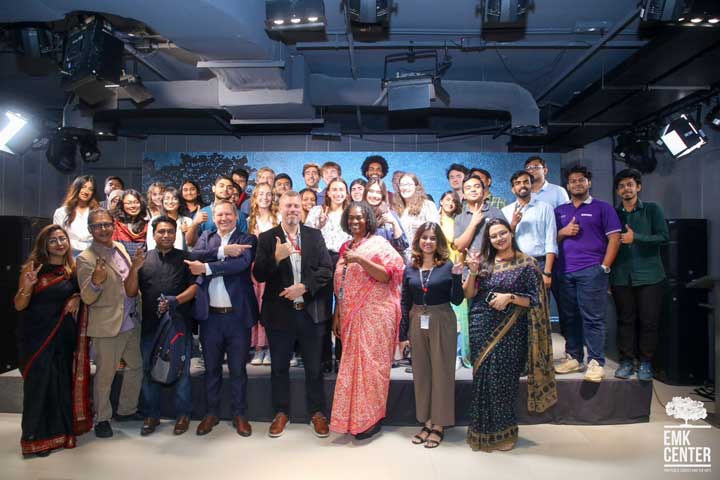
DHAKA, November 28, 2023 – U.S. Embassy Dhaka’s Education USA center hosted a meet-up between American undergraduate students and their Bangladeshi counterparts at the new EMK Center on Gulshan Avenue. The 13 American economics students traveled to Dhaka from Carleton College, one of the top ten liberal arts colleges in the United States (according to U.S. News and World Report).   Carleton students met with Bangladeshi students from several local institutions, including Scholastica, Aga Khan Academy, the University of Dhaka, and Jahangirnagar University to exchange ideas and foster a deeper understanding of U.S. higher education. The session also included a presentation on how the U.S. government supports economic growth in Bangladesh.  For the past decade, the number of Bangladeshi students pursuing higher studies in the United States have increased by more than 300%.  According to the 2023 Open Doors Report, the number of Bangladeshi students in the United States reached an all-time high (13,563) in the 2022-2023 academic year.  Education USA centers across Bangladesh offer free virtual and in-person advising for Bangladeshi students and scholars about the U.S. higher education application process.  Sessions include information on different types of academic programs, funding and scholarship opportunities, and U.S. government-sponsored academic and professional exchange programs.  For more information, please visit:   https://www.facebook.com/EdUSABangladesh or e-mail [email protected]. EMK Center Address: Level 6, CES(A) 1/A, Road, 113 Gulshan Ave, Dhaka 1212, Bangladesh
Minnesota Students Exchange with Bangladeshi Students about U.S. Education opportunities
Read More
Yemen: Maersk halts Red Sea shipping after another attack