Dhaka 26 September, 2026

French Scientists Probe mRNA's Potential to Fight Cancer

BSS

Publish : 20 Nov 2025, 09:47 AM
Photo: Collected

Inside a lab in the French city of Orleans, scientists are testing out the limits of molecules in our body called messenger RNA -- best known for being used in Covid-19 vaccines -- in the hopes of finding a breakthrough treatment for a particularly deadly cancer.

Messenger RNA, or mRNA, are molecules that carry genetic information from the DNA in every cell in the body to create specific proteins.

"For cancer, this message will stimulate the patient's ability to effectively fight tumours," Dimitri Szymczak, project manager of French research institute INSERM's ART lab in Orleans, told AFP.

While mRNA was discovered in the early 1960s, it rose to global prominence when scientists used it to swiftly develop next-generation vaccines during the Covid pandemic, earning the medicine Nobel prize in 2023.

Today, most research in the field is focused on developing vaccines to fight cancer, but mRNA holds "many other possibilities," the ART lab's head Chantal Pichon said.

"It can be used to boost immunity, compensate for malfunctioning cells," target rare or genetic diseases -- and even treat allergies, she added.

There are more than 200 mRNA clinical trials being conducted by both big pharma firms and new start-ups around the world, many of them in the United States, China and Japan, Pichon said.

But France has "some of the best fundamental research teams working on mRNA", she added.

At the ART lab in Orleans, the scientists are making different kinds of mRNA to "test them on cells to check they are not toxic and that they work", Szymczak said.

Bunker buster

The RNA used in experiments are usually produced in test tubes, a costly process often patented by US companies.

However, some of the lab's scientists are seeking an alternative by creating the RNAs in yeast, which has the potential to slash costs by 10 to 50 times.

But these RNAs then need to be cleaned and checked to make sure they meet the requirements of the pharmaceutical industry.

Another team is trying to find a new treatment for pancreatic cancer, which has an extremely low survival rate after being diagnosed.

The survival rate has risen "from five percent in 2000 to 10 percent today", ART gastroenterologist Birane Beye said.

The only slight improvement over two decades of effort shows "that therapies like chemotherapy and immunotherapy aren't working very well", he added.

Seeking a breakthrough, French scientists are trying to combine an mRNA vaccine with ultrasound technology.

"The idea is to use the mRNA to teach immune cells to defend themselves against this very aggressive cancer," Beye explained.

First, a powerful ultrasound is used to "create vibrations inside the tissue that generate gas bubbles", he said.

"When these bubbles burst, they destroy the barrier surrounding the pancreatic cancer -- which is a bit like a bunker -- allowing the mRNA vaccine to penetrate the tumour."

So far, they have shown that ultrasounds can be used on the pancreas -- and that this technique can improve the results of conventional treatments.

Next up, the scientists hope they can use the power of mRNA to increase the survival of pancreatic cancer patients.

Thursday is World Pancreatic Cancer Day, which aims to spread awareness of the deadly cancer.

Follow google news channel to get RTV news Google News
Is the Nobel Prize Still Relevant Today?
Every October, a handful of scientists get woken up by a phone call to find out they've won a Nobel Prize in physiology or medicine, physics or chemistry. Startled and bleary-eyed, they throw a shirt on over their pajamas, join a video call to Stockholm and try to explain a lifetime's worth of research to the world's media in a few short minutes. Journalists then desperately try to understand what "quantum dots," or "entangled photons" are, file their reports, then breathe a sigh of relief that it's all over until next year. By the following week everyone's forgotten — another flash in an endless news cycle. Be honest, who really cares about Nobel Prizes? Are these prizes, first awarded in 1901, with all their high-class pomp and ceremony, still relevant today? The Nobel Prizes do help to popularize scientific discoveries. But do they also give a false impression of how discoveries are made? Are they too biased in favoring science from the US, Europe and men? Noble idea behind the Nobel Prize The Nobel Prizes originated from one guilt-ridden scientist's final will and testament — Alfred Nobel, inventor of dynamite. Nobel's goal was to reward outstanding science to "those who, during the preceding year, shall have conferred the greatest benefit to humankind." Nobel Prizes are meaningful milestones for scientific advances. They credit how millions of people were protected from severe COVID-19 infections from rapid vaccine development , the invention of energy-saving LED lights and gene-editing technologies which have cured previously untreatable diseases. "Doubtless they're the Mount Everest of science. The Nobel Prizes show the pinnacle of scientific discoveries, and there's an emotive attachment to them," said Rajib Dasgupta, a physician and professor of public health based in New Delhi, India. If anything, the prizes help remind us that we're fortunate to live in an age of new scientific advances, after DNA, after vaccinations, after theories of the big bang and sub-atomic particles. Do Nobel Prizes really inspire people about science? The Nobel Prizes are certainly a useful way to capture the public imagination about science when they are elevated to the platform of mass media. The extent to which media outlets cover the Nobel Prizes varies by country, but Dasgupta said the prizes are closely followed by the Indian media — and that in detail, rather than just for the news. "The interest comes from an educational tilt towards STEM subjects in India, particularly among the middle class," Dasgupta told DW, referring to science, technology, engineering and mathematics. Teaching children about the Nobel Prizes is embedded in the Indian school curriculum to get people interested in science, as it is around the world. Lily Green, a biology teacher at a high school for 11-to-18-year-olds in Newbury, UK, said she taught a historical perspective of the Nobel Prizes in her science classes, but didn't follow the prize announcements every October. "We use them to teach the more fundamental concepts of science. The best discoveries are those that capture kids' imagination with scandals or great stories — like [Barry Marshall] who infected himself with bacteria to show how they cause ulcers," said Green. But Green doubted whether the Nobel Prizes played much of a role in inspiring students to study science at university. "They're generally captivated and interested in science, not because they want to win a Nobel Prize," she told DW. Myth of the genius scientist In the first years of the Nobel Prizes, they were mostly awarded to individual gentlemen scientists, such as Albert Einstein or Rutherford. Marie Curie's gender — in terms of the ratio between male and female scientists — was, and still is, an exception. But Curie was also awarded two Nobel Prizes, so she was a double exception. Stories like that of Marie Curie, who died from radiation exposure through her work, tend to capture the imagination when it come to the Nobel Prizes The prizes helped build the idea of the genius scientist — one who single-handedly drove science forward with their sheer brilliance. But in reality, scientific progress operates very differently, especially in contemporary research. Scientific discoveries are born from collaborations between hundreds of researchers around the world from different research fields. Science is a community — it is multidisciplinary and diverse. Now, Nobel Prizes are commonly split between groups of scientists. But for every Nobel laureate, there are thousands of other scientists, Ph.D. students and technicians who were part of the research — and did the experiments — but remain uncredited, at least among the general public. Green agreed there was a tendency to overplay the work of individual scientists at the Nobel Prizes, but also felt that the idea of the solo genius scientist is waning. "We're teaching more and more that science is a collaborative effort. It helps the kids to see the amount of work that goes into scientific discoveries," she said. Lack of diversity in Nobel Prizes The biggest criticisms of the Nobel Prizes relate to their lack of diversity and bias toward Western scientific institutions. In the sciences, less than 15% of Nobel laureates are women. And very few people from countries outside Europe and the US have won a Nobel Prize in Science. The US, UK and Germany dominate the rankings for the number of Nobel laureates, totaling 468 among them. China has eight and India has 12 Nobel laureates. The 2022 Physics Nobel Prize was one of the most anticipated for years: It had been expected that Aspect, Clauser and Zeilinger would be recognized for their work with 'entangled photons.' But what of the hundreds of other scientists who contributed to their field? "Most prizes are very deserving, but they're not without politics. Institutions in many countries are being overlooked, including India. And certainly, Nobel Prize committees are not as inclusive as they need to be," said Dasgupta. Nobel Prizes can also exacerbate this inequality by diverting more funding to institutions which have already won prizes and the recognition that follows. But Dasgupta said the reality was that institutions in India and elsewhere had to get stronger to compete with the US or Europe — only then would those countries be able to hold onto the talent they have created.
Is the Nobel Prize Still Relevant Today?
How Much Screen Time is Safe for Children?
In a world full of smartphones, tablets, and computers, how much media time is acceptable at what stage of life? Though there's little data on the issue, there are still a few principles on which most experts agree. Despite studies, research and recommendations, there are still no uniform international rules on how much screen time is safe for children. Not only does every child have different needs, but by the time science has collected enough data to make a recommendation, technology and social norms are already several steps ahead. But there are a few principles that doctors, psychologists, addiction researchers, and media educators agree on. These are closely linked to the stages of childhood development and follow the principle of precaution. The consensus: It is better to act on the scientifically based suspicion that electronic devices cause harm than to regret not doing so later. The first years of life are for exploring the world"Screen-free until age three" is the slogan for the first years of life in Germany. "At this stage, children do not yet need or understand screen content," says pediatrician Ulrike Gaiser, who co-authored the country's media guidelines for children. The World Health Organization is less strict and recommends no more than one hour of screen time per day for children aged two and above. But it also says that less is better. In the first one to two years of life, it is important for a child to explore its environment. During this phase, the child broadens its focus, Gaiser says. To do this, they must learn to control their attention themselves — and not be placed in front of something distracting. Children should also learn early that it takes time for their needs to be met, she adds. That time passes between crying and their parents providing food. That you can't shape or make the world disappear with a swipe or the push of a button. Waiting and acceptance are basic life skills, Gaiser adds. Screens rob children of time to develop"Children perceive the world differently from adults," Jena University child psychologist Julia Asbrand says. This also applies to content in films or on social media. "For very young children, everything they see can be real in their imagination," she adds.  "Of course that's scary! As a parent, it's good to pause and ask, 'What did you see there?' And, 'Do you have any questions about it?'" Experts are concerned by the way that screen time replaces actual time in which children should develop their motor skills, interact with other people and gain social experience.  Recent research shows that for every minute spent in front of a screen, children hear six fewer words from their parents. Added up over time, this amounts to a significant amount of vocabulary by the time a child graduates from high school. The longer children sit alone in front of screens, the poorer their language skills will be later on. Reducing screen time also improves fine motor skills, attention, and social behavior. Kindergarten: all about interaction and imagination Before children start school, it's important for them to explore the world, have tactile experiences, orient themselves in space, and play with others — all for several hours a day, Gaiser says. Through play, they also learn that others sometimes have different ideas that require negotiation, assertiveness or acquiescence. And that sometimes these tactics still fail. This phase is also important for developing imagination. Children need to learn to explore the world and shape it themselves. The less opportunity they have to create inner images, the harder this skill becomes to develop. That's why a maximum of 30 minutes of screen time is sufficient at this stage of life, Gaiser says. Teaching values in elementary schoolBetween the ages of six and nine, children develop something like a moral compass for the first time, Gaiser says, and wonders: "Do we want to leave that to the internet?"  This entails skills such as discipline, performance, and acquiring knowledge — and whether kids can rely on themselves for this or only on what they find on the internet. The recommendation in Germany is a maximum of 30 to 45 minutes of supervised screen time. While clearly less screen time is better, nowadays many discussions take place digitally, child psychologist Asbrand says. "You trade one thing for another." If the child is not in the class WhatsApp group then they might be excluded, especially in the next phase of life, which should not be allowed to happen, she adds. Some apps have settings that allow users to restrict screen time The difficulty of monitoring adolescentsExperts know that keeping children away from smartphones is unrealistic. The question is how to define healthy media use. In Germany, doctors recommend a maximum of 45 to 60 minutes of screen time during leisure time for 9- to 12-year-olds. For those between 12 and 16, a maximum of one to two hours, and between 16 and 18, about two hours. During this time of individuation, it is all the more important to ask open questions and let children show you what they are looking at, Asbrand says.  "One of the biggest problems is when children do things secretly and then encounter grooming, for example, which is when adults with abusive intentions try to gain their trust," she says. "Children sometimes don't dare to talk to their parents about it because they know: 'I shouldn't have done that'." Not all technology is bad"We know ourselves that the times we suggest are hardly feasible," Gaiser says. Much more important than time is content. What exactly are children watching and how are they coping with it? From the perspective of addiction research, it is particularly important that consumption does not become a habit, Asbrand says. It's also important to remember that every child, medium and piece of content is different. There simply isn't hard scientific evidence for every situation, she adds. "There are fantastic things on the internet!" Gaiser says, with a reminder that tablets and other devices can be useful at school for things like learning languages, finding peer groups, and developing one's own voice. In private life, social media can help maintain contacts, for example with grandparents or a parents away on business. It can also help establish interesting contacts. For example, one of her patients exchanges ideas online with a polar researcher, she says. What parents can do Parents should avoid leaving their children alone in front of screens whenever possible. They should talk about media use and let their children show what they are watching. In a good parent-child relationship, freedom and trust are crucial, Gaiser says. As is knowledge about potential dangers, such as how addictive digital media can be. Parents should be alarmed if their child withdraws, gives up other activities, or is generally sad or upset, she adds. From a technical perspective, setting limits on platform use and clear rules that parents also follow can be useful. For example, at 8 p.m. all devices are set to sleep mode — including those belonging to parents.
How Much Screen Time is Safe for Children?
China: Surgeons Conduct Pig-to-Human Lung Transplant
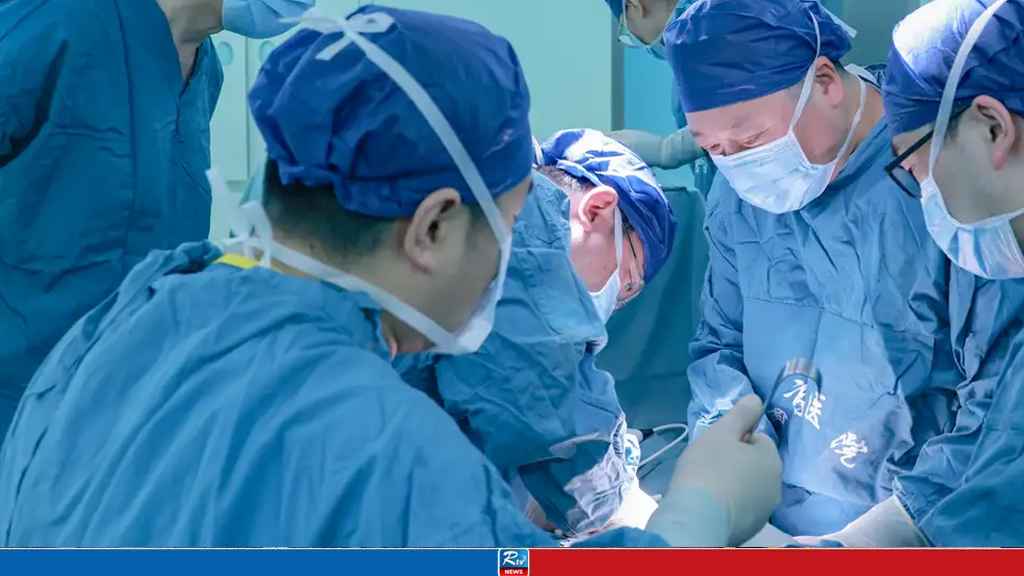
Surgeons in China have conducted a successful pig-to-human lung transplant which they say demonstrated the feasibility of the procedure – even if substantial further tests are still required. According to scientists at the National Clinical Research Center for Respiratory Disease in the southern Chinese city of Guangzhou, the pig lung, which was transplanted into a brain-dead human recipient, "maintained viability and functionality" for 216 hours (nine days) without becoming infected or being rejected by its host. What is xenotransplantation?The transplantation of organs across species is known as xenotransplantation and has been touted as a potential solution to the global organ shortage crisis. According to the Guangzhou study, advancements have recently been made in heart and kidney xenotransplantation from pigs to humans, but lungs present "distinct challenges" due to their "anatomical and physiological complexity." Among other things, the direct contact of the lung with the outside air naturally increases the risk of infection. But the genetically altered lung transplanted from the 22-month-old, 70-kilogram, male, Chinese Bama Xiang pig to the 39-year-old male human patient survived and functioned for over a week of monitoring. "This study demonstrates that genetically modified pig lungs can maintain viability and functionality in brain-dead recipients for 216 hours without signs of hyperacute rejection or evidence of uncontrolled infection," concluded the researchers. "This success highlights the progress made in genetic modifications and immunosuppressive strategies but also underscores key challenges that must be addressed for clinical translation."
China: Surgeons Conduct Pig-to-Human Lung Transplant
NASA Astronauts Return to Earth from ISS After Five Months
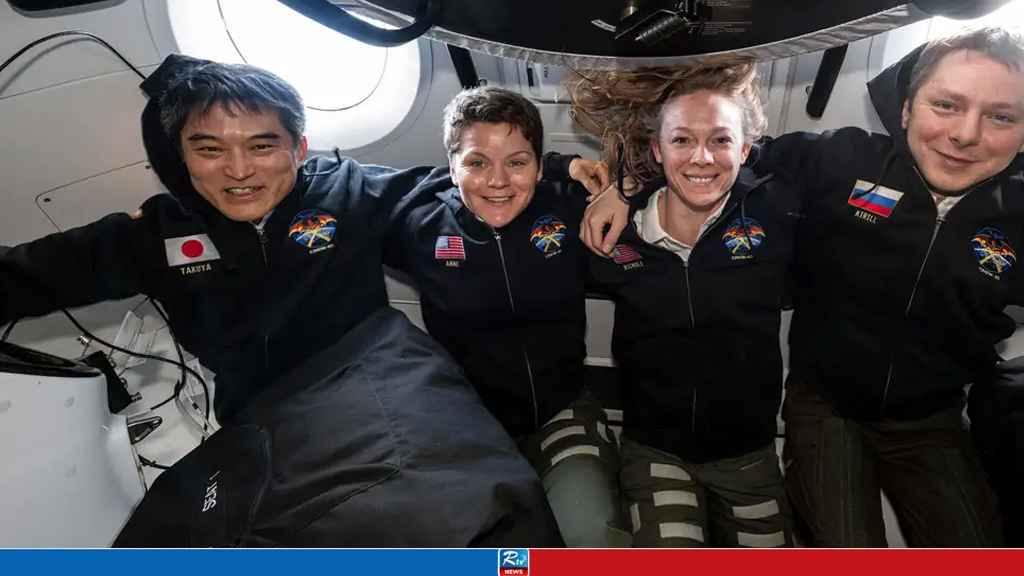
The Crew-10 mission, returning on a SpaceX capsule, had replaced astronauts Wilmore and Williams, who were stranded aboard the International Space Station for nine months. Four astronauts from NASA's Crew-10 mission departed the International Space Station (ISS) on Friday aboard a SpaceX Dragon capsule, beginning an almost 18-hour journey back to Earth. US astronauts Anne McClain and Nichole Ayers, Japan's Takuya Onishi, and Russian cosmonaut Kirill Peskov are set to splash down off California's coast in the Pacific Ocean at 3.33 p.m. UTC/GMT on Saturday. The crew's return wraps up NASA's 10th commercial crew rotation. According to the space agency, the four astronauts conducted more than 200 "important and time-sensitive research" experiments over 146 days, including studies on plant growth and cell behavior in microgravity. Crew-10 replaced stranded astronautsThe Crew-10 mission was launched on March 14, replacing Crew-9, whose members included Barry "Butch" Wilmore and Sunita "Suni" Williams. Wilmore and Williams were stranded for nine months aboard the ISS after their Boeing Starliner capsule developed propulsion issues. Eventually, a SpaceX capsule owned by billionaire Elon Musk brought the stranded astronauts home. Wilmore retired this week after 25 years with NASA, the space agency announced. Last week, US astronauts Zena Cardman and Mike Fincke, Japan's Kimiya Yui and Russian cosmonaut Oleg Platonov boarded the ISS for a six-month mission.
NASA Astronauts Return to Earth from ISS After Five Months
Fake Medication is a Problem Across the World
Amid rising demand for popular medications, experts and industry groups are concerned regulators may not be able to keep pace with the speed of counterfeiters. "A doctor simply writes down the prescription. They don't care where the patient buys the drug," said Saifuddin Ahmed, a public health practitioner and epidemiologist at Johns Hopkins University in the US.  "It is critically important that a health care provider should be engaged. The [regulators are] not enough," Ahmed told DW. Nowhere else is the challenge more obvious than with the huge demand for products like Wegovy and Zepbound. They contain active compounds called semaglutide or tirzepatide, which were originally designed to treat type 2 diabetes. But these drugs were found to have a side effect that triggered substantial, sustained weight loss. Demand rose from people wanting to lose weight, and that caused a shortage. Fakes have filled the gap. Fake drugs are a global problemDrug counterfeiting is a major global problem. The World Health Organization (WHO) estimates that one in 10 pharmaceuticals are fakes that carry no guarantee of any health benefits.  While this is mainly a problem in low-and-middle income countries, especially parts of Africa and Asia, around 1% of people in high-income nations also obtain medication from unregulated sources. In some cases, these drugs may have no effect. In other cases, however, ingredients in the fake medication may lead to adverse reactions or create new health problems. "Purchasing medicine online from unregulated, unlicensed sources can expose patients to potentially unsafe products that have not undergone appropriate evaluation or approval, or do not meet quality standards," said the US regulator, the Food and Drug Administration (FDA) in 2023, when it issued its first warnings about the problem. In 2024, the WHO issued a global warning that batches of fake Ozempic were flooding the black market. More recently, in July 2025, data from the UK National Pharmacy Association found one in five Britons had attempted to obtain weight loss treatments in the previous year. It warned that the high demand for these medicines carried the risk that people would "resort to unregulated online suppliers instead of regulated pharmacies." There is global demand for semaglutide and tirzepatide, but costs and supplies mean consumers may look to unregulated sources Where are people buying counterfeit medicine?Unregulated pharmaceuticals are being sold via online-only pharmacies, international drug shopping and organized criminal distributors. These digital marketplaces are not online stores for established pharmacies, but sites that seemingly offer medicine at a fraction of the usual cost. The drugs may look identical to genuine medicines online, but when delivered often have spelling errors on the packet or incorrect ingredient listings. But it's not only fake drugs or placebos. Regulators have raised concern about compounding, where medicines that have been approved individually can be formulated to produce non-regulated "compounds" for individual patients. In some regions of the world, including the US, trained pharmacists are allowed to compound medicines, but even then, the practice is less regulated than the stringent approvals that drug manufacturers must meet to bring their products to market. For example, when the FDA temporarily allowed the compounding of weight loss drugs to address a product shortage, some pharmacists used semaglutide salts — which are not approved by regulators — instead of semaglutide itself. This led to reports of side effects. And it wasn't just trained compounding pharmacies that were formulating these products in the US. Ahmed said, "this is done in [places] like gymnasiums and spas." The FDA has now stopped allowing compounded versions of these weight loss drugs, but it is concerned that unregulated online pharmacies are still making substandard products available. Raising awareness about fake drugsTo address concerns that consumers may seek unsafe products from unregulated sources, the FDA operates a campaign called BeSafeRx that provides guidance for consumers to identify genuine pharmaceuticals. In the European Union, safety features on medicines are mandated, and include standardized labeling practices.  In a statement provided to DW, the European Medicines Agency said "patients should only use online retailers registered with the national competent authorities in the EU Member States, to reduce the risk of buying substandard or falsified medicines." Europol, which is responsible for law enforcement for pharmaceutical crime across member states, has coordinated regular actions across the bloc in collaboration with US and Colombian partners.  In a 2023 operation, more than 1,284 people were charged for offenses related to the trafficking of counterfeit and misused medicines and doping substances. As well as local awareness campaigns and enforcement initiatives, the key measure, Ahmed said, was to help improve awareness between patients and their health practitioners. Ahmed heads the Johns Hopkins University's BESAFE initiative, which investigates risks and interventions to prevent the uptake of substandard and counterfeit medication.  Surveys undertaken by BESAFE have found that within the US and South Africa, awareness of where to safely buy prescriptions and report fakes or adverse events is low.  He said building trust between consumers, medical practitioners and regulators may help avoid the risks of counterfeit and unregulated drug purchases.
Fake Medication is a Problem Across the World
Read More
All Efforts Fail: Khaleda Zia Passes Away
How Far will India and China Go in Improving Ties?
India, China to Resume Direct Flights
Pilot Crisis Looms as Airlines Scramble to Fill Cockpits