Dhaka 02 October, 2026

Scientists set to unveil first picture of a black hole

Rtv online desk

Publish : 07 Apr 2019, 12:00 AM

The world, it seems, is soon to see the first picture of a black hole.

On Wednesday, astronomers across the globe will hold “six major press conferences” simultaneously to announce the first results of the Event Horizon Telescope (EHT), which was designed precisely for that purpose.

It has been a long wait.

Of all the forces or objects in the Universe that we cannot see — including dark energy and dark matter — none has frustrated human curiosity so much as the invisible maws that shred and swallow stars like so many specks of dust.

Astronomers began speculating about these omnivorous “dark stars” in the 1700s, and since then indirect evidence has slowly accumulated.

“More than 50 years ago, scientists saw that there was something very bright at the centre of our galaxy,” Paul McNamara, an astrophysicist at the European Space Agency and an expert on black holes, told AFP.

“It has a gravitational pull strong enough to make stars orbit around it very quickly — as fast as 20 years.”

To put that in perspective, our Solar System takes about 230 million years to circle the centre of the Milky Way.

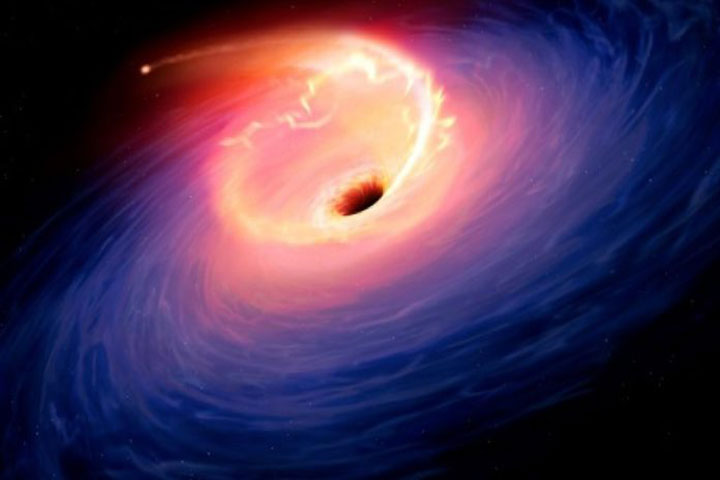
Eventually, astronomers speculated that these bright spots were in fact “black holes” — a term coined by American physicist John Archibald Wheeler in the mid-1960s — surrounded by a swirling band of white-hot gas and plasma.

At the inner edge of these luminous accretion disks, things abruptly go dark.

“The event horizon” — a.k.a. the point-of-no-return — “is not a physical barrier, you couldn’t stand on it,” McNamara explained.

“If you’re on the inside of it, you can’t escape because you would need infinite energy. And if you are on the other side, you can — in principle.”

– A golf ball on the moon –

At its centre, the mass of a black hole is compressed into a single, zero-dimensional point.

The distance between this so-called “singularity” and the event horizon is the radius, or half the width, of a black hole.

The EHT that collected the data for the first-ever image is unlike any ever devised.

“Instead of constructing a giant telescope — which would collapse under its own weight — we combined several observatories as if they were fragments of a giant mirror,” Michael Bremer, an astronomer at the Institute for Millimetric Radio Astronomy in Grenoble, told AFP.

In April 2017, eight such radio telescopes scattered across the globe — in Hawaii, Arizona, Spain, Mexico, Chile, and the South Pole — were trained on two black holes in very different corners of the Universe to collect data.

Studies that could be unveiled next week are likely to zoom in on one or the other.

Oddsmakers favour Sagittarius A*, the black hole at the centre of our own elliptical galaxy that first caught the eye of astronomers.

Sag A* has four million times the mass of our sun, which means that the black hole is generates is about 44 million kilometres across.

That may sound like a big target, but for the telescope array on Earth some 26,000 light-years (or 245 trillion kilometres) away, it’s like trying to photograph a golf ball on the Moon.

– Testing Einstein –

The other candidate is a monster black hole — 1,500 times more massive even than Sag A* — in an elliptical galaxy known as M87.

It’s also a lot farther from Earth, but distance and size balance out, making it roughly as easy (or difficult) to pinpoint.

One reason this dark horse might be the one revealed next week is light smog within the Milky Way.

“We are sitting in the plain of our galaxy — you have to look through all the stars and dust to get to the centre,” said McNamara.

The data collected by the far-flung telescope array still had to be collected and collated.

“The imaging algorithms we developed fill the gaps of data we are missing in order to reconstruct a picture of a black hole,” the team said on their website.

Astrophysicists not involved in the project, including McNamara, are eagerly — perhaps anxiously — waiting to see if the findings challenge Einstein’s theory of general relativity, which has never been tested on this scale.

Breakthrough observations in 2015 that earned the scientists involved a Nobel Prize used gravitational wave detectors to track two black holes smashing together.

As they merged, ripples in the curvatures of time-space creating a unique, and detectable, signature.

“Einstein’s theory of general relativity says that this is exactly what should happen,” said McNamara.

But those were tiny black holes — only 60 times more massive than the Sun — compared to either of the ones under the gaze of the EHT.

“Maybe the ones that are millions of times more massive are different — we just don’t know yet.”

Source: AFP

AH

Follow google news channel to get RTV news Google News
First human head transplant could be achieved by 2030
The first ever human head transplants could be achieved within the next decade, claims a former NHS neurosurgeon who believes he knows how the feat of moving a person’s consciousness to another body could be made to work. Bruce Mathew, a former clinical lead for neurosurgery at Hull University Teaching Hospitals NHS Trust, was working on a science fiction novel with Institute of Futurology founder Michael Lee when he realized the potential key to making the outlandish surgery a success. He believes that surgeons would not only have to transplant a person’s head, but place their entire spinal cord into another body. Until now, the few contentious scientists striving to make head transplants a reality have mainly focused on methods that sever the spinal cord – an idea that Mr Mathew, who has performed more than 10,000 operations, describes as “utterly ridiculous”. But the 63-year-old from Hull asserts that advancements in nerve surgery, robotics and stem cell transplants mean that it could be possible to reattach an entire spinal cord – and its corresponding head – to another body before 2030. “Initially our intention was to just brainstorm an idea and it seemed rather silly, but then I realized, it actually isn’t. If you transplant the brain and keep the brain and spinal cord together it’s actually not impossible,” he told The Telegraph. “The spinal cord is the most profound thing imaginable. You need to keep the brain connected to the spinal cord. The idea that you cut the split the spinal cord is utterly ridiculous. One of the more infamous scientists in the sparse head transplant field, Sergio Canavero, in 2017 claimed to have performed a successful transplant on a human corpse based on a method that severs the spinal cord at the base of the neck. He claimed electrical stimulation proved it had been a success, but other scientists criticized the claims and pointed to his previous claim of success with a monkey, which never regained consciousness and would have remained paralyzed if it had done so. Mr Canavero, who has a willing human volunteer lined up, suggested his work could pave the way to immortality – a word also used in the title of Mr Mathew and Mr Lee’s book, called Chrysalis: A surgical sci-fi story about immortal potential​. Mr Mathew continued: “The thought of keeping [the spinal cord] in one piece has always been totally daunting, but now with modern technology you can do most things. “At the moment, you can connect one or two nerves, but with robotics and artificial intelligence we’ll soon be able to do 200 nerves. You would take off all the spinal column, so that you could drop in the whole brain and spinal cord and lumbar sacra into a new body. “Obviously it’s very difficult to take out the dura (the protective membrane of the spinal cord) intact without making a hole in it. It will take a number of advancements and incremental steps but it will probably will happen in the next 10 years.” While the method would be of no help to those with spinal injuries, it could help those with degenerative muscle diseases, and Mr Mathew suggests it could allow people to be given robotic bodies. Mr Mathew told The Telegraph that there are still doubts as to whether the head and spine could be made to successfully integrate with so much of another person’s DNA, and that gut bacteria may need to also be transferred. But he believes stem cell transplants could be used to prevent rejection. “You would take on the DNA of the actual brain and spinal cord, so rather like a bone marrow donor, and you would get rid of donor DNA and then colonize it with that from the person receiving the body,” he told the paper. “I mean there are huge problems, but it is possible. And you’ve got to remember you’ve got thousands of people in deep freezes, often just heads, and companies who really believe you will one day be able to reawaken them from the dead, cure them of disease, and give them new bodies. In comparison what I’m proposing is fairly conservative.”​ Source: Independent/MSN AH
First human head transplant could be achieved by 2030
NASA’s rover to hunt for microscopic fossils on Mars
NASA scientists have discovered a potential place for its Mars 2020 rover to look for signs of ancient life in Jezero Crater where the rover will land in February of 2021. The study published Tuesday in the journal Icarus showed the existence of distinct deposits of minerals called carbonates along the inner rim of the crater, the site of a lake more than 3.5 billion years ago. The hardy structures of carbonates can survive in fossil form for billions of years on Earth. Those fossils include seashells, coral and some stromatolites, which are rocks formed by ancient microbial life along ancient shorelines. Scientists identified Jezero's shoreline as a prime scientific hunting ground since the stromatolite-like structures may exist there. NASA's Curiosity rover had already found that parts of Mars could have supported microbial life billions of years ago. It identified the seasonal changes of the oxygen and methane directly above the surface of Gale Crater on Mars, showing tantalizing signs of possible biological activity on Mars. However, the Curiosity rover is unable to analyze what causes the changes. Mars 2020 is NASA's next-generation mission to study life throughout the universe. It will search for actual signs of past microbial life, taking rock core samples that will be deposited in metal tubes on the Martian surface. Also, carbonates can reveal more about how Mars transitioned from having liquid water and a thicker atmosphere to being the freezing desert it is today. The Mars 2020 rover will launch in July or August 2020. It is part of a larger program that includes missions to the moon as a way to prepare for human exploration of the Red Planet. Source: UNB AH
NASA’s rover to hunt for microscopic fossils on Mars
Water, temperature right for life at another star’s planet
In a tantalizing first, scientists have discovered water at a planet outside our solar system that has temperatures suitable for life. Two research groups announced this week that they've found water vapor in the atmosphere of a planet 110 light-years away in the constellation Leo. This so-called Super Earth is just the right distance from its star to conceivably harbor life. It's the only exoplanet known so far to have both water and temperatures needed for life, the University College London team reported in the journal Nature Astronomy on Wednesday. But lead author Angelos Tsiaras stressed, "This is definitely not a second Earth." Its star and atmosphere are so different than ours, "Earth-like conditions are not possible," Tsiaras told reporters. "The only question that we're trying to ask here, and we're pushing forward, is the question of habitability." A Canadian-led team announced similar findings Tuesday. In a paper just submitted to the Astronomical Journal for publication, these scientists suggest it might even be raining there. "This represents the biggest step yet taken toward our ultimate goal of finding life on other planets, of proving that we are not alone," the study's lead astronomer, Bjorn Benneke of the University of Montreal, said in a statement. Discovered in 2015, the planet known as K2-18b is twice the size of Earth with eight times the mass. While it's thought to be rocky, no one knows if water's flowing on the surface. Its star, a red dwarf, is considerably smaller and cooler than our sun, a yellow dwarf, and its atmosphere is also different than ours. Nonetheless, Tsiaras said K2-18b could help determine, "Is the Earth unique?" The results are doubly exciting, Tsiaras noted, given this is not only the first Super Earth with water detected in its atmosphere but the planet also resides within the habitable zone of its star. The research teams used archived data from the Hubble Space Telescope and other spacecraft to analyze the planet's atmosphere. Further observations are needed to determine whether the planet is indeed a true water world, using next-generation observatories like NASA's James Webb Space Telescope and the European Space Agency's Ariel, both due to launch in the 2020s. Future telescopes on Earth and in space should help uncover more Super Earths orbiting red dwarf stars — believed to be the most common planets and stars in our Milky Way galaxy. Super Earths are defined as having a mass greater than Earth but less than gas giants like Uranus and Neptune; more than 1,260 have been confirmed to date. While water already has been identified in the atmospheres of hot gas giants circling other stars, the latest findings represent the first detection of water vapor in the atmosphere of another type of exoplanet, Tsiaras said. A NASA tally currently lists more than 4,000 confirmed exoplanets and another 4,000 potential candidates. Most have been detected using the transit method, where telescopes watch for a slight, fleeting dimming of a star's light as a planet passes in the field of view. For now, scientists know K2-18b takes 33 days to orbit its star, so one year there is one month here. At this distance, temperatures range from minus-100 degrees to 116 degrees Fahrenheit (minus 73 degrees to 47 degrees Celsius.) The star, glowing red in the day sky, is believed to bombard the planet with radiation harsh enough to quickly inflict any human visitors with cancer, although "life there may have evolved differently" in order to survive, noted the London team's Ingo Waldmann. A sister planet, meanwhile, orbits closer to the star and is likely too hot to be in the habitable zone. The cloud cover isn't too thick on K2-18b, otherwise it would have obscured the water vapor in the atmosphere, according to the scientists. The surface, meanwhile, could be wet or dry. The London data suggest water vapor makes up anywhere between 0.01% and 50% of the atmosphere — "quite a big range," Waldmann acknowledged. Either way, given the planet's mass, it would be difficult to walk on the surface. "Maybe not quite your vacation destination just yet," Waldmann joked. Source: AP/UNB AH
Water, temperature right for life at another star’s planet
Isro locates Chandrayaan-2 lander on moon
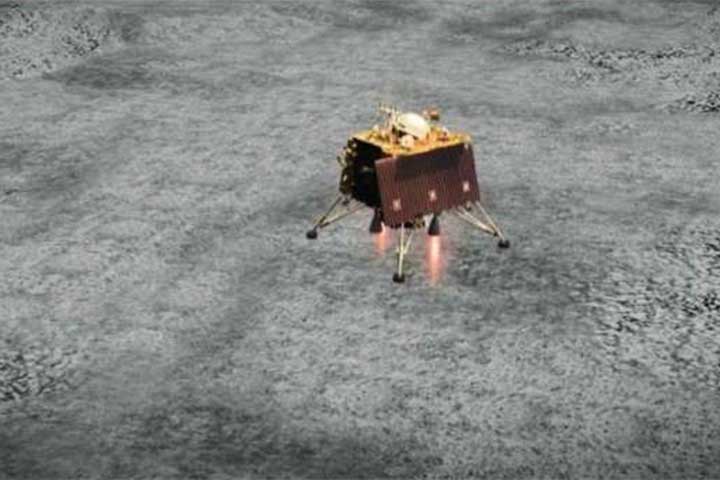
The Indian Space Research Organization (Isro) has managed to locate Vikram, the Chandrayaan-2 lander, on Moon's surface a day after losing contact with the craft. However, Isro is yet to establish contact with Vikram; the space agency lost communications with the lander minutes before it was to land on near the south pole of the Moon on Saturday. According to sources, communication with the lander has not yet been established, reports India Today. The lander was located with the help of the Chandrayaan-2 orbiter, which remains safe and is revolving around the Moon. The orbiter managed to shoot a thermal image of the Vikram lander. In an exclusive interview to India Today TV, Isro chief K Sivan said that the agency has managed to locate the lander using the orbiter and has attained a thermal image of it. Isro has been able to identify the lander Vikram, but the condition of the lander is yet to be ascertained. The soft-landing of Chandrayaan-2's landing module, Vikram, did not go according to plan as all ground communication was lost with it just moments before the scheduled landing late on September 7. The landing began minutes before 1:40 am Saturday, and then things went awry around 12 minutes after Vikram began its descent. Isro will investigate several factors to determine what triggered the communication loss with Chandrayaan-2's lander, Vikram. Sources have informed India Today TV that the Chandrayaan-2 team will investigate key datasets like final emissions and signals, last sets of sensor data to find out the reason behind the communication loss with Vikram lander. Source: UNB AH
Isro locates Chandrayaan-2 lander on moon
Chandrayaan-2: Modi proud despite moon landing setback
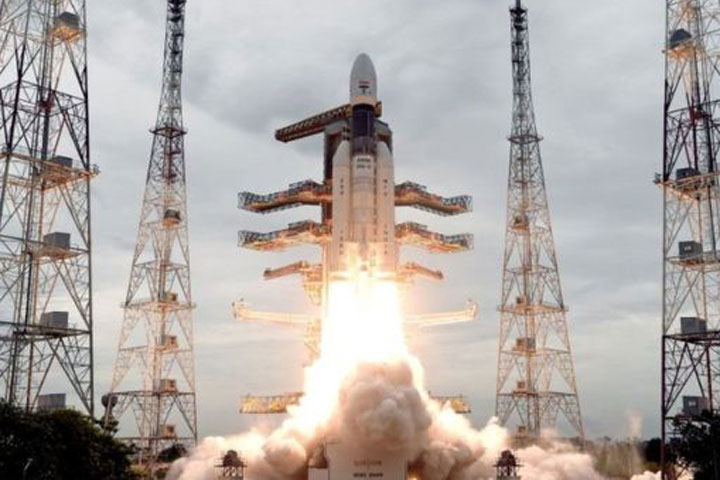
Indian Prime Minister Narendra Modi told his country's space scientists he was proud of a programme that had come so near to putting a probe on the Moon. Contact with Chandrayaan-2 was lost moments before its Vikram module was due to touch down at the lunar south pole. The fate of the craft is not yet known, but Narendra Modi said there would be further opportunities. India would have been the fourth nation to make a soft landing on the Moon. "The best is yet to come in our space programme. India is with you," said Narendra Modi. The Chandrayaan-2 approached the Moon as normal until an error occurred about 2.1km (1.3 miles) from the surface, officials said. India's Space Research Organization (Isro) said it lost contact seconds before the ship was expected to land. The country's first Moon mission - Chandrayaan-1, in 2008 - carried out the first and most detailed search for water on the lunar surface using radars. What happened? Chandrayaan-2 entered the Moon's orbit on 20 August and was due to make a controlled descent to the surface early on Saturday, Indian time, over a month after it first took off. Staffs at mission control were glued to the screens at Isro's Bangalore space centre as the spacecraft made its descent towards the surface. The control room burst into applause during the so-called rough breaking phase of the descent, with Prime Minister Modi watching the action from behind a glass screen. Isro chairman Kailasavadivoo Sivan announced to staff that the ship's initial descent had been "normal," and that the mission's data would be analysed. Mr Sivan had earlier described the final descent as "15 minutes of terror". What was the mission all about? Chandrayaan-2 (Moon vehicle 2) was the most complex mission ever attempted by India's space agency, Isro. "It is the beginning of a historical journey," Isro chief K Sivan said after launch in July. The lander (named Vikram, after the founder of Isro) carried within its belly a 27kg Moon rover with instruments to analyse the lunar soil. The rover (called Pragyan - wisdom in Sanskrit) had the capacity to travel 500m from the lander in its 14-day life span, and would have sent data and images back to Earth for analysis. The mission would have focused on the lunar surface, searching for water and minerals and measuring moonquakes, among other things. Why would it have been significant? A soft landing on another planetary body - a feat achieved by just three other countries so far - would have been a huge technological achievement for Isro and India's space ambitions, writes science writer Pallava Bagla. He adds that it would also have paved the way for future Indian missions to land on Mars, and opened up the possibility of India sending astronauts into space. For the first time in India's space history, the interplanetary expedition was led by two women - project director Muthaya Vanitha and mission director Ritu Karidhal. It is also a matter of national pride - the satellite's lift-off in July was broadcast live on TV and Isro's official social media accounts. The mission has also made global headlines because it's so cheap - the budget for Avengers: Endgame, for instance, was more than double at an estimated $356m. But this isn't the first time Isro has been hailed for its thrift. Its 2014 Mars mission cost $74m, a tenth of the budget for the American Maven orbiter. Source: BBC AH
Chandrayaan-2: Modi proud despite moon landing setback
Read More
Chicxulub asteroid impact: Stunning fossils record dinosaurs’ demise
TIB’s great truth causes heartburn to EC: Rizvi