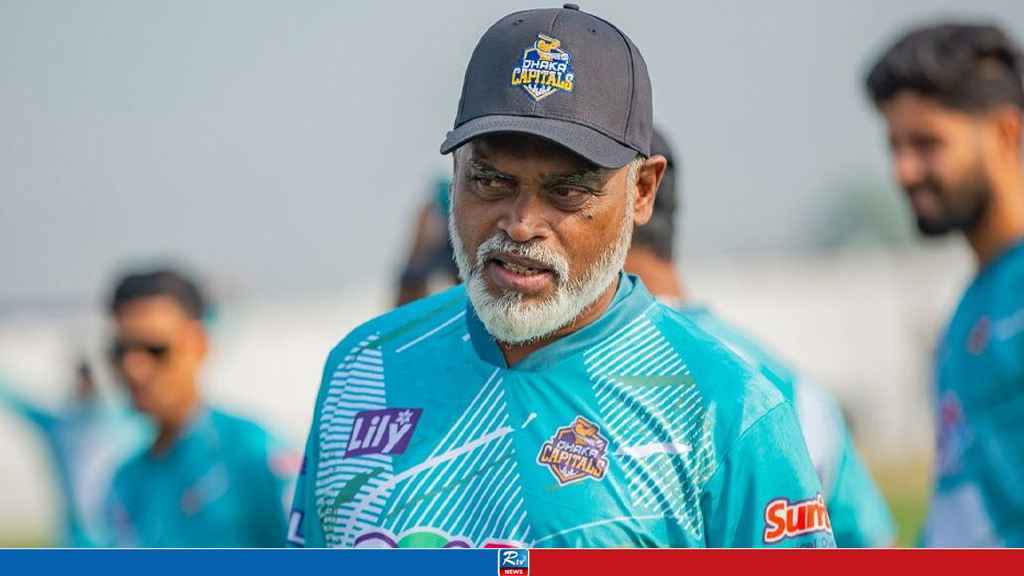
Shakib Al Hasan, Bangladesh's most prominent cricket star and one of the most controversial public figures, stated in a recent interview with Cricbuzz that he respects the public backlash following his silence during the student movement, but he doesn't feel any regret.
He also added that the people are starting to understand 'his point of view' more and more now.
"I think that was just one moment that went against me. Maybe because they were expecting something else, and I was not in a position to do it, or I wasn't aware of the situation, to be honest. So, it was very difficult for me because I was far from home at that time. And that's the only time I think they went against me, and which I understand from their point of view, and I respect it as well. But I don't have any regret for that, but I think people are starting to understand it more and more now", Shakib was quoted in an interview published on Cricbuzz.
Cricbuzz's Smit Patel, who talked with Shakib, published the interview on Thursday (October 23) with a title "Shakib's MiLC Journey- Shakib Al Hasan: Misunderstood, unbroken, unfinished."
At the beginning of the interview, Shakib is portrayed as "typically all business, fiercely competitive, and known for wearing a permanent game face." The interviewer also made several other comments on his political and sports career in Bangladesh.
He wrote, "Rarely would such words be used to describe the former Bangladesh captain and Member of Parliament, who now plies his trade in franchise leagues around the world while quietly navigating a self-imposed exile from Bangladesh in the political aftermath of the fall of the Sheikh Hasina government. Far from the noise, expectation, and constant scrutiny that once defined his daily existence in Bangladesh, Shakib has rediscovered something simple. The pure, unbridled joy of just playing cricket again."
In another part of the interview, he wrote, "That lingering perception among a section of Bangladeshi fans that Shakib is driven by money and by extension lives in his own insulated bubble resurfaced during the anti-Hasina protests of 2024. As tensions escalated in Bangladesh, Shakib's neutrality became a talking point. He became a target of intense criticism for his decision not to take a political position. Depending on which side of the political divide one occupied, to some he was rightly chastised for staying silent, while to others he was unfairly berated in a social media trial, where extreme voices went as far as calling him an "enemy of the people.
That public hostility spilled to the diaspora too. During a GT20 Canada match in 2024, a group of Bangladeshi spectators heckled him, hurling accusations and insults. Shakib, never one to back down from confrontation, briefly engaged with one of them. A moment that went viral and further amplified the dogma of he had somehow lost touch with the people who once adored him.
Critics argued that his reluctance to take a political stand would tarnish his legacy, that his time in the cold had begun. But reality, as it often does with Shakib, proved more layered over time. At the FOBANA (Federation of Bangladeshi Associations of North America) convention in Atlanta earlier this year, a different story unfolded. The event ran out of Shakib-signed jerseys and hats within no time as hundreds of Bangladeshi expatriates lined up for the Shakib merchandise.
What happened at the FOBANA event was a powerful ode to a parallel reality that exists too. A reminder that while there are people who carry a persistent resentment toward Shakib, there are just as many who refuse to let him be defined by one moment of silence or distorted by agenda-driven narratives. Those who believe two decades of sweat, blood and service to Bangladesh cannot be erased by social media noise or political witchhunts."
In another part, the author wrote, "If the diaspora response at FOBANA was any indication, the reality on the ground in Bangladesh may already be shifting. Narratives evolve with time, and it may not be long before a sense of perspective kicks in amongst the masses in Bangladesh. It has, after all, been more than 18 months since their hero has last set foot in Bangladesh."
The interview also highlighted the incident of Shakib's birthday wish to Sheikh Hasina, "Shakib may have softened with time, but he hasn't lost the steel in his spine. He still lives by his own principles and doesn't bend to please people in power. In a world full of psychopaths, Shakib remains stubbornly with his individuality. That was evident when, despite the current political toxicity in Bangladesh, in what was eventually perceived as an act of defiance he posted a picture wishing Hasina on her birthday at a time when her name had been virtually blacklisted in public discourse.
He didn't fear backlash though. Neither when he was the toast of the nation, and neither does he fear it now in his self-imposed exile. The backlash came swiftly though. Bangladesh sports advisor publicly declared he would do everything in his power to prevent Shakib from playing for Bangladesh again, branding him an accomplice to tyranny. The irony here is unmistakable.
If sanity prevails and if he is allowed to walk into the sunset with grace, it will be a farewell that stands to be more than just a ceremonial send-off. A chance for the country to reconcile with its greatest son of the 21st century. And perhaps, a unifying moment for all of Bangladesh that cuts through the political divide."
In Addition, Shakib also made it clear in the interview that he has not retired from any cricket format for Bangladesh.
"No, to be honest, I am not retired from any format officially," he said, putting to rest the contrary reports of him being retired from certain formats. He has expressed a quiet wish to hang up those massive boots one final time at the Sher-e-Bangla National Stadium in Dhaka. "Yes, 100%. I think it's more for them than it's for me," he admitted. "If that happens, that's the best thing that can happen to my fans and to me."






 Live TV
 RTV Plus