Dhaka 26 September, 2026

WhatsApp to End Support for Older Android Phones From January 1

Rtv News

Publish : 25 Dec 2024, 01:35 PM
Photo: File Picture

WhatsApp, owned by Meta, is one of the world's most popular messaging platforms. Millions of users worldwide rely on this app for sharing photos and videos, conducting polls, and more. Beyond personal use, the app is regularly utilized for business and office purposes.

WhatsApp will no longer be available on certain phones starting in 2025. Meta made this decision to align with new features, security updates, and compatibility with the latest hardware and software. The limitations of older operating systems and hardware are the primary reasons for this decision.

Phones That Will No Longer Support WhatsApp from January 2025:
Samsung

  • Galaxy S3
  • Galaxy Note 2
  • Galaxy Ace 3
  • Galaxy S4 Mini

Sony

  • Xperia Z
  • Xperia SP
  • Xperia T
  • Xperia V

Motorola

  • Moto G (1st Gen)
  • Razr HD
  • Moto E 2014

HTC

  • One X
  • One X+
  • Desire 500
  • Desire 601

LG

  • Optimus G
  • Nexus 4
  • G2 Mini
  • L90

Follow google news channel to get RTV news Google News
US Unveils Sweeping Cybersecurity Measures Over Alleged China-backed Salt Typhoon Campaign
US President Joe Biden's administration on Friday announced sweeping cybersecurity measures following revelations about Salt Typhoon, an alleged China-backed hacking campaign that infiltrated major US telecommunications companies. The new steps include mandatory federal regulations for telecoms cybersecurity, enhanced guidance for securing networks and strengthened requirements for healthcare data protection. Deputy national security adviser Anne Neuberger stressed a need for urgent reforms to prevent future breaches. "We wouldn't leave our homes or offices unlocked, yet our critical infrastructure often lacks the basic cybersecurity practices necessary to make it more defensible," she said. The US intelligence community believes Salt Typhoon has been active since 2022 and exploited vulnerabilities in telecom infrastructure to access sensitive data, including geolocation, phone call records and text messages. To date, nine telecoms companies have been identified as targets. Neuberger cited one case in which a single administrator account controlled access to more than 100,000 routers, giving hackers unfettered control. While the exact number of affected customers is not yet known, investigations thus far have shown that "a large number of individuals were geolocated in the Washington, DC and Virginia area", she said. The goal was to identify which phones were linked to government targets and then conduct espionage and intelligence gathering on text messages and calls. "But they were very careful about their techniques," Neuberger explained. "They erase logs. In many cases, companies were also not keeping adequate logs. So there are details that we will never know regarding the scope and scale of this." "That's why we're looking forward and saying, 'let's lock down our infrastructure', and frankly, let's hold the Chinese accountable for this." The Chinese embassy in Washington on Friday pushed back against the allegations of a hacking campaign, with spokesperson Liu Pengyu calling them "smear attacks" made without evidence. Liu referenced Chinese President Xi Jinping's direct denial of cyberattack claims during his meeting with Biden in Lima during the APEC summit, asserting that "China is itself a target of international cyber intrusions." The embassy statement alluded to technical challenges in attributing cyber incidents, urging "relevant parties" to take a more "professional and responsible attitude" when making such accusations. "The US needs to stop using cybersecurity to smear and slander China and stop spreading all kinds of disinformation about the so-called Chinese hacking threats," Liu said. Meanwhile, the Federal Communications Commission, a US government agency, has proposed regulations requiring telecom companies to adopt minimum cybersecurity standards. The rules, set for a vote by mid-January, aim to close long-standing gaps. "Without defensible networks, attackers will continue to exploit weaknesses, threatening national security and public trust," Neuberger said. Updated technical guidance has also been released to help telecom providers harden their defences, focusing on network segmentation and configuration management to limit the impact of breaches. "By segmenting the network, even if attackers gain access, their movement can be controlled and contained," she added. Beyond telecommunications, the US Department of Health and Human Services plans to revise the Health Insurance Portability and Accountability Act Security Rule for the first time since 2013. Established in 1996, HIPAA sets nationwide standards for protecting patients' medical information. The law requires healthcare providers, insurance companies and their business partners to safeguard both paper and electronic health records while laying forth strict rules about how this sensitive data can be shared. The updates will require entities handling healthcare data to implement encryption and stronger monitoring systems. In highlighting the urgency of the revision, Neuberger cited a 1,002 per cent increase in Americans affected by healthcare data breaches over the past five years. "The cost of not acting is not only high but endangers critical infrastructure and patient safety," she said. Recent breaches have cost organisations hundreds of millions of dollars in recovery expenses, Neuberger added.
US Unveils Sweeping Cybersecurity Measures Over Alleged China-backed Salt Typhoon Campaign
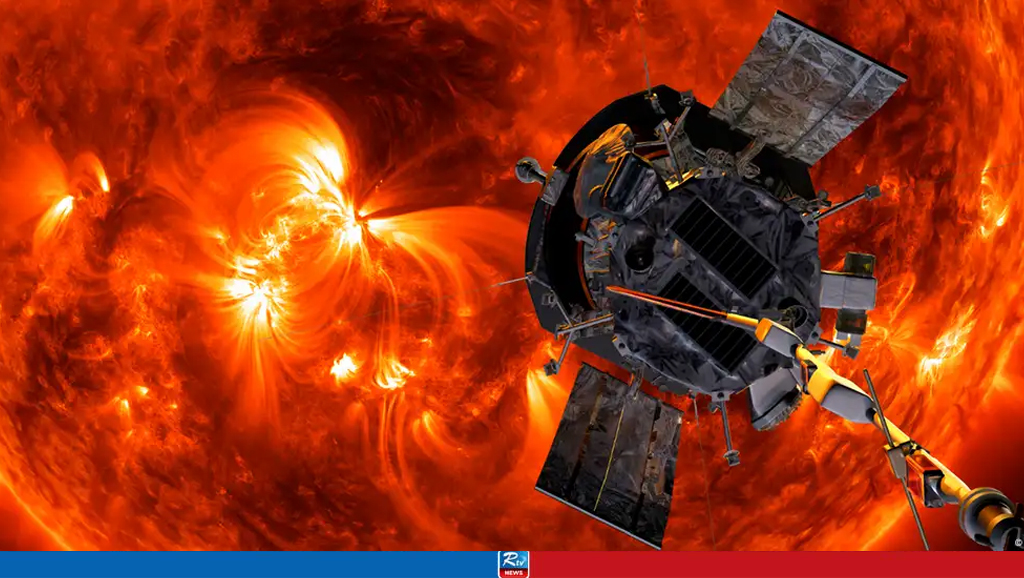
NASA Probe Survives Record-breaking Close Approach to Sun
NASA scientists have announced that the Parker Solar Probe survived zooming by the sun at a record-breaking closest distance. The craft collected precious data which researchers say will aid work on solar wind, particles and the sun's atmosphere. What we know about the mission The mission was carried out by a team at the Johns Hopkins Applied Physics Laboratory in Maryland. "The team was out of contact with the spacecraft during closest approach, which occurred on Dec. 24, with Parker Solar Probe zipping just 3.8 million miles from the solar surface while moving about 430,000 miles per hour," Michael Buckley, spokesperson for the laboratory, said in a statement. On December 26, the team received a signal from the probe indicating that it is in "good health and operating normally." Scientists expect detailed data from the NASA-developed spacecraft on January 1. About the probe The craft was built to endure temperatures up to 1,800 degrees Fahrenheit (about 980 degrees Celsius), enough to survive in the sun's outer atmosphere. Launched in 2018, the probe's mission is to complete 24 orbits around the sun in seven years. The close approach to the sun allowed the probe to collect measurements that will help scientists study how the sun's outer atmosphere gets "heated to millions of degrees," trace the flow of energy and discover how solar wind accelerates to near light speed. Previous solar probes have helped researchers to understand the structures of solar wind and to map out the structure of the sun's atmosphere. 
NASA Probe Survives Record-breaking Close Approach to Sun
Tesla Recalls Nearly 700,000 EVs For Tire-safety Issue
Due to issues with the tire pressure monitoring system's warning light, American Electric Vehicle (EV) manufacturer Tesla has recalled nearly 700,000 vehicles. The company stated that the warning light for the tire pressure monitoring system may fail to illuminate while driving, potentially failing to alert drivers about low tire pressure. This increases the risk of accidents on the road. As a result, Model 3, Model Y, and Cybertruck vehicles have been recalled. According to British news outlet Sky News, Tesla will resolve the issue through a free software update. Elon Musk's company announced that it would send letters to the owners of the defective vehicles by February 15, 2025. This is not the first time Tesla has issued recalls. Throughout the year, the company has recalled various models multiple times. In July of this year, 1.8 million vehicles were recalled due to issues with the car's hood. In February of this year, Tesla recalled about 2.2 million vehicles in the United States due to some warning lights on the instrument panel being too small.
Tesla Recalls Nearly 700,000 EVs For Tire-safety Issue
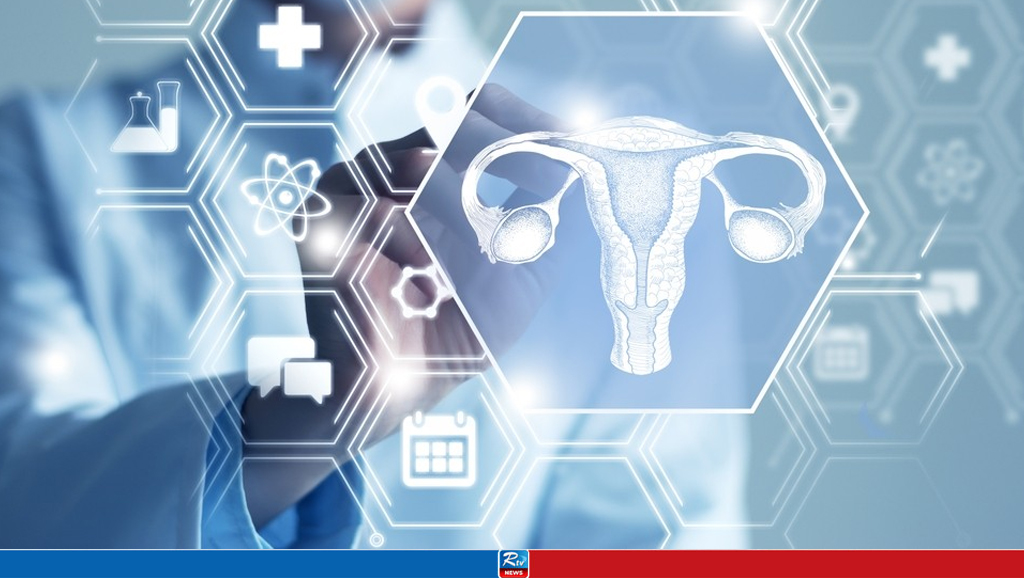
AI is Trained to Spot Warning Signs of Ovarian Cancer and Pneumonia
A revolutionary blood test leveraging artificial intelligence (AI) has emerged as a game-changer in diagnosing deadly diseases like ovarian cancer and pneumonia at their earliest stages.  Developed by Dr. Daniel Heller and his team at New York’s Memorial Sloan Kettering Cancer Center, the test utilizes nanotube technology—carbon tubes 50,000 times thinner than a human hair—to detect molecular reactions in blood samples. These nanotubes emit specific wavelengths of fluorescent light when certain molecules attach to them. The patterns are so intricate that only AI, through machine learning algorithms, can decode them. Dr. Heller explained, “It’s like identifying molecular fingerprints too subtle for humans to detect.” Ovarian cancer, often diagnosed late, spreads quickly. Audrey Moran, head of the Ovarian Cancer Research Alliance (OCRA), stressed that early detection could significantly lower mortality rates.  The AI algorithm, trained on limited patient data, has already shown remarkable accuracy despite challenges in gathering sufficient samples for this rare cancer. Beyond cancer, AI is also revolutionizing pneumonia diagnosis. California-based company Karius uses AI to identify pathogens within 24 hours, eliminating the need for multiple costly tests. Researchers are optimistic about making this technology widely available within 3–5 years, heralding a new era in medical diagnostics and lifesaving innovations.
AI is Trained to Spot Warning Signs of Ovarian Cancer and Pneumonia
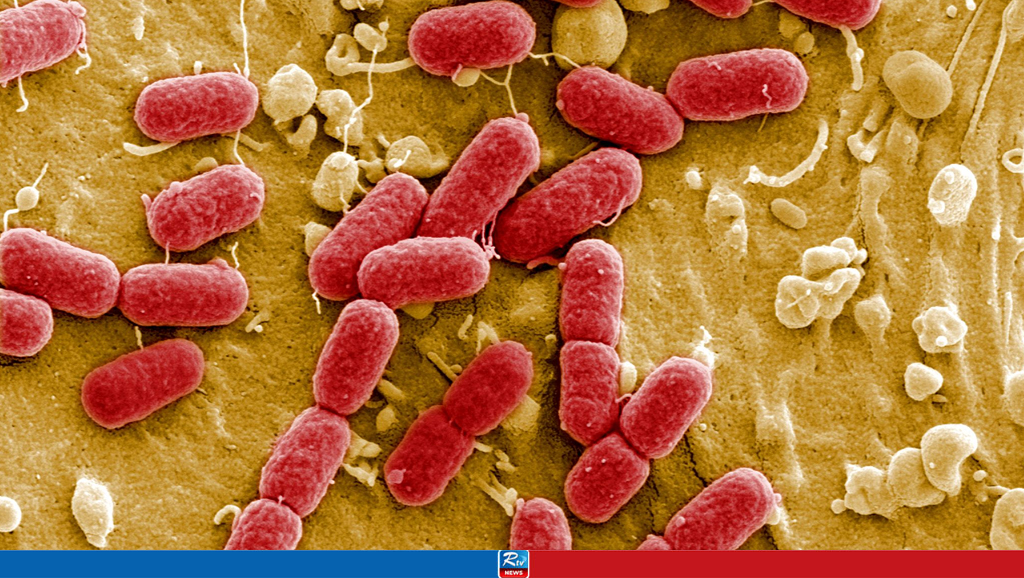
Mirror Bacteria: A Synthetic Lifeform Looming as a Threat to Life on Earth
Scientists have raised alarms about ‘Mirror Bacteria,’ a synthetic life form being developed in laboratories. These bacteria are created as mirror replicas of natural biological molecules, such as DNA, using advanced synthetic biology techniques. While the concept may revolutionize science, experts warn that it could pose catastrophic risks to global ecosystems, plants, animals, and humans. Mirror Bacteria, still in development, are expected to take at least a decade to fully materialize. However, recent studies published in the Science Journal indicate significant progress has already been made. A team of 38 Nobel laureates and scientists is calling for the immediate suspension of this research due to its potential to bypass immune defenses. Unlike naturally evolved organisms, living beings may not recognize or defend against these artificial entities, which could spread unchecked. Vaughn Cooper from the University of Pittsburgh cautions, “Mirror life has never existed before, and it could disrupt all biological systems.” Similarly, Nobel laureate Gregory Winter from Cambridge University highlights that living organisms, including humans, lack natural immunity against Mirror Bacteria, making them defenseless in the event of an outbreak. If released accidentally, Mirror Bacteria could trigger fatal infections, acting as invasive species across ecosystems. Scientists fear that attempts to combat these bacteria with antibodies could prove futile, leading to widespread and uncontrollable infections. Plants, animals, and even human populations would face devastating consequences. The development of Mirror Bacteria raises ethical and safety concerns in synthetic biology, demanding careful consideration and global regulation to prevent irreversible damage to life on Earth.
Mirror Bacteria: A Synthetic Lifeform Looming as a Threat to Life on Earth
Read More
CA Urges Meta to Address Misinformation Campaign Against Bangladesh
Albania: Former President Ilir Meta Arrested
Why People Advise Against Dipping Metal Spoons in Honey
Exciting New Features on the Horizon