Dhaka 26 September, 2026

10 Cold Waves Predicted to Hit Bangladesh in Coming Winter

Rtv News

Publish : 03 Nov 2025, 02:34 PM
Collected Photo

According to the Bangladesh Meteorological Department (BMD), the coming winter is likely to be slightly colder than usual, as at least 10 cold waves -- including three severe ones-- may hit different regions of the country between November and January.

Read More

The BMD said in its long-range weather forecast released on Sunday night that along with cold waves, fog, rainfall and fluctuating temperatures may disrupt daily life, particularly in northern and central parts of the country and hinted that the country may experience slightly higher than normal rainfall during November-January.

Besides, two and four low-pressure areas are likely to form over the Bay of Bengal and two of them could intensify into depressions or cyclones. During the period, both daytime and nighttime temperatures will gradually decrease.

Follow google news channel to get RTV news Google News
Nikli Records Country's Lowest Temperature for Second Day
Nikli upazila of the Kishoreganj district recorded the lowest temperature in the country for the second consecutive day today (Monday). The temperature dropped to 10 degrees Celsius in the haor-dominated upazila this morning, according to the Meteorological Department.  Earlier, on Sunday morning, the temperature in Nikli was recorded at 9.8 degrees Celsius. Read More Philippines Declares Emergency as Kalmaegi Death Toll Soars Data published on the Meteorological Department's website at 11:30 am confirmed that Nikli experienced the lowest temperature nationwide on Monday. Meteorologists said that although the intensity of winter eased slightly compared to Sunday, a mild cold wave is still sweeping over the district. They added that the cold conditions may persist throughout the current month, with little chance of significant improvement. The ongoing cold spell has caused severe suffering for low-income people in the area. Farmers are also facing difficulties, particularly as the Boro rice cultivation season continues in the haor regions of the district.
Nikli Records Country's Lowest Temperature for Second Day
Philippines Declares Emergency as Kalmaegi Death Toll Soars
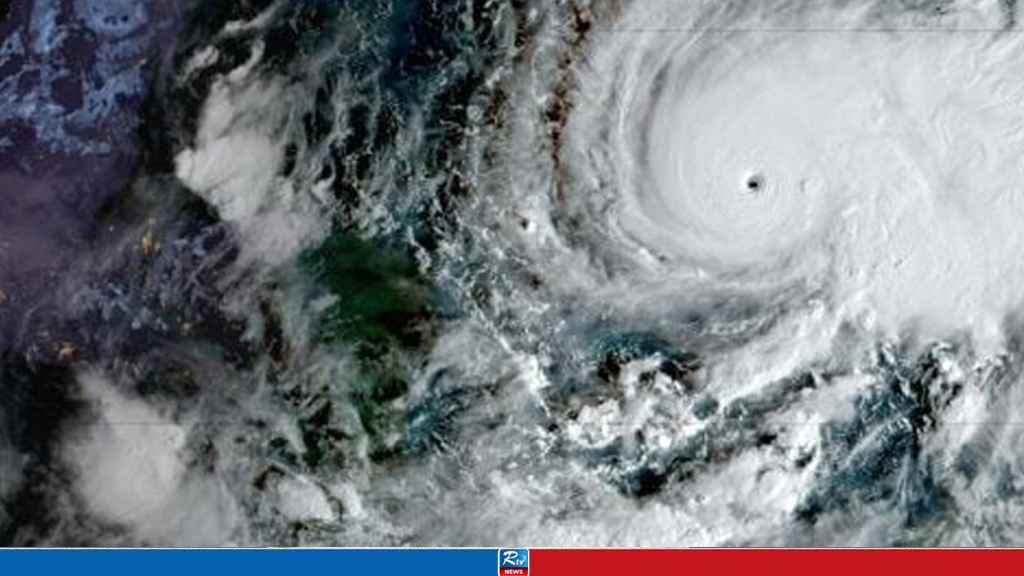
Typhoon Kalmaegi is heading towards Vietnam after floods and high winds caused dozens of deaths in central Philippines. President Ferdinand Marcos Jr. has declared a state of emergency. The death toll from Typhoon Kalmaegi in the Philippines has risen to well over 100, while dozens of others are missing, prompting Philippine President Ferdinand Marcos Jr. to declare a state of emergency on Thursday. Kalmaegi barreled into central Philippines on Tuesday, bringing torrential rains and gale-force winds. Most of the deaths have come on the island of Cebu, which saw the worst flash floods in recent memory in the province. Floodwaters swept away shanties, vehicles, and even shipping containers.  Over 430,000 people in the Philippines have been displaced by Typhoon Kalmaegi. -Deutsche Welle Photo  The rapidly rising water forced residents to climb onto the roofs of their homes, the Philippine Red Cross said. The devastating typhoon hit the province less than a month after a powerful earthquake killed at least 72 people and injured more than 140 others. What do we know about the casualties? At least 49 people have died in the province of Cebu. The Philippine Office of Civil Defense said they were killed by drowning, landslides and fallen debris. Eight people have been confirmed dead on the neighboring island of Negros and the provinces of Capiz, Bohol, Leyte and Southern Leyte. Six people were killed after a Philippine Air Force helicopter crashed in the province of Agusan Del Sur on Tuesday while it was on its way to provide humanitarian assistance to provinces affected by the typhoon, the Philippines military said, without providing a cause for the crash. The OCD also reported 28 other deaths, without providing further details. At least 75 people were missing; 13 in Cebu, and 62 on Negros Island, the OCD added. Over 430,000 people have been displaced, the country's disaster management agency said. What else do we know about Typhoon Kalmaegi? Kalmaegi also caused widespread electricity outages. Much of the affected areas of Cebu, Southern Leyte and Negros Occidental provinces were either partially or fully without power. Dozens of people are missing. --Deutsche Welle Photo  The storm has caused severe transport disruption, with more than 30 flights canceled on Wednesday. Shipping has also been affected, with nearly 3,000 passengers stranded at ports, the Philippine coast guard said. Kalmaegi left the western Philippine province of Palawan and entered the South China Sea before midday local time (4 a.m. GMT) on Wednesday, with maximum sustained winds of 130 kilometers (81 miles) per hour and gusts of up to 180 kilometers per hour. The storm was headed towards Vietnam, which itself is still recovering from days of record-breaking amounts of rain that caused flash floods.  Fishing boats have returned to shore, and local authorities have prepared for potential evacuations as well as setting up shelters and stockpiling emergency food supplies. Kalmaegi is expected to reach Vietnam by Friday morning. Thailand's meteorological agency has also issued an advisory for the north, east and center of the country, warning of heavy rain from Friday through the weekend that could lead to floods and landslides. Read More 10 Cold Waves Predicted to Hit Bangladesh in Coming Winter Philippines braced for another imminent storm The Philippine weather bureau said another tropical cyclone was heading towards the country, and was expected to make landfall on Friday evening or Saturday. The storm is forecast to strengthen and could become a super typhoon over the weekend. The Philippines is hit by around 20 tropical cyclones each year. More than 6,300 people died when Super Typhoon Haiyan hit the country in November 2013.
Philippines Declares Emergency as Kalmaegi Death Toll Soars
Nearly 50 Dead After Hurricane Melissa Thrashes Caribbean
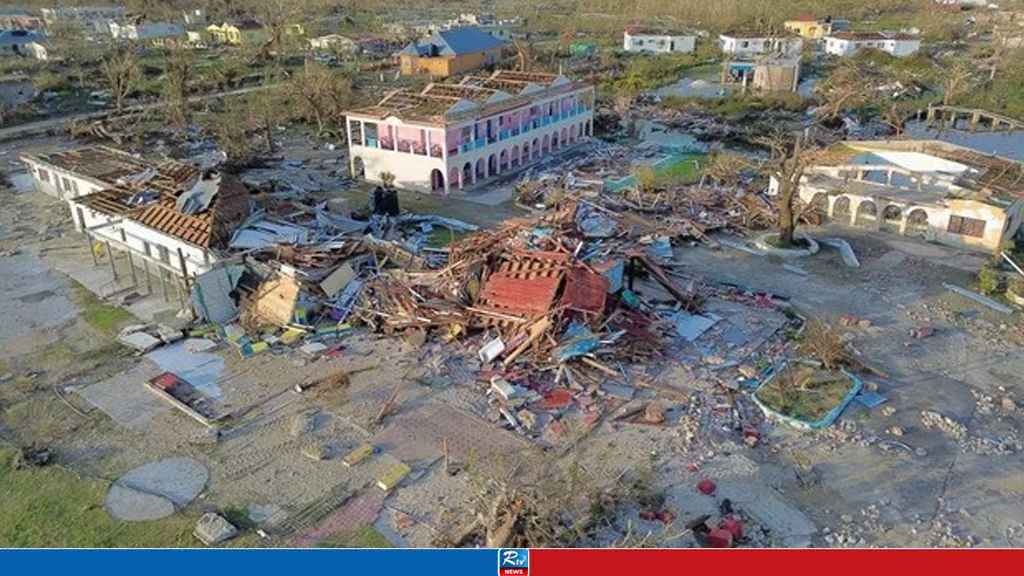
The death toll from Hurricane Melissa rose Thursday to nearly 50 people, officials said, after the ferocious storm devastated Caribbean islands and was bearing down on Bermuda. Flooding was expected to subside in the Bahamas although high water could persist in Cuba, Jamaica, Haiti and neighboring Dominican Republic, the US National Hurricane Center (NHC) said. The storm, one of the most powerful ever recorded, was made four times more likely because of human-caused climate change, according to a study by Imperial College London. Tropical storm conditions were occurring on Bermuda late Thursday and the island was under a hurricane warning, with maximum sustained winds of 100 miles (155 kilometers) per hour, the NHC said. The government urged residents to take precautionary measures against the still-powerful storm. Melissa smashed into both Jamaica and Cuba with enormous force, and residents were assessing their losses and the long road to recovery. Read More Trump Stirs Tensions with Surprise Nuclear Test Order "The confirmed death toll from Hurricane Melissa is now at 19," including nine in Westmoreland and eight in St. Elizabeth, both parishes in the Caribbean island's hard-hit west, Information Minister Dana Morris Dixon told local news outlets including the Jamaica Gleaner. Communications and transportation access remains largely down in Jamaica and Cuba, and comprehensive assessment of the damage could take days. In impoverished Haiti, the country's civil defense agency said Thursday that the death toll had risen to 30, with 20 people injured and another 20 missing. It said more than 1,000 homes have been flooded, with some 16,000 people in shelters. In the east of the communist island of Cuba, battling its worst economic crisis in decades, people struggled through inundated streets lined with flooded and collapsed homes. The storm smashed windows, downed power cables and mobile communications, and tore off roofs and tree branches. Melissa "killed us, because it left us destroyed," Felicia Correa, who lives in the La Trampa community near El Cobre, told AFP. "We were already going through tremendous hardship. Now, of course, we are much worse off." Cuban authorities said about 735,000 people had been evacuated -- mainly in the provinces of Santiago de Cuba, Holguin and Guantanamo. 'Disaster area' The United States meanwhile has mobilized disaster assistance response teams and urban search and rescue personnel, and the teams were currently on the ground in the Dominican Republic, Jamaica and the Bahamas, according to a State Department official. Teams were en route to Haiti too. Secretary of State Marco Rubio also included ideological foe Havana, saying the United States is "prepared to offer immediate humanitarian aid to the people of Cuba affected by the Hurricane." The UK government announced œ2.5 million (about $3.3 million) in emergency funding for the region, and also said it was chartering "limited" flights to help British nationals leave. In Jamaica, UN resident coordinator Dennis Zulu told reporters Melissa had brought "tremendous, unprecedented devastation of infrastructure, of property, roads, network connectivity." Authorities there have said confirming reports of deaths was difficult as access to the hardest-hit areas was limited, and some people were still unable to reach family and loved ones. 'Everything is gone' Hurricane Melissa tied the 1935 record for the most intense storm ever to make landfall when it slammed Jamaica on Tuesday, according to the US National Oceanic and Atmospheric Administration. In Seaford Town, farmer and businessman Christopher Hacker saw his restaurant and nearby banana plantations flattened. "Everything is gone," he told AFP. Such mega-storms "are a brutal reminder of the urgent need to step up climate action on all fronts," said UN Climate Change Executive Secretary Simon Stiell.
Nearly 50 Dead After Hurricane Melissa Thrashes Caribbean
Cyclone Montha Brings Heavy Rains and Strong Winds in India
Authorities have evacuated tens of thousands of residents from low-lying areas and set up more than 1,900 relief camps in India, with about 4 million people expected to be impacted. Cyclone Montha made landfall along India's eastern coast late Tuesday, bringing torrential rain and strong winds, the national weather office said. At least one person was killed, local media reports said. The Indian Meteorological Department (IMD) said on X that the Severe Cyclonic Storm Montha has weakened into a Cyclonic Storm over coastal Andhra Pradesh, in south India. "It is likely to move nearly northwestwards across coastal Andhra Pradesh and maintain its intensity of cyclonic storm during next 6 hours, and weaken further into a deep depression during subsequent 6 hours," the IMD post said. Earlier on Tuesday, the IMD announced the commencement of the landfall process and said the "severe cyclonic storm," was crossing the coast of Andhra Pradesh, with a maximum sustained wind speed of 90-100 kilometers (55-60 miles) per hour. Millions expected to be impacted Authorities have evacuated tens of thousands of residents from low-lying areas and set up more than 1,900 relief camps. Nara Lokesh, a minister in the Andhra Pradesh state government, said that about 4 million people may be affected. Local media reported that heavy rain earlier in the day flooded parts of the state's coastal districts and forced the cancellation of more than 30 flights. Read More Hurricane Melissa Takes Aim at Cuba After Roaring Across Jamaica Schools and colleges were ordered shut in many districts, train services were disrupted, and fishing activities were suspended. State officials said 19 districts could be affected, with early reports of flooding and crop damage in coastal regions. The neighboring state of Odisha was also placed on alert for heavy rain. Climate change behind intensifying storms Cyclone Montha is the latest in a series of increasingly intense storms to hit India's eastern coast. In 2023, India's deadliest cyclone season left 523 people dead and caused an estimated USD 2.5 billion (Euro 2.15 billion) in damages. Scientists link warming ocean temperatures, which cause intensifying storms, to climate change. "Global warming is increasing the air temperature and is also making oceans warm," Akshay Deoras, a meteorologist at the University of Reading in England, told the AP news agency. "And if an ocean is very warm, it is going to supply a lot of energy to any tropical storm over the ocean."
Cyclone Montha Brings Heavy Rains and Strong Winds in India
Hurricane Melissa Takes Aim at Cuba After Roaring Across Jamaica
Hurricane Melissa ripped a path of destruction through Jamaica after making landfall as one of the most powerful hurricanes on record Tuesday, lashing the island nation with brutal winds and torrential rain before heading towards Cuba. Prime Minister Andrew Holness declared the island a "disaster area" and authorities warned residents to remain sheltered over continued flooding and landslide risk, as dangerous weather persisted even as the hurricane's worst moved on. The scale of Melissa's damage in Jamaica wasn't yet clear, as a comprehensive assessment could take days and much of the island was still without power, with communications networks badly disrupted. At its peak, the storm packed ferocious sustained winds of 185 miles (300 kilometers) per hour. Immediate details regarding casualty figures were not available. Government minister Desmond McKenzie said several hospitals had been damaged, including in the hard-hit southwestern district of Saint Elizabeth, a coastal area he said was "underwater." "The damage to Saint Elizabeth is extensive, based on what we have seen," he told a briefing. "Saint Elizabeth is the bread basket of the country, and that has taken a beating. The entire Jamaica has felt the brunt of Melissa." The hurricane was the worst to ever strike Jamaica, hitting land with maximum wind speeds even more potent than most of recent history's most brutal storms, including 2005's Katrina, which ravaged the US city of New Orleans. The storm took hours to cross over the Caribbean nation, a passage over land that diminished its winds, dropping by Tuesday evening down to a Category 3 storm from the top-level of 5. But the still-powerful Melissa was set to hit Cuba as soon as Tuesday night and later the Bahamas. 'Severely damaged infrastructure' Even before Melissa slammed into Jamaica, seven deaths -- three in Jamaica, three in Haiti and one in the Dominican Republic -- had been blamed on the deteriorating conditions. Jamaica's climate change minister told CNN that Hurricane Melissa's effect was "catastrophic," citing flooded homes and "severely damaged public infrastructure" and hospitals. And as if that weren't enough: health authorities were urging vigilance against crocodiles displaced by the torrential rains. "Rising water levels in rivers, gullies, and swamps could cause crocodiles to move into residential areas," the South East Regional Health Authority (SERHA) posted in a public service announcement on Instagram. Mathue Tapper, 31, told AFP from Kingston that those in the capital were "lucky" but feared for fellow Jamaicans in the island's more rural areas. "My heart goes out to the folks living on the Western end of the island," he said. The mammoth storm could leave devastation on the scale of some of the worst hurricanes in recent memory like Katrina, Maria or Harvey. Climate change impact Broad scientific consensus says human-driven climate change is responsible for intensified storms like Melissa that are occurring with increased frequency and higher potential for destruction and deadly flooding. Melissa lingered over Jamaica long enough that the rains were particularly dire. "Human-caused climate change is making all of the worst aspects of Hurricane Melissa even worse," said climate scientist Daniel Gilford. The Jamaican Red Cross, which was distributing drinking water and hygiene kits ahead of infrastructure disruptions, said Melissa's "slow nature" exacerbated the anxiety. The UN is planning an airlift of some 2,000 relief kits to Jamaica from a relief supply station in Barbados once air travel is possible. Assistance is also planned to other impacted countries including Cuba and Haiti, UN spokesperson Stephane Dujarric told journalists. Jamaican officials said some 25,000 tourists were in the country famed for its normally crystalline waters. Olympian sprinter Usain Bolt, one of Jamaica's most famous figures, meanwhile was posting regularly on social media with messages for his home country: "Pray for Jamaica."
Hurricane Melissa Takes Aim at Cuba After Roaring Across Jamaica
Read More
Nikli Records Country's Lowest Temperature for Second Day
China's Rare Earths El Dorado Gives Strategic Edge
Cyclone Montha Brings Heavy Rains and Strong Winds in India
Floods and Landslides Claim Dozens of Lives in Mexico