Dhaka 26 September, 2026

Bangladesh Still Polarized a Year After Hasina's Ouster

Arafatul Islam , Deutsche Welle

Publish : 02 Aug 2025, 10:26 AM
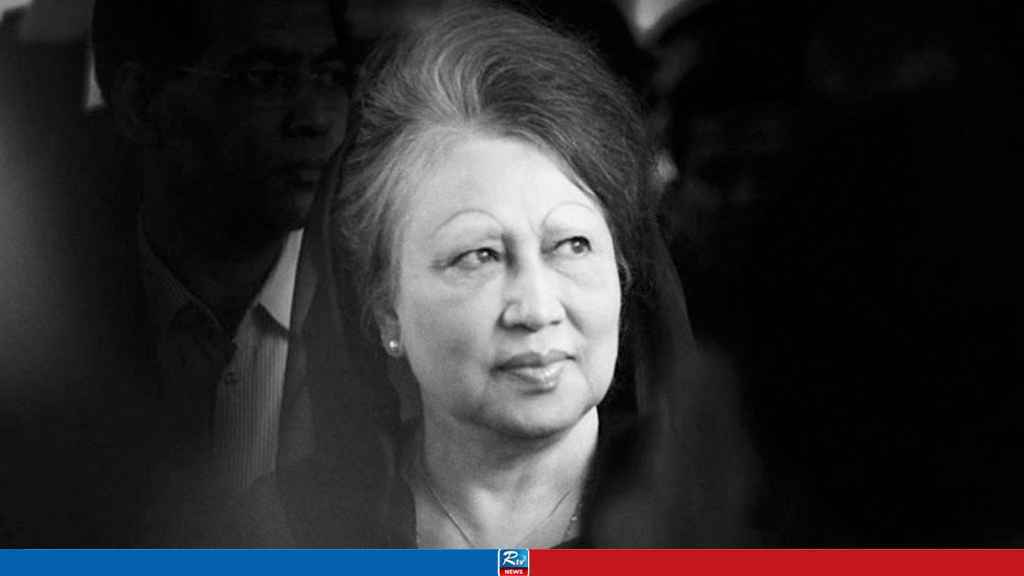
Bangladesh has seen economic progress since Hasina's ouster, but human rights remain a concern. Photo: DW

Sheikh Hasina resigned as Bangladesh's long-serving prime minister in August 2024 after weeks of deadly protests that started over a controversial quota system for government jobs, but morphed into a wider anti-government movement.

Hasina fled to India, while other members of her Awami League party were either arrested in connection with the protests or went into hiding.

Today, in the capital, Dhaka, the main office of the powerful opposition Bangladesh Nationalist Party (BNP), led by Hasina rival and former Prime Minister Khaleda Zia, is a hub of activity.

When will Bangladesh hold credible elections?
Many BNP members, including Zia, who had been imprisoned on charges including graft, vandalism and violence — which the BNP says were politically motivated during Hasina's 15-year tenure — are now free.

Abdus Salam, a prominent BNP leader, told DW that the only change he sees since Hasina fled to India in August 2024 is political freedom.

"We were in hiding during this time last year. We were not able to stay in our homes. We were facing numerous court cases. We didn't have a normal life. That suffering may have ended," he said.

In another busy Dhaka street, Ambia, a garment factory worker, told DW that while she admires the students who led last year's uprising to bring change in her country, she said her expectations have not yet been met.

"I hoped that the anarchy would end, and that people wouldn't politicize every incident," said Ambia. "The political parties create many issues whenever something happens. I didn't expect that. The feeling of security hasn't returned yet."

The interim government led by Muhammad Yunus, a former banker and prominent economist, had been aiming to hold elections in April 2026, saying it needed time to implement constitutional reforms, changes to the electoral process and bring about progress in judicial independence and press freedoms.

However, Yunus' administration did not rule out a possibility of polls in February, which has been demanded by the BNP and its allies.

Rights violations and rise of Islamists
Bangladesh has seen some economic progress, but human rights remain a concern.

London-based rights group Human Rights Watch (HRW) has said the Yunus-led interim government is "falling short" on its promise to improve human rights in Bangladesh.

"Some of the fear and repression that marked Sheikh Hasina's Awami League Party's 15-year rule, and abuses such as widespread enforced disappearances, appear to have ended," according to HRW.

"However, the interim government has used arbitrary detention to target perceived political opponents and has yet to deliver systemic reforms to protect human rights."

"The hope of the thousands who braved lethal violence a year ago when they opposed Sheikh Hasina's abusive rule to build a rights-respecting democracy remains unfulfilled," said Meenakshi Ganguly, HRW's deputy Asia director.

At the same time, Islamist parties have increased their visibility since Hasina's ouster.

The Yunus government also withdrew a ban on the country's largest Islamist party last August, reversing a decision by the Hasina government.

A rally held by an influential Islamist group in May drew thousands to the streets of Dhaka. As many as 20,000 people turned out to show support for the Hefazat-e-Islam group as it laid out a list of demands for Bangladesh's interim government.

They opposed government proposals that include equal inheritance rights for women, a ban on polygamy and recognition of sex workers as laborers.

'Significant progress' on reducing rights violations
Foyez Ahammad, senior assistant press secretary for the interim government, told DW that HRW's expectation of reducing human rights violations to zero may not have been achieved, but significant progress has been made toward reducing it.

"HRW has expressed its dissatisfaction [with] many issues as their expectation after the era of Sheikh Hasina didn't meet to the level they expected," Ahammad said.

"Bangladesh was in a condition of massive human rights violations, where hundreds of secret prisons were operating, and enforced disappearances and extrajudicial killings happened," he added, noting that press freedom "went down to zero" under Hasina's rule.

"We have made progress from that situation within a short period. For example, media houses that were closed down in the past reopened," added Ahammad, who said that ordinary people are expressing their opinions openly, including on social media.

"They are even criticizing the government in state-run broadcasters, which didn't happen in the past," he said.
Hasina's supporters, however, do not agree with these claims and point to a crackdown on their party under the interim government.

Hasina faces uncertain future
Yunus' interim government has banned all political activities of Hasina's Awami League until a special tribunal completes a trial of the party and its leaders over the deaths of hundreds of people during last year's mass uprising.

Following the ban, senior Awami League politician Mohammad A. Arafat claimed Yunus was trying to "keep his unconstitutional regime in power and delay elections."

Speaking to DW from an unknown location in May, the former information minister said Yunus was trying to secure the support of Islamists and the National Citizens' Party — which spearheaded the move against the Awami League (AL) — by banning the former ruling party.

"The only way the Islamists can make their way into parliament is by banning AL," Arafat said.

The tribunal against Hasina, former Home Minister Asaduzzaman Khan and former police chief Chowdhury Abdullah Al-Mamun has set August 3 and 4 for the prosecution's statement.

Economic stabilization
Despite the human rights situation, the interim government has made some economic progress. It has announced training programs for young people and courted foreign investment to create jobs.

Bangladesh, the world's second-largest garment supplier, on Friday secured a reduced 20% tariff on exports to the United States — down from the 35% initially proposed by US President Donald Trump.

The 20% rate, which will come into effect on August 7, is comparable to Bangladesh's key apparel-sector competitors such as Sri Lanka, Vietnam, Pakistan and Indonesia, which received rates between 19% and 20%.

Follow google news channel to get RTV news Google News
Dr Asif Nazrul, Dr Khalilur Meet Foreign Dignitaries
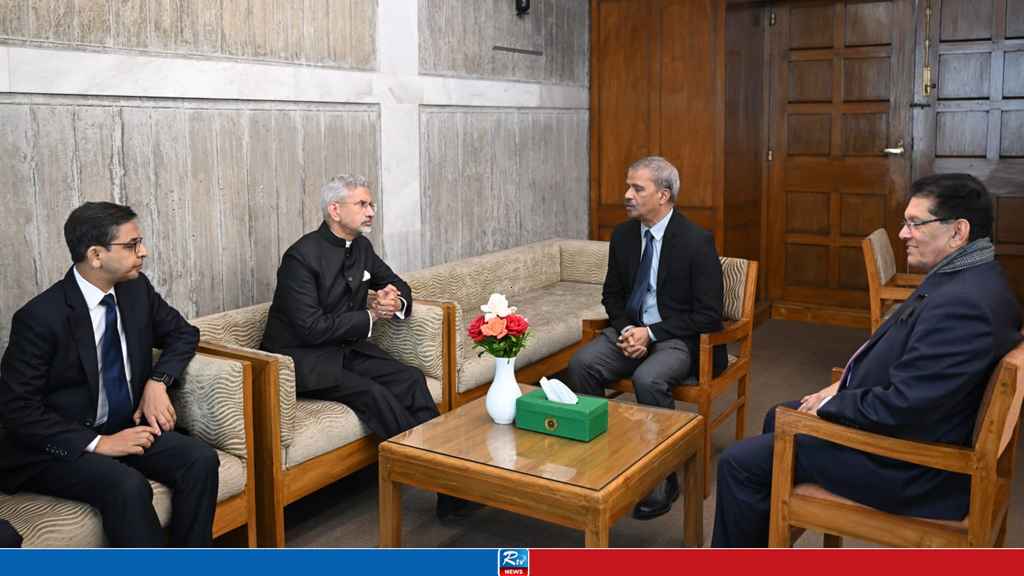
Law Adviser Dr Asif Nazrul and National Security Adviser Dr Khalilur Rahman today (Wednesday) met visiting Indian External Affairs Minister S Jaishankar, Speaker of the Pakistan National Assembly Sardar Ayaz Sadiq, Nepal's Foreign Minister Bala Nanda Sharma, and Bhutan's Foreign Minister DN Dhungyel at Jatiya Sangsad Bhaban here. Read More Pakistan Speaker and Indian Minister Meet at Begum Zia’s Funeral The dignitaries arrived in Dhaka to attend the last rites of former Prime Minister and national leader Begum Khaleda Zia, who passed away yesterday. The advisers expressed their gratitude to the visiting dignitaries for their presence and for showing solidarity with the people of Bangladesh during this time of national mourning.
Dr Asif Nazrul, Dr Khalilur Meet Foreign Dignitaries
Pakistan Speaker and Indian Minister Meet at Begum Zia’s Funeral
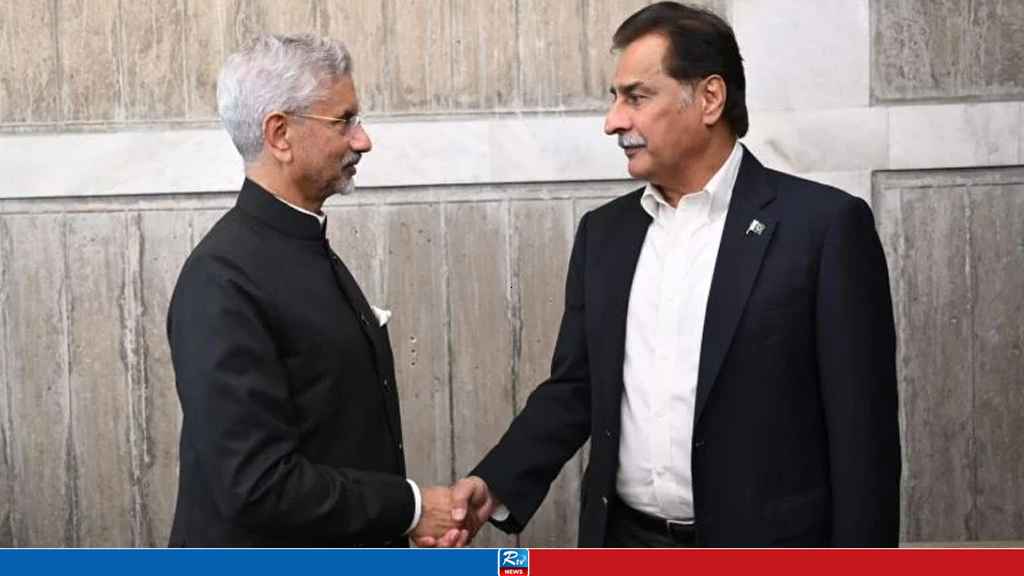
In a notable moment of regional diplomacy, Pakistan’s National Assembly Speaker Sardar Ayaz Sadiq and Indian External Affairs Minister Dr. S. Jaishankar exchanged greetings on Wednesday at Manik Mia Avenue, ahead of the state funeral of former Prime Minister Begum Khaleda Zia. Both leaders arrived in the capital this morning, representing their respective governments to pay final respects to the three-time former premier and Bangladesh Nationalist Party (BNP) Chairperson. Their presence underscores the significant regional impact of Khaleda Zia’s long political career and her role in South Asian affairs. Read More Pakistan’s National Assembly Speaker Calls on CA Prior to the commencement of the namaz-e-janaza, Speaker Sadiq and Minister Jaishankar met with BNP Acting Chairman Tarique Rahman. They conveyed formal condolence messages on behalf of Pakistan and India, expressing deep sympathy for the bereaved family and the people of Bangladesh. The interaction between the high-ranking officials of the two neighboring nations, amidst a sea of millions of mourners, highlighted a rare moment of shared respect for the veteran Bangladeshi leader. Dignitaries from across the globe have gathered in Dhaka today, reflecting a broad international recognition of Khaleda Zia's legacy as a symbol of democratic struggle in the region. Following the funeral prayers, both foreign representatives joined the state processional as the nation prepares to lay the "uncompromising leader" to her eternal rest.
Pakistan Speaker and Indian Minister Meet at Begum Zia’s Funeral
Pakistan’s National Assembly Speaker Calls on CA
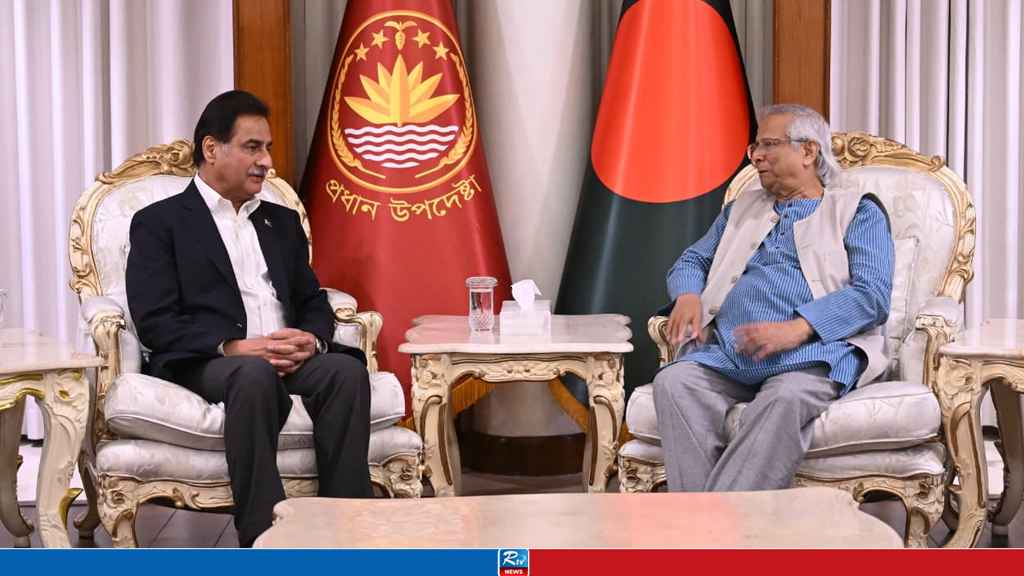
Speaker of the National Assembly of Pakistan Sardar Ayaz Sadiq today called on Chief Adviser Professor Muhammad Yunus at the State Guest House Jamuna here, according to the Chief Adviser’s Press Wing.  Earlier, he handed over Islamabad's condolence message to BNP Acting Chairperson Tarique Rahman at the death of three-time former Prime Minister and BNP Chairperson Begum Khaleda Zia, reflecting Pakistan's deep respect for Bangladesh's late uncompromising leader. Read More Begum Zia Laid to Eternal Rest at Zia Udyan with Full State Honors Sadiq met Tarique Rahman at the Jatiya Sangsad Bhaban this afternoon and formally conveyed the condolence message before the namaj-e-janaza of Begum Khaleda Zia at the Manik Mia Avenue here this afternoon. Earlier in the day, the Speaker of Pakistan's National Assembly arrived here to attend the funeral of the former prime minister and BNP chairperson, representing the government of Pakistan. 
Pakistan’s National Assembly Speaker Calls on CA
Begum Zia Laid to Eternal Rest at Zia Udyan with Full State Honors
An era in Bangladesh's political history concluded on Wednesday as former Prime Minister and Bangladesh Nationalist Party (BNP) Chairperson Begum Khaleda Zia was laid to eternal rest with full state honors.  The three-time premier was interred beside her husband, Shaheed President Ziaur Rahman, at Zia Udyan in Sher-e-Bangla Nagar at approximately 4:30 pm. The burial followed a massive funeral prayer (namaz-e-janaza) at Manik Mia Avenue, where hundreds of thousands of mourners gathered in an unprecedented display of national grief.  The prayers were led at 3:02 pm by the renowned Islamic scholar and Khatib of Baitul Mukarram, Mufti Mohammad Abdul Malek.  The congregation was joined by Chief Adviser Professor Muhammad Yunus, the chiefs of the three services, interim government advisers, and high-level foreign dignitaries from across South Asia, including representatives from India and Pakistan. The final journey of the "uncompromising leader" began early Wednesday morning when her body, draped in the national flag, was brought to the Parliament area from the residence of her son, Tarique Rahman.  Read More Please Pray for My Mother: Tarique Rahman Despite the biting winter cold, millions of citizens from every corner of the country converged on the capital to pay their final respects. To ensure order, a multi-layered security detail involving the Army, Police, RAB and BGB was deployed across the city. Begum Khaleda Zia’s death at age 80 follows a month-long battle with chronic health complications at Evercare Hospital.  Her legacy spans 41 years of political leadership, during which she transitioned from a homemaker to a three-time Prime Minister and five-term Member of Parliament. She was famously known for her steadfast resolve during the anti-autocracy movements of the 1990s and for her historic record of never losing an election she contested. While the general public was restricted from the immediate burial site to maintain solemnity, the sheer scale of the gathering at her janaza served as a powerful testament to her enduring connection with the people of Bangladesh.  As she was laid to rest with military honors, the nation observed a day of mourning for the woman who spent over four decades shaping its democratic path.
Begum Zia Laid to Eternal Rest at Zia Udyan with Full State Honors
Please Pray for My Mother: Tarique Rahman
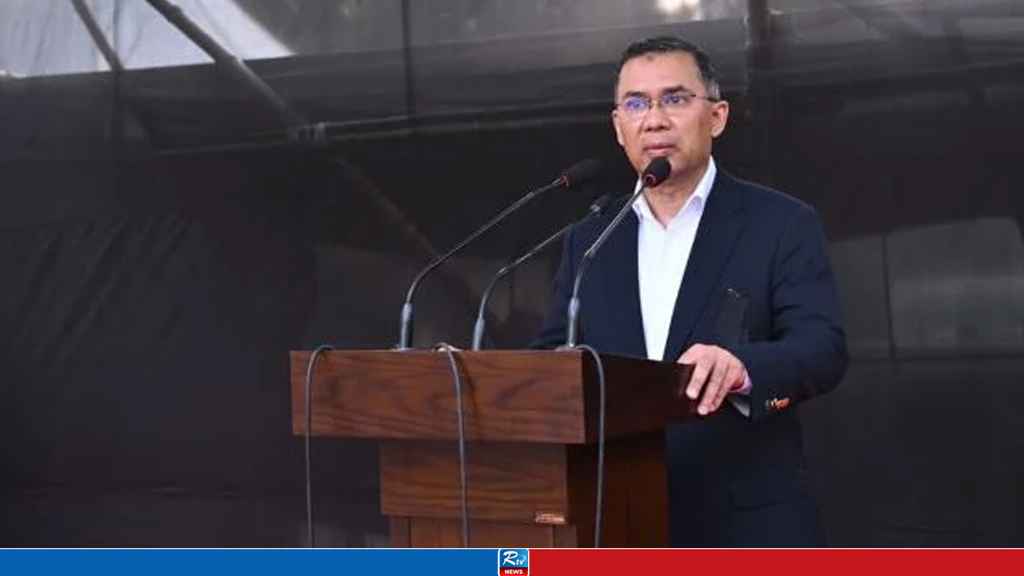
In a deeply emotional moment preceding the funeral prayers at Manik Mia Avenue, Bangladesh Nationalist Party (BNP) Acting Chairman Tarique Rahman addressed a massive congregation of millions, seeking spiritual blessings for his mother, Begum Khaleda Zia.  Standing before the sea of mourners, he introduced himself simply as her eldest son and made a heartfelt request: "Please pray for my mother so that Allah grants her Jannat (Paradise)." The namaz-e-janaza of the three-time former Prime Minister and country's first female premier was conducted by Mufti Mohammad Abdul Malek, Khatib of the Baitul Mukarram National Mosque.  Read More Millions Bid Tearful Farewell as Begum Zia’s Janaza Concludes Before the prayers, BNP Standing Committee member Nazrul Islam Khan shared a brief biography, reflecting on her journey as a political icon. The red-and-green national flag-wrapped coffin was brought to the venue with full state honors at 2:45 pm, with the prayers commencing at 3:00 pm. The gathering was attended by the highest levels of the state, including Chief Adviser Professor Muhammad Yunus and Chief Justice Zubayer Rahman Chowdhury.  They were joined by foreign dignitaries, interim government advisers, the chiefs of the three services, and senior civil and military officers, alongside an overwhelming number of citizens from all walks of life. As the final prayers were offered, the venue echoed with the sound of weeping as mourners bid a tearful adieu to their beloved leader. Following the ceremony, her body was taken to Zia Udyan to be laid to eternal rest beside the grave of her husband, Shaheed President Ziaur Rahman, with full state honors. 
Please Pray for My Mother: Tarique Rahman
Read More
3-Day State Mourning for Khaleda Zia, Public Holiday Today
Chief Adviser to Address the Nation at Noon
CA Expresses Deep Grief Over the Death of Khaleda Zia
Sheikh Hasina, 16 Others Charged with Enforced Disappearance, TFI Cell Crimes