Dhaka 11 October, 2026

Gazette of 'July National Charter Implementation Order' Issued

BSS

Publish : 13 Nov 2025, 06:27 PM

The interim government on Thursday published the gazette of the “July National Charter (Constitution Reform) Implementation Order, 2025”.

The Order mandates the government for a referendum on the provisions of the July National Charter relating to reforms of the Constitution.

The Order and its constitution-reform issues will be submitted for referendum to “exercise the sovereign power of the people”, the notification said. The referendum will be held in accordance with the Order on the day of the national parliament election.

The charter envisages the creation of a bicameral parliament with an upper house of 100 members, representing the political parties proportionally according the vote they got in the polls.

The Order has made as many as 30 proposals including limiting the term of the Prime Minister in office, empowering the President and electing Deputy Speaker from the opposition bench, and increasing the number of female seats in the parliament, suggesting that execution of the proposals will be obligatory for the winning political parties of the coming parliamentary elections.

Referendum will be held through ballot and each voter will vote secretly on the ballot determined by the Election Commission. According to the gazette an appropriate law will be enacted for holding the referendum and the Election Commission will take required measures to this end.

Earlier, President of Bangladesh Md Shahabuddin, has signed the Order, the notification said.

In the ballot of the referendum the following question shall be placed before the voters: “Do you have consent to the July National Charter (Constitution Reforms) Implementation Order, 2025 and the following proposals related to constitutional reform mentioned in the July National Charter?”; (Yes/No):

(a) For election, a Caretaker Government, an Election Commission and other constitutional institutions shall be constituted according to the July Charter.

(b) The next National Parliament shall be bicameral. A 100 member Upper House shall be constituted with proportional representation of the votes received by the political parties in the National Parliament elections. Approval by the majority members of the Upper House will be mandatory for any amendment to the constitution.

(c) The winning parties in the next parliamentary election will be obliged to execute 30 proposals of the July National Charter on various issues which include- increasing the representation of females in the parliament, election of the deputy speaker and chairpersons of several parliamentary committees from the opposition bench, limiting the term of the Prime Minister, empowerment of the President, fundamental rights, independence of the judiciary, local government, etc. on which the political parties have reached consensus in the July National Charter.

(d) The other reforms mentioned in the July National Charter shall be implemented as promised by the political parties.

According to the Order, if the majority of votes indicate ‘yes’, then a Constitutional Reform Council will be formed with the elected representatives of the national parliament which can exercise every power to reform the constitution.

The representatives elected at the said election shall simultaneously serve as members of the Jatiya Sangsad and as members of the Constitution Reform Council.

The Council shall complete the constitution reform in accordance with the July National Charter and the results of the referendum within 180 (one hundred and eighty) working days from the date of commencement of its first session of the parliament. The activities of the Council shall be closed after completion of the constitution reform.

For fulfillment of the purpose of this Order, the Council shall determine the rules of procedure of convening and adjourning its sessions, raising proposals for constitution reform, consideration and adoption of the reform proposals and other matters.

The Jatiya Sangsad Secretariat shall provide secretarial assistance to the Council.

The elected representatives shall, after taking oath as members of the Parliament, will swear-in again as members of the Constitution Reform Council in the same oath-taking ceremony.

The same person, who will administer the oath of the Parliament Members, will also administer oath of the Constitution Reform Council.

At the first meeting of the first session of the Council, the members of the Council shall elect its Chairperson and Deputy Chairperson; and until such election, the eldest member of the Council shall, with the consent of the majority of the members, act as the Chairman of the meeting.

In the absence of both the Chairman and the Deputy Chairman, any member of the Council shall act as the Chairman.

According to the Order, the first session of the Council shall be convened within 30 calendar days of the declaration of the results of the elections.

Read More

The presence of at least 60 members of the Council shall be required for conducting the proceedings of the Council.

A decision shall be taken by a majority vote of the total members of the Council for the approval of any proposal relating to constitutional amendments.

On other matters, decisions shall be taken by a majority vote of the members present.

In case of an equal number of votes, the Chairman shall have a casting vote.

In accordance with the Order, the validity of any proceedings of the Council and the special rights and immunity of the members of the Council shall be the same as those of the Jatiya Sangsad and the Members of the Parliament.

Measures shall be taken to incorporate the July National Charter into the Constitution in accordance with the commitment of the political parties to implement the July National Charter.

All reforms that can be implemented immediately after the completion of the constitutional reforms in accordance with sub-paragraph (1)(c) of Article 7 of this Order shall be implemented immediately and in this regard, and the government shall take all appropriate measures.

An Upper House of the Jatiya Sangsad shall be constituted on the basis of proportional representation (PR) of the votes obtained by the political parties in the Lower House and its terms of reference shall be determined within 30 (thirty) working days after the completion of the constitutional reforms.

The tenure of the Upper House will be effective from the date of its taking the oath of the members to the last day of the tenure of the Lower House of the Jatiya Sangsad.

It shall not be necessary to publish the list of candidates for the Upper House of the Jatiya Sangsad at the time of the parliamentary elections to be held immediately after the promulgation of this order.
The Council may frame necessary provisions and the Government may issue necessary instructions for the purpose of removing any obstacle to the formation of the Upper House.

According to the Order, the constitution reform adopted by the Council shall be final and no other approval or consent shall be required for such reforms.

The full text of the constitution reform adopted by the Council and the full text of the reformed Constitution shall be published by the Government in the Official Gazette forthwith.

The Government may issue directives for the implementation of the provisions of this Order.

Follow google news channel to get RTV news Google News
Dr Asif Nazrul, Dr Khalilur Meet Foreign Dignitaries
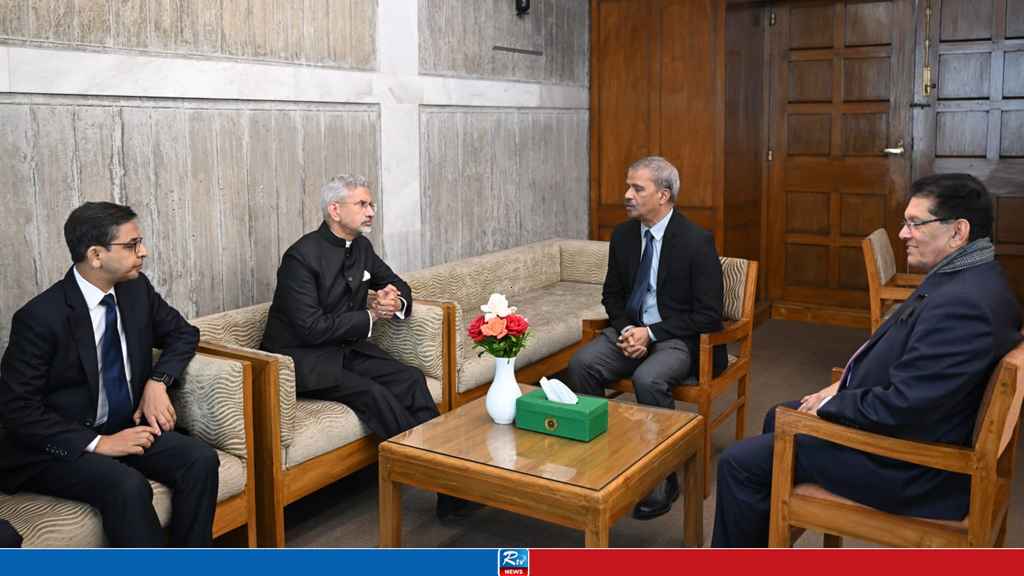
Law Adviser Dr Asif Nazrul and National Security Adviser Dr Khalilur Rahman today (Wednesday) met visiting Indian External Affairs Minister S Jaishankar, Speaker of the Pakistan National Assembly Sardar Ayaz Sadiq, Nepal's Foreign Minister Bala Nanda Sharma, and Bhutan's Foreign Minister DN Dhungyel at Jatiya Sangsad Bhaban here. Read More Pakistan Speaker and Indian Minister Meet at Begum Zia’s Funeral The dignitaries arrived in Dhaka to attend the last rites of former Prime Minister and national leader Begum Khaleda Zia, who passed away yesterday. The advisers expressed their gratitude to the visiting dignitaries for their presence and for showing solidarity with the people of Bangladesh during this time of national mourning.
Dr Asif Nazrul, Dr Khalilur Meet Foreign Dignitaries
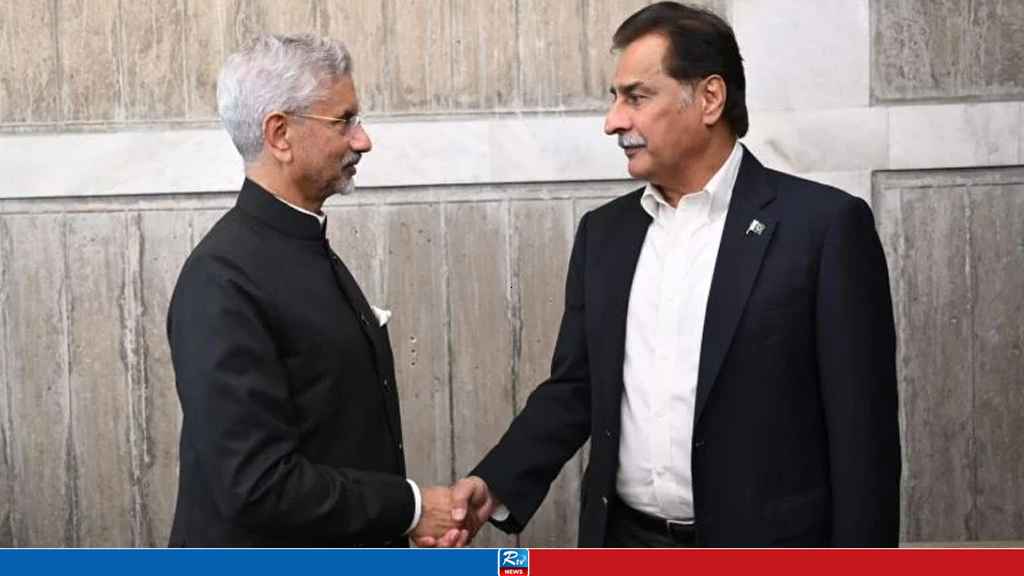
Pakistan Speaker and Indian Minister Meet at Begum Zia’s Funeral
In a notable moment of regional diplomacy, Pakistan’s National Assembly Speaker Sardar Ayaz Sadiq and Indian External Affairs Minister Dr. S. Jaishankar exchanged greetings on Wednesday at Manik Mia Avenue, ahead of the state funeral of former Prime Minister Begum Khaleda Zia. Both leaders arrived in the capital this morning, representing their respective governments to pay final respects to the three-time former premier and Bangladesh Nationalist Party (BNP) Chairperson. Their presence underscores the significant regional impact of Khaleda Zia’s long political career and her role in South Asian affairs. Read More Pakistan’s National Assembly Speaker Calls on CA Prior to the commencement of the namaz-e-janaza, Speaker Sadiq and Minister Jaishankar met with BNP Acting Chairman Tarique Rahman. They conveyed formal condolence messages on behalf of Pakistan and India, expressing deep sympathy for the bereaved family and the people of Bangladesh. The interaction between the high-ranking officials of the two neighboring nations, amidst a sea of millions of mourners, highlighted a rare moment of shared respect for the veteran Bangladeshi leader. Dignitaries from across the globe have gathered in Dhaka today, reflecting a broad international recognition of Khaleda Zia's legacy as a symbol of democratic struggle in the region. Following the funeral prayers, both foreign representatives joined the state processional as the nation prepares to lay the "uncompromising leader" to her eternal rest.
Pakistan Speaker and Indian Minister Meet at Begum Zia’s Funeral
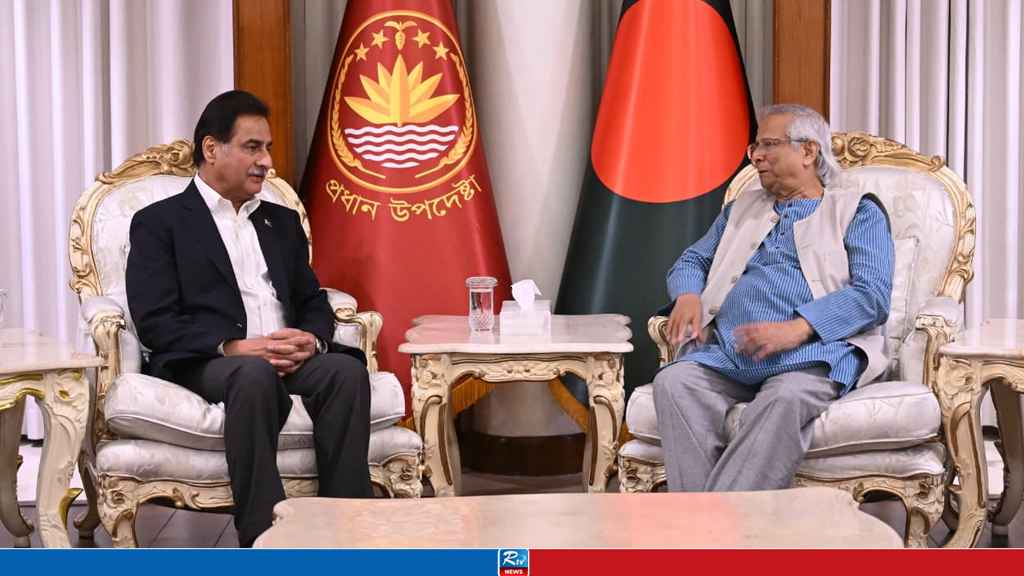
Pakistan’s National Assembly Speaker Calls on CA
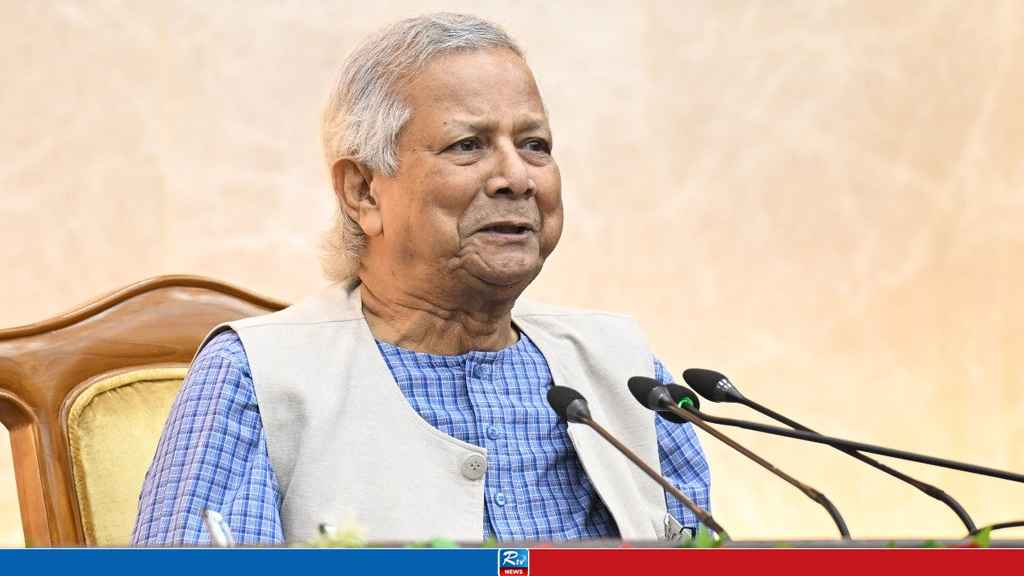
Speaker of the National Assembly of Pakistan Sardar Ayaz Sadiq today called on Chief Adviser Professor Muhammad Yunus at the State Guest House Jamuna here, according to the Chief Adviser’s Press Wing.  Earlier, he handed over Islamabad's condolence message to BNP Acting Chairperson Tarique Rahman at the death of three-time former Prime Minister and BNP Chairperson Begum Khaleda Zia, reflecting Pakistan's deep respect for Bangladesh's late uncompromising leader. Read More Begum Zia Laid to Eternal Rest at Zia Udyan with Full State Honors Sadiq met Tarique Rahman at the Jatiya Sangsad Bhaban this afternoon and formally conveyed the condolence message before the namaj-e-janaza of Begum Khaleda Zia at the Manik Mia Avenue here this afternoon. Earlier in the day, the Speaker of Pakistan's National Assembly arrived here to attend the funeral of the former prime minister and BNP chairperson, representing the government of Pakistan. 
Pakistan’s National Assembly Speaker Calls on CA
Begum Zia Laid to Eternal Rest at Zia Udyan with Full State Honors
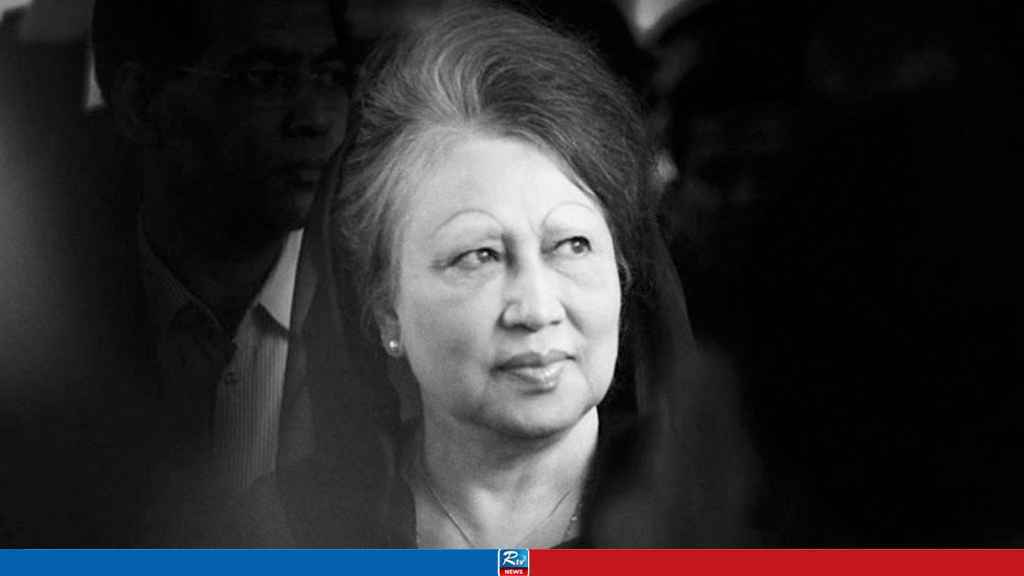
An era in Bangladesh's political history concluded on Wednesday as former Prime Minister and Bangladesh Nationalist Party (BNP) Chairperson Begum Khaleda Zia was laid to eternal rest with full state honors.  The three-time premier was interred beside her husband, Shaheed President Ziaur Rahman, at Zia Udyan in Sher-e-Bangla Nagar at approximately 4:30 pm. The burial followed a massive funeral prayer (namaz-e-janaza) at Manik Mia Avenue, where hundreds of thousands of mourners gathered in an unprecedented display of national grief.  The prayers were led at 3:02 pm by the renowned Islamic scholar and Khatib of Baitul Mukarram, Mufti Mohammad Abdul Malek.  The congregation was joined by Chief Adviser Professor Muhammad Yunus, the chiefs of the three services, interim government advisers, and high-level foreign dignitaries from across South Asia, including representatives from India and Pakistan. The final journey of the "uncompromising leader" began early Wednesday morning when her body, draped in the national flag, was brought to the Parliament area from the residence of her son, Tarique Rahman.  Read More Please Pray for My Mother: Tarique Rahman Despite the biting winter cold, millions of citizens from every corner of the country converged on the capital to pay their final respects. To ensure order, a multi-layered security detail involving the Army, Police, RAB and BGB was deployed across the city. Begum Khaleda Zia’s death at age 80 follows a month-long battle with chronic health complications at Evercare Hospital.  Her legacy spans 41 years of political leadership, during which she transitioned from a homemaker to a three-time Prime Minister and five-term Member of Parliament. She was famously known for her steadfast resolve during the anti-autocracy movements of the 1990s and for her historic record of never losing an election she contested. While the general public was restricted from the immediate burial site to maintain solemnity, the sheer scale of the gathering at her janaza served as a powerful testament to her enduring connection with the people of Bangladesh.  As she was laid to rest with military honors, the nation observed a day of mourning for the woman who spent over four decades shaping its democratic path.
Begum Zia Laid to Eternal Rest at Zia Udyan with Full State Honors
Please Pray for My Mother: Tarique Rahman
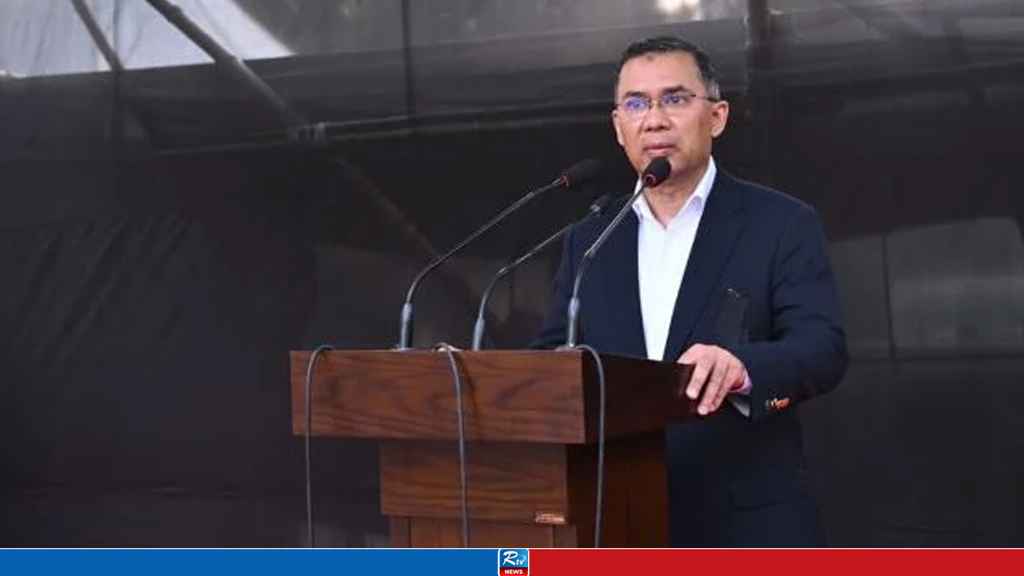
In a deeply emotional moment preceding the funeral prayers at Manik Mia Avenue, Bangladesh Nationalist Party (BNP) Acting Chairman Tarique Rahman addressed a massive congregation of millions, seeking spiritual blessings for his mother, Begum Khaleda Zia.  Standing before the sea of mourners, he introduced himself simply as her eldest son and made a heartfelt request: "Please pray for my mother so that Allah grants her Jannat (Paradise)." The namaz-e-janaza of the three-time former Prime Minister and country's first female premier was conducted by Mufti Mohammad Abdul Malek, Khatib of the Baitul Mukarram National Mosque.  Read More Millions Bid Tearful Farewell as Begum Zia’s Janaza Concludes Before the prayers, BNP Standing Committee member Nazrul Islam Khan shared a brief biography, reflecting on her journey as a political icon. The red-and-green national flag-wrapped coffin was brought to the venue with full state honors at 2:45 pm, with the prayers commencing at 3:00 pm. The gathering was attended by the highest levels of the state, including Chief Adviser Professor Muhammad Yunus and Chief Justice Zubayer Rahman Chowdhury.  They were joined by foreign dignitaries, interim government advisers, the chiefs of the three services, and senior civil and military officers, alongside an overwhelming number of citizens from all walks of life. As the final prayers were offered, the venue echoed with the sound of weeping as mourners bid a tearful adieu to their beloved leader. Following the ceremony, her body was taken to Zia Udyan to be laid to eternal rest beside the grave of her husband, Shaheed President Ziaur Rahman, with full state honors. 
Please Pray for My Mother: Tarique Rahman
Read More
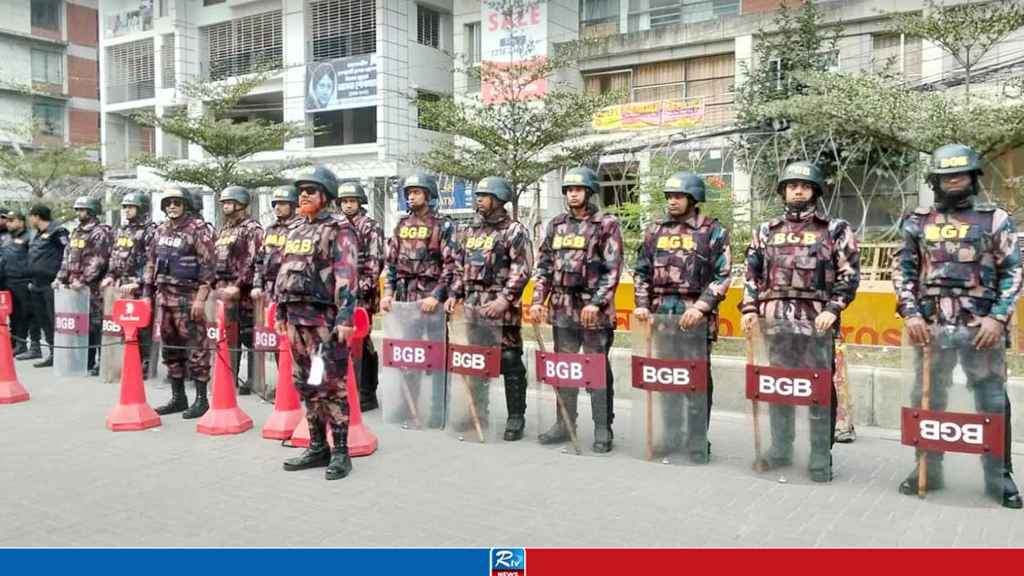
27 Platoons of BGB Deployed for Khaleda Zia’s Funeral and Burial
3-Day State Mourning for Khaleda Zia, Public Holiday Today
Chief Adviser to Address the Nation at Noon
CA Expresses Deep Grief Over the Death of Khaleda Zia