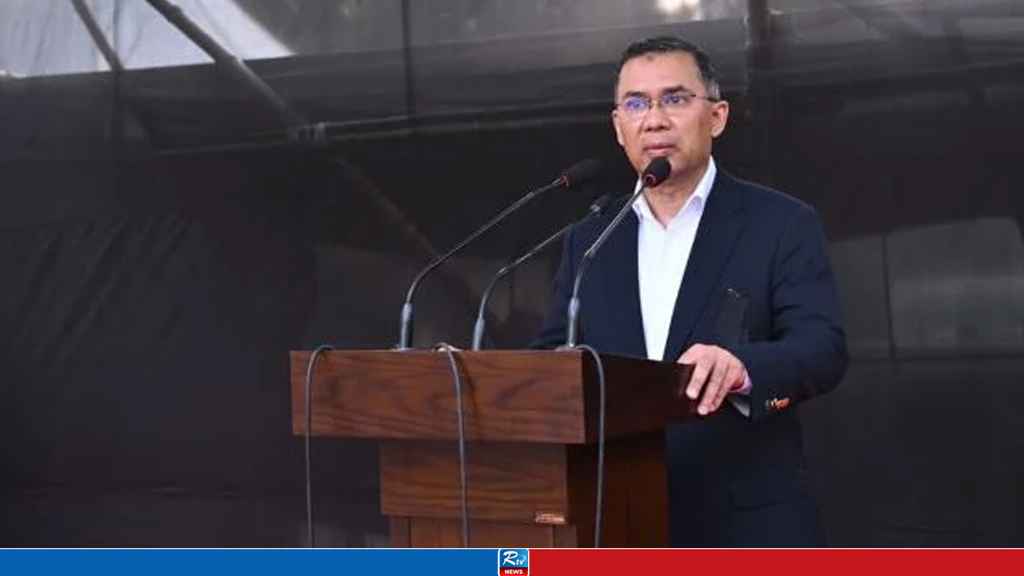
Tarique Rahman, the Acting Chairman of the Bangladesh Nationalist Party (BNP), slammed Bangladesh Jamaat-e-Islami on Sunday, accusing the party of mimicking the "fascist Awami League’s" propaganda against the BNP.
He said that the people of Bangladesh had already judged Jamaat based on their actions in 1971, where they "killed lakhs of people and dishonoured women for political gains."
Tarique Rahman delivered the comments virtually at the BNP’s ‘Plan to Build the Country’ programme, also alleging that Jamaat was "misleading people with false promises, including claiming they could ‘guarantee heaven in return for votes’."
“We hear some people or some groups nowadays—in different places or on social media— saying ‘We have seen this party and that party, so now give this party (Jamaat) a chance’. But the people of this country already saw this party in 1971,” Tarique said.
Tarique Rahman obliquely referred to Jamaat's historical role, stating that the party killed lakhs of innocent people in 1971 to protect its political interests, equating this behaviour to a "fallen dictator who killed thousands before fleeing to cling to power."
“Those who are now asking people to support—the people of this country have already seen them in 1971. They not only killed lakhs of people, but their collaborators also violated countless mothers and sisters. We must never forget this,” he said.
Turning to BNP’s record, he stated that when the BNP governed from 2001 to 2006, it inherited a nation severely impacted by corruption left by the Awami League's rule. He claimed that the BNP, under Begum Khaleda Zia’s leadership, then worked steadily to reduce corruption and improve the situation.
“The progress we made was reviewed by an international organisation, and that analysis has already been clearly shared with you in the leaflet. So, we can confidently say — if any party in Bangladesh can stop corruption, it is BNP. We have done it before and, Insha’Allah, we will do it again for the people,” he added.
Referring indirectly to Jamaat leaders, Tarique stated that some people are now repeating the "same false propaganda about BNP that the fugitive autocrat once spread." He defended the presence of two senior Jamaat leaders in the 2001-2006 government.
“We recently noticed a few individuals or parties making those same baseless claims. But here is the question — two of their senior leaders were in our government at that time. Both have passed away. They were respected political figures, and we should not speak badly about those who are no longer alive,” he said.
“What we can say is that they stayed in the BNP government until the very last day, showing their full confidence in Begum Khaleda Zia’s fight against corruption,” the BNP leader added.
Tarique Rahman stated that while allegations of corruption were raised during the BNP's tenure, none of the charges have ever been proven in the now "more independent judiciary—unlike during autocratic time."
“All those were only propaganda,” he asserted. “So, the conclusion remains—only BNP has been able to pull Bangladesh away from corruption in the past, and Insha’Allah, only BNP will be able to do it again.”
Tarique Rahman warned party members that the days ahead would be difficult, a sentiment he has maintained since August 5 last year.
“More difficult times are waiting for us. Different conspiracies are being planned from different directions," he cautioned. "Only the people can stop these plots, and BNP, together with the people, can resist them.”
He concluded that the only way to halt these conspiracies is to restore democracy. “If we can establish democracy and ensure the people’s mandate at any cost, we will be able to stop many conspiracies. Yet even then, tough days are still ahead.”
Meanwhile, the six-day programme was inaugurated in the morning by BNP Secretary General Mirza Fakhrul Islam Alamgir, with BNP Senior Joint Secretary General Ruhul Kabir Rizvi in the chair.
The event was held at the Krishibid Institution Bangladesh (KIB) auditorium in the capital’s Farmgate and saw attendance from leaders and activists of the Jatiyatabadi Chhatra Dal from across the country.
With inputs from agencies





 Live TV
 RTV Plus