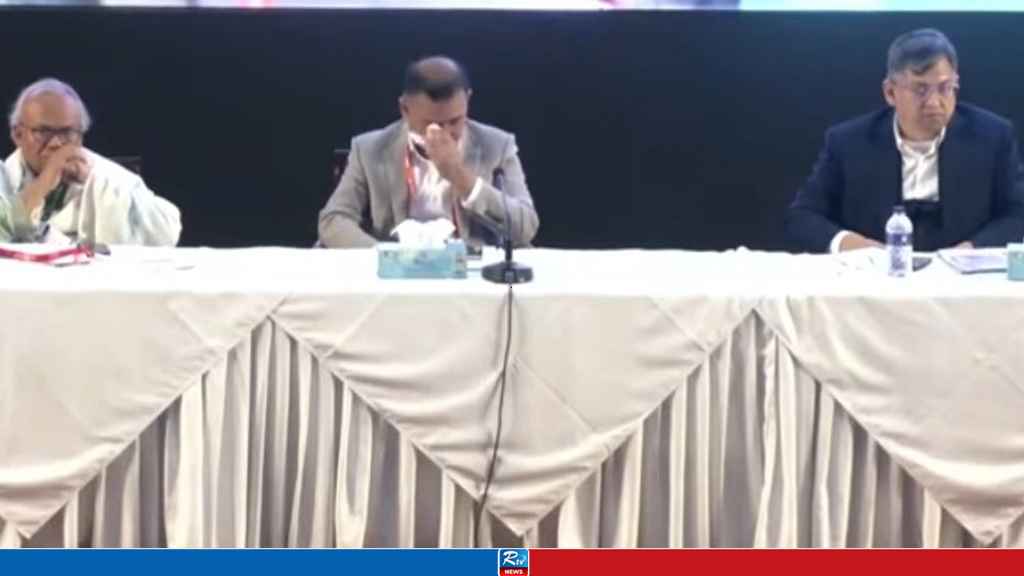
Bangladesh Nationalist Party (BNP) Chairman Tarique Rahman announced on Sunday that if his party is voted into power, a separate department will be established under the Ministry of Liberation War Affairs specifically to support the families of martyrs and those injured during the mass uprising in the July-August in 2024.
Speaking at a views-exchange program at the Krishibid Institution Bangladesh (KIB) auditorium, he emphasized that the struggle of 2024 was a fight to protect the nation's independence and sovereignty, much like the 1971 Liberation War.
He asserted that those who sacrificed their lives or were injured in the uprising against fascism deserve to be recognized as freedom fighters.
The event, organized in honor of the victims and their families, was marked by deep emotion. Tarique Rahman, accompanied by his wife Dr. Zubaida Rahman, spent time listening to the harrowing accounts of family members and survivors.
The BNP Chairman was seen stepping down from the stage to offer personal consolation to those permanently disabled or blinded during the movement. He described the crackdown during the uprising as "genocide," noting that over 1,400 people were killed and thousands more were injured or disappeared during the years of anti-fascist struggle.
Tarique Rahman underscored that the 2024 uprising was a true "mass movement" belonging to all citizens, regardless of their political or religious affiliations.
He warned against any attempts to co-opt this achievement for narrow partisan interests. To honor the martyrs' legacy, he outlined a two-fold compensation plan: ensuring the best state-sponsored medical treatment for the injured and fulfilling the ultimate goal of the movement—restoring political and economic rights to every citizen.
Addressing the political future of the country, the BNP chief described the upcoming national election as "extremely important" for building a self-reliant and democratic Bangladesh.
He noted that the sacrifices made on the streets were intended to end the cycle of state-sponsored grief and mourning.
By establishing a dedicated welfare department, he argued, the state would finally fulfill its undeniable responsibility toward those who stood at the frontlines of the democratic victory.
With Inputs from UNB






 Live TV
 RTV Plus