Prime Minister Tarique Rahman officially inaugurated the four-day annual Deputy Commissioners’ (DC) Conference on Sunday at the Osmani Memorial Auditorium in the capital.
This marks the first time he has opened the conference since assuming office following his victory in the 13th parliamentary election.
During the opening ceremony, the Prime Minister issued a series of directives regarding the government’s core policies and priorities, providing essential guidance on how to make the national administration more dynamic, efficient, and people-friendly.
The Prime Minister’s arrival at the venue was notable for its simplicity; according to Additional Press Secretary Atikur Rahman Rumon, the Prime Minister walked from his office at the Secretariat to the auditorium.
He was greeted by crowds standing on both sides of the road, to whom he responded by waving.
Upon addressing the opening session, the Prime Minister outlined the government's strategic vision and instructed the field administrators to align their local activities with national development goals.
This year’s conference, which concludes on May 6, features a rigorous schedule of 34 sessions, including 30 intensive working sessions involving 56 ministries and divisions.
The deputy commissioners have arrived with a substantial agenda, having submitted 1,729 proposals concerning various governance issues.
From these, 498 proposals were selected for the official working papers, with the Health Services Division receiving the highest attention via 44 specific proposals.
The core discussions over the next four days will focus on land management, law and order, local government, disaster management, employment, social security, e-governance, education, health services, and environmental protection.
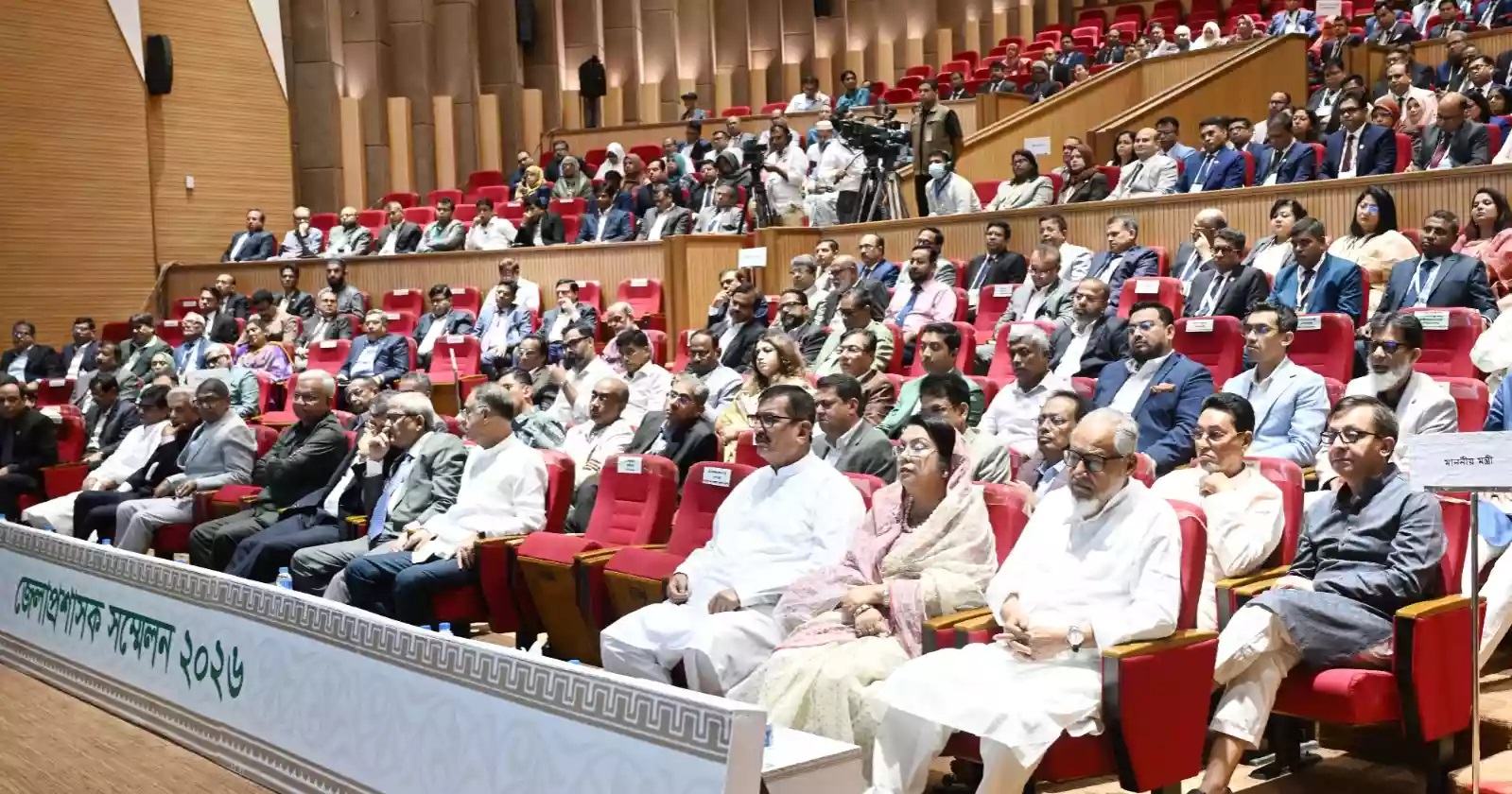
Beyond policy discussions, the conference serves as a platform for the DCs to interface with the highest branches of government.
The administrators are scheduled to pay courtesy calls on the President, the Speaker of the House, and the Chief Justice.
Furthermore, specialized working sessions will be conducted with the Chief Election Commissioner and the Anti-Corruption Commission to ensure administrative transparency and electoral integrity.
This annual gathering remains the primary mechanism for direct interaction between government policymakers and district administrators to ensure that policy guidance is effectively translated into public service.






 Live TV
 RTV Plus