Following high-level bilateral talks in Beijing, China has proposed the development of an economic corridor linking Bangladesh, Myanmar and China, a landmark initiative aimed at bolstering regional connectivity, trade and economic cooperation.
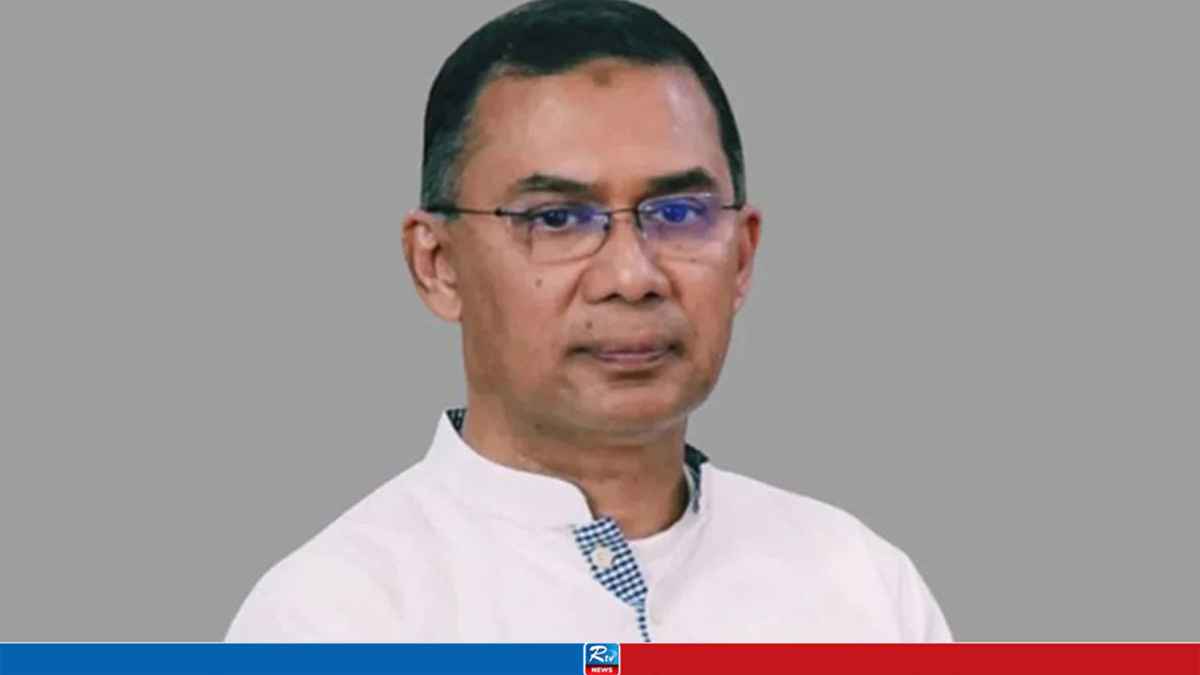
Prime Minister’s Office (PMO) spokesperson and adviser Mahdi Amin, briefing reporters after the meeting between Prime Minister Tarique Rahman and President Xi Jinping, stated that the two leaders held detailed discussions on how this proposed corridor could expand Bangladesh's economy, increase economic transactions and strengthen multimodal transportation across the region, creating significant new opportunities for trade and investment.
During the discussions, China also expressed a strong interest in modernizing Bangladesh’s maritime infrastructure.
Amin noted that the goal is to transform Chattogram Port into a regional hub serving both Bangladesh and neighboring countries, while simultaneously upgrading Mongla Port to make it more progressive and service-oriented.
Beyond infrastructure, both nations are committed to deepening people-to-people relations through cooperation in culture, media, technology, knowledge transfer, and employment generation.
China has pledged to provide teachers and infrastructural support to prioritize Mandarin as a third language in Bangladesh's education system and to share its developmental experience in technical and vocational training.
In the healthcare sector, China expressed a commitment to helping Bangladesh introduce advanced services, such as robotic surgery and hospital development, while facilitating easier visa processing for Bangladeshis seeking medical treatment in China.
Addressing the Rohingya crisis, Mahdi Amin reaffirmed that Bangladesh’s position remains clear: the country seeks the safe, voluntary, and dignified return of Rohingyas to their homeland.
"China has assured us that whenever necessary, it will facilitate dialogue with Myanmar. We will move forward with discussions on voluntary and dignified repatriation, something that was previously achieved only during the tenures of Shaheed President Ziaur Rahman and former Prime Minister Begum Khaleda Zia," he said.
Furthermore, the two countries reached a historic understanding to launch a "2+2 dialogue" mechanism covering foreign affairs and defence, with the details of the mechanism currently being finalized.
Mahdi Amin noted that China reaffirmed its respect for Bangladesh's sovereignty, independence, and territorial integrity, adding, "China said it respects Bangladesh's democratic aspirations and supports an independent foreign policy that reflects the sovereignty of Bangladesh."
On the multilateral front, China has welcomed Bangladesh's bid for BRICS membership. Mahdi Amin highlighted the success of the visit, noting that a total of 17 Memorandums of Understanding (MoUs) were signed during the Prime Minister’s stay.
These include 13 MoUs signed following talks with Premier Li Qiang, three agreements between the Bangladesh Investment Development Authority (BIDA) and Chinese business organizations, and one MoU between the Communist Party of China (CPC) and the Bangladesh Nationalist Party (BNP).
Amin also noted that Bangladesh recently secured a seat in a UN body with Chinese support, for which the leadership expressed mutual gratitude, cementing a growing alignment between the two nations on the global stage.
With Inputs from UNB



 Live TV
 RTV Plus