Bangladesh on Tuesday firmly expressed its objections to Myanmar over its framing of the Rohingya population, emphasizing that they are not "Bengalis" and possess a distinct ethnic identity that was formally recognized by Myanmar authorities until recently.
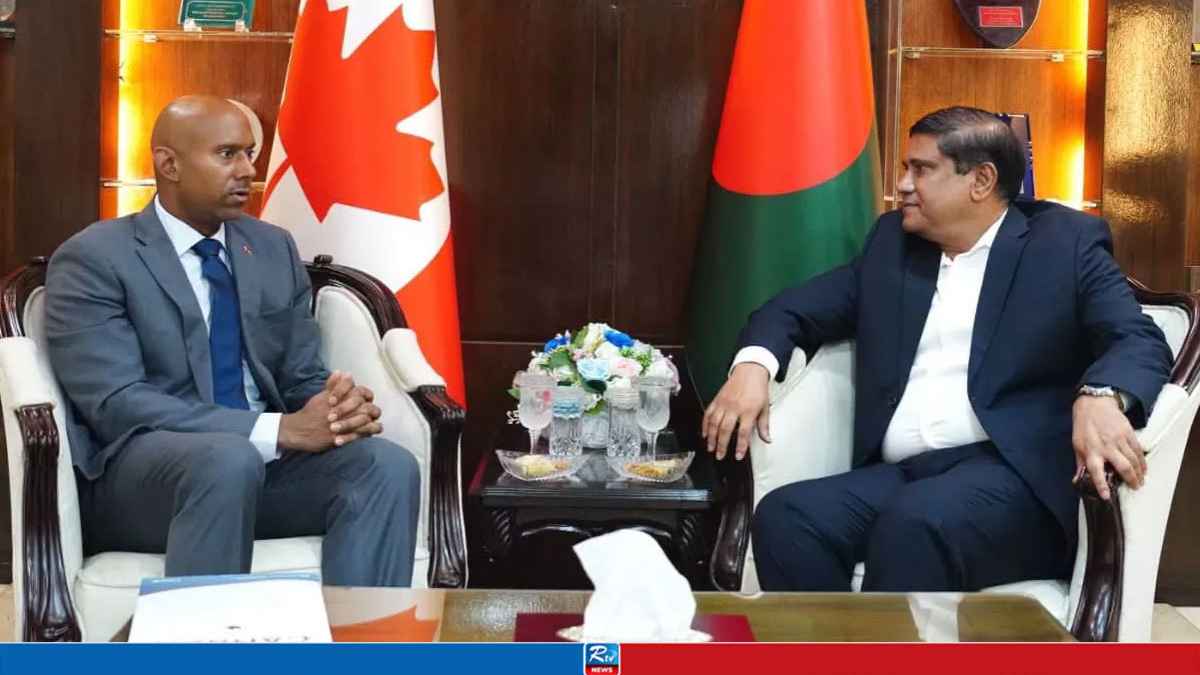
Director General (Myanmar Wing) at the Ministry of Foreign Affairs Md. Toufiq-ur-Rahman conveyed Dhaka’s serious concerns directly to Myanmar Ambassador Kyaw Soe Moe during a meeting at the ministry.
Addressing a controversial press statement issued by Myanmar’s Foreign Ministry on August 15, the Bangladeshi diplomat pointed out that key assertions were based on inaccurate statistics regarding the displaced population, noting that data recorded under the United Nations system reflects the true figures.
Toufiq-ur-Rahman urged the ambassador to expedite the verification process using agreed bilateral agreements, specifically stressing the need to account for children born in the camps and new arrivals forced out of Rakhine State following the 2017 military operations.
Bangladesh is currently registering these additional individuals and will share information beyond the initial caseload of 828,824 with Myanmar in due course.
Reassuring Dhaka, Ambassador Kyaw Soe Moe pledged to convey these observations to his capital and affirmed his government’s commitment to accelerating verification to begin repatriation.
The Bangladeshi official reiterated that the only viable and lasting resolution to the crisis lies in the safe, dignified, and voluntary return of the Rohingya to Rakhine State.
In its August 15 release, Myanmar’s Foreign Ministry claimed that Bangladesh had submitted 828,824 names of displaced persons, of which 426,545 had been evaluated as of July 31, 2026.
Naypyidaw asserted that 308,797 people showed evidence of past residence in Rakhine State, 4,241 had committed acts of terrorism, and 113,507 lacked proof of living in Rakhine.
Based on these figures, Myanmar expressed concern over accusations that all camp residents originated from its territory and strongly objected to claims that boat refugees or individuals arriving elsewhere under non-existent ethnic names are from Myanmar.
Denying that over one million people were displaced, Myanmar claimed only 540,000 crossed into Bangladesh after the 2017 violence, while over 200,000 remained in northern Rakhine, adding that it would receive verified former residents once local security stabilizes.
Myanmar does not recognize the Rohingya among its 135 legal ethnic minorities, labeling them "Bengalis" to imply illegal settlement from Bangladesh while blaming the Arakan Rohingya Salvation Army (ARSA) for triggering the crisis.
The United Council of Rohingya (UCR) vehemently rejected and condemned Myanmar's statement, characterizing it as a "misleading" release and a "calculated attempt to rewrite history, whitewash state-sponsored crimes, and evade the international community's calls for accountability."
Refuting Naypyidaw’s claims point by point, the UCR issued a statement regarding their identity: “We address the Government of Myanmar's fallacies point by point: On Our Identity: We are Rohingya, not "Bengalis". Myanmar's continued refusal to acknowledge our ethnic identity is the root cause of our persecution. The term "Bengali" is a weapon of erasure. We are the indigenous Rohingya people of Rakhine State, with a documented history and culture spanning centuries and Myanmar government recognized the Rohingya as an indigenous ethnic minority of Myanmar.. We demand the world to restore our identity as Rohingya, and we reject any nomenclature designed to deny our existence and our rights to citizenship.”
Describing Myanmar's attempt to blame ARSA as a "complete inversion of reality," the UCR highlighted that the military’s "clearance operations" in 2016 and 2017 constituted a systematic campaign of genocide and ethnic cleansing documented by the UN Independent International Fact-Finding Mission.
The organization added: "These operations involved the mass rape of women, the torching of over 300 villages, and the summary execution of entire families. The isolated ARSA attacks were a desperate reaction to decades of apartheid, not the cause of our forced exodus. Myanmar's claim that their military acted in 'defensive response' is an insult to the memory of the thousands massacred."
Calling Myanmar’s screening framework a "sham," the UCR rejected the population figures provided by Naypyidaw.
The group noted that over 700,000 Rohingya fled in a matter of weeks during the 2017 genocide, joining more than 200,000 who had escaped earlier persecution in 1991–1992.
They added that the roughly 200,000 Rohingya remaining in Rakhine are effectively interned in camps, stripped of freedom of movement and basic rights, aligning with UN statistics confirming that over one million Rohingya are currently displaced.
Despite a two-year repatriation framework agreed upon by Bangladesh and Myanmar in 2018, progress has remained stalled.
Conditions deteriorated significantly following the 2021 military coup that ousted Aung San Suu Kyi’s elected government, sparking widespread armed conflict.
Repatriation efforts were further complicated in late 2023 when heavy fighting broke out between the military and the ethnic Arakan Army—which now controls vast areas of Rakhine State—forcing even more refugees to flee toward Bangladesh to save their lives.
Meanwhile, amid broader regional political discussions, former Indian minister Dinesh Trivedi remarked that the Bangladesh Prime Minister's visit to India should take place much sooner.





 Live TV
 RTV Plus