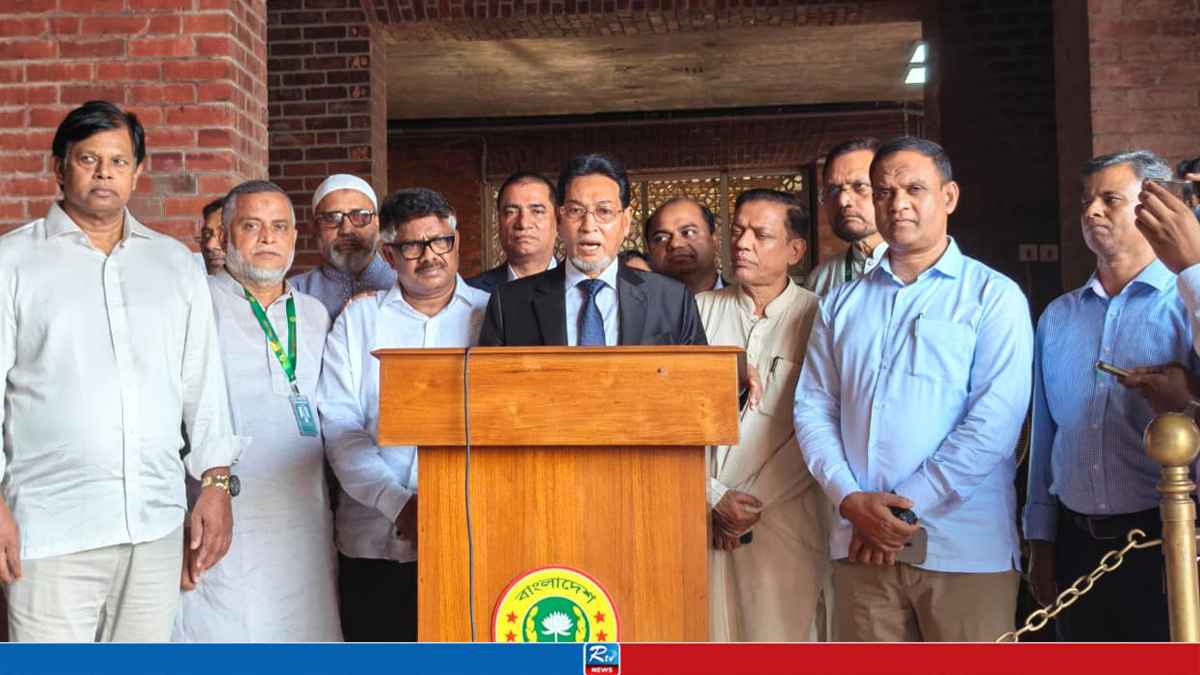
Prime Minister’s Foreign Affairs Adviser Humaiun Kobir has said that a visit to India by Prime Minister Tarique Rahman could occur once a suitable environment is established, rooted in mutual trust, respect for sovereignty, diplomatic dialogue, and a dignified invitation.
Speaking during an interview at his official residence on Minto Road on August 17, Humaiun Kobir remarked, “There is no justification for rushing into a top-level visit by going beyond the national interest.”
Addressing reports in Indian media speculating on a potential visit ahead of the BRICS Summit scheduled for September 12-13 in New Delhi, Humaiun Kobir clarified that Bangladesh has adopted a firm policy against entering into high-level visits without clearly defined national interests.
However, he noted, “if an appropriate environment is created in the meantime on the basis of consensus between the two countries, Dhaka will express a positive attitude towards participation in the upcoming BRICS Summit.”
Humaiun Kobir, who also serves as Joint Secretary General of the BNP’s International Affairs Committee, elaborated on Bangladesh's broader diplomatic orientation, detailing bilateral relations with India, strategic ties with the United States and China, the reopening of Malaysia’s labor market and key foreign policy goals.
Addressing media speculation regarding the proposed visit, Humaiun Kobir characterized such reports as “baseless and assumption-driven,” emphasizing that the future trajectory of bilateral engagement depends on a shift in the approach of India's leadership.
“The neighbouring country must properly understand the reality of Bangladesh’s July Mass Uprising, which took place through the sacrifices of more than 1,500 people,” he stated.
Humaiun emphasized the need to determine what kind of relationship India intends to build with a government elected in Bangladesh with a two-thirds mandate, adding, “The possibility of the Prime Minister visiting India ahead of the upcoming BRICS Summit remains slim unless an appropriate environment is created based on consensus between the two countries on specific issues and a dignified invitation.”
The Foreign Affairs Adviser voiced strong disapproval regarding convicted and fugitive individuals being granted space for political or media activities on Indian soil.
“After the fall of autocratic rule through the July Mass Uprising, in which more than 1,500 people sacrificed their lives in Bangladesh, providing political or media space in India to fascist Sheikh Hasina, who fled there and took shelter as a criminal, is contrary to India’s democratic etiquette,” he said.
He further noted that allowing Indian territory to be utilized for activities intended to destabilize Bangladesh—or giving a platform to convicted persons, terrorists, or murderers—has caused deep anger among millions of Bangladeshis.
Humaiun Kobir asserted that such actions cannot be justified under international diplomatic norms or defended on the grounds of freedom of expression.
He confirmed that formal diplomatic protests have been lodged with New Delhi reminding it of its legal and bilateral obligations, and stated that diplomatic pressure will continue to prevent anti-Bangladesh activities.
Outlining the government's “Bangladesh First” foreign policy, Humaiun Kobir explained that Dhaka is pursuing a balanced approach centered on core national interests.
Bangladesh maintains a open perspective regarding potential participation in economic or defense frameworks involving Saudi Arabia, Pakistan, and Türkiye, taking into consideration global trade shifts and national priorities.
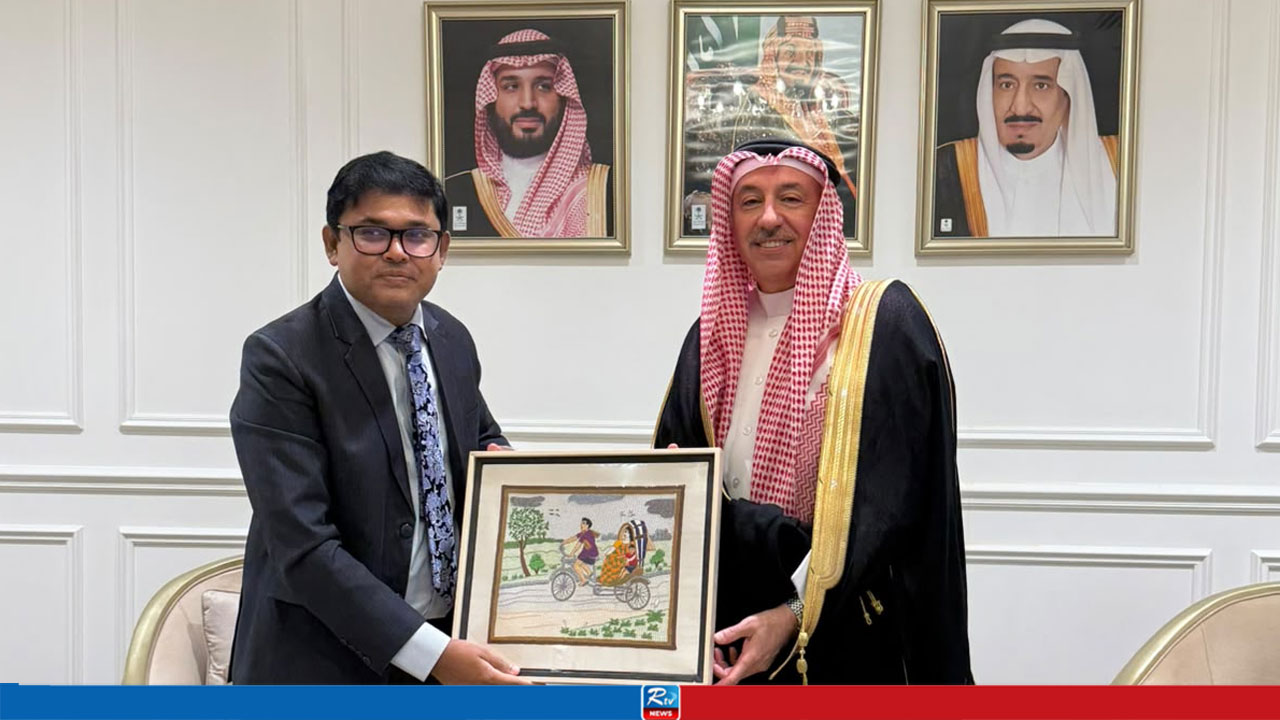
He indicated that a visit by Prime Minister Tarique Rahman to Riyadh, following an invitation from Saudi Crown Prince and Prime Minister Mohammed bin Salman, is likely to be finalized after the summer.
Concurrently, Bangladesh is strengthening working bilateral relations with Pakistan through standard diplomatic channels, focusing on commercial ties and people-to-people connectivity.
In the sphere of economic diplomacy, Kobir highlighted efforts to enhance commercial engagements with Western partners.
Discussions with the United States government and private entities regarding soybean imports and Boeing aircraft acquisitions are progressing, alongside measures to expand bilateral trade.
Additionally, structured talks have commenced with the European Union concerning a comprehensive trade and partnership agreement.
Regarding ties with Beijing, Kobir stated that relations have reached a new height. Avoiding geopolitical pressures, Bangladesh is prioritizing engagement with China under a "Two Plus Two" mechanism and a comprehensive partnership framework.
Negotiations are also underway to attract Chinese foreign direct investment, alongside diplomatic efforts to engage the Bangladeshi diaspora in the United Kingdom to boost remittance inflows.
On international support, Kobir pointed to the backing of 52 out of 54 African nations during the election for the presidency of the 81st Session of the United Nations General Assembly as evidence of international confidence in Bangladesh.
To build on this, a high-level delegation, including the Foreign Minister, is slated to visit Africa to conclude bilateral agreements aimed at promoting contract farming and opening export markets for Bangladeshi goods.
Addressing the long-standing complications surrounding the Malaysian labor market, Humaiun expressed optimism that positive diplomatic chemistry between Prime Minister Tarique Rahman and his Malaysian counterpart has begun resolving the deadlock, clearing the path for Bangladeshi workers to enter Malaysia.
Characterizing Bangladesh’s election to the presidency of the 81st Session of the UN General Assembly as a historic victory, Humaiun called it global recognition of Prime Minister Tarique Rahman’s leadership and the country’s democratic standing.
He expressed confidence that Bangladesh would use the UNGA platform to project an ethical foreign policy while intensifying diplomatic and financial efforts to secure a sustainable, dignified solution to the Rohingya crisis by mobilizing international partners to pressure Myanmar.
Concluding his remarks, Humaiun Kobir affirmed that the administration has established a robust foreign policy structure over the past 180 days, demonstrating the speed with which an elected government can restore international standing and sovereign dignity.




 Live TV
 RTV Plus