Prime Minister Tarique Rahman has directed the authorities concerned to examine the possibility of bringing back a universal stipend programme for female students from Class VI through the undergraduate level.
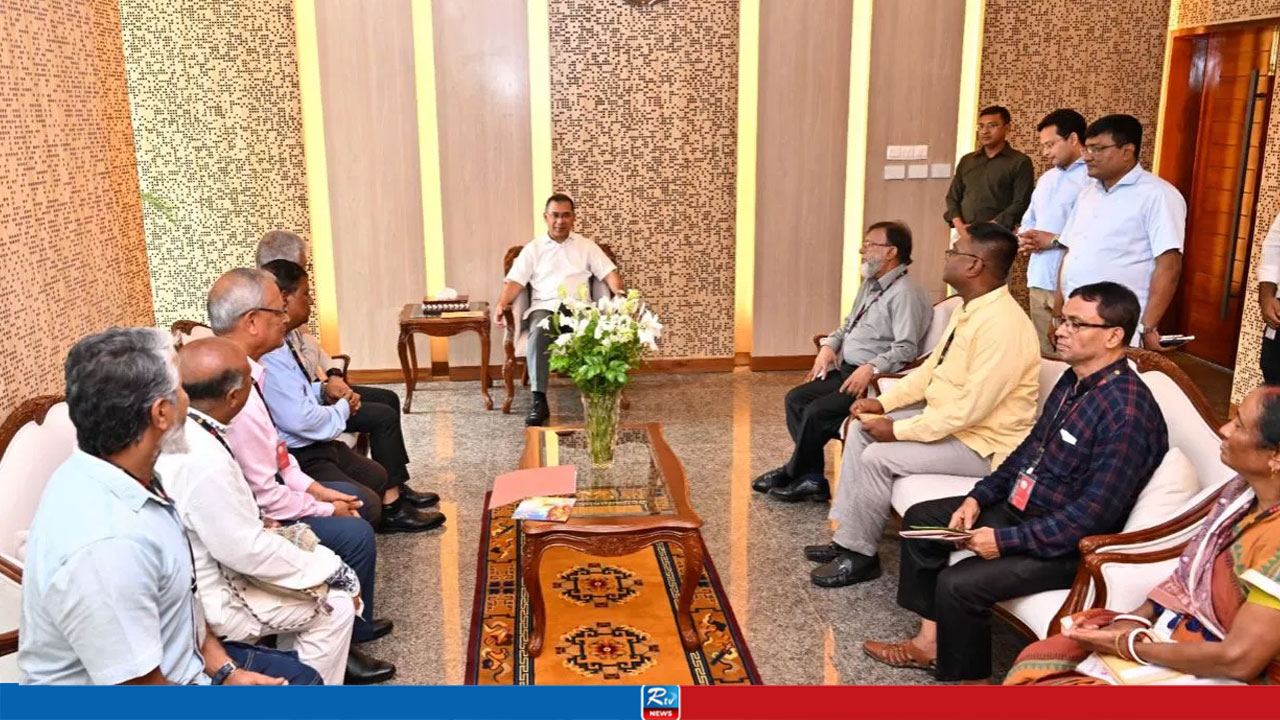
He issued the instruction at a meeting of the Prime Minister’s Education Assistance Trust held at the Cabinet Division of the Secretariat this afternoon, according to Prime Minister’s Deputy Press Secretary Shahadat Shadhin.
The meeting called for a comprehensive proposal on the possible restoration of the programme, covering its estimated financial requirements, the number of potential beneficiaries, the mechanism for implementation and its expected impact on education and society.
During the meeting, Prime Minister Tarique Rahman was also given a detailed briefing on the ongoing programmes, objectives and activities of the Prime Minister’s Education Assistance Trust. The discussion highlighted the trust’s role in helping students continue their education by providing financial support and reducing the risk of school dropout.
The possibility of introducing stipends for male students was also discussed. The meeting considered providing financial assistance to boys on the basis of merit and eligibility as an incentive for them to remain in education.
The participants also reviewed the impact of the universal stipend programme for girls that was introduced during the tenure of former Prime Minister Begum Khaleda Zia.
According to Shahadat Shadhin, the meeting noted that the programme had contributed positively to girls’ attendance and retention in schools while also helping to discourage child marriage.
The meeting placed emphasis not only on improving the quality of education but also on protecting students’ health and ensuring adequate nutrition.
Detailed discussions were held on the management of school-level mid-day meal programmes, including maintaining nutritional standards, ensuring food safety and establishing an effective system for preparing and supplying meals to students.
Prime Minister Tarique Rahman stressed that meals provided to students must be nutritious, safe and of high quality, making it clear that there should be no compromise on these standards.
According to Shahadat Shadhin, the meeting considered two alternative models for implementing the mid-day meal programme. The proposed approaches were discussed in terms of their cost, management efficiency, participation at the local level and mechanisms for maintaining food quality.
Prime Minister Tarique Rahman subsequently directed the authorities to launch pilot projects based on the two approaches in two separate districts. The pilot programmes will be used to evaluate their effectiveness, practicality and potential outcomes before any wider implementation is considered.
The meeting was attended by Education Minister Dr. ANM Ehsanul Hoque Milon, Prime Minister’s Adviser on Education and Spokesperson Mahdi Amin, Education Secretary Abdul Khaleque, Prime Minister’s Additional Press Secretary Atikur Rahman Ruman and other relevant officials.





 Live TV
 RTV Plus