
Eminent cardiologist and Ziaur Rahman Foundation (ZRF) Vice President Dr Zubaida Rahman asserted on Sunday that national medical systems must proactively detect health risks and maladies before they escalate into critical stages, underlining the fundamental truth that healthcare functions as an essential human right rather than a commercial privilege.
“Our healthcare system cannot be built around treatment alone. We often say prevention is better than cure, and that remains true. The healthcare system must identify risks and diseases before they become severe,” she declared.
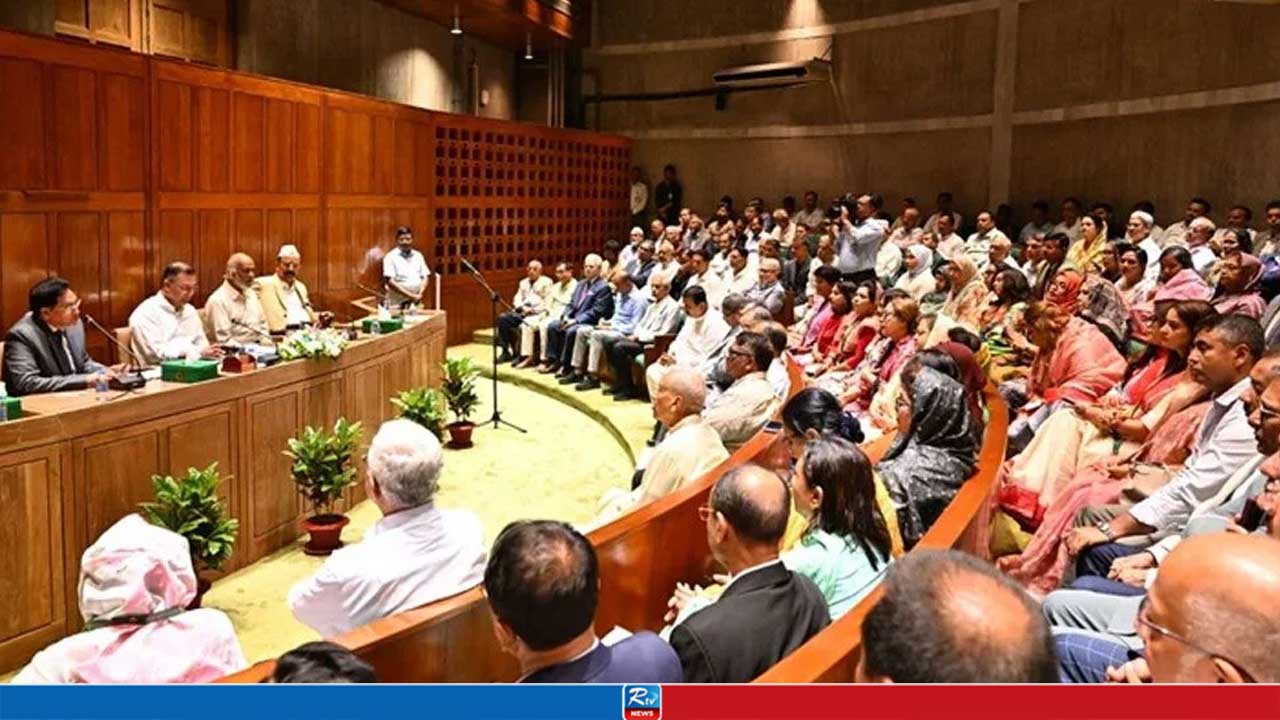
Dr Zubaida, Prime Minister Tarique Rahman's wife, delivered these observations while serving as the chief guest for a specialized international seminar titled “Health Innovation for All: Expanding Access to Affordable and Inclusive Care,” held on the second day of the three-day “Bangladesh Innovation Fair 2026” situated at the Novo Theatre in the capital's Agargaon locality.
The academic session concentrated on technology-driven methodologies designed to deliver advanced medical services at economical rates to underserved populations.
Arguing that hospital grandeur or technological sophistication alone cannot measure a nation's medical standard, Dr Zubaida noted that numerous individuals reach specialist facilities only after their illnesses have developed severe complications, while patients frequently travel long distances because necessary care remains unavailable locally.
“Modern tertiary healthcare has also become extremely expensive. But this is not only for Bangladesh; many advanced countries are facing this worldwide,” she explained.
The ZRF vice president emphasized that the ultimate objective must involve extending medical access to the farthest corners of the country, stating, “We want to make healthcare accessible to the remotest villages of our country. More than 90,000 villages in our country should receive accessible healthcare for every citizen of Bangladesh.”
She further advocated for intensified dengue awareness initiatives alongside vigorous promotion of measles immunizations to ensure no citizen misses the vaccine.
Identifying cardiovascular conditions as a primary catalyst for physical disability and mortality nationwide, she observed, “Simple lifestyle preventive measures combined with excellent treatment facilities can change this scenario,” while simultaneously calling for comprehensive public education campaigns addressing cancer.
Addressing the prevalence of diabetes, Dr Zubaida remarked that despite Bangladesh hosting internationally recognized medical institutions and clinical expertise, countless individuals continue managing diabetes unknowingly, stressing that every screening initiative must link directly to confirmatory diagnoses, patient counseling, therapeutic intervention, pharmaceuticals, ongoing monitoring, and structured referrals.
She urged that the nation begin preparing proactively for the specialized health demands of an aging demographic, encompassing geriatric conditions such as dementia and Parkinson’s disease.
Reiterating her core principle, the cardiologist stated that the country’s medical roadmap must ensure high-quality care is never dictated by income level, geographical location, or social standing. “It should be accessible to every citizen in every part of Bangladesh,” she affirmed.
This strategic vision involves reinforcing primary healthcare networks, decentralizing treatment delivery closer to residential areas, broadening preventive programming, expanding the medical workforce, and progressively elevating public health expenditure toward 5 percent of the gross domestic product.
“The planned recruitment of 100,000 health workers, particularly, gives an opportunity for women and can create the human foundation for this transformation,” Dr Zubaida noted, explaining that these personnel could facilitate diagnostic screenings, maternal and infant wellness, health education, chronic ailment management, and community-level referrals.
Highlighting persistent logistical challenges, she pointed out, “In our country, women travel miles in inadequately equipped transport in the late stages of pregnancy or in cases of preeclampsia. Prematurely born babies have no proper facilities to thrive,” thereby emphasizing the imperative for a seamless referral apparatus connecting community and primary clinics to district and specialized hospitals.
The ZRF vice president also demanded a nationally harmonized infrastructure governing voluntary blood donation, safe acquisition, infectious pathogen screening, blood component separation, secure storage, transit logistics, and full traceability spanning from the donor to the recipient. “We need to move towards establishing a national plasma transport technology,” she stated.
While affirming that innovation remains pivotal to these structural reforms, she clarified that technological advancement does not necessitate inventing costly machinery or releasing redundant mobile applications. “The most valuable innovation is the one that solves a real problem for patients around the country,” she said.
Dr Zubaida observed that Bangladesh already possesses many foundational institutions required to enact such systemic change, noting, “We have respected researchers, a strong pharmaceutical base, experienced clinicians, expanding digital capability, community-level organisations, and an energetic generation of entrepreneurs,” while identifying the missing link as the synergy between them.
She suggested that research should seamlessly integrate with validation, validation with regulatory standards, regulation with responsible procurement frameworks, and innovation with practical service delivery.
Concluding her address, she urged stakeholders to utilize the innovation platform to bridge domestic inventive capacity with an inclusive national healthcare model that detects pathologies earlier, brings treatment closer to households, guarantees foundational therapeutic safety, and shields families from catastrophic financial ruin.
“Let us use this innovation fair not only to discuss what is possible, but to agree on what we will begin doing now,” she urged.
Operating under the central theme “Innovate to Market,” the three-day exhibition concludes on Monday, following its inauguration on Saturday by Prime Minister Tarique Rahman, which featured active participation from university research teams and independent innovators nationwide.





 Live TV
 RTV Plus
