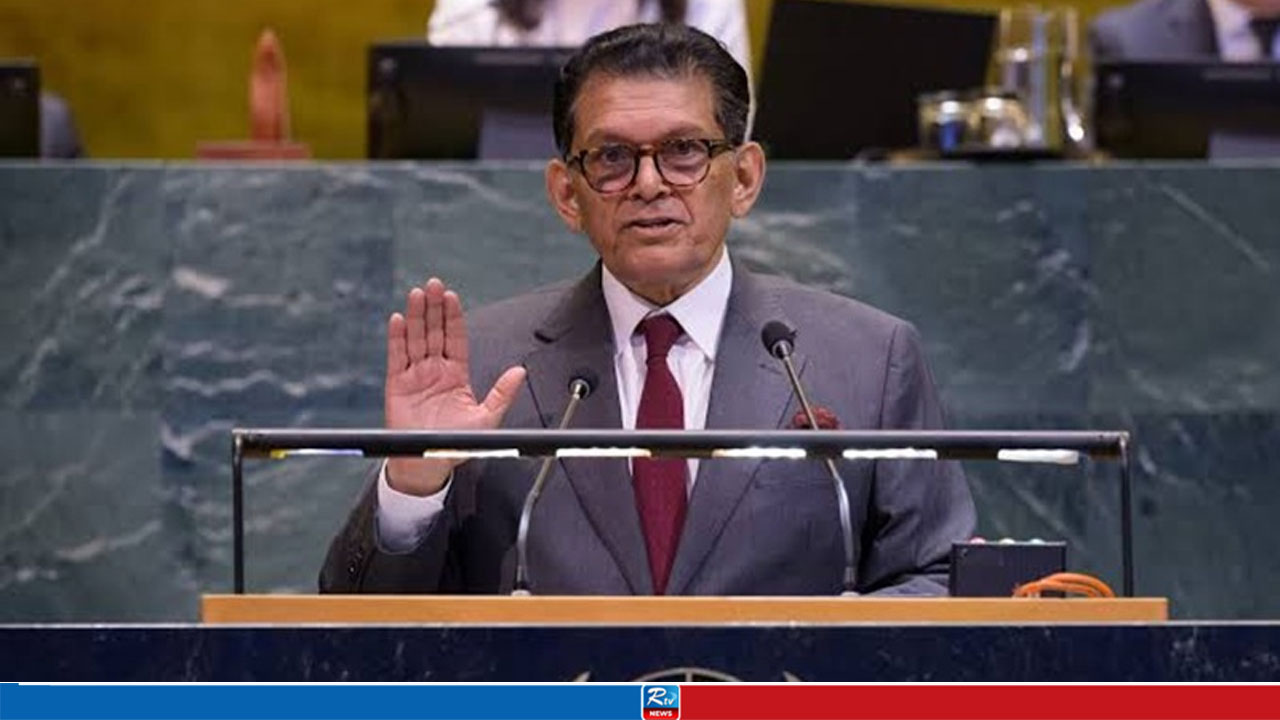
Addressing the opening of the 81st session of the United Nations General Assembly, General Assembly President and Foreign Minister of Bangladesh, Dr. Khalilur Rahman, strongly emphasized the need to restore the organization's effectiveness, urgently reform the Security Council, and rebuild global trust.
The core theme of the current session has been set as: "Restoring Trust, Managing Transformation: An Effective UN for All."
Highlighting the structural inequalities within the Security Council, Dr. Rahman pointed out that despite being the UN's largest regional bloc and a major partner in peacekeeping operations, Africa holds no permanent seat on the Council.
He stressed that Africa must be given a proper place at the decision-making table, explicitly noting that Africa's demand for representation is not a matter of charity, but of justice and the UN's own credibility.
He underscored the necessity of making the Security Council more transparent, representative, and aligned with current geopolitical realities, while expressing support for the General Assembly's intergovernmental negotiation process.
Three Pillars for Rebuilding Trust
To recover global trust in the UN, Dr. Rahman outlined three key strategies:
Global Inequalities and Rising Military Spending
Expressing frustration over global inequality and surging military expenditures, he noted that while progress toward achieving the Sustainable Development Goals (SDGs) has stalled, official development assistance by OECD countries dropped by 23 percent in a single year to 175 billion dollars.
In sharp contrast, global military spending has leaped to nearly 3 trillion dollars.
Crises and Humanitarian Action
Drawing attention to ongoing conflicts in Gaza, Sudan, Ukraine, Myanmar, and the Middle East, he stated that international law and the principles of civilian protection must never be applied selectively or with bias.
He also highlighted the positive humanitarian roles played by the UN in Bangladesh’s Rohingya refugee camps in Cox's Bazar and in Haiti.
Warnings on Artificial Intelligence
Warning world leaders about the misuse of technology and the risks of artificial intelligence (AI), the General Assembly President cautioned that the abuse of AI in sensitive sectors such as water supply, electricity, and military operations poses an existential threat to human civilization.
He urged the creation of evidence-based global policies and regulatory frameworks ("guardrails") in collaboration with scientists and experts to prevent an AI arms race.






 Live TV
 RTV Plus