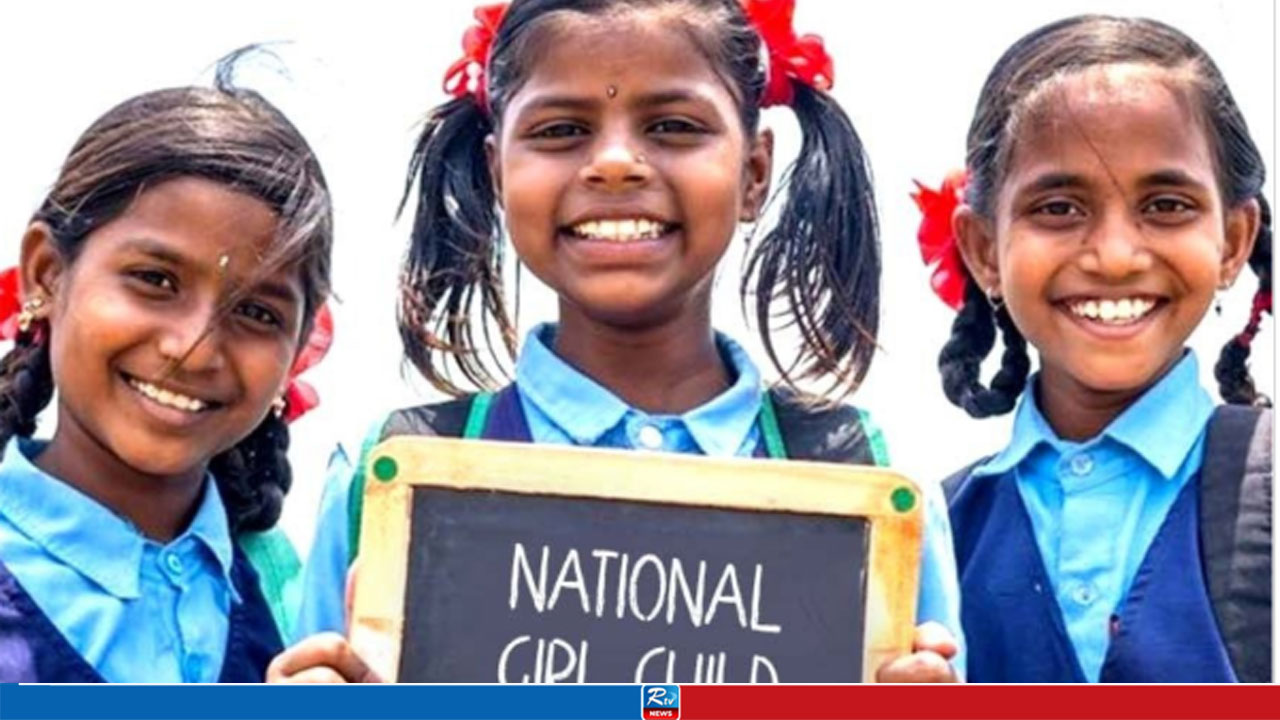
Today, September 30, marks National Girl Child Day. Analyzing the standing of girl children in Bangladesh's education sector reveals a mixed picture of notable progress alongside persistent concerns.
Over recent years, driven by various government initiatives and stipends, primary and secondary school enrollment rates for girls have increased commendably, achieving significant gender parity.
However, statistical data indicates that once girls transition beyond the primary level into secondary education, their dropout rate increases at an alarming rate.
While participation and success among girls in primary education have risen, a substantial portion drops out after reaching the secondary and higher secondary stages.
Updated data from the Bangladesh Bureau of Educational Information and Statistics (BANBEIS) and the Ministry of Education show that the secondary-level dropout scenario remains concerning.
According to the data, the dropout rate for boys at the secondary level is approximately 30.63 percent. For girls, this rate is even higher at roughly 34.87 percent.
This indicates that while girls hold a slight comparative lead in primary education, a large segment is unable to maintain continuity in their studies upon reaching secondary school.
Child marriage has emerged as one of the primary drivers behind this dropout trend. Surveys by the Bangladesh Bureau of Statistics (BBS) reveal that approximately 71 percent of female students who drop out are forced to discontinue their education due to child marriage.
Consequently, alongside ensuring initial school enrollment, it is critical to implement effective measures that help girls sustain their education and protect them from the risks of child marriage.
The education of a girl child is not merely a matter of shaping an individual future; it is deeply intertwined with the long-term development of families, society, and the nation as a whole.
Therefore, top priority must be given not only to bringing girls to school but also to retaining them, ensuring a safe educational environment, and shielding them from the threats of child marriage.






 Live TV
 RTV Plus