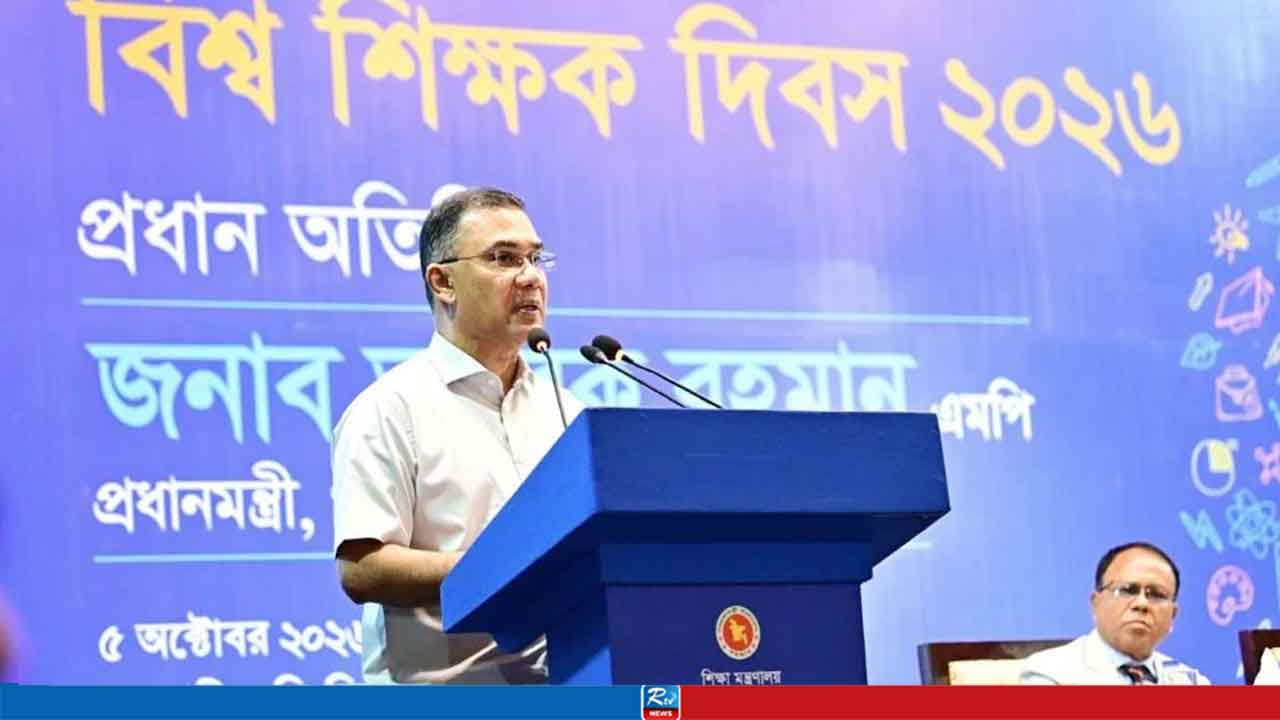
Prime Minister Tarique Rahman on Saturday witnessed a demonstration of a pioneering project designed to generate fuel oil from human waste and agricultural residues, offering the research team complete government backing to realize its commercial potential.
If successfully commercialized, this innovative technology could significantly decrease the nation's reliance on imported crude oil, conserve foreign exchange reserves, streamline waste management practices, and mitigate environmental pollution.
The Prime Minister extended his pledge of official support during a project demonstration at his office in Tejgaon on Saturday morning, presented by lead researcher Professor Dr. Md. Khalekuzzaman of Khulna University of Engineering and Technology (KUET), according to PM's Deputy Press Secretary Md. Suzauddhowla (Sujan Mahmud).
During the presentation, Dr. Khalekuzzaman briefed the Prime Minister on the core technology, ongoing research developments, and the prospects for commercial fuel production utilizing human waste, sewage treatment plant sludge, kitchen refuse, and agricultural crop residues.
The Prime Minister was also informed about how the innovation could bolster national energy security while tackling waste management challenges.
Following the briefing, he assured the scientific team of all required state assistance to bring the project to fruition, given its immense prospects.
The KUET research team has achieved notable breakthroughs over nearly ten years of dedicated study in converting waste into organic crude oil—commonly termed biocrude—via Hydrothermal Liquefaction (HTL) technology.
The researchers informed the Prime Minister that laboratory trials have successfully yielded biocrude at a conversion efficiency rate of 50 to 55 percent, while also demonstrating success in synthesizing diesel-rich biocrude variants.
As their next milestone, the scientists intend to construct a pilot facility capable of processing one to three tonnes of waste per day to evaluate the technology's practical efficacy, production overheads, and financial viability.
The preliminary cost of establishing this pilot facility is estimated at BDT 100 crore to BDT 120 crore.
According to the researchers, scaling up the process for full-scale commercial manufacturing could potentially substitute roughly 10 to 15 percent of Bangladesh's imported crude oil requirements over time.
This substitution could translate into annual foreign exchange savings estimated between BDT 6,500 crore and BDT 13,000 crore.
However, they clarified that such economic benefits could only be fully realized after validating large-scale operational performance and market competitiveness.
The scientists expressed optimism that achieving commercial viability through state backing would play a crucial role in solving the country's dual pressures of fuel security and urban waste disposal.
They underscored that the initiative would simultaneously diminish import dependence, conserve foreign currency, curb ecological contamination, and open up new avenues for developing a domestic alternative fuel sector.
Power and Energy Minister Iqbal Hassan Mahmood Tuku, State Minister Aninda Islam Amit, University Grants Commission (UGC) Member for Public Management Prof. Dr. Abdullah-Al-Mamun, KUET Vice-Chancellor Prof. Muhammad Masud, and Bangladesh Petroleum Corporation (BPC) Chairman Dr. Md. Rafiqul Islam were among the key officials present at the demonstration.






 Live TV
 RTV Plus