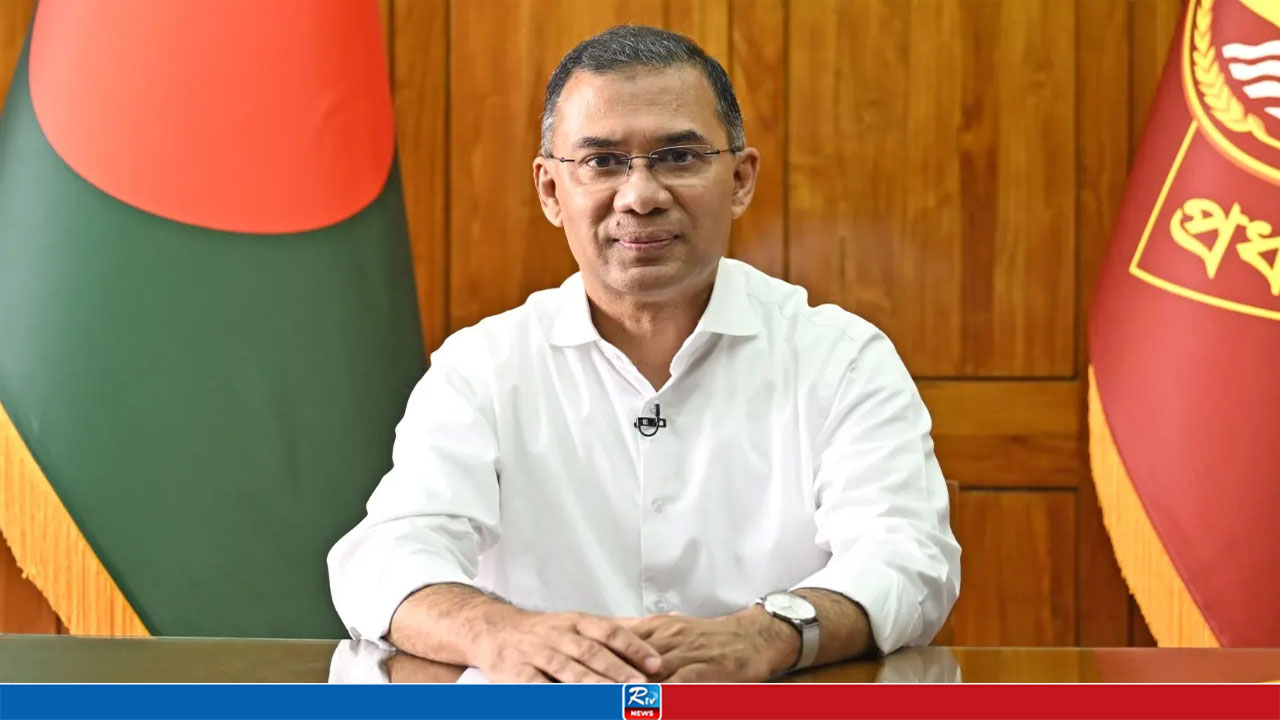
Prime Minister Tarique Rahman has urged universities to focus more heavily on research and innovation.
He made the call as the chief guest on Monday (18 May) during the opening ceremony of a workshop titled 'Transforming Higher Education in Bangladesh: Roadmap to Sustainable Excellence', held at 11:00 AM at the Nawab Ali Chowdhury Senate Bhaban of the University of Dhaka.
"A question often arises in public discourse as to whether our universities are maintaining global standards in education and research," the Prime Minister said.
He added, "Rankings generally place the highest emphasis on research, publications, citations, and innovations. Our academics will surely reflect deeper on where we stand regarding these metrics. If universities do not focus on research and innovation instead of relying solely on rote learning, it will be difficult for us to survive in this competitive world."
Highlighting the Fourth Industrial Revolution (4IR), the Prime Minister noted, "The world has now stepped into the Fourth Industrial Revolution. In this era, advanced technologies like AI, robotics and automation, the Internet of Things (IoT), genetic engineering, biotechnology, cyber security, quantum computing, Industrial IoT, big data, materials science, nanotechnology, and 5G wireless technology are controlling our thoughts on one hand and ruling human workspaces and employment on the other. Consequently, while the use of new technologies is increasing unemployment in traditional job markets, it is simultaneously creating entirely new employment opportunities."
Tarique Rahman emphasized that to tackle the challenges of the Fourth Industrial Revolution and enter the new job market, the nation must break away from a memorization-based and certificate-centric education system. "We must overhaul our conventional education system in accordance with the demands of the Fourth Industrial Revolution," he said.
The Prime Minister continued, "Education is not just for individual transformation; today, technology-driven education is the primary determinant of a state's economic growth, innovation, and world-class competitive capability. As a result, we must build stronger linkages between the higher education system—meaning universities—and the industrial sector. The demands of the industry must be integrated into curriculum formulation."
He noted that the message clear to the world from the 4IR is that education is no longer confined to the boundaries of schools, colleges, or universities. "Knowledge is no longer restricted to a single specific subject. Instead, we see data science blending with biology, or engineering merging with sociology. As a result of this intersection, the horizons of knowledge are constantly expanding and remaining dynamic. It is imperative that we maintain a close relationship with the nature and pace of this transformation," he said.
Stressing the need to overhaul the academic curriculum, Prime Minister Tarique Rahman stated, "Lakhs of students graduate from universities every year, yet many remain unemployed despite having higher education. In fact, the unemployment rate is higher among the highly educated. While there are varying opinions on why this happens, many agree that the main reason is the failure to acquire skills alongside academic degrees."
"Overhauling our education curriculum from the primary to the higher levels is the need of the hour," he said. "Unemployment cannot be eradicated without morally grounded, career-oriented education. Survival in global competition is impossible without a timely educational curriculum. This is why the current government has initiated the task of modernizing academic syllabi."
The Prime Minister mentioned that the government has taken effective steps to increase collaboration regarding apprenticeships, internships, and industry-academia partnerships to modernize higher education. "Initially, this program is being launched by establishing linkages between universities located in divisional cities and local educational and business institutions. Consequently, alongside acquiring theoretical knowledge, students will gain hands-on practical training and achieve professional skills during their student life. They will no longer have to face unemployment after finishing their academic life."
He further stated that initiatives have been taken to provide seed funding or innovation grants through competitive processes to commercialize innovative business ideas in colleges and universities. "The objective is to foster entrepreneurs right from the campuses, allowing them to implement new and creative business ideas to contribute to the national economy."
The Prime Minister added, "By acquiring skills as a student, a graduate might not have to wait for a job, but could instead become an entrepreneur and create employment for several others. Apart from these initiatives, the government plans to establish 'Innovation and Entrepreneurship Development Institutes' and science parks in higher education institutions. There are also plans to encourage education and skill-related events, including science fairs, innovation fairs, and product sourcing fairs in universities through partnerships with domestic and foreign organizations. Not only in higher education, but the government also plans to make technical and practical education compulsory in the curriculum starting from the school level."
Quoting British author Tom Goodwin, the Prime Minister said,
"He noted that Uber, the world's most widely used taxi company, owns no vehicles. Facebook, the unrivaled social media platform, creates no content. Alibaba, the world's largest online business platform, carries no inventory. And Airbnb, the world’s largest accommodation provider, owns no real estate. In other words, they are ruling the world in their respective fields through innovative ideas. These institutions are essentially 'smart interfaces'. They do not provide the service directly; rather, they bring those who want to provide a service and those who want to receive it into one place. This is technology-driven knowledge."
Terming students the soul of a university, the Prime Minister said, "It is natural for the government to allocate funds to advance innovation and research activities in universities. However, I am aware that in many countries, including Britain, alumni heavily patronize university 'research and innovation' activities. This is why it is often said: 'Students are the soul of the university, and alumni are its backbone.'"
He added, "I politely urge the academics present here to take initiatives to involve the alumni of various universities, including Dhaka University, who are currently established at home and abroad in knowledge, science, and wealth, in the development of 'education and research' at their respective institutions."
Expressing his commitment to building a merit-based nation, the Prime Minister said, "Although our capabilities are not limitless, it is entirely possible for us to create something new through the effective use of limited resources. I believe we have an abundance of talented people who, if given the opportunity or facilities, can easily achieve world-class feats. We want to confront future challenges by preventing brain drain and instead fostering, nurturing, and developing talent."
Noting that the youth have repeatedly taken to the streets against fascism and autocracy, Tarique Rahman said, "Freedom-loving, democracy-seeking people have repeatedly joined processions to claim their rights. In this way, after more than a decade and a half and at the cost of thousands of lives, a democratic government has been established in Bangladesh. This government, accountable to the people, wants to build a safe Bangladesh for current and future generations. The current democratic government aims to build a knowledge- and merit-based state and society."
He stated that the foundation of a knowledge- and merit-based society is creating an environment where education, research, merit, competence, and creativity receive the highest priority.
The Prime Minister concluded, "We want to develop an education system where every student gets the opportunity to flourish to their full potential. Through collective efforts, we want an education system that will enlighten both current and future Bangladesh. For the sake of a prosperous future, we must embrace technological excellence. However, we must ensure that we do not lose the timeless religious, social, and moral values of our state and society. I call upon teachers, journalists, intellectuals, professionals, and people from all walks of life to remain cautious and vigilant in this regard."
At the event, the Chairman of the University Grants Commission (UGC), Professor Dr. Mamun Ahmed, presented a commemorative crest to the Prime Minister.
Presided over by UGC Chairman Professor Dr. Mamun Ahmed, the workshop was also addressed by Education Minister A N M Ehsanul Haque Milan, the Prime Minister's Education Affairs Adviser Mahdi Amin, Education Secretary Abdul Khalek, and UGC Secretary Fakhrul Islam.







 Live TV
 RTV Plus