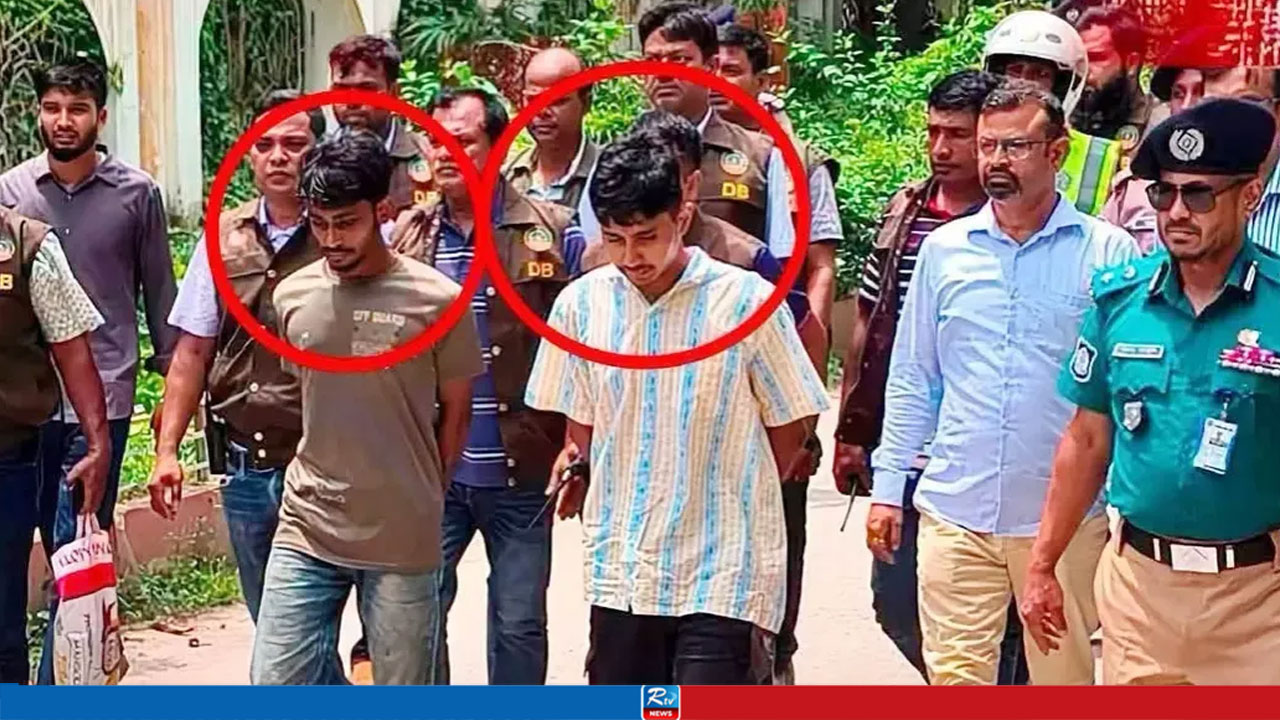
Siddhartha Das alongside Mugdha Das, a pair of detainees apprehended in connection with the homicides of retired educator Ganapati Chakraborty, his spouse, alongside their two offspring in Rangpur, yielded negative results during drug screenings, displaying zero remnants of Yaba, marijuana, or alternative illicit narcotics within their urine specimens.
Deputy Commissioner (Detective Branch) pertaining to the Rangpur Metropolitan Police, Sonaton Chakroborty, stated on Monday that the findings of the dope examinations performed upon the two suspects returned negative.
Nonetheless, a medical professional noted that the biological specimens were gathered 10 days subsequent to the slayings, rendering it complicated to ascertain whether the pair had ingested narcotics at the period of the occurrence.
Meanwhile, a Rangpur tribunal on Monday authorized law enforcement approval to question the duo for a span of two days—comprising three hours daily—at the prison entrance.
Judge of the Rangpur Metropolitan Magistrate Court-2, Rafiqul Islam, issued the directive after the inquiry officer handling the case registered over the murders, Jinnat Ali, petitioned for a three-day remand for questioning.
Law enforcement reported that the two suspects, within their depositions documented pursuant to Section 164 of the Code of Criminal Procedure, asserted that they maintained an agitated disposition and operated under the sway of narcotics when the fatalities transpired.
Pursuant to a judicial directive, physicians gathered urine samples from Siddhartha alongside Mugdha inside Rangpur Central Jail on August 30 in the physical presence of police.
Laboratory assessments subsequently detected zero presence of Yaba, cannabis, or any alternative forbidden substance inside their systems, per the documentation.
Prof Dr Md Rashedul Haque, chairman of the Biochemistry Department at Rangpur Medical College, explained that narcotic residues typically stay identifiable within urine across multiple days, contingent upon the substance alongside alternative variables.
“Testing should have been done earlier. A test within seven days could have provided a better indication of recent drug use,” he remarked.
Rashedul, nevertheless, cautioned that a negative outcome following 10 days fails to definitively establish that the suspects were clean of narcotics or had abstained from consuming drugs during the time of the event.
Ganapati’s sister-in-law, Puja Chakraborty, raised doubts regarding why the drug screenings were not executed sooner.
She mentioned that such an examination could have been conducted within a day or two of the incident and voiced apprehension regarding the credibility of a negative outcome acquired 10 days later.
Detective Branch representatives communicated that the negative reports will fail to impact alternative dimensions of the probe.
They stated that investigators are reviewing the accused individuals’ depositions, physical evidence gathered from the crime scene, alongside additional details as part of the ongoing inquiry.
On August 22, the remains of Ganapati, aged 65, a former instructor at Rangpur Zilla School, his wife Pritilata Chakraborty Bala, aged 50, daughter Agami Chakraborty Prarthi, aged 25, alongside son Ayush Chakraborty Priyam, aged 12, were retrieved from their secured residence situated in Machhuapara of Rangpur city.
Police revealed that all four victims were choked to death.
Authorities detained Mugdha, aged 23, and Siddhartha, aged 19, from the identical locality the succeeding day concerning the homicides.
The two apprehended suspects subsequently delivered confessional declarations under Section 164 of the Code of Criminal Procedure before a tribunal, while a pair of witnesses, identified as Shimanto and Bidyut Das, likewise provided statements before the court.
With Inputs from UNB





 Live TV
 RTV Plus