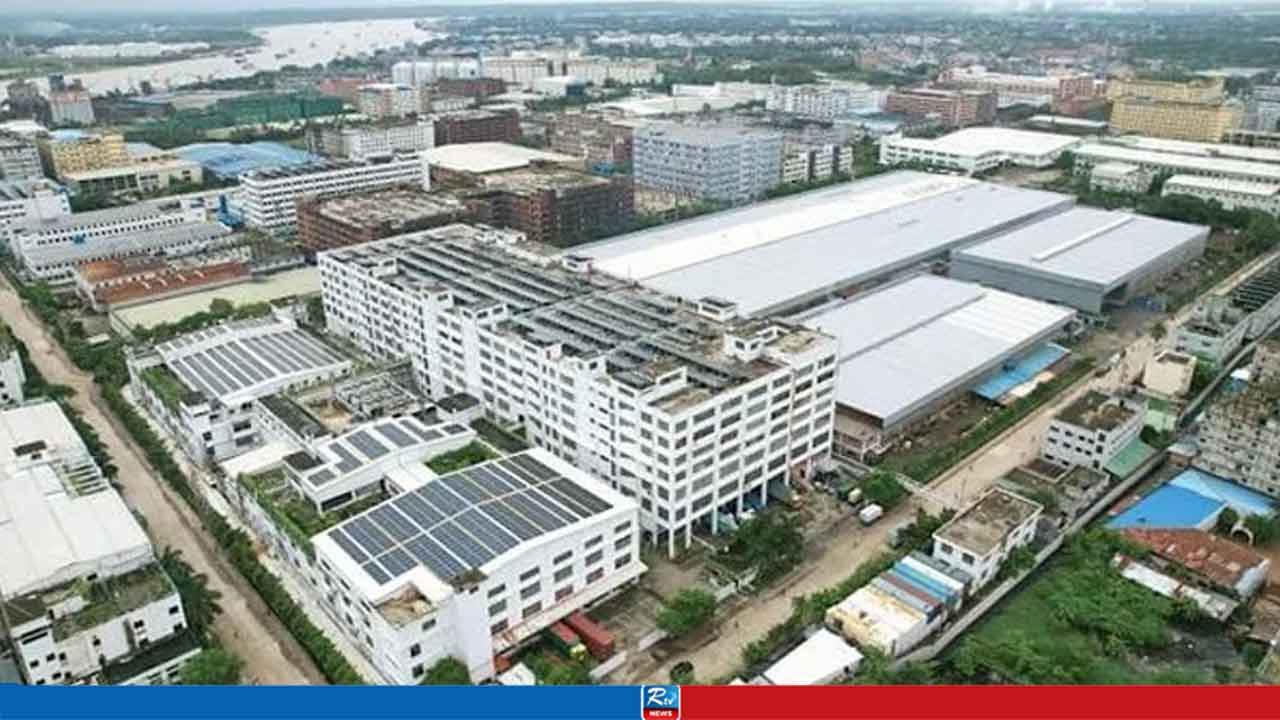
Playing a vital role in Bangladesh’s export-oriented industrialization, the Karnafuli Export Processing Zone (Karnafuli EPZ) has marked its two-decade journey.
The EPZ was officially inaugurated on September 12, 2006, by then-Prime Minister Khaleda Zia, and has since crossed $14 billion in "Made in Bangladesh" product exports over 20 years.
Following its establishment, the first shipment from Karnafuli EPZ took place in November 2007 by Paolo Footwear (BD) Ltd. Starting with $9.86 million in the 2007–08 fiscal year, cumulative exports reached $14,156.46 million by the end of August 2026.
Beyond garments, the zone's export basket has diversified to include tents and camping equipment, bicycles, leather goods, furniture, bags, undergarments, fashion apparel, and safety shoes, supplying world-renowned brands and buyers.
On Saturday (September 12), officials shared these milestones during a press briefing themed "Two Decades of Transformation and Growth" at Karnafuli EPZ. Attendees included Executive Director Mahbub Ahmed Siddique, BEPZA Member (Investment Development) Md. Tanvir Hossain, BEPZA Executive Director (Public Relations) Anwar Parvez, and Campbelli Global Ltd. CEO Li Hengo.
Historical Transformation from Steel to EPZ
The zone stands on the former grounds of the state-owned Chittagong Steel Mills Ltd. (CSM) located on the banks of the Karnafuli River, about 10 kilometers from Chittagong city.
Severe damage from the 1991 cyclone, coupled with global market competition, obsolete technology, and management issues, led to heavy losses.
In 1998, the mill was laid-off with workers owed roughly 80 crore BDT in unpaid wages, and it was permanently closed via a government notification on July 7, 1999.
To revitalize the Patenga area and create new employment, then-Commerce Minister (and current Finance Minister) Amir Khasru Mahmud Chowdhury requested the Prime Minister to integrate the defunct steel mill land under the Chittagong EPZ umbrella.
BEPZA officially took over the land in two phases during 2004 (74 acres on February 22 and 148.42 acres on December 20), clearing old structures and transforming the site into a modern, planned industrial park.
Current Investment and Employment Landscape
Global Footprint: Investors from 14 countries—including China, Taiwan, Hong Kong, South Korea, India, Sri Lanka, Japan, the UK, the US, the Netherlands, and Malaysia—have channeled capital into the zone.
Investment Growth: Starting with $1.91 million in the 2006–07 fiscal year, total investment reached $787.33 million by August 2026.
Full Capacity: All 258 industrial plots (each sized 2,000 square meters) and 5 standard factory buildings (spanning 49,798 square meters of total floor space) have been fully allocated to investors.
Active Enterprises: Currently, 40 companies are operational—29 100% foreign-owned, 3 joint ventures, and 8 locally owned—while 5 more are under implementation.
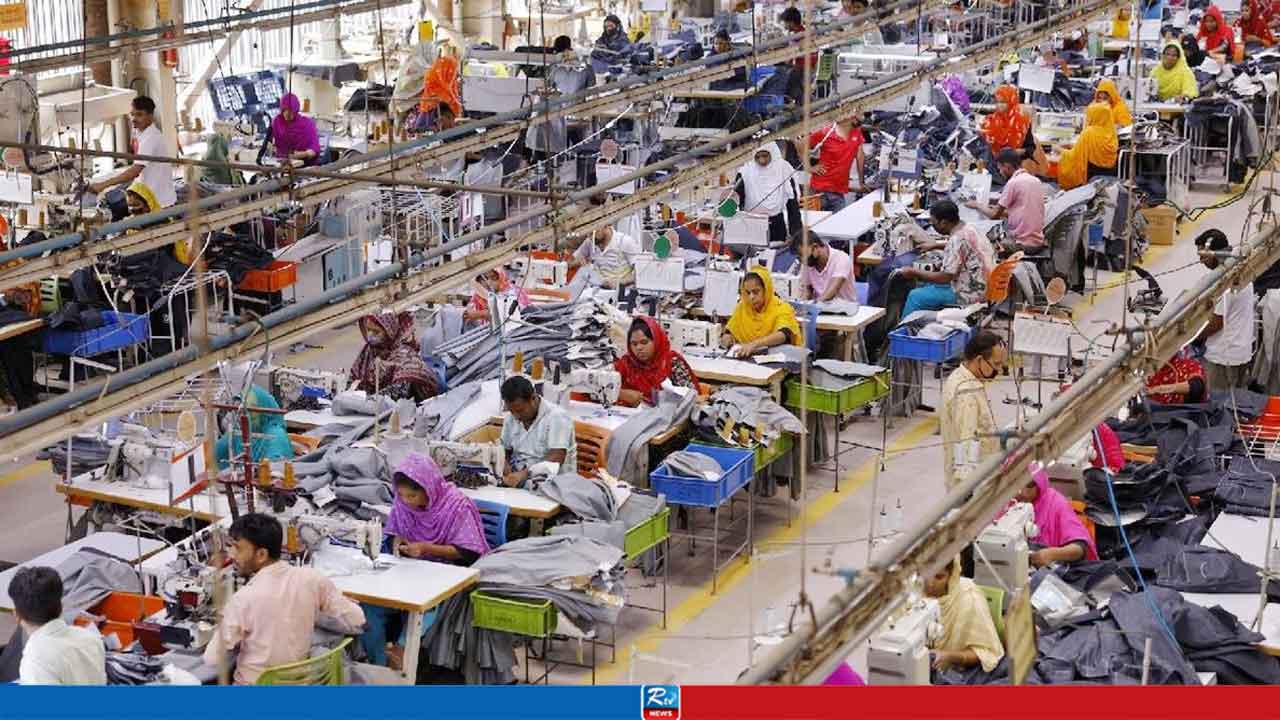
Employment Generation: The zone directly employs approximately 80,000 workers while generating indirect employment for about 100,000 people.





 Live TV
 RTV Plus