Dhaka 26 September, 2026

Holocaust Photo: 1941 Nazi Murderer Now Identified

Deutsche Welle

Publish : 18 Oct 2025, 01:16 PM
Deutsche Welle Photo

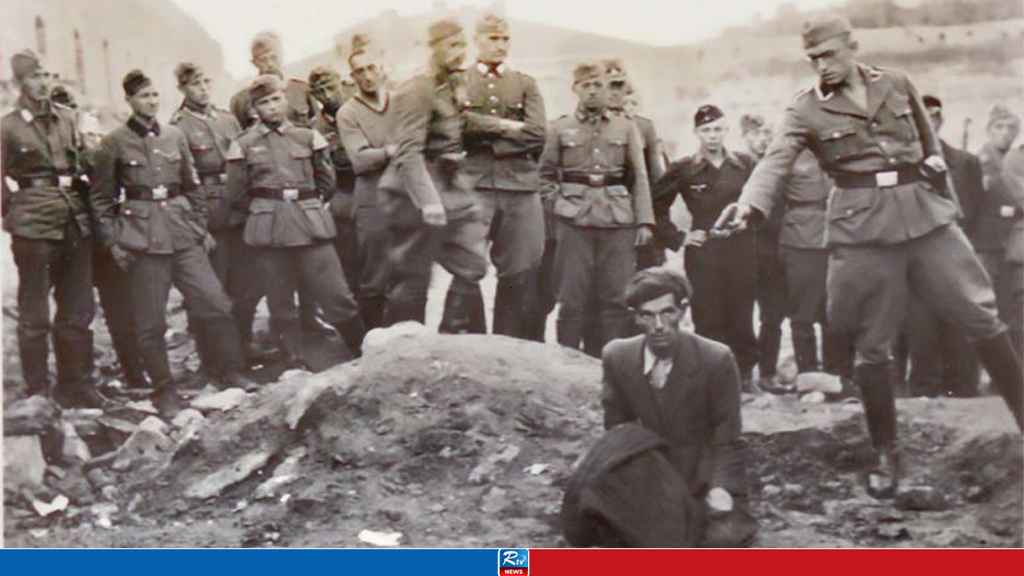
"The Last Jew in Vinnitsa" is one of the starkest images of the Holocaust in Eastern Europe. Thanks to AI and hive minds, we now know the perpetrator's identity.

A man in a long coat with a full head of hair and sunken cheeks, kneels at the edge of a mass grave, resigned to his fate.

The dozens of corpses below him and the gunman pointing a pistol to the back of his head leave no room for doubt — he knows his life is about to end. The victim's identity remains a mystery, but a match has been found for the perpetrator with 99% certainty.

The gunman in the photo, striking a "casual pose," while showing "performative indifference" and "procedural matter-of-factness," is most likely Nazi war criminal Jakobus Onnen, and the photo was probably a Nazi trophy, explains German historian Jürgen Matthäus.

The latest findings by the former head of the United States Holocaust Memorial Museum's research department recently appeared in the Zeitschrift für Geschichtswissenschaft (or "Journal of Historical Science"), published by Metropol Verlag.

"This is a massive step forward in getting to the historical reality of the Holocaust. These are the moments where — if I can generalize — where historians are really thinking, 'Aha, here I've really pushed the limit of what we know'," Matthäus told DW.

This photo became one of the most famous images of the Holocaust, titled "The Last Jew in Vinnitsa." It first drew attention in 1961, during the trial of Nazi war criminal Adolf Eichmann in Israel. However, little was known about the image until now, and some of what was known turned out to be incorrect in retrospect.

The photo's history

According to the United Press International (UPI) news agency, which distributed the photo at the time, it was supplied by Al Moss, a Holocaust survivor from Chicago. He reportedly received the photo in Munich in 1945 shortly after his liberation by American troops and handed it over to UPI.

But the image had long been mislabeled. Only in 2023 did Matthäus discover that the photo wasn't taken some time between 1941 and 1943 in the Ukrainian city of Vinnytsia as originally thought, but rather in Berdychiv, about 150 km from Kyiv.

The error was discovered through a stroke of serendipity. A few years ago, the United States Holocaust Memorial Museum in Washington D.C. received the war diaries of Austrian Wehrmacht soldier Walter Materna, who was stationed in Berdychiv in 1941.

They included a print of this photo, but of significantly better quality than the previously known copy. On the back was written, "Late July 1941. Execution of Jews by the SS in the citadel of Berdychiv. July 28, 1941."

A diary entry by Materna on the same date, in which he describes the murder of hundreds of Jewish people at the same pit at the Berdychiv citadel, reinforced the theory that the crime scene was not Vinnytsia, but Berdychiv.

Matthäus published the results of his research on Materna's diaries in late 2023 in the journal "Holocaust and Genocide Studies." The German daily WELT reported on the topic.

74348018_906
The victim, however, could not be identified. -Deutsche Welle Photo

Successful use of hive minds

Jürgen Matthäus then received several tips from readers who claimed to have recognized the perpetrator. One of them came from a retired high school teacher who wrote that the "horrifying image" had played a role in his family for decades "because it shows an SS member who resembles an uncle of my wife, her mother's brother... An uncle who was 'on site' as a member of Einsatzgruppe C during the period in question," Matthäus wrote in the Journal of Historical Science.

This 'uncle' was Jakobus Onnen, who was born into a middle-class family in 1906 in the East Frisian village of Tichelwarf, near the Dutch border. He studied French, English and sports in Göttingen to become a teacher, following in his late father's footsteps. He later taught at the German Colonial School in Witzenhausen.

In 1931, he joined the Sturmabteilung (or SA), a paramilitary organization of the Nazi Party and a year later he transferred to the SS, a kind of elite police force under the Nazis that had started out as Adolf Hitler's personal bodyguard. In early June 1941, he became part of Einsatzgruppe C, which murdered hundreds of thousands of Jewish people in Eastern Europe.

"He joined the SA and then later the SS. His study time in Göttingen was clearly influenced by the Nazi student movement, which was very strong, particularly in Göttingen at the time. So here is the Nazification that you can observe," Matthäus says.

Read More

'AI was the icing on the cake'

Onnen was never investigated because he died in battle in August 1943. In addition, his sister had destroyed a collection of letters he'd sent her, eliminating the possibility of using them to reconstruct events.

Despite such hurdles, AI experts pitched in and managed to determine the murderer's identity using AI-based facial recognition software with a high degree of certainty. This feat was achieved largely through the help of the high school teacher who recognized his relative in the image and sent photos to use for comparison.

"The more we cooperate across the disciplinary divide, which is not a given particularly in the humanities, the better. This is very much collaborative ... Holocaust studies exist only as an interdisciplinary field," say Matthäus, adding that such collaborations could also involve art historians, technical experts, musicologists, psychologists and political scientists among others.

74348296_906
The perpetrator was identified using facial recognition software. -Deutsche Welle Photo

Victims remain unidentified

The name and biographical details of the shooter are now known. Yet the victim remains unknown — as in so many cases — even though his face is clearly visible in the photograph. This is not surprising, says Matthäus, because the Nazis deliberately did not list the names of the people shot in Eastern Europe — unlike in the case of deportations from Western Europe.

"Increasingly over time, there have been massive efforts to de-anonymize the victims by identifying them by name. Who were these people? A lot of this work was done by survivors who stepped forward and identified on the basis of photos or memoirs and testimonies like at the Shoah Foundation at Yad Vashem and also at the US Holocaust Museum in Washington," explains Matthäus.

Nonetheless, the historian remains "cautiously optimistic" that one day interdisciplinary collaboration, hive minds and AI will enable the victim in this photo to be identified, besides opening up many new opportunities for Holocaust research.

"If this is possible for this photo, it might be possible for letters, diaries. I think a lot hinges on the willingness of society to embrace this, not just the political class. But also individuals and families to confront this," says Matthäus.

The article was originally published in German
Writer: Djamilia Prange de Oliveira

Follow google news channel to get RTV news Google News
Martyred Intellectuals Day: the Trick to Kill Intellectual Potential
Martyred Intellectuals Day is being observed today (Sunday) with due dignity. The nation recalls on this day the mass killing of a large number of Bengali top brains by the then Pakistan army and their collaborators visibly sensing their defeat just two days ahead of the emergence of Dhaka as the free capital of free Bangladesh. The occupation troops and their Bengali speaking collaborators like Al-Badr, Al-Shams and Razakars carried out a systemic killing throughout the nine months of 1971 Liberation War but the December 14 appeared to be a systematic massacre to expose the new born country to a state of brainlessness. The main goal of this atrocity was to make the newly independent Bangladesh devoid of intellect and direction through the brutal killing of teachers, writers, journalists, researchers, doctors and cultural activists. The nation remembers the martyred intellectuals on this day every year with deep sorrow, pain and respect. The killing of martyred intellectuals was a horrific chapter in the final phase of the Liberation War. This massacre was carried out to break the foundation of the nation's thinking, conscience and leadership just before the dawn of independence.  Eminent educationists and thinkers, speaking to BSS about this tragic incident of December 14, 1971, said that the need for intellectuals for society and the state never ends. Development Studies Professor Mahbub Ullah at Dhaka University said that when December 14 comes, a deeply painful memory comes back to the nation.  The collage shows the bodies of the Martyred Intellectuals, with images collected from various internet sources The planned killing of intellectuals just two days before of independence was a ploy to destroy Bangladesh's future prospects, he said. He said the Pakistani ruling class considered the country's conscious and progressive intellectuals as enemies. That is why, at the beginning of the Liberation War, on the night of March 25, intellectuals were targeted and killed at various places, including Dhaka University. However, December 14 was the final and most horrific form of that sequence, he added. He said the nation has lost numerous wise and virtuous personalities including philosopher Govinda Chandra Dey and Professor Munir Chowdhury. Intellectuals are the ones who provide the food for thought and consciousness to move the society forward on the path of liberation, progress and advancement. Professor Mahbub said they were the ones who truly keep the unquenchable flame of the spirit of independence burning. In their absence, a state becomes paralyzed in thought and mind. This murder was committed to push Bangladesh into that paralysis. Read More Real Challenges Waiting for Trump 'Foe' Mayor Mamdani He said that before December 16, the decomposed and mutilated remains of martyred intellectuals were recovered from various slaughterhouses including Rayerbazar and Mirpur. Many could not be identified, and many more are still missing. It is difficult to find words to express hatred against this planned and brutal killing. He expressed optimism that the intellectuals of the current and future generations can pursue knowledge in a safe environment and show the nation the path of light. Category Names Dhaka University Teachers A. N. M. Munier Choudhury, Dr. G.C. Dev, Muffazzal Hyder Chowdhury, Anwar Pasa, Jyotimay Guhathakurta, Abdul Muqtadir, S. M. Rashidul Hasan, Dr. A.N.M. Faizul Mahi, Fazlur Rahman Khan, A.N.M. Maniruzzaman, Dr. Serajul Haque Khan, Dr. Shahadat Ali, Dr. M.A. Khair, A.R. Khan Kadim, Muhammad Sadeque, Sharafat Ali, Ghiasuddin Ahamed, Ananda Payan Rajshahi University Teachers Prof. Qayyum, Habubur Rahman, Shree Sukha Ranjan Samadder M.C.A.s (Members of the Constituent Assembly) Mashiur Rahman, Amjad Hossain, Aminuddin, Nazmul Haque Sarker, Abdul Haque, Syed Anwar Ali, A.K. Sarder Journalists Sirajuddin Hossain, Shahidulla Kaiser, Khondakar Abu Taleb, Nizamuddin Ahmed, A.N.M. Golam Mustofa, Shahid Saber, Sk. Abdul Mannan (Ladu), Nazmul Haque, M. Akhter, Abul Basar, Chisty Helalur Rahman, Shibsadan Chakravarty, Selina Akhter Physicians Md. Fazle Rabbi, Abdul Alim Chowdhury, Shamsuddin Ahmed, Azharul Haque, Humayun Kabir, Sulaiman Khan, Kaiser Uddin, Mansur Ali, Ghulam Murtaza, Hafez Uddin Khan Jahangir, Abdul Jabbar, S.K. Lal, Hem Chandra Basak, Kazi Obaidul Haq, Mrs. Ayesaha Bedoura Chowdhury, Al-Haj Mamotazuddin, Hashimoy Hazra, Naren Ghose, Zikrul Haq, Shamsul Haq, M. Rahman, A. Gafur, Mansur Ali, S.K. Sen, Mafizuddin, Amulya Kumar Chakravarty, Atiqur Rahman, Ghulam Sarwar, R. C. Das, Mihir Kumar Sen, Saleh Ahmed, Anil Kumar Sinha, Sunil Chandra Sharma, A.K.M. Ghulam Mustafa, Maqbul Ahmed, Enamul Haq, Mansur (Kanu), Ashraf Ali Talukdar, Lt. Ziaur Rahman, Lt. Col. Jahangir, Badul Alam, Lt. Col Hai, Maj. Rezaur Rahman, Maj. Nazmul Islam, Asadul Haq, Nazir Uddin, Lt. Nurul Islam, Kazal Bhadra, Mansur Uddin Educationists Zahir Raihan, Purnendu Dastidar, Ferdous Dowla, Indu Saha, Meherunnessa Artists, Professionals, etc. Altaf Mahmud, Danbir Ranada Prasad Saha, Jogesh Chandra Ghose, Dhirendra Nath Dutta, Shamsuzzaman, Mahbub Ahmed, Khurshid Alam, Nazrul Islam, Muzammel Haq Chowdhury, Mohsin Ali, Mujibul Haq *Source: https://www.genocidebangladesh.org/ Eminent educationist Professor Abul Kashem Fazlul Haque said that the term 'intellectual' became particularly popular in the political and social arena in this country in the 1960s. At that time, a section of the educated society did not participate in direct political movements but expressed opinions from afar, which was also criticized.  However, the December 14 massacre - beyond all those controversies - was a terrible attempt to eliminate the nation's intellectuals, he said. He said, "Real intellectuals do not trample on the feet of power; rather, they have the courage to stand up to power and speak the truth. That is why they become a threat to the ruling class. An attempt was made to demoralize the nation by capturing and killing them in the slaughterhouses of Rayer Bazar and Jigatola." He said Martyred Intellectuals Day is therefore not just a day of remembrance, but also a day of protest and self-criticism against atrocities. Dhaka University's Mass Communication and Journalism Professor Dr. Giti Ara Nasreen said, "Martyred intellectuals are not just memories of the past; they are part of our daily thoughts and reflections. The monuments and memorials spread across the Dhaka University campus keep the presence of the martyrs alive. The question is, are we able to carry their ideals and legacy properly?" She said political change does not just mean a change in power. "Power relations in a society, the struggle for rights and the scope of expression are all part of politics. The meaning of the word 'intellectual' has also changed over time. The abundance of talk shows and column-based discussions has increased, but in many cases its depth has decreased. However, the job of a real intellectual is to confront society with new questions and give direction." Referring to the 2024 July Uprising, she said, "The memory of 1971 is so deeply rooted in our collective consciousness that it comes back in times of crisis. During the movement, the memory of the martyrs gained new importance in the conversations of students and ordinary people. The uprising was an expression of the people of Bangladesh's desire for freedom and justice, in which the role of intellectuals was inseparable."
Martyred Intellectuals Day: the Trick to Kill Intellectual Potential
Real Challenges Waiting for Trump 'Foe' Mayor Mamdani
... Throughout the mayoral race, Mamdani remained a frequent target of President Trump's public criticism, with the President actively campaigning against his candidacy... New York City's newly elected Mayor Zohran Mamdani, a 34-year-old democratic socialist, defeated 67-year-old former Democratic Governor Andrew Cuomo, who ran as an independent after losing the primary and Republican nominee Curtis Silwa.  Mamdani's victory is notable as he becomes the city's youngest mayor in over a century (since 1892), as well as its first Muslim and first African-born mayor. However, these historic milestones are overshadowed by the immediate challenge he faces in the coming days -- from the White House, from his opponent, Republican President of US Donald Trump.  Throughout the mayoral race, Mamdani remained a frequent target of President Trump's public criticism, with the President actively campaigning against his candidacy. Trump closely followed the race and repeatedly attacked Mamdani, falsely calling him a communist and threatening to withhold federal funds from New York if he won.  Trump endorsed Cuomo on the eve of the election, bypassing Republican candidate Curtis Sliwa. The US president, who has a personal connection to New York, is sure to welcome a political tussle with Mamdani and he has a wealth of ways to complicate life for the new mayor. "Whether you personally like Andrew Cuomo or not, you really have no choice. You must vote for him, and hope he does a fantastic job... He is capable of it, Mamdani is not!," Trump posted on Truth Social on Monday (US Time).  Republican President of US Donald Trump. -Collected Photo  The president earlier said he would be reluctant to send more than "the very minimum" level of federal funding to his hometown of New York if Mamdani was elected. This echoed comments he made in a television interview on Sunday, during which he referred to Mamdani as a communist - a label that Mamdani rejects, wrote BBC in a news titled "Trump backs Cuomo for New York City mayor and threatens to cut funding if Mamdani wins".  "It's gonna be hard for me as the president to give a lot of money to New York. Because if you have a communist running New York, all you're doing is wasting the money you're sending there," Trump said in that interview.  BBC also found that the Trump administration has repeatedly tried to cut federal grants and funding for projects primarily located in Democratic-run areas. New York City received USD 7.4bn in federal funding this fiscal year. Mamdani is also a long-standing supporter of the Palestinian cause, although his positions on Israel -- which he has called an "apartheid regime" while branding the war in Gaza a "genocide" -- have drawn the ire of some in the Jewish community. In recent months, he has made a point of vocally denouncing antisemitism -- as well as the Islamophobia he has suffered. Playing the race card, Trump, who calls Mamdani a "little communist," denounced him as a "proven and self-professed JEW HATER" Tuesday as New Yorkers were heading to the polls. AFP wrote that Mamdani was born in Uganda to a family of Indian origin and has lived in the United States since he was seven, becoming a naturalized US citizen in 2018. He is the son of filmmaker Mira Nair ("Monsoon Wedding," "Mississippi Masala") and Mahmood Mamdani, a professor and respected Africa expert -- leading some of his detractors to call him a "nepo baby." Read More Holocaust Photo: 1941 Nazi Murderer Now Identified He followed a path paved by other youngsters from elite liberal families, attending the elite Bronx High School of Science followed by Bowdoin College in Maine, a university seen as a bastion of progressive thought. Under the alias "Young Cardamom," he ventured into the world of rap in 2015, influenced by hip-hop group "Das Racist," which had two members of Indian origin who played with references and tropes from the subcontinent. He took an interest into politics when he learned that rapper Himanshu Suri, who performed under the alias Heems, was supporting a candidate for city council -- and joined that campaign as an activist. Mamdani went on to become a foreclosure prevention counselor, helping financially struggling homeowners avoid losing their homes. He was elected in 2018 as a lawmaker from Queens, a melting pot of predominantly poor and migrant communities, representing the area in the New York State Assembly. Undoubtedly, Mamdani's victory came in the face of fierce attacks on his policies and Muslim heritage from President Donald Trump, business elites and conservative media. House minority leader Hakeem Jeffries said "Democrats are smoking Donald Trump and Republican extremists throughout the country," writing on X that "the Democratic Party is back." Mamdani with his father Mahmood Mamdani (far right), mother Mira Nair (far left) and his wife Rama Duwaji (second from right). -Collected Photo  Mamdani, a state lawmaker for New York's Queens borough, appealed to voters by pledging to tackle the soaring cost of living, offering free city bus travel, childcare and city-run grocery stores. He focused on living costs facing ordinary New Yorkers, building support through his informal personal style, social media savvy and a massive canvassing ground game. "The next and last stop is City Hall," Mamdani said in a video posted to X showing the doors of a subway train opening to City Hall station. NBC News wrote, In his first speech as the next mayor of New York, Zohran Mamdani made clear he and his city are coming for President Donald Trump.  "If anyone can show a nation betrayed by Donald Trump how to defeat him, it is the city that gave rise to him," Mamdani said at his victory speech in Brooklyn Tuesday night. "And if there's any way to terrify a despot, it is by dismantling the very conditions that allowed him to accumulate power. So Donald Trump, since I know you're watching — I have four words for you: Turn the volume up." "His election is proof that the Democrat Party has abandoned common sense and tied themselves to extremism," he said. "Next year, Democrats will be held accountable by voters for embracing Mamdani’s far-left agenda and the consequences it will bring." “We will hold bad landlords to account, because the Donald Trumps of our city have grown far too comfortable taking advantage of their tenants,” Mamdani said. “We will put an end to the culture of corruption that has allowed billionaires like Trump to evade taxation and exploit tax breaks. We will stand alongside unions and expand labor protections because we know, just as Donald Trump does, when working people have ironclad rights, the bosses who seek to extort them, become very small indeed." "New York will remain a city of immigrants, a city built by immigrants, powered by immigrants and as of tonight, led by an immigrant," he said. "So hear me, President Trump, when I say this: To get to any of us, you will have to get through all of us.” Mamdani quoted Eugene Debs, the popular socialist of the early 20th century, and promised to enact the “most ambitious agenda” since Great Depression-era New York City Mayor Fiorello LaGuardia, talking up his proposals for free buses, universal child care and a freeze on rent-stabilized buildings. “In this moment of political darkness," Mamdani said, "New York will be the light." "…AND SO IT BEGINS!" Trump posted on social media during the speech.
Real Challenges Waiting for Trump 'Foe' Mayor Mamdani
Truth Behind the Claim of 'Eiffel Tower's Demolition'
'Paris' iconic Eiffel Tower is really being demolished in 2026!' -- It started with a viral claim on social media, 'the Eiffel Tower, Paris’ iconic iron lattice monument, slated for demolition in 2026'. This claim has sparked widespread concern, igniting alarm and indignation among fans of French heritage worldwide.  This post, amplified across social media platforms like X, cites reasons such as an expiring "operating lease," structural fatigue, high maintenance costs and a supposed lack of visitors. However, these claims are baseless; a different truth quietly emerged. Satirical Article -- origin of the claim The claim that the Eiffel Tower will be demolished in 2026 appears to have originated from a satirical article published on September 18, 2025, by Tapioca Times, a website known for parody content. The article quoted a fictional an imginary “spokesman” who said " “We’ve had a good run, it’s been popular for a long time but nobody goes there anymore so we’re shutting it down. It seems like the Internet has finally caught up with us and young kids just don’t want to go to the top anymore.”  The article further blamed a supposed decline in attendance on drones “circling the tower” and joked about squirrels, pigeons, and outlandish replacements, including a water slide or a “Paris Burning Man” festival. “Either way, no matter what happens, demolition starts in early 2026 so if you are old and nostalgic now is the time to come visit Paris," the article stated. This satirical narrative was picked up and spread through viral X posts, many using nearly identical wording. No official confirmation of demolition No credible evidence supports the demolition claims. Neither the Société d’Exploitation de la Tour Eiffel (SETE), which manages the tower, nor the City of Paris, nor French heritage authorities have issued any statements indicating plans to dismantle the monument. Why the Eiffel Tower is temporarily closed?  The current closure of the Eiffel Tower, which began on October 2, 2025, has fueled speculation but is unrelated to any demolition plans. The closure is due to nationwide strikes by French unions protesting government spending cuts and advocating for higher taxes on the wealthy. These labor disputes have disrupted operations, affecting SETE staff and other workers across France. Similar strike-related closures occurred in 2023 and earlier. Authorities expect the site to resume normal operations soon after labor negotiations conclude. Read More Catherine Duleep Singh: The Nazi-defying Indian Royal Why satire and social media fuel false narratives?  The rapid spread of the demolition rumor highlights a familiar challenge in the digital age: the difficulty of distinguishing satire from reality, especially when stories are stripped of their original context.  Experts warn that such episodes are becoming increasingly common. “Satirical articles are designed to provoke thought or laughter, not to inform policy or public opinion,” noted a media analyst in conversation with Hindustan Times. “But when these stories are repackaged and circulated as fact, they can cause real confusion and anxiety.” For institutions responsible for safeguarding heritage sites, managing misinformation is now part of the job. SETE and Parisian officials routinely monitor viral posts, issuing clarifications when necessary to protect the reputation and integrity of the city’s monuments. Eiffel Tower’s enduring significance While the rumor of demolition proved unfounded, the episode speaks volumes about the enduring power of the Eiffel Tower as a symbol. More than 135 years after its completion, the monument continues to inspire awe, curiosity, and, as recent events show, passionate defense from people around the globe. Its image graces postcards, films, and Instagram feeds, serving as a shorthand for romance, innovation, and the spirit of Paris itself. “Whenever the Eiffel Tower is threatened—even in jest—it touches a nerve,” said a Parisian tour guide interviewed by Reuters. “It’s not just steel and rivets. It’s memory, hope, and the idea that some things can last.” For now, the tower remains closed due to labor unrest, not because of any plan to tear it down. When it reopens, crowds will once again ascend its steps, gaze out over the city, and perhaps reflect on the peculiar power of rumors—and the resilience of monuments that have weathered far more than social media storms. Source: Hindustan Times and Azat TV
Truth Behind the Claim of 'Eiffel Tower's Demolition'
Gaza Civilians Struggle as Aid Fails to Reach North
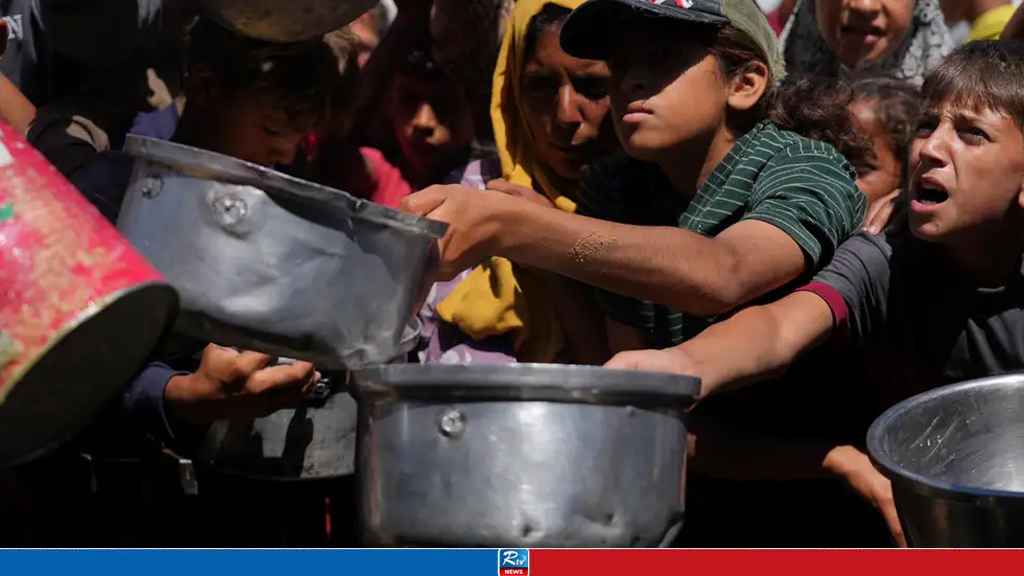
Before the war, Hazem Lubbad was a university student, supporting his studies while working as a waiter at a restaurant in Gaza City. For the past 19 months, he has been hunkering down with his extended family in Sheikh Radwan, a neighborhood in the northwest of Gaza City. Many neighboring areas, such as Beit Lahiya and Jabalia, have been ordered by the Israeli military to 'evacuate' and move south. The area faces constant Israeli airstrikes and shelling, residents say, as well as a desperate struggle to find enough food. Moving around the area is dangerous, too. "We eat whatever is available, one meal a day, from morning until late at night. Sometimes it is lentils; sometimes it is pasta," the 21-year-old Palestinian said in a video message from Gaza. Food has been in short supply throughout the war, Lubbad said. Now, some food has begun to trickle into Gaza after an 11-week blockade imposed by the Israeli government, but residents say it is still not reaching the north. Israel closed the crossings and halted all aid deliveries into Gaza on March 2. Israeli officials said that Hamas was stealing aid and using it to supply its own fighters, without providing evidence to support this claim. Hamas, which is in charge of Gaza, is considered a terrorist group by Israel, Germany, the US and several other countries. Civilians face daily struggle for food amid war"There has been no flour for a month and a half to two months. A kilo of flour on the black-market costs 80–100 shekels (roughly €20-24 or $22-28), and the situation we are living in does not allow us to buy it," explained Lubbad, adding that no one in the family has a regular income anymore due to the war. Lubbad said that they had set up a basic solar-powered phone charging station where people could recharge their phones in exchange for money. "Without this money, there's no income," he said. This means that he cannot afford to buy much in the markets, where prices have skyrocketed. According to residents, some of the aid that recently entered Gaza was looted by desperate and hungry people. Others are selling food at inflated prices. Israel has not allowed foreign journalists into Gaza since it launched its war following the Hamas terror attacks in 2023, so DW often has to rely on talking to Gazans over the phone.  Residents in the north are also watching with horror at the news of almost daily killings of people trying to reach food distribution sites in southern Gaza. These sites are run by a private American-Israeli company called the Gaza Humanitarian Foundation (GHF) and secured by the Israel Defense Forces (IDF). The United Nations and other humanitarian organizations have rejected the new food distribution system, arguing that it would be unable to meet the needs of Gaza’s 2.3 million inhabitants and would allow Israel to use food as a means of controlling the population. There are no distribution sites in northern Gaza and for people in the north it would be too far and dangerous to get to them. The UN said it is permitted to bring in a limited number of trucks with flour, which is only allowed by Israel to be distributed to bakeries, as well as some other supplies, such as medical items and baby food. UN-OCHA speaks of 'deprivation by design'"It is engineered scarcity," said Jonathan Whittall, head of UN-OCHA, in a briefing with journalists in Jerusalem last week, adding that aid should reach all civilians wherever they are — and should not be limited. "This new scheme is surveillance-based rationing that legitimizes a policy of deprivation by design. And it comes at a time when people in Gaza, half of whom are children, are facing a crisis of survival." There is a widespread shortage of food as well as clean water and cooking gas. People resort to burning rubbish or pieces of wood salvaged from bombed-out buildings to cook. On Tuesday, in another of such incident, news agencies, quoting local officials, reported there had been 27 deaths after Israeli forces opened fire near an aid center. People have to walk for many miles to reach these sites, which are located near Israeli militarized zones. Earlier on Tuesday, the IDF put out a statement. "During the movement of the crowd along the designated routes toward the aid distribution site — approximately half a kilometer from the site — IDF troops identified several suspects moving toward them, deviating from the designated access routes," it said. "The troops carried out warning fire, and after the suspects failed to retreat, additional shots were directed near a few individual suspects who advanced toward the troops." It added that the military is "aware of reports regarding casualties, and the details of the incident are being looked into." The military also said that it "allows the American Civil Organization (GHF) to operate independently in order to enable the distribution of aid to the Gazan residents — and not to Hamas."  The International Red Cross (ICRC) said that its field hospital in Rafah had received "a mass casualty influx of 184 patients" on Tuesday morning. Nineteen cases were declared dead upon arrival, the statement said, and eight died shortly after. The majority of cases had suffered gunshot wounds. What is happening at the new distribution points for aid?Last week, DW spoke to a young man who had been displaced in southern Gaza and who had managed to obtain two food boxes from a GHF distribution point. Explosions are ongoing in Gaza — as are food shortages "Anyone could carry as much as they could. There were no instructions about the number, no checks, or anything," Muhammad Qishta said by phone, adding that the boxes contained rice, sugar, flour, halva (sweet sesame paste), oil, biscuits, and pasta. "Since there were no clear instructions about which streets to take to get in and out of the area, some people entered streets they didn't know were off-limits, and there was gunfire. I ran quickly and didn't see anything, but I heard the sound of gunfire," 30-year-old Qishta said. In Sheikh Radwan in northern Gaza, Hazem Lubbad and his relatives are staying put. They do not want to leave their area because "everywhere is the same bad situation. Everywhere is dangerous."   For now, Lubbad said they have also resorted to grinding pasta and lentils to make bread. "We make 20 pieces of pita bread daily and divide them among 13 people. Each person gets one or two pieces of bread per day. This helps us until we find something else to eat." Until recently, they were also able to buy dukkah, a spice mixture used as a dip for bread, but it is running low. The canned food they stocked up on when it was available has also run out, Lubbad said. "For the children, it is extremely difficult," he said. "One meal a day is simply not enough, but there is no food for more than one meal."
Gaza Civilians Struggle as Aid Fails to Reach North
Catherine Duleep Singh: The Nazi-defying Indian Royal
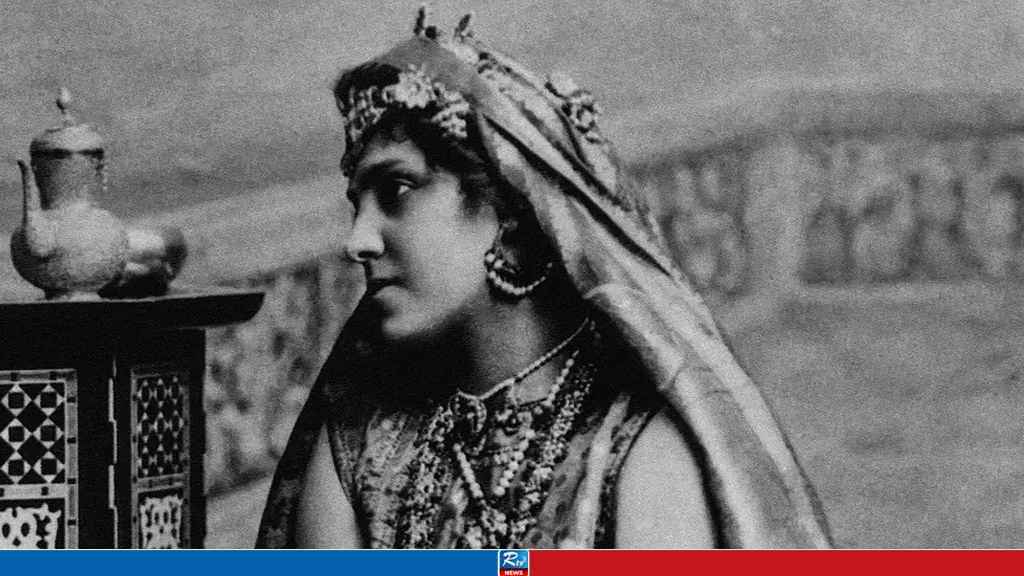
In the annals of World War II history, few would have expected a British-born Sikh princess from a dethroned royal family to quietly resist Nazi Germany, and live openly with a female partner long before LGBTQ+ rights were acknowledged — let alone accepted. Yet, that is precisely what Princess Catherine Hilda Duleep Singh did. The daughter of the last Maharaja of the Sikh Empire, Catherine blazed her own trail and defied social norms.  The recognition of her legacy is relatively recent. Among those who've brought her acts to the forefront is British biographer Peter Bance, who has spent over two decades researching and writing about the Duleep Singh family, besides piecing together Catherine's extraordinary contributions from scattered records and family documents. The drawing room of Elveden Hall in Suffolk, Catherine's childhood home Bance explained to Metro in 2023: "She didn't do these things for self-promotion, so the stories weren't in books or anything. Her stories have survived through the people she saved. Her intervention at that time have seen families across the world thrive." Royal roots, radical pathBorn in 1871 in Suffolk, England, Catherine was raised far from the land her father once ruled. At age 10, Maharaja Duleep Singh was forced to surrender the Sikh Empire — and the (in)famous Koh-i-Noor diamond — after the British annexed Punjab. In return, he received a pension from the British Crown on the condition he "remain obedient to the British Government." He later married Bamba Müller, a German-Ethiopian woman, with whom he had six children; Catherine was the fourth. The family lived in exile, but under the patronage of Queen Victoria, who was also Catherine's godmother. Educated at Somerville College, Oxford, Catherine supported the suffragette cause with her two sisters, campaigning for women's voting rights. But it was her private life — especially her years in Germany — that would come to mark her unconventionality and gumption. Catherine (middle) with her sisters Bamba (left) and Sophia (right) at an 1895 debutantes ball Kassel: A home away from homeHaving lost both her parents during her teens, Catherine had developed a close bond with Lina Schäfer, her German governess. In the early 1900s, Catherine left England and moved with Schäfer to the central German city of Kassel. The villa in which they lived together for more than three decades still stands today. Their relationship, though never formally acknowledged, defied social norms of the time and remained steadfast until Lina's death in 1937. Catherine initially felt at ease there  — among others, the couple enjoyed annual visits to the Bayreuth Festival — but the 1930s saw Germany degenerating into a police state under Hitler.  "Being brown-skinned and gay in Germany during the rise of Hitler was dangerous for her," according to Peter Bance. "I remember reading some correspondence between her and her accountant. He urged her to leave the country warning she was going to be targeted. She was being watched by the local Nazis, but she refused to leave." Catherine and Lina Schäfer lived together for close to 30 years in Kassel, Germany Making humanity her businessAs the Nazi regime tightened its grip, Catherine used her resources and influence and helped several Jewish individuals and families escape persecution in Germany and start over in Britain. She wrote letters of recommendation, provided financial support, and personally guaranteed immigration documents that were crucial to survival. One of the most documented examples involves the Hornstein family. Wilhelm Hornstein, a Jewish lawyer and decorated First World War soldier, was arrested during the November Pogrom of 1938 and imprisoned in a concentration camp. He was later released on condition that he left Germany. Catherine arranged safe passage to England for him, his wife Ilse and their two children. Catherine (seated) surrounded by the Hornstein family, whose descendants still live in England Catherine hosted them at Colehatch House, her country home in the village of Penn, Buckinghamshire, as well as other Jewish refugees, including a physician named Wilhelm Meyerstein and his partner, Marieluise Wolff, and a violinist named Alexander Polnarioff. She also advocated for those interned as "enemy aliens" — a cruel irony for Jews who had fled the Nazis. "I think she did her part for humanity. There was a lot of atrocities going on at that time which were going under the radar, and some were there blatantly as well, and people were sort of turning a blind eye. And she could have quite easily turned a blind eye and said, it's not my business, but she made it her business," Bance tells DW. In 2002, one outcome of her "one-woman rescue mission" resurfaced in a chance encounter. Bance recalls how, after having published a local article about Catherine, a man named Michael Bowles walked into his office and told him: "My mother and my uncles and my grandparents were saved by Princess Catherine in Germany. And if it wasn't for her, I would not be alive today." Bowles, it turns out, is the grandson of Ursula, one of the Hornstein children saved by Catherine's intervention. Neither Catherine (second from right) nor any of her siblings had descendants Resting in powerCatherine died in 1942, aged 71. Neither she nor her siblings had any descendants. In her will, she'd requested that part of her ashes be buried at Lina Schäfer's gravesite in Kassel. Over the decades, the site fell into disrepair and Bance is now working with Kassel's Main Cemetery to formally mark their shared grave. "I really think it's something Princess Catherine would have liked ... They spent their whole life together. And she loved her so much," he explains. Their bond, though subtle in its time, resonates today. Bance tells DW that while Catherine never hid her relationship "and her sisters obviously knew about it, but it was very hush hush," since in that era "it was not something they would have sort of flaunted or advertised." However, as Catherine's valor gets more media mileage, LGBTQ+ communities have been posthumously embracing her as an icon for having fearlessly loved and lived as she willed. And she has since headlined media coverage during diverse Pride Months, including one by the BBC in 2023. 'Princesses of Resistance'Bance is now working on a new book set to coincide with a Kensington Palace exhibition titled "Princesses of Resistance," set for March 2026 that will focus on Catherine and her sisters Sophia and Bamba. "It's a very female-oriented exhibition showing the efforts of these Duleep Singh princesses," Bance tells DW, adding that he'll be lending items from his personal archive of nearly 2,000 family artifacts that he's collected over the course of 25 years.  Catherine Duleep Singh (seated) helped Marieluise Wolff and Dr Wilhelm Meyerstein flee Nazi Germany While details continue to emerge about the Jewish families that Catherine helped, Bance had once described her as an "Indian Schindler,"  in reference to German industrialist Oskar Schindler (1908–1974), who is credited with saving around 1,200 Jewish lives during the Holocaust. Acknowledging that Catherine's efforts may not meet the scale of the original Schindler's list, Bance nevertheless tells DW: "Saving one life or saving 10 lives, it's still 'saving.' You're saving somebody who's not your color, not your religion, not your ethnic background, but you're doing it based on humanity." A profile on her alma mater's website sums it up: "A true LGBTQ+ icon, who put herself at risk for the comfort of her aging lover, and the very essence of the Somerville motto: 'Include the excluded.' Catherine did not just include the excluded: she saved them, campaigned for them, fought for them."
Catherine Duleep Singh: The Nazi-defying Indian Royal
Read More
'Govt to Public Names behind Hadi Murder Soon, Complete Trial within Its Tenure'
Two Arrested in Meghalaya for Aiding Osman Hadi Murder Suspects
Auto-Rickshaw Driver Gives Statement as a Witness in Osman Hadi Murder Case
12 Remanded for 3 days over Dipu Das murder case