Dhaka 26 September, 2026

Israel-Hezbollah Ceasefire Tensions Threaten to Escalate

Deutsche Welle

Publish : 23 Nov 2025, 09:51 AM
A year into the ceasefire between Hezbollah and Israel, tensions are rising again. Photo: picture alliance

Days before the one-year anniversary of the ceasefire that ended the Israel-Hezbollah war in Lebanon on November 27, 2024, tensions are once again threatening to escalate.

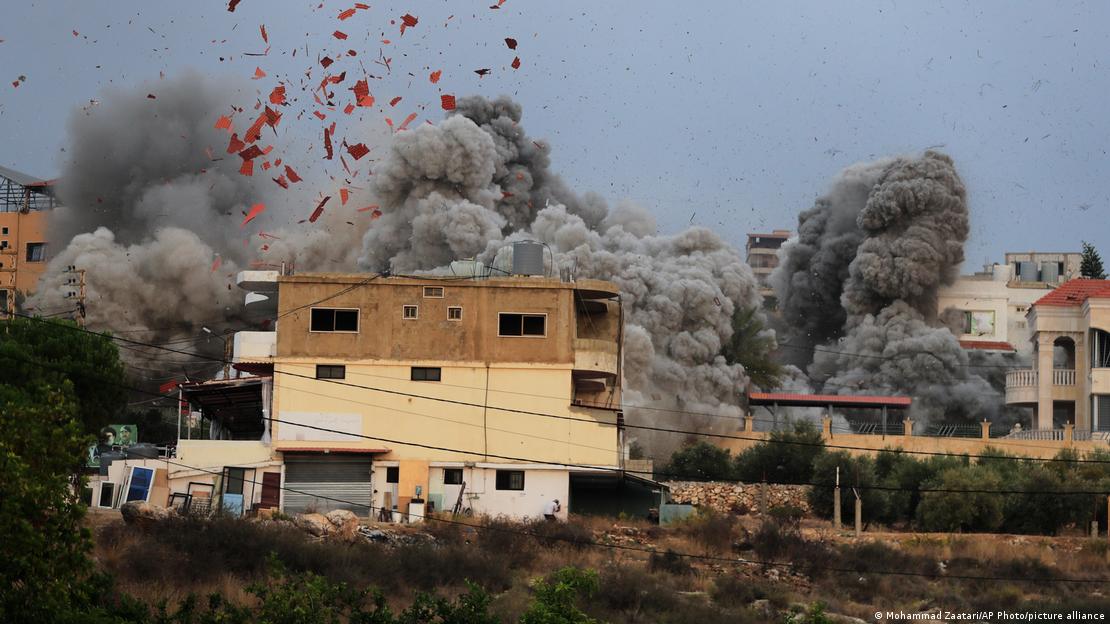
This week, Israel launched numerous airstrikes on southern Lebanon, killing at least a dozen people, according to Lebanese health officials.

Israel's military said on X that it had targeted Hezbollah members and infrastructure, including weapons storage facilities, as well as a Hamas training compound, all linked to Iran-backed groups.

A local resident, speaking to DW on the condition of anonymity, denied the Israeli army's claim that the area housed weapons or explosives. "The area is populated by civilians," the resident said, and "the sports ground was reduced to rubble, and there [were] many victims."

Another local confirmed that the location was a popular sports venue. "We are always there," the resident said. "The claims that Hamas is present are completely false."

Hezbollah's military wing, which is designated as a terrorist organization by several countries, including the US and Germany, has rejected Israel's allegations.

"One year on, the ceasefire is essentially in shambles," Sami Halabi, director of policy at the Beirut-based think tank The Alternative Policy Institute, told DW.

"It is held together as all parties to the conflict are using it for their own purposes," he said, adding that, in his view, the coming year will be decisive. "Either Lebanon addresses the core issues, or the ceasefire collapses and the country slides back into open conflict."

What led to the ceasefire?

On October 8, 2023, Hezbollah began targeting northern Israel in support of Hamas, which had carried out a terror attack on Israel the day before, sparking two years of conflict in Gaza.

Over the next 12 months of skirmishes between Israel and Hezbollah, around 60,000 Israelis and some 100,000 Lebanese were forced to evacuate border areas. In Israel, most have yet to return due to ongoing security concerns, while in Lebanon, widespread destruction and continued airstrikes make returning nearly impossible for many.

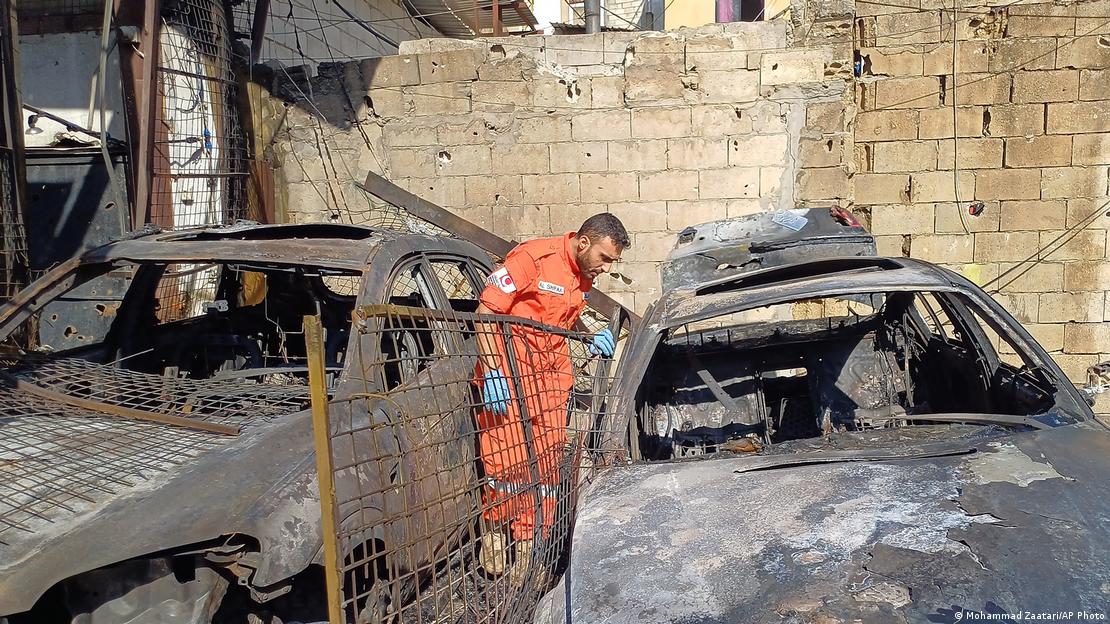
On the night of September 30 2024, the conflict escalated into two months of war in Lebanon, including a ground invasion by Israel. By January 9, 2025, more than 4,200 people had been killed, including many Lebanese civilians, according to the Lebanese Ministry of Public Health. The World Bank estimates reconstruction costs at approximately $11 billion (€9.5 billion).

Over the course of the war, Israel weakened Hezbollah significantly, killing numerous leaders and reducing much of the group's military capabilities.
74809224_906
Thousands of civilians in Lebanon and Israel hope to return to their homes in the border area once the strikes stop

However, Hezbollah remains a key member of Iran's "axis of resistance" — a coalition of groups and states that call for the destruction of the US and Israel — and continues to advocate for Israel's extinction. Israel accuses Hezbollah of regrouping and rebuilding its arms stockpile.

What did the ceasefire specify?

The peace deal, brokered by France and the US on November 27, 2024, mirrors key provisions of UN Resolution 1701 from 2006.

It calls for Israel's withdrawal from Lebanese territory, though Israeli troops remain stationed at five locations within Lebanon.

This week, Beirut filed an urgent complaint with the UN Security Council over the construction of a newly erected wall. According to the UN peacekeepers (UNIFIL), the wall overlaps with the Blue Line, which demarcates the border between Israel and Lebanon, and restricts Lebanese access to more than 4,000 square meters (43, 000 square feet) of land.
74649506_906
Israel accuses Hezbollah of regrouping and rearming with Iran's help

In response, Israel denied that the wall, whose construction began in 2022, encroaches on Lebanese territory.

The ceasefire also calls for the deployment of Hezbollah forces north of the Litani River, Lebanon's largest river. Hezbollah claims it has withdrawn its military presence beyond that line.

Additionally, the ceasefire also specified that Hezbollah must disarm. However, Hezbollah officials argue that this applies only to areas south of Litani River, not across Lebanon. The militia further rejects disarmament as long as Israeli troops remain in Lebanon.

In August, Hezbollah even threatened to start a civil war if the Lebanese government pushed for its disarmament.

The peace plan also called for Lebanon's military to deploy troops alongside the multinational UNIFIL peacekeepers in southern Lebanon.

On Thursday, Lebanese Prime Minister Nawaf Salam announced that plans to demilitarize the south by the end of the month are "on track."

"We need to recruit more people into the army, and we need to better equip the army, and we need to be able to raise the salaries of the army," Salam told the news broadcaster Bloomberg.

However, political analyst Sami Halabi argues that core problems remain unresolved. "The ceasefire agreement was drafted in the same way the [US] Trump administration approached its 'peace deals' across multiple conflicts: a list of bullet points posing as a framework," he said.

"While it can be good to have something to revolve around, the issue is that after a year of 'revolving,' the situation in Lebanon is nowhere closer to a resolution," Halabi told DW.

In his view, the ceasefire can only lead to stability, or durable peace, if it is part of a broader process where the Lebanese state gradually assumes control of national defense and is equipped to maintain deterrence.

"This could be through stronger military capabilities, such as in Egypt, or through a broader political deal," he said, adding that "one or both could work, but the status quo doesn't."

Could direct negotiations mark a turnaround?

The ceasefire also brought an end of Lebanon's years-long political vacuum with the election of President Joseph Aoun in January 2025.

Earlier this month, Aoun stated that Lebanon has "no choice" but to engage in negotiations. "The language of negotiation is more important than the language of war," he told reporters, adding "we have seen what [war] did to us."

Also, Prime Minister Nawaf Salam echoed Aoun's sentiment, expressing hope that Lebanon could secure US support for a diplomatic solution.

So far, direct negotiations between Lebanon and Israel have been out of the question — except for one brief instance in 1983 — due to the lack of diplomatic relations. In fact, the two countries have technically been in a state of war since 1948.

"Lebanon is under mounting pressure — by Israel militarily and the US diplomatically — to accept compromises it previously considered objectionable," Lina Khatib, associate fellow at the London-based think tank Chatham House wrote earlier this month in an opinion piece.

This prospect threatens Hezbollah, she added, noting that it could "pave the way for a future peace deal with Israel, which would remove Hezbollah's self-proclaimed raison d'etre."

Follow google news channel to get RTV news Google News
Russia Deploys 'Oreshnik' Nuclear Missiles in Belarus
Russia has deployed its indigenously developed 'Oreshnik' nuclear-capable missiles in neighboring Belarus. The British daily The Guardian reported the development, citing sources within the Belarusian defense forces. In a statement released yesterday, the Belarusian Ministry of Defense confirmed, "The Oreshnik missile division of the military has commenced combat duty in designated areas of the country." "Unstoppable" Technology Russian President Vladimir Putin previously praised the weapon's capabilities, stating that the missile travels at ten times the speed of sound and claiming that no existing air defense system is capable of intercepting it. Strategic Impact on Europe and Beyond Security analysts suggest that this deployment brings the entirety of Europe within the missile's reach. As an intermediate-range weapon, the Oreshnik is capable of striking targets up to 5,500 kilometers away. From its new positions in Belarus, the missile system can target any location in Europe and potentially reach the West Coast of the United States. Visual Confirmation The defense ministries of Russia and Belarus released a video showing an Oreshnik missile being transported through a forested path, concealed under green camouflage netting. Read More World Bids Farewell to 2025, A Year of Trump, Truces and Turmoil However, the military has not disclosed the specific location of the deployment within Belarus. Context of the Escalation Some Western political analysts believe this move is a direct response to recent pledges by several NATO members to supply Ukraine with missiles capable of striking deep into Russian territory. Russia reportedly moved forward with the Oreshnik deployment immediately after receiving intelligence regarding these supplies. Source: AFP
Russia Deploys 'Oreshnik' Nuclear Missiles in Belarus
World Bids Farewell to 2025, A Year of Trump, Truces and Turmoil
New Year's Eve revellers toasted the end of 2025 on Wednesday, waving goodbye to 12 months packed with Trump tariffs, a Gaza truce and vain hopes for peace in Ukraine. It was one of the warmest years on record, the stifling heat stoking wildfires in Europe, droughts in Africa and deadly rains across Southeast Asia. There was a sombre tinge to party preparations in Australia's harbour city Sydney, the self-proclaimed "New Year's capital of the world". Barely two weeks have passed since a father and son allegedly opened fire on a Jewish festival at Bondi Beach, killing 15 people in the nation's deadliest mass shooting for almost 30 years. Parties will pause for a minute of silence at 11 pm (1200 GMT) as the famed Sydney Harbour Bridge is bathed in white light to symbolise peace. "It has been a difficult year for so many people," said Steph Grant, a 32-year-old Sydney resident. "Here's hoping the world looks like a brighter place in 2026," said Grant, who works in advertising. Hundreds of thousands of spectators are expected to line Sydney's foreshore as nine tonnes of fireworks explode on the stroke of midnight. Security will be tighter than usual, with squads of heavily armed police patrolling the crowds. Sydney kick offs a chain of celebrations stretching from glitzy New York to the Hogmanay festival on the chilly streets of Scotland. More than two million people are expected to pack Brazil's lively Copacabana Beach for what authorities have billed as the world's biggest New Year's Eve party. Truce and tariffs Labubu dolls became a worldwide craze in 2025, thieves plundered the Louvre in a daring heist, and K-pop heartthrobs BTS made their long-awaited return. The world lost pioneering zoologist Jane Goodall, the Vatican chose a new pope, and the assassination of right-wing activist Charlie Kirk laid bare America's deep political divisions. US President Donald Trump returned to the White House in January, launching a tariff blitz that sent global markets into meltdown. From palm-fringed islands in the South Pacific to the sprawling factories of Shanghai, few escaped the trade assault unscathed. Many expect the tough times to continue in 2026. "The economic situation is also very dire, and I'm afraid I'll be left without income," said Ines Rodriguez, 50, a merchant in Mexico City. "All our colleagues are in the same situation: very little work and not very profitable," said Buenos Aires business owner Fernando Selvaggi, 61. After two years of war that left much of the Gaza Strip in ruins, US pressure helped land a fragile ceasefire between Israel and Hamas in October. But with each side already accusing the other of flagrant violations, no one is sure how long the break in hostilities will hold. Hamas militants stormed into southern Israel on October 7, 2023, resulting in the deaths of more than 1,200 people, most of them civilians. Israel's retaliatory assault on Gaza has killed more than 70,000, also mostly civilians, according to the health ministry in the Hamas-run territory, a figure the UN deems is credible. The war in Ukraine -- sparked by Russia's invasion in 2022 -- meanwhile grinds towards its four-year anniversary in February. There were hopes a renewed burst of diplomacy might produce a breakthrough this year. But Russia shot down any notion of a temporary ceasefire in the final days of 2025. As envoys shuttle between Moscow, Washington and Kyiv, one major obstacle remains: Ukraine is reluctant to give up land, and Russia is unwilling to give it back. Sports, space and AI The coming 12 months promise to be full of sports, space travel and serious questions over artificial intelligence. More than 50 years since the last Apollo lunar mission, 2026 looks to be the year that mankind once again sets its sights towards the moon. NASA's Artemis II mission, backed by Elon Musk, plans to launch a crewed spacecraft that will circle that moon during a 10-day test flight. After years of unbridled enthusiasm, artificial intelligence is starting to face mounting scrutiny. Nervous investors are already questioning whether the years-long AI boom might be starting to resemble something more like a market bubble. Athletes will gather on Italy's famed Dolomites to hit the slopes for the Winter Olympics. And for a brief few weeks between June and July, nations will come together for the biggest football World Cup in history. For the first time, 48 teams will compete in the world's most-watched sports event, playing in venues across the United States, Mexico and Canada. From the beaches of Brazil to the far-flung reaches of New Zealand, the tournament is expected to draw millions of fans.
World Bids Farewell to 2025, A Year of Trump, Truces and Turmoil
North Korea Tests Long-Range Cruise Missiles: State Media
Kim Jong Un personally oversaw the launching drill for new long‑range cruise missiles, according to state media. The test marks the latest flashpoint in tensions over Pyongyang's expanding nuclear ambitions. North Korean leader Kim Jong Un oversaw a long-range strategic cruise missile launching drill, state media KCNA reported on Monday. During Sunday's drill, Kim urged "unlimited and sustained" development of the country's nuclear weapons forces, according to KCNA. He expressed satisfaction as the cruise missiles flew along their preset orbit above the sea west of the Korean Peninsula and accurately hit their targets, KCNA added. Kim: Missile Test a 'Responsible Exercise' Kim described regular checks on the reliability and rapid response capabilities of the components of the North's nuclear deterrent as "just a responsible exercise," given that the country "is facing various security threats." He affirmed that Pyongyang would continue devoting all its efforts to developing its nuclear combat force, KCNA reported. The test follows last week's release of new images by North Korea showing significant progress on its first nuclear-powered submarine. Read More Alcohol Claims 800,000 Lives Annually in Europe: WHO Report State media photos depicted Kim inspecting a nearly completed 8,700-ton hull at a shipyard. South Korean President to Seek China's Help These military advancements have further heightened tensions in the region, coinciding with preparations for South Korean President Lee Jae-myung's planned visit to China in early January Lee is expected to seek Beijing's cooperation on addressing Pyongyang's nuclear ambitions and related security issues. Meanwhile, Japan, South Korea and the United States have conducted expanded joint air drills in recent weeks, including US B-52 bombers flying with Japanese fighter jets over the Sea of Japan earlier this month. Pyongyang has accused such activities of undermining regional stability. The developments occur amid a longstanding standoff over North Korea's nuclear program, encompassing warheads, ballistic missiles, and submarine-launched systems. US President Donald Trump has expressed willingness for fresh engagement, urging Pyongyang to re-engage with Washington and regional partners.
North Korea Tests Long-Range Cruise Missiles: State Media
Alcohol Claims 800,000 Lives Annually in Europe: WHO Report
The number of alcohol consumers across Europe continues to rise, leading to a significant surge in related fatalities. According to a new report by the World Health Organization (WHO), alcohol is responsible for approximately 800,000 deaths in Europe every year. The report highlights that one in every 11 deaths in the region is directly or indirectly linked to alcohol consumption. WHO data indicates that Europe has the highest rate of alcohol intake globally, making it a leading cause of premature death. Key Findings from the Report: Accidental Deaths: In 2019 alone, alcohol was a factor in roughly 145,000 deaths caused by injuries, including suicides, road accidents, and falls. Link to Violence: Alcohol consumption is closely tied to violence, including physical assaults and domestic abuse, contributing significantly to violent injury-related deaths across the continent. Regional Disparities: Nearly half of injury-related deaths due to alcohol occur in Eastern European countries, while the rate stands at approximately 20% in Western and Southern Europe. Risks to Youth and Long-term Health Adolescents and young adults are particularly at risk. The WHO warns that alcohol consumption during these formative years can impair brain development and decision-making abilities, leading to reduced memory and learning capacity. It also increases the long-term risk of mental health issues. Carina Ferreira-Borges, WHO Regional Advisor for Alcohol in Europe, emphasized that alcohol is a toxic substance linked to at least seven types of cancer and various non-communicable diseases. She noted that it impairs judgment, slows reaction times, and encourages risky behavior, leading to many preventable accidents. Changing Trends in Russia The report also noted a shift in consumption patterns in Russia over the last two decades. The number of teetotalers (people who do not drink) has nearly doubled; however, beer has now overtaken vodka as the most consumed alcoholic beverage in the country. Experts conclude that without stricter alcohol control policies and increased public awareness, the risk of death across Europe will continue to escalate.
Alcohol Claims 800,000 Lives Annually in Europe: WHO Report
Myanmar's Military Junta Holds Controversial Election
Civil war-torn Myanmar went to the polls on Sunday in a three-phased election. Critics say the political exercise is a ploy to keep the military's grip on power. Myanmar on Sunday saw early voters queuing up outside polling stations to cast their ballot in the military-ruled nation's first general election in five years. The heavily restricted polls are being conducted under the supervision of Myanmar's military junta which has touted the exercise as a path to reconciliation and a return to democracy. However, western governments and human rights groups see the elections as a sham designed to keep the military secretly in power through affiliated parties. In 2021, The Tatmadaw — Myanmar's powerful army —  seized power by removing the elected government of Aung San Suu Kyi. The coup triggered a deadly civil war, which has killed thousands of people and displaced millions. The civil war continues to rage through much of the Southeast Asian nation even as the elections take place. Opposition groups have called for a voter boycott. What Do You Need to Know about the Elections in Myanmar? The month-long election is divided into three phases. In Sunday's first round —  which began at 6 am local time (2330 GMT) —  the vote is being held in 102 of Myanmar's 330 townships, including in the capital Naypyidaw and the cities of Yangon and Mandalay. Read More EU Backs Somalia after Israel Recognizes Somaliland The next two phases are slated for January 11 and January 25. There will be no voting in rebel-held areas. Over 4,800 candidates from 57 parties are contesting in the elections. Only six parties —  including the pro-military Union Solidarity and Development Party —  have candidates competing nationwide. The Union Solidarity and Development Party is widely projected to win. The other 51 parties and independents will contest only for regional legislatures.  Former civilian leader Aung San Suu Kyi remains imprisoned. Her hugely popular party, the National League for Democracy, was dissolved in 2023 and is not taking part. UN Decries 'Repression' The junta has passed legislation that it says forbid "disruption" of the election, including protest and criticism. It is pursuing prosecution against more than 200 people for violating the laws. "These elections are clearly taking place in an environment of violence and repression," UN rights chief Volker Turk said in a statement last week. Meanwhile on Sunday, Myanmar's military chief Min Aung Hlaing cast his ballot in Naypyidaw alongside other military personnel, the French AFP news agency reported. "We guarantee it to be a free and fair election," he told reporters. "It's organised by the military, we can't let our name be tarnished."
Myanmar's Military Junta Holds Controversial Election
Read More
Thailand and Cambodia Declare Truce After Weeks of Clashes
Thailand, Cambodia Agree to 'Immediate' Ceasefire
Thailand, Cambodia to Discuss Truce amid Fierce Fighting
Remains of Six Martyred UN Peacekeepers Arrive in Dhaka