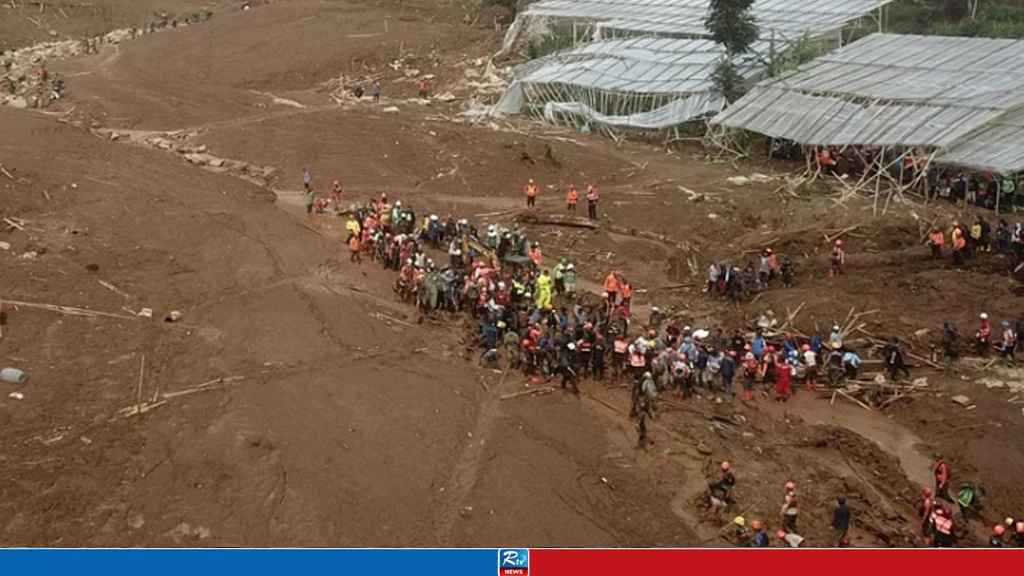
The Italian government has declared a state of emergency across the regions of Calabria, Sicily, and Sardinia following catastrophic rainfall and landslides triggered by Cyclone Harry.
The town of Niscemi in Sicily has been hit particularly hard, with reports confirming that at least 1,500 residents have been displaced.
Italy’s Minister for Civil Protection, Nello Musumeci, announced that the safety perimeter in Niscemi has been expanded from 100 meters to 150 meters in a desperate bid to halt the landslide's progression toward the town center.
According to state broadcaster RAI News, the landslide front now spans approximately four kilometers.
Fabio Ciciliano, head of the Civil Protection Department, warned that the earth is still moving. "The landslides have not stopped, and the number of displaced persons could rise if the situation deteriorates further," he stated.
Recent days have seen two major geologically significant shifts in Niscemi, with some affected areas seeing the ground drop by as much as six meters.
Government Response and Funding
In response to the crisis, the Italian cabinet has made an initial allocation of €100 million from the National Emergency Fund. These funds are earmarked for:
Travel and Weather Disruptions
The infrastructure in Northern Italy has also suffered; the Via Aurelia coastal road, a vital link between Arenzano and Genoa, remains closed due to debris from landslides.
Meanwhile, weather authorities have extended the storm and heavy rain alerts for Sardinia for another 24 hours. Government agencies remain on high alert as they coordinate rescue and stabilization efforts across the Mediterranean nation.





 Live TV
 RTV Plus