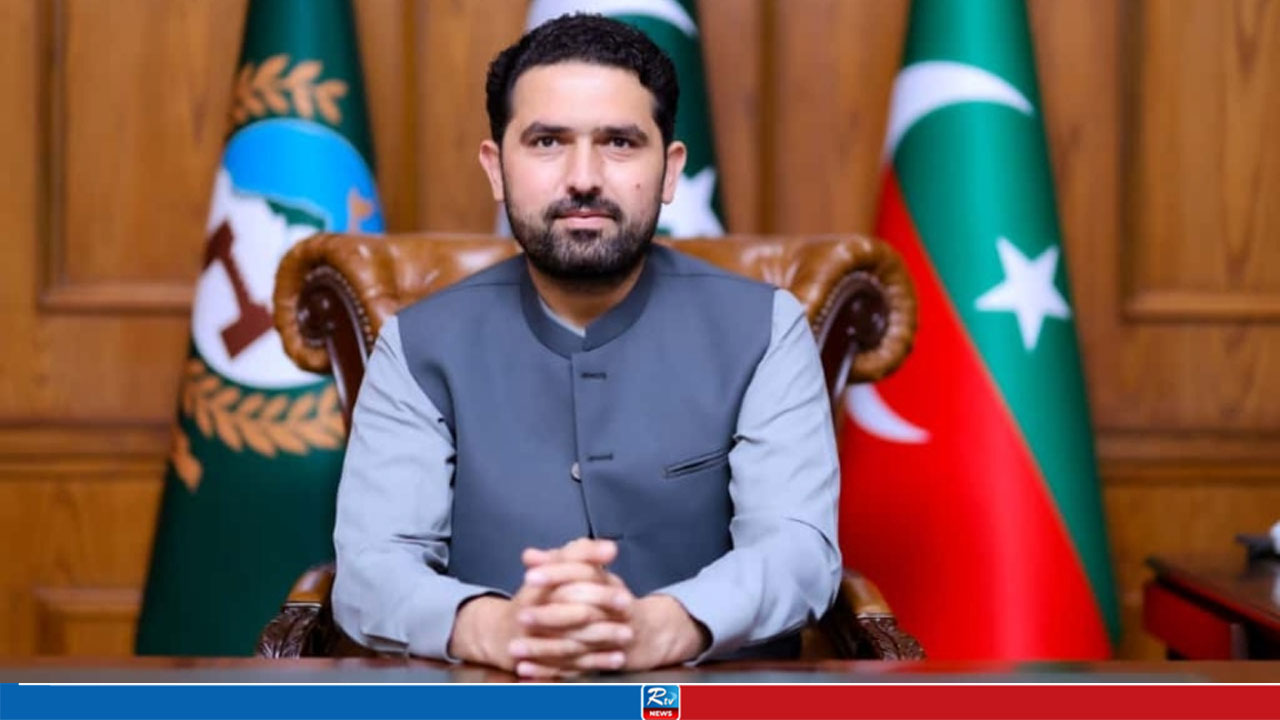
UK Prime Minister Keir Starmer touched down in Beijing with a business delegation on Wednesday for a three-day visit, the first of its kind in more than seven years.
The British leader is seeking to strengthen political and business ties between the two countries, despite a tense decade, as relations between Western countries and the United States under Donald Trump become more strained.
Starmer, criticized by some opponents in Britain for not taking a hard enough line on China, said the UK must remain vigilant on security threats but could not afford to ignore the world's second-largest economy.
"It doesn't make sense to stick our head in the ground and bury it in the sand when it comes to China, it's in our interests to engage," Starmer told reporters on the flight to China. "It's going to be a really important trip for us and we'll make some real progress."
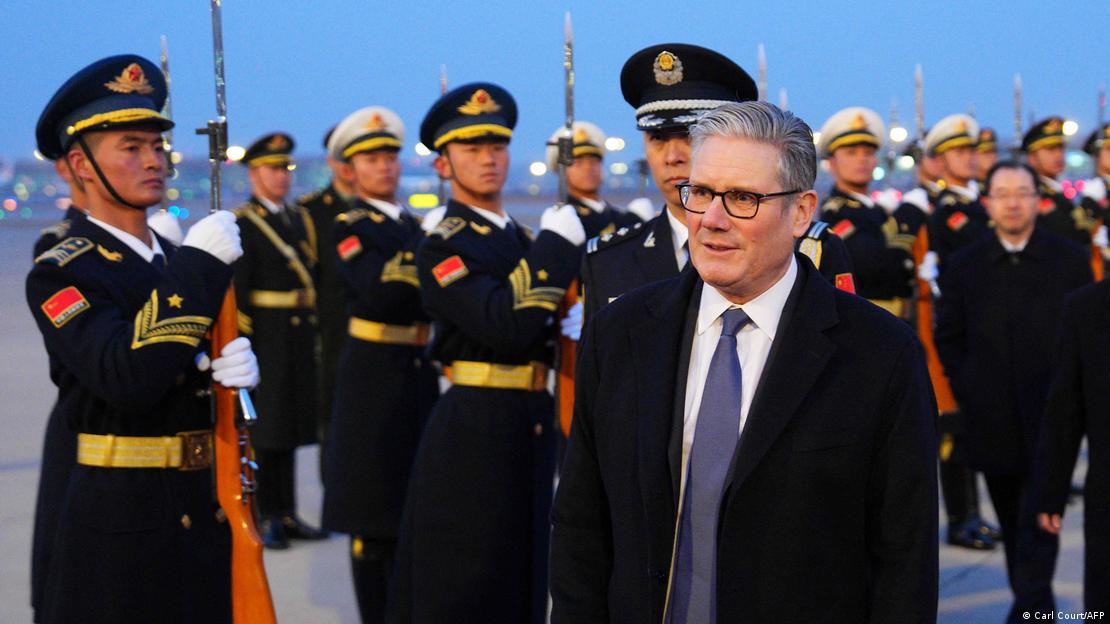
China and UK must strengthen ties, Xi tells Starmer
China's President Xi Jinping told Starmer their countries must work together on global stability, climate change and other issues.
"I have long been clear that the UK and China need a long term, consistent and comprehensive strategic partnership," he said.
Xi said the relationship with Britain had been through "twists and turns" that did not serve the interests of either country.
The Chinese president called for both sides to strengthen relations to counter geopolitical challenges.
"The current international situation is complex and intertwined. As permanent members of the UN Security Council and major global economies, China and the UK need to strengthen dialogue and cooperation," Xi said.
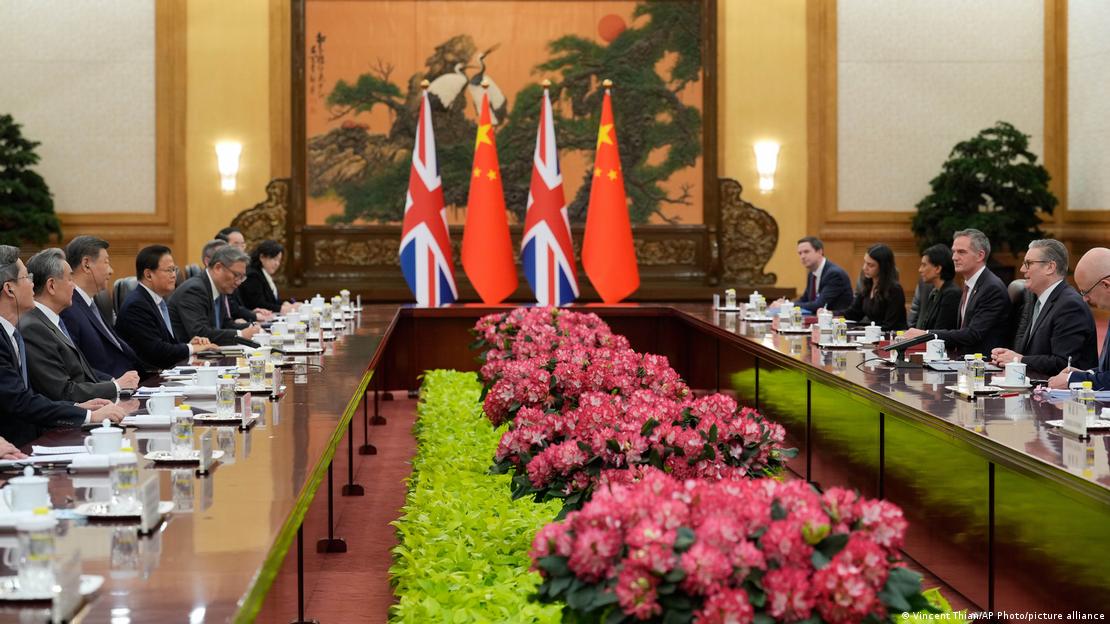
The Labour prime minister was also scheduled to meet Premier Li Qiang later in the day.
On Friday, he and a delegation of roughly 60 representatives of business, sport and culture move on to the financial capital Shanghai for talks with local executives.
China courting Western leaders amid Trump upheaval
After several years, primarily around the COVID pandemic, when the Chinese government made and requested very few foreign visits, Beijing has extended invitations to a string of Western leaders in the past few months.
Delegations from France, South Korea, Ireland and Finland have all visited China over the winter.
Canadian Prime Minister Mark Carney was there just days before his pointed speech at the World Economic Forum in Davos, with its not-so-thinly veiled jabs at Trump, raised eyebrows. Trump subsequently threatened exorbitant tariffs on Canada if Carney goes ahead with a bilateral accord brokered on his visit, albeit only in one of his many, often exaggerated social media posts.
At the end of February, it will be German Chancellor Friedrich Merz's turn to fly to the Chinese capital, at least assuming the schedules hold.
This flurry of diplomacy comes after China and the US had a tariff and trade spat of their own last year — with Beijing securing a US climbdown fairly quickly — and ahead of a planned Trump trip to China, scheduled for early April.
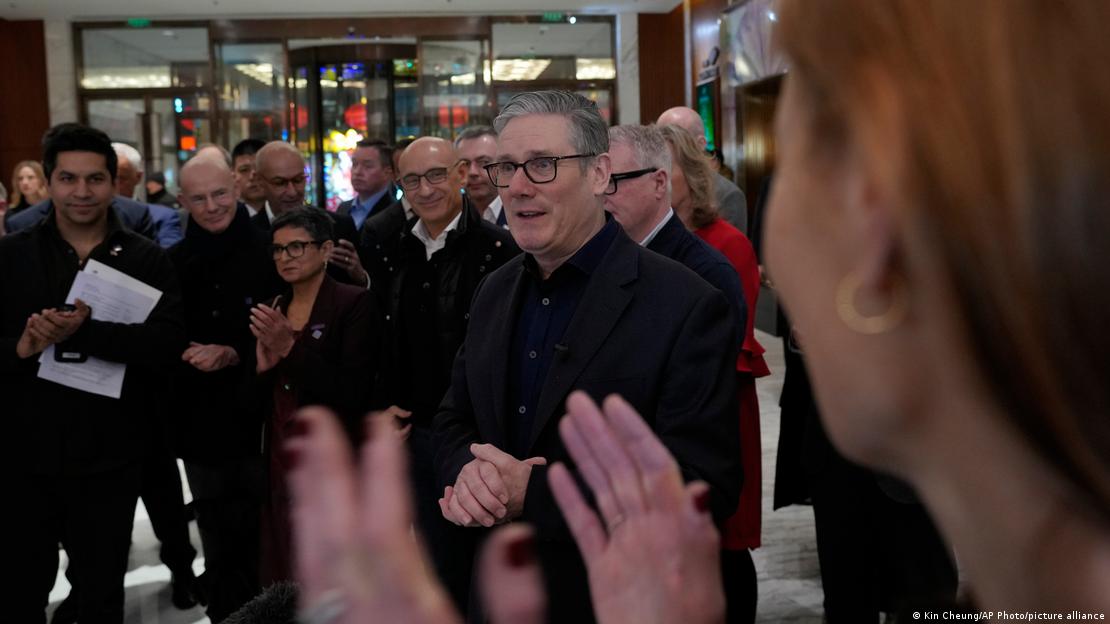
Sticking points
The recent move to build a new massive Chinese Embassy in London had prompted criticism of Starmer's government back home.
Beyond that, the continued repression of freedoms in Hong Kong, a British colony until 1997, could prove a sticking point. However, Starmer refused to be drawn in on whether he would raise the recent conviction of media tycoon Jimmy Lai or other legal and democratic issues during his visit.
He also sought to downplay notions that the China visit could endanger ties with the US, and the idea Carney raised in Davos about the importance of medium-sized powers stepping up more to counter great power influence in the world.
"I'm a pragmatist, a British pragmatist applying common sense," said the first prime minister to visit China since Theresa May in 2018.






 Live TV
 RTV Plus