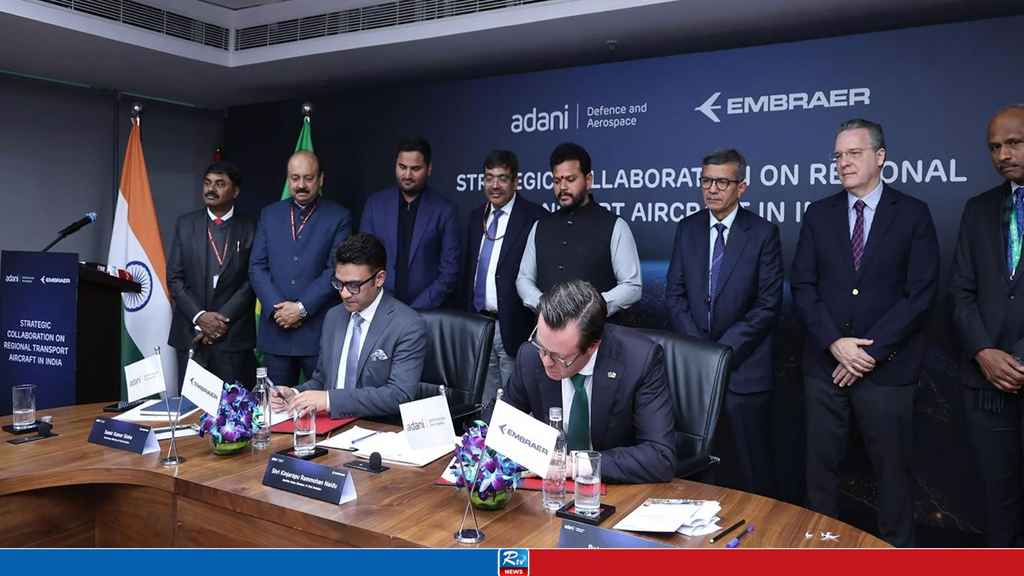
The India-European Union Free Trade Agreement (FTA), finalized on Tuesday, represents one of the most forward-looking and wide-ranging concession packages India has ever negotiated, according to a report by EY.
Described as a historic breakthrough between two economic giants, the agreement is set to redefine trade for a combined market of two billion people.
The deal, popularly dubbed the "mother of all deals," aims to double bilateral trade by 2030, covering critical sectors such as automobiles, defense, aerospace, textiles, and information technology.
In the automotive sector, the FTA introduces a transformative phased reduction of import duties on completely built units (CBUs) from roughly 110% to just 10% over a five-to-ten-year period, capped at an annual quota of 250,000 vehicles.
This shift is expected to enhance competition, drive innovation, and make luxury European brands significantly more accessible to Indian consumers.
Meanwhile, lower duties on completely knocked down (CKD) units at approximately 15% will continue to support local assembly operations by European, Japanese, and Korean manufacturers, bolstering domestic employment and price stability.
Strategic integration is a cornerstone of the agreement, particularly through the Security and Defence Partnership framework.
This pillar facilitates deeper industrial collaboration between Indian and European aerospace and defense firms, enabling vital technology exchanges and improving interoperability.
Lower tariffs on EU aerospace exports are expected to help Indian original equipment manufacturers build more integrated supply chains and accelerate the localization of complex technologies like radar systems and advanced structural assemblies.
The textile industry is set for an immediate boost with zero-duty access to the EU market from Day 1.
This move fully neutralizes the impact of the previous withdrawal of the Generalized System of Preferences (GSP), restoring India’s price competitiveness against rivals like Vietnam and Bangladesh.
Furthermore, the IT sector stands to gain from a structured professional mobility framework, allowing for the seamless movement of workers across EU member states.
This is particularly relevant for the deployment of new AI technologies and is supported by a pathway for Social Security Agreements over the next five years, addressing the long-standing industry concern of dual contributions.
Announced at the 16th India-EU Summit in New Delhi by Prime Minister Narendra Modi, European Commission President Ursula von der Leyen, and European Council President Antonio Costa, the FTA marks a watershed moment in global trade.
By eliminating or reducing tariffs on over 99% of Indian exports by trade value and 97.5% of EU exports, the agreement secures a stable, rules-based partnership that integrates India more deeply into the global value chain while safeguarding sensitive domestic priorities.
Source: ANI






 Live TV
 RTV Plus