
Rescue operations are intensifying across Venezuela as teams utilize both heavy machinery and their bare hands to search for survivors following twin earthquakes that have claimed at least 235 lives and injured approximately 4,300 people.
Two days after the country’s strongest seismic event in over a century struck west of Caracas, the situation remains desperate, with scores of buildings flattened and more than 200 people reported trapped beneath rubble.
At one collapse site, workers were filmed using sledgehammers to break through debris, repeatedly calling for "absolute silence" to listen for any signs of survivors.
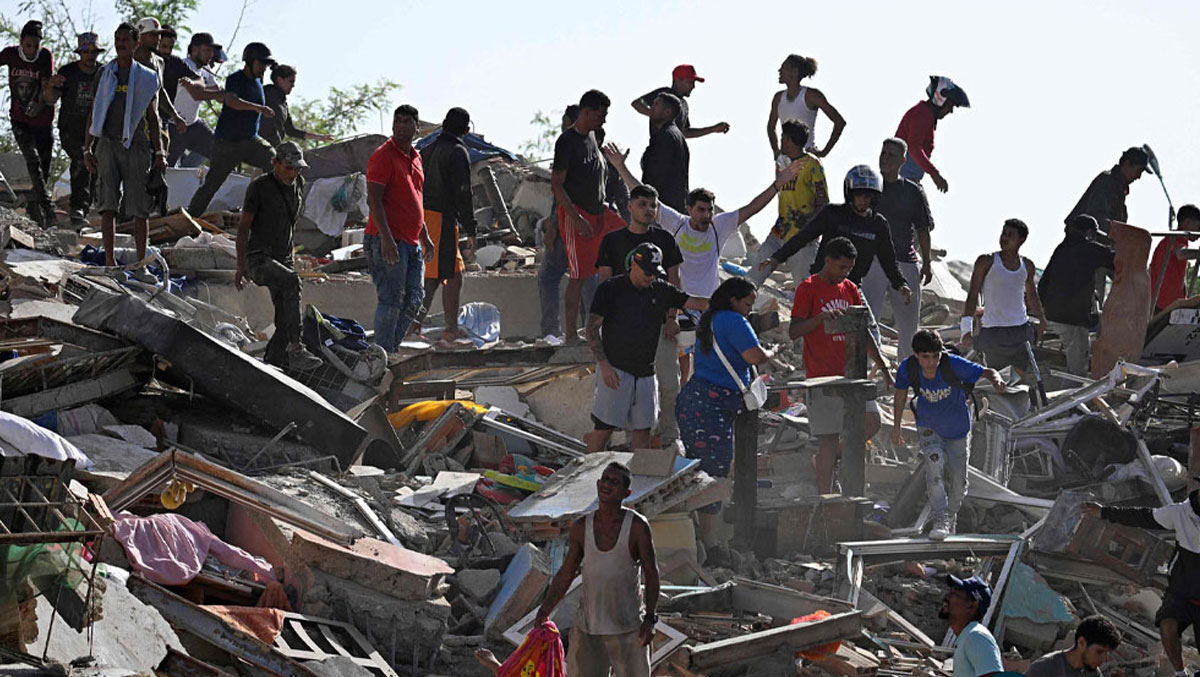
The scale of the destruction is catastrophic, particularly in the hardest-hit state of La Guaira, where residents like Amparo del Giudice have been left to dig through mounds of concrete in a frantic search for loved ones.
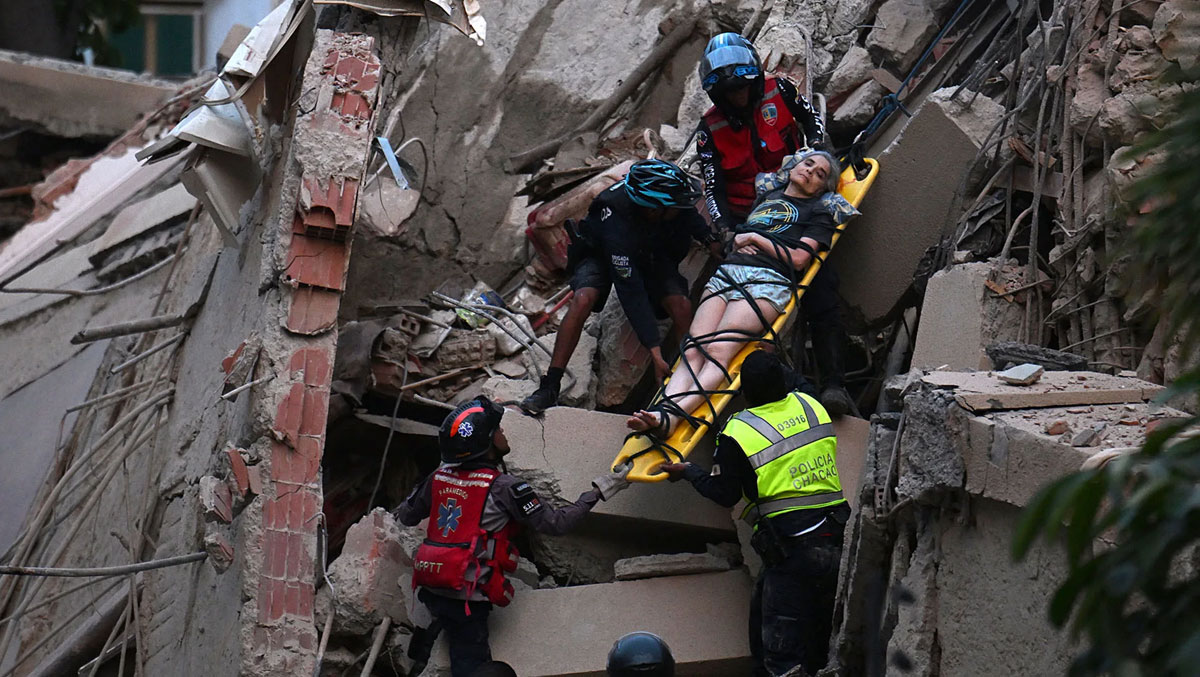
"It is a lot of rock, and with bare hands it is impossible," she said.
Local reports have highlighted the agonizing nature of the rescue effort, with residents describing scenarios where victims, including a young girl, perished after crying for help for hours as onlookers stood by, unable to reach them.
"We need people... military personnel, to come and help so we can get her out," said 48-year-old resident Dani Rizo.
The disaster has also prompted incidents of social unrest, with AFP reporters witnessing residents looting a local supermarket in La Guaira.
The international community has begun a massive mobilization to provide relief, with the United States deploying two warships, transport planes, and helicopters, alongside a USD 150 million aid package; a senior American military official has already arrived in Caracas to oversee these efforts.
US Secretary of State Marco Rubio pledged a "whole-of-government response," promising that "It'll be big, it'll be fast, and it'll be effective."
Meanwhile, global support has arrived from nations including Switzerland, Spain, France, Portugal, and Mexico, which are sending specialized rescue teams.
China, India, Brazil, and Iran have also offered assistance and Pope Leo XIV has contributed an initial 100,000 euros in aid.
UN Secretary-General Antonio Guterres expressed that he was "deeply saddened" by the disaster, and the global body has vowed to assist in the recovery.
The death toll includes a diverse group of victims, with two Spaniards, one Portuguese national, two Brazilians, one Italian-Venezuelan and two Chinese nationals confirmed among the deceased.
The Spanish Ministry of Foreign Affairs further reported that 80 Spanish citizens remain unaccounted for.
Complicating the logistical response, the international airport located in La Guaira has been forced to close due to serious structural damage.
Rescue workers have warned that conditions on the ground are precarious, citing a significant shortage of trained personnel and technical limitations.
The 7.5-magnitude earthquake, which occurred on Wednesday, is the most powerful tremor to strike the region since October 29, 1900.
It follows a historical pattern of seismic activity along the boundary of the Caribbean and South American tectonic plates, though the country had not experienced a quake of this significance since 1997, when 73 people died; a previous major quake in 1967 resulted in 236 deaths.
Tremors from Wednesday’s disaster were felt as far away as Bogota, Colombia, and several cities in northern Brazil.
For families like that of 60-year-old Rita Gomez, who traveled to Caracas after her daughter stopped answering her phone following a building collapse, the focus remains entirely on hope.
"There is a lot of cooperation from the neighbors," she said. "We are trusting in God that they will find her alive."



 Live TV
 RTV Plus


