Burqas and niqabs will soon be banned in Italian schools, and Rome will also take steps to limit the number of foreign students in classrooms.
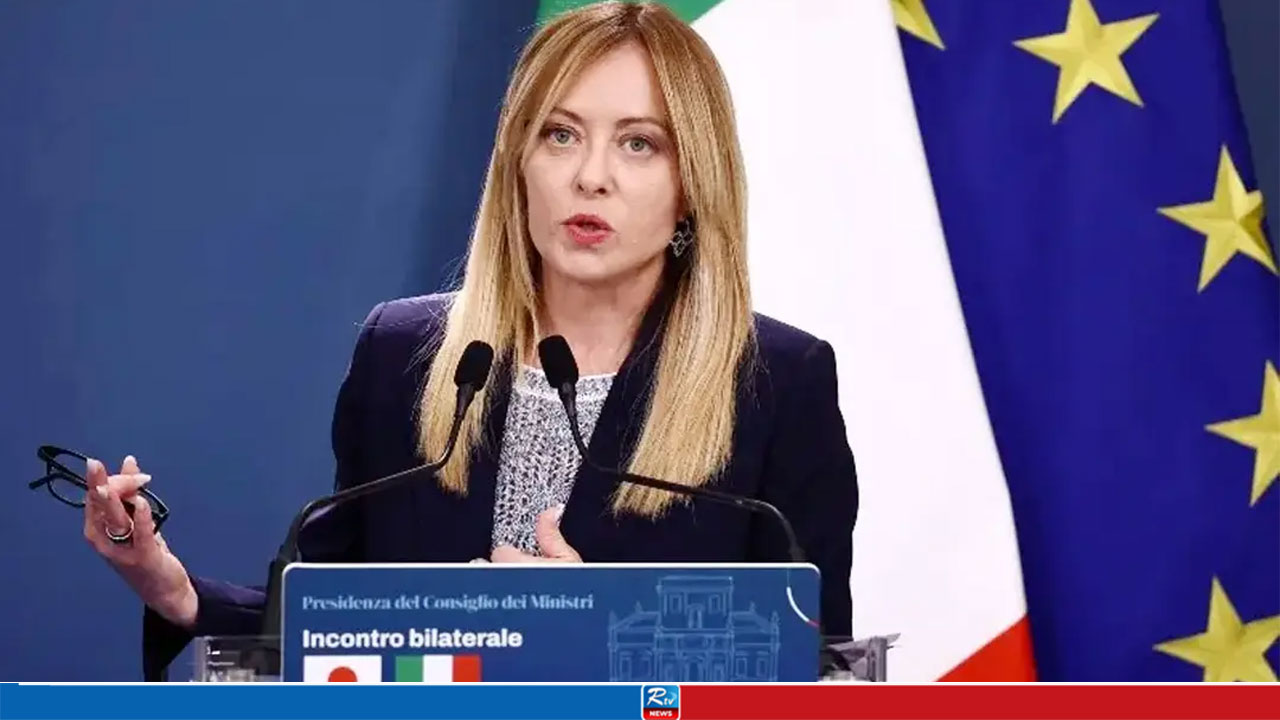
Italian Prime Minister Giorgia Meloni made this announcement on Sunday during a public rally in Milan. In her announcement, she said, "A proposal regarding the maximum number of foreign students schools can enroll will soon be tabled in the Cabinet meeting. This proposal will also include measures such as making it mandatory for parents of foreign students who struggle to adapt to the school system to learn the Italian language, as well as banning the burqa and niqab in schools."
Justifying the reduction of foreign students in school classrooms, Meloni stated, "If only one child in a class does not understand Italian, they can likely learn the language quickly with the help of classmates and teachers and integrate with others; however, if the number of children who do not understand Italian increases significantly—even to the point where they become the majority—then teaching the language becomes difficult, and they can no longer be integrated with Italians."
Regarding the burqa, Meloni said, "Students must come to school with their faces uncovered. Italy never patronizes a culture that encourages a teenage girl or young woman to walk around with her face covered."
The percentage of foreign students in Italian schools is quite significant, standing at 11.6 percent. This means that out of every 100 students in Italian schools, 12 are foreign students.
However, Meloni did not give any clear indication of what the enrollment cap for foreign students in schools will be in the future.
Notably, Italy ranks at the top among European countries with the highest rates of legal and illegal immigration. A significant portion of these immigrants are Muslims.
Meloni’s political party, Brothers of Italy, and most of its supporters view the religious practices, symbols, and rituals of Muslim immigrants as a threat to Italian culture.
Source: Reuters




 Live TV
 RTV Plus
